VISION OF COUNCIL
"A thriving and friendly community
that recognises our history and embraces cultural diversity and economic
opportunity, whilst nurturing our unique natural and built environment."
AGENDA
FOR THE
Economic Development Advisory
Committee Meeting
16 September 2016
"A
thriving and friendly community that recognises our history and embraces
cultural diversity and economic opportunity, whilst nurturing our unique
natural and built environment."
OUR MISSION
“To
deliver affordable and quality Local Government services.”
CORE
VALUES OF THE SHIRE
The core
values that underpin the achievement of the
mission
will be based on a strong customer service
focus and a
positive attitude:
Communication
Integrity
Respect
Innovation
Transparency
Courtesy
DISCLAIMER
The purpose of Council Meetings is to discuss, and where possible,
make resolutions about items appearing on the agenda. Whilst Council has
the power to resolve such items and may in fact, appear to have done so at the
meeting, no person should rely on or act on the basis of such decision or on
any advice or information provided by a Member or Officer, or on the content of
any discussion occurring, during the course of the meeting.
Persons should be aware that the provisions of the Local
Government Act 1995 (Section 5.25 (e)) establish procedures for revocation or
rescission of a Council decision. No person should rely on the decisions
made by Council until formal advice of the Council decision is received by that
person. The Shire of Broome expressly disclaims liability for any loss or
damage suffered by any person as a result of relying on or acting on the basis
of any resolution of Council, or any advice or information provided by a Member
or Officer, or the content of any discussion occurring, during the course of
the Council meeting.
Agenda – Economic
Development Advisory Committee Meeting 16 September 2016 Page 4 of 6
NOTICE OF MEETING
Dear Council Member,
The next Economic Development
Advisory Committee Meeting of the Shire of Broome will be held on Friday, 16
September 2016 in the Committee Room, Corner Weld and Haas Streets, Broome,
commencing at 2pm.
Regards
K R DONOHOE
Chief Executive Officer
09/09/2016
Agenda –
Economic Development Advisory Committee
Meeting 16 September 2016 Page 5 of 6
|
Recommendation:
That the Minutes of the
Economic Development Advisory Committee held on 18 August 2016 be confirmed
as a true and accurate record of that meeting.
|
Agenda –
Economic Development Advisory Committee
Meeting 16 September 2016 Page 6 of 7
|
5.1 BROOME
GROWTH PLAN - STATUS UPDATE AND KEY ELEMENTS
LOCATION/ADDRESS: Nil
APPLICANT: Nil
FILE: EDP007
AUTHOR: Director
Development Services
CONTRIBUTOR/S: Nil
RESPONSIBLE
OFFICER: Director
Development Services
DISCLOSURE
OF INTEREST: Nil
DATE OF REPORT: 6
September 2016
|
|
SUMMARY: The
Broome Growth Plan is being prepared as part of the State government’s
Regional Centres Development Planning Initiative. At the last meeting
of the Economic Development Advisory Committee on 18 August 2016, the
Committee considered the status of the Growth Plan and key elements informing
the Growth Plan developed in the period leading up to that meeting. The
purpose of this report is to provide an update on the work that has occurred
on the Growth Plan since 18 August 2016, and seek direction from the
Committee on the content and direction of that work to inform the Growth
Plan.
|
BACKGROUND
Previous
Considerations
OMC 30 July 2015 Item
12.1
OMC 26 November 2015 Item
9.3.2
SMC 19 January 2016 Item
6.2.2
OMC 26 May 2016 Item
10.1
OMC 25 August 2016 Item
12.1
The Broome Growth Plan is being
prepared as part of the State government’s Regional Centres Development
Planning (RCDP) initiative. The RCDP initiative is led by the
Regional Development Council, through the Department of Regional Development,
and funded through Royalties for Regions funding. The growth planning
process commenced in late 2015 and the Broome Growth Plan has to be finalised
by 31 October 2016.
At its meeting on 18 August 2016, the
Economic Development Advisory Committee (EDAC) considered a
report on the status of the Growth Plan and the key elements that had been
developed to inform the Growth Plan over the preceding five months. A
significant amount of work has been undertaken to bring together information
and the outcomes of community and stakeholder consultation to inform the Growth
Plan.
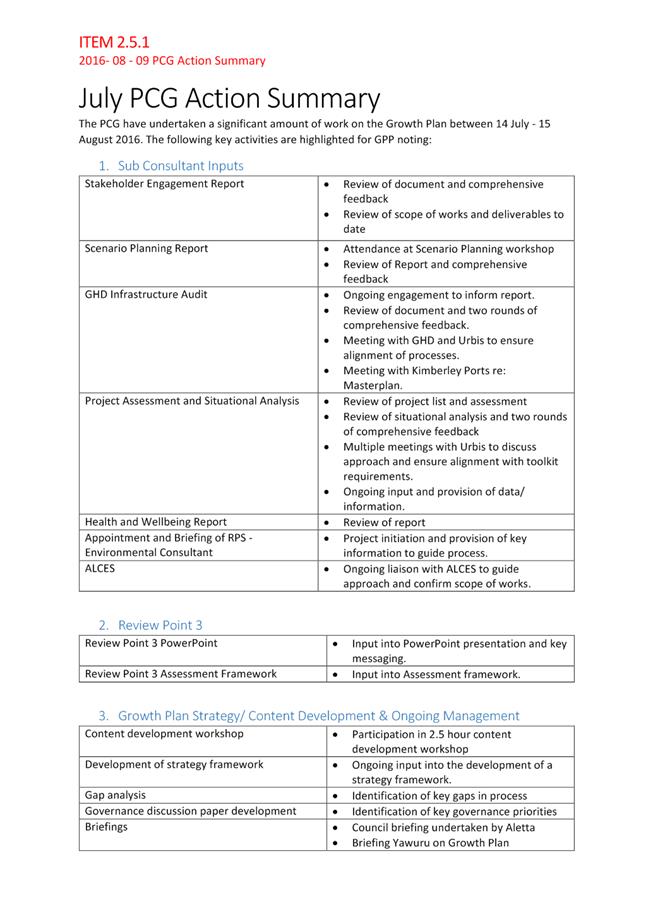
Since the EDAC meeting on 18 August
2016, more work has been carried out to inform the Growth Plan and key elements
of the Growth Plan are starting to take shape. Drafting of sections of
the Growth Plan has also commenced.
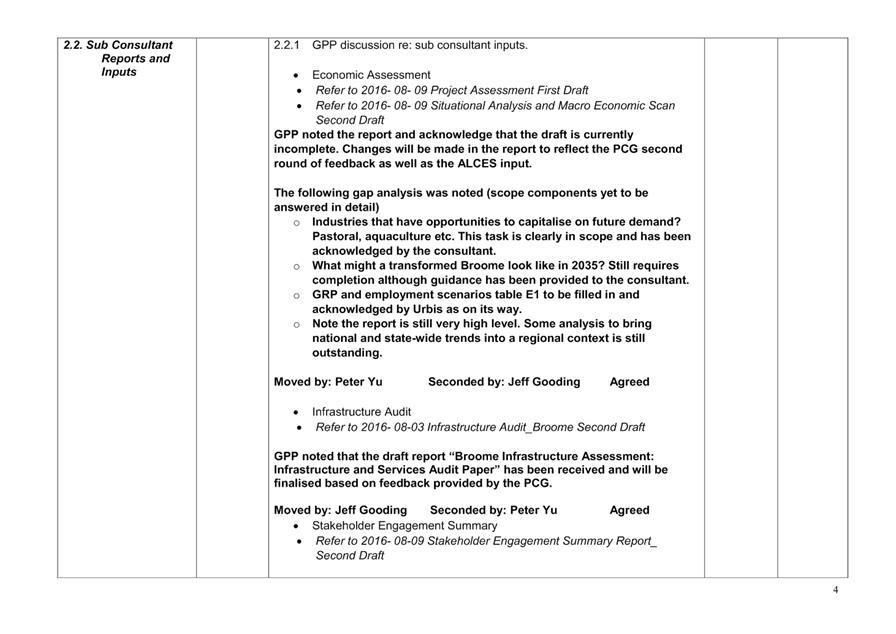
Since the EDAC meeting on 18 August
2016, the following actions have occurred:
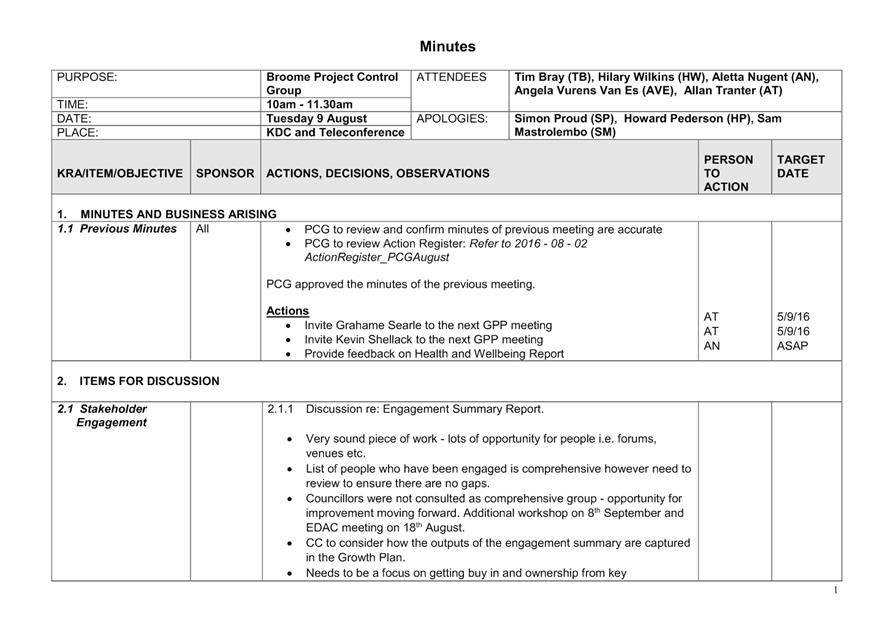
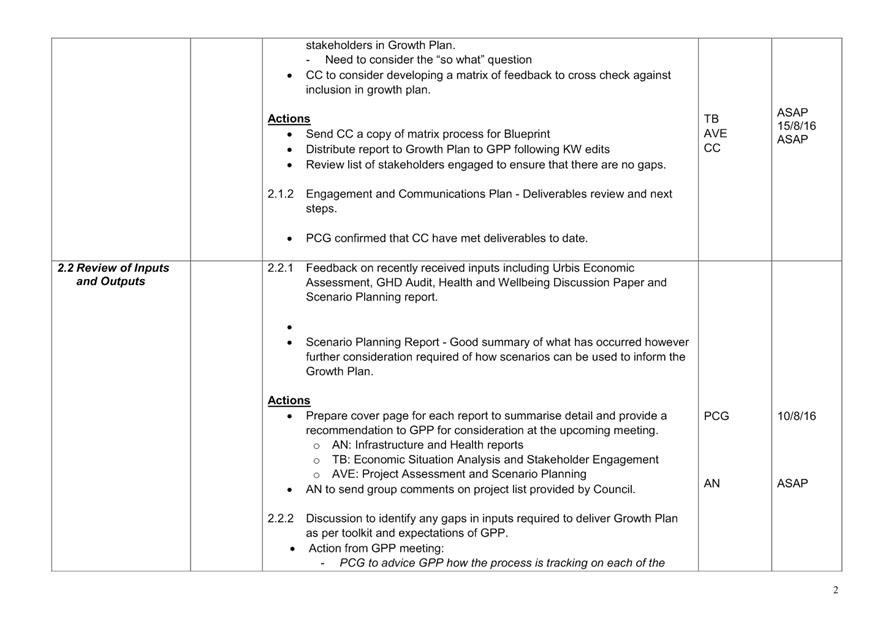
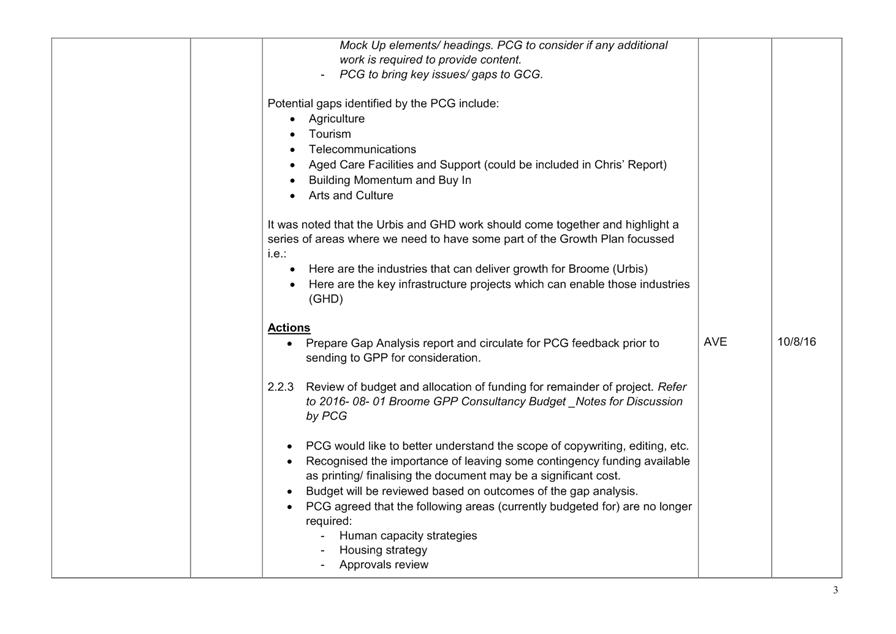
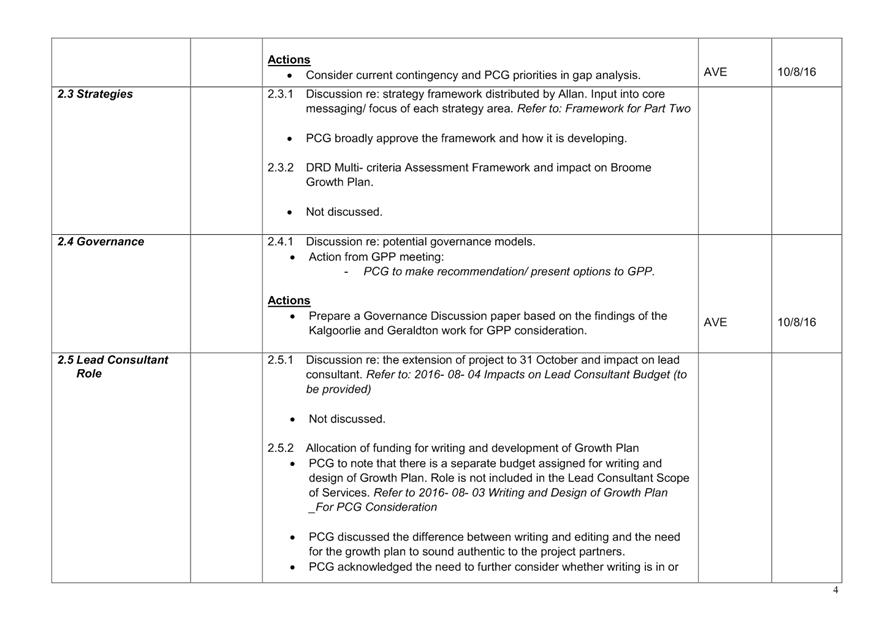
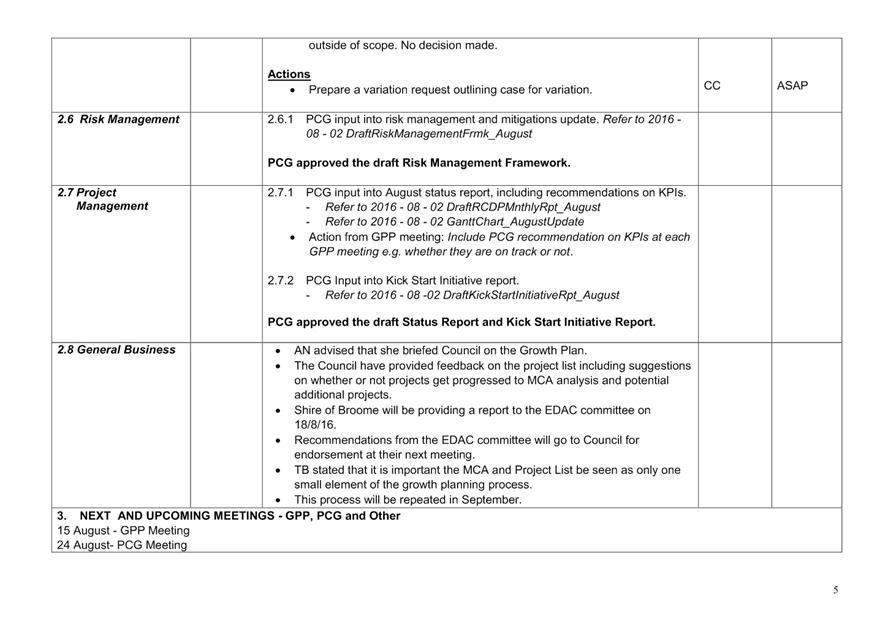
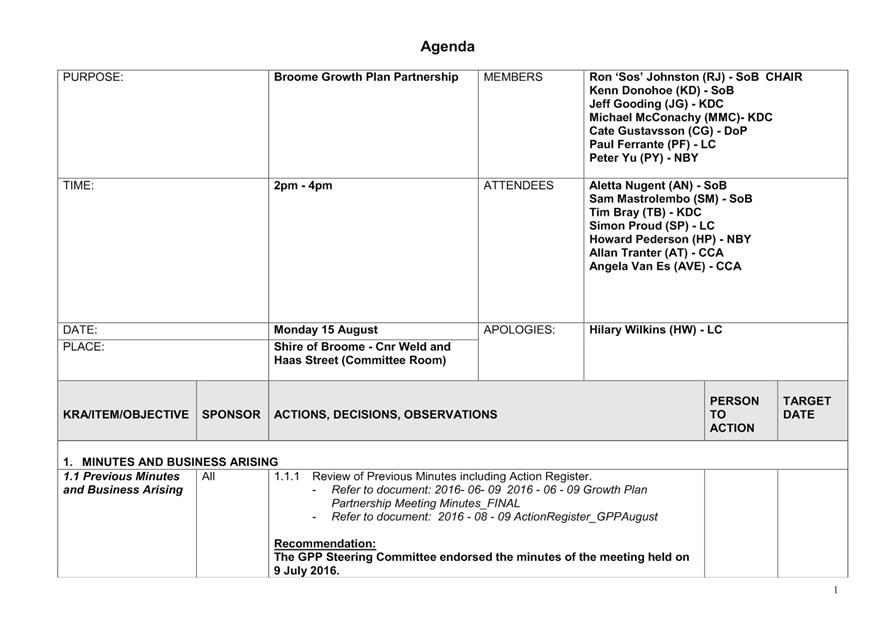
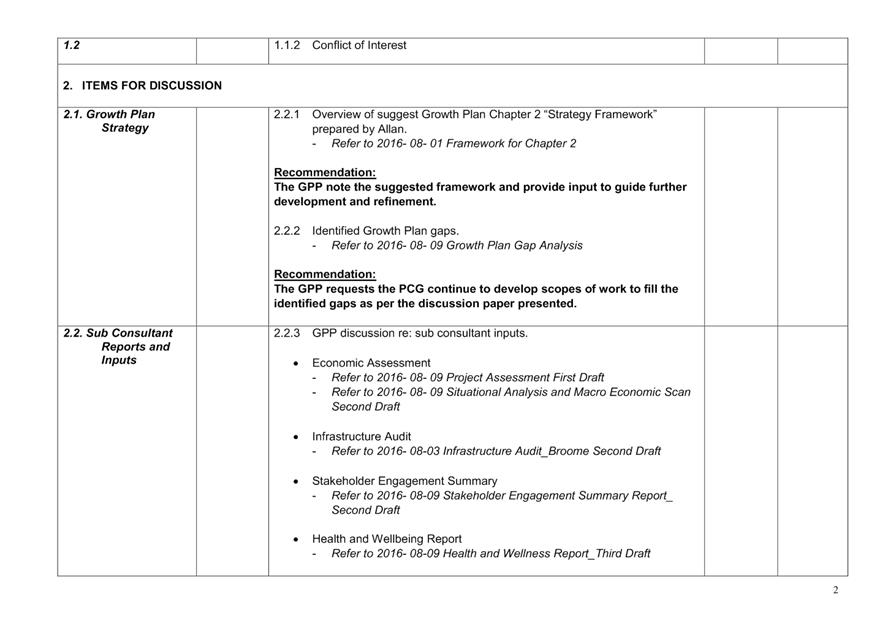
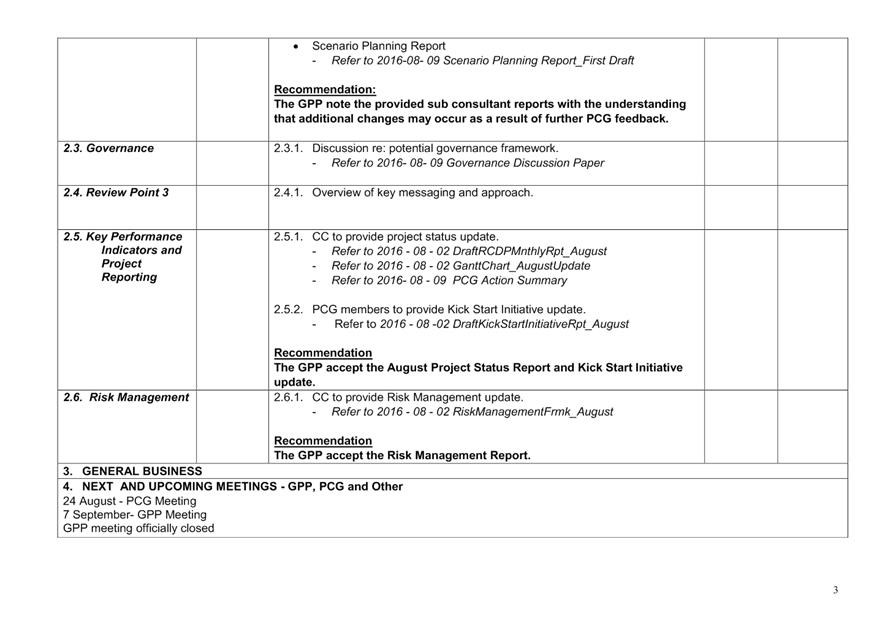
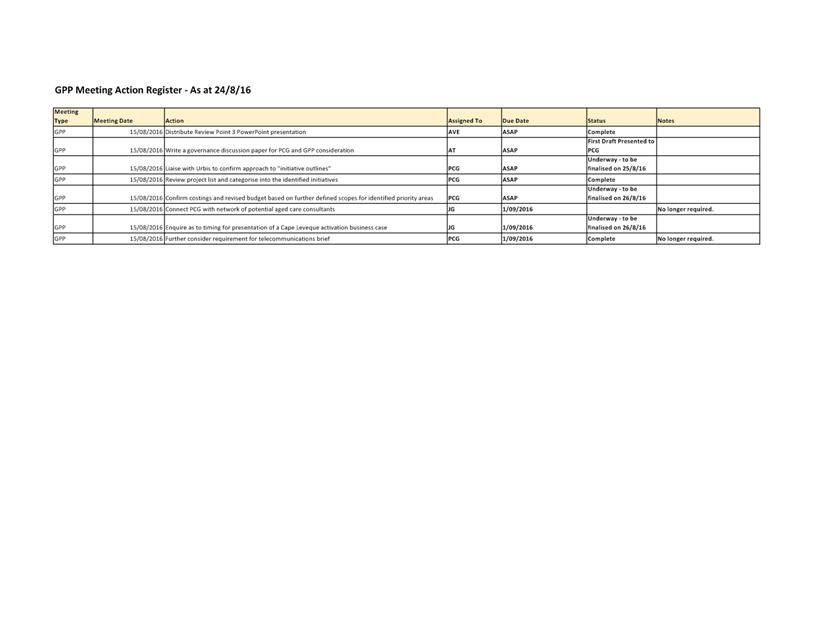
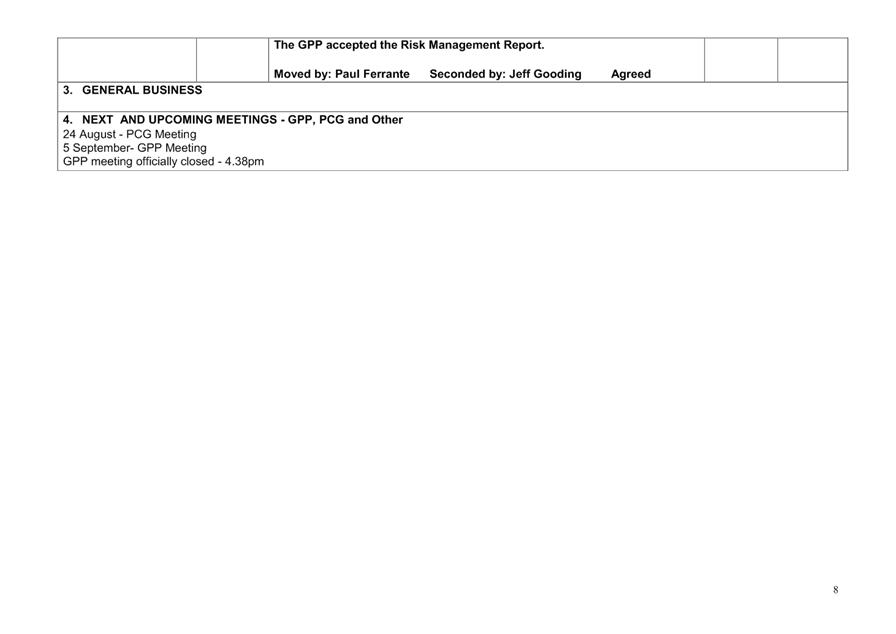
· The minutes
of the Project Control Meeting (PCG) held on 9 August 2016 were made
available (see Attachment 1 to this report);
· The PCG met
on 10 August 2016 to discuss the status of the Urbis and GHD sub-consultancies;
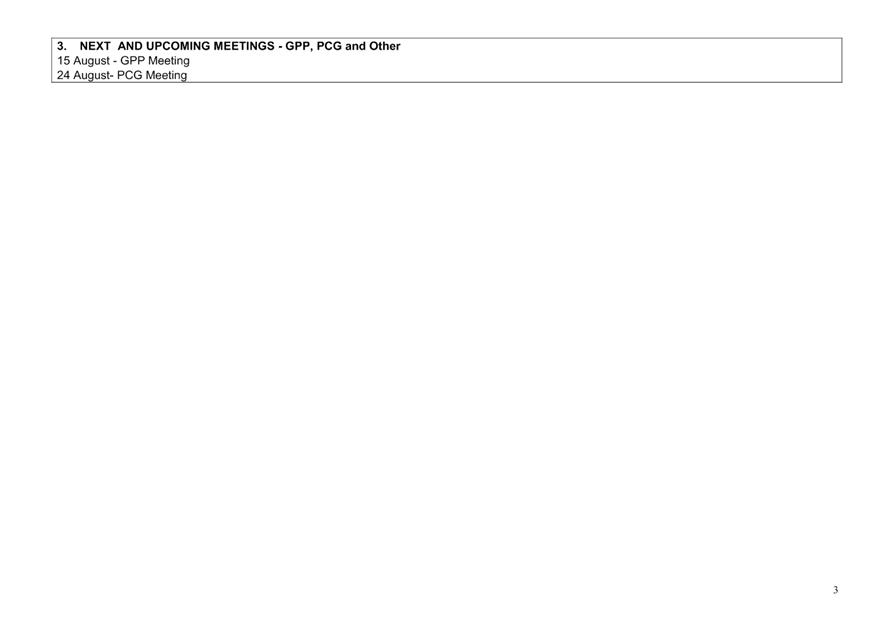
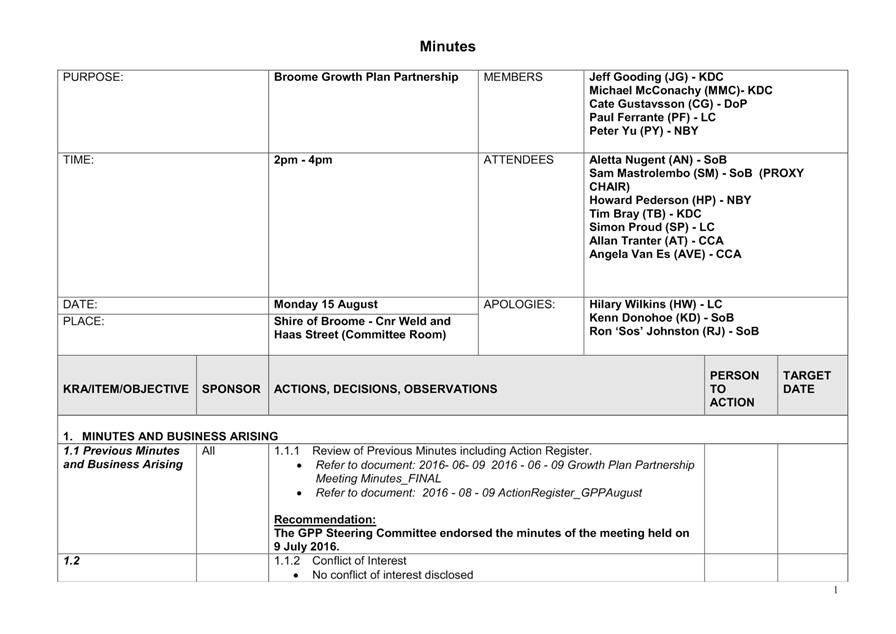
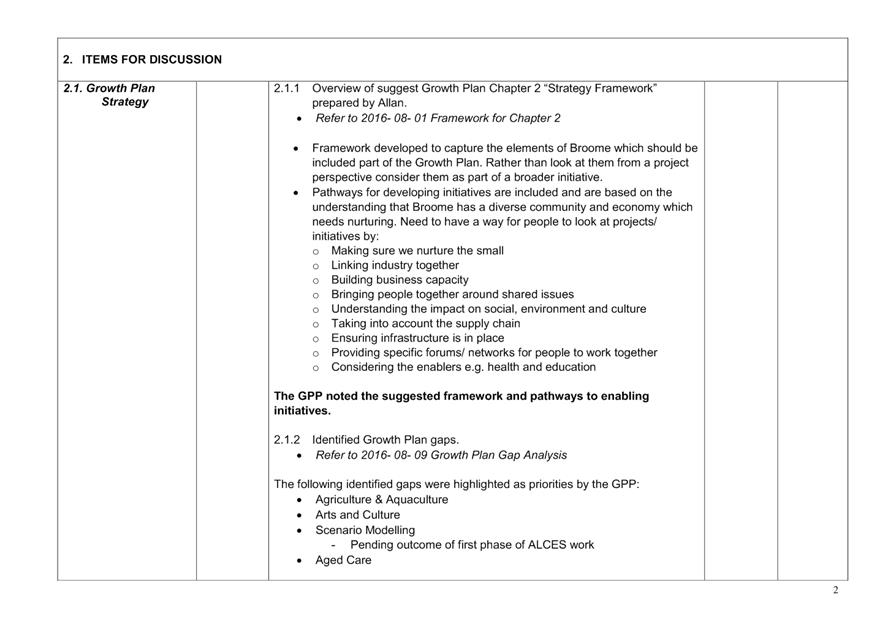
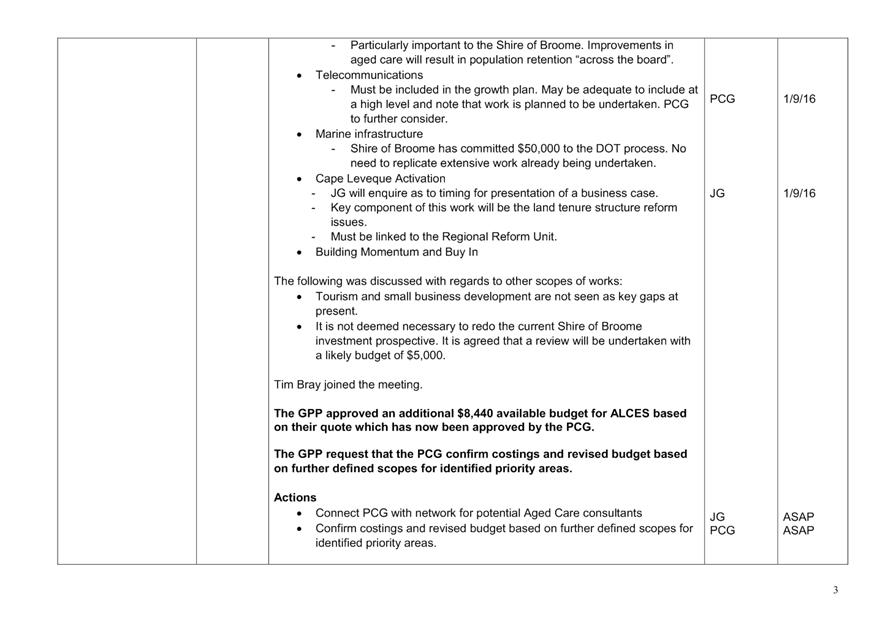
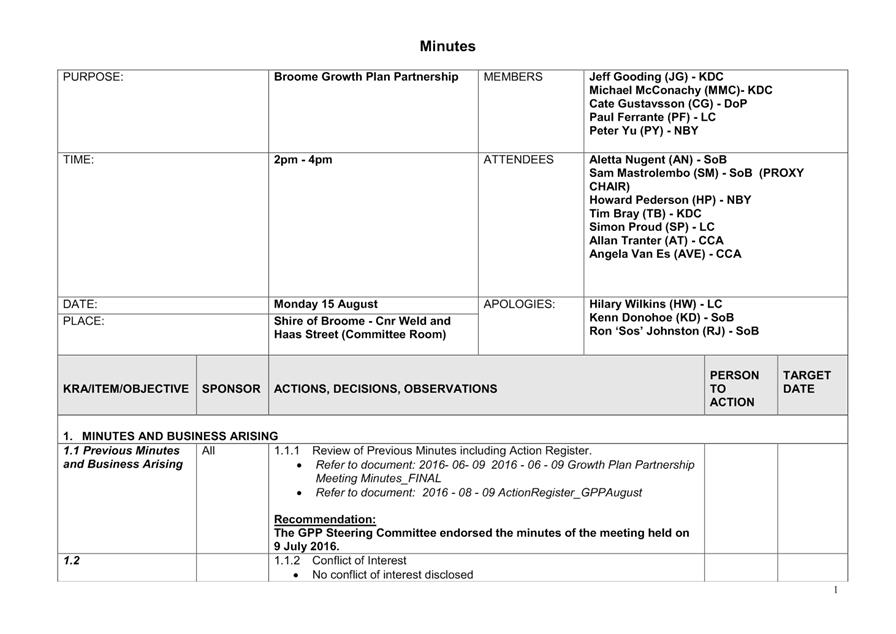
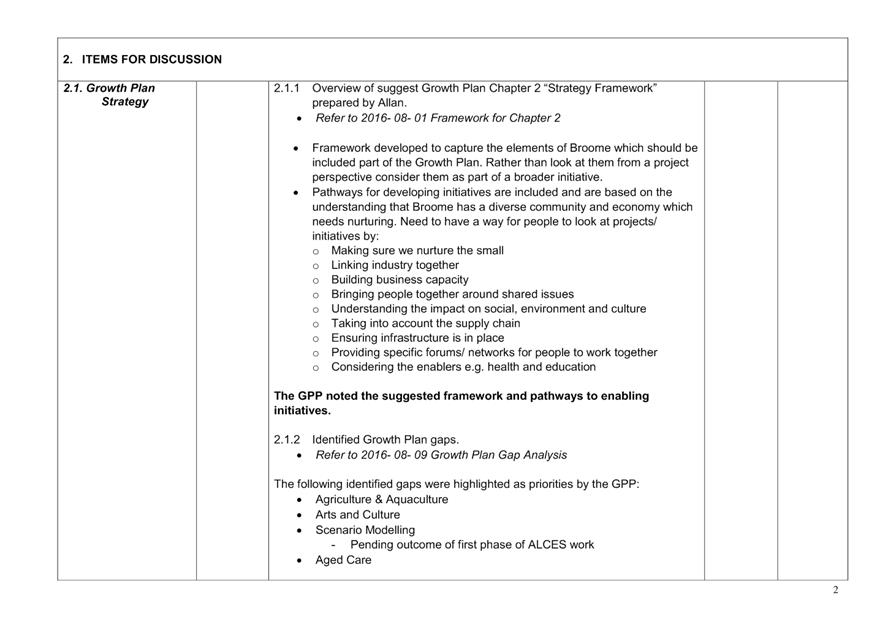
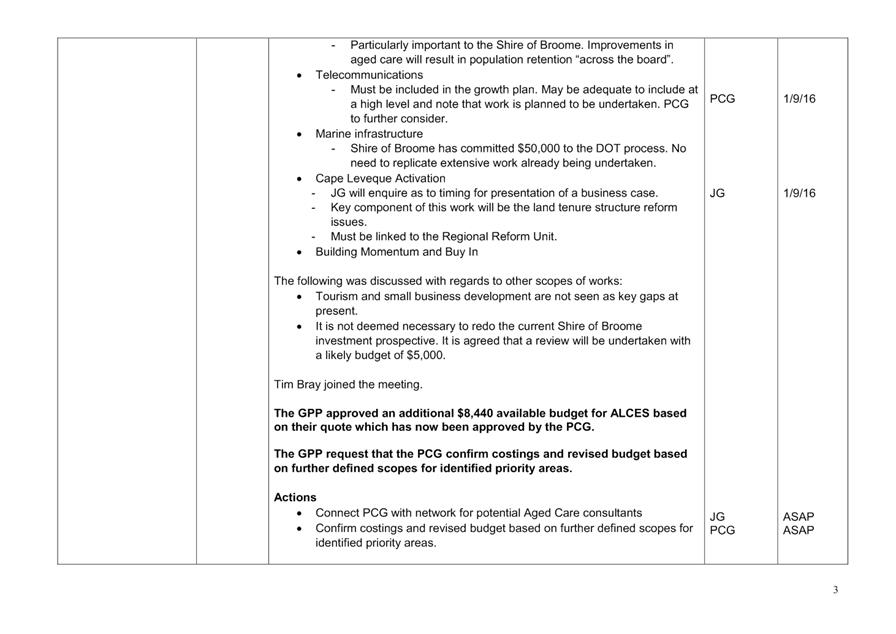
· The Growth
Plan Partnership (GPP) met on 15 August 2016 (see minutes in Attachment
2 to this report);
· The PCG met
on 24 August 2016 to discuss additional technical input and sub-consultancies
required for the Growth Plan;
· Council
considered and adopted EDAC’s recommendations in relation to the status
and key elements of the Growth Plan at the Ordinary Meeting of Council (OMC)
on 25 August 2016;
· Council
considered and made resolutions in relation to governance matters associated
with the Growth Plan project at the OMC on 25 August 2016;
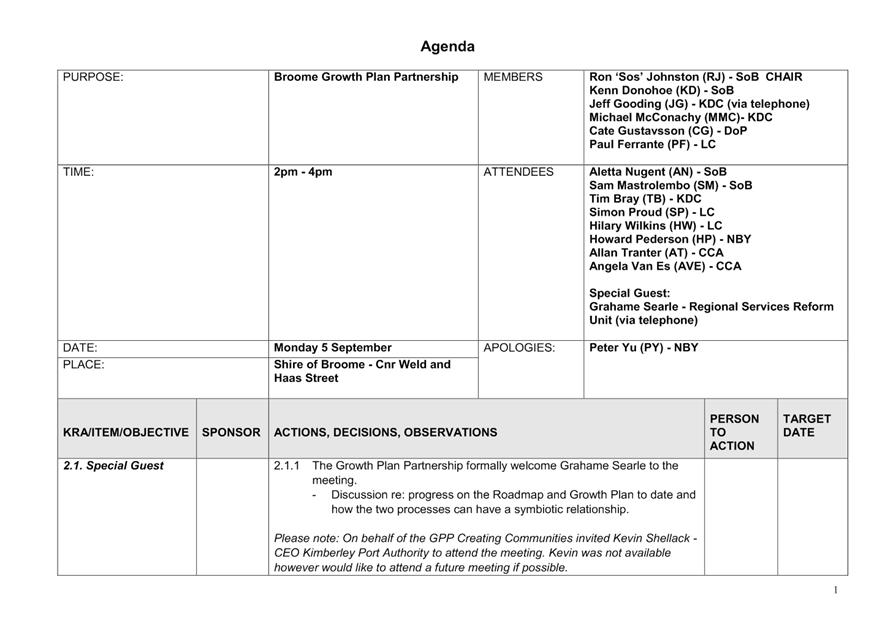
· A GPP meeting
was held on 5 September 2016 (see agenda and supporting documents in Attachment
2, note that the minutes were not available at the time of writing this
report);
· Feedback
from the Councillor workshop on 8 August 2016 was provided to Urbis, Creating Communities
and the PCG, along with additional information on certain projects;
· A paper on
the economic resilience of Broome prepared as an initiative of the Eastern
Australian Regional Capital Alliance was provided to Urbis, Creating
Communities and the PCG as an input to the Growth Plan;
· Initiative
areas for the Growth Plan have been developed;
· Discussions
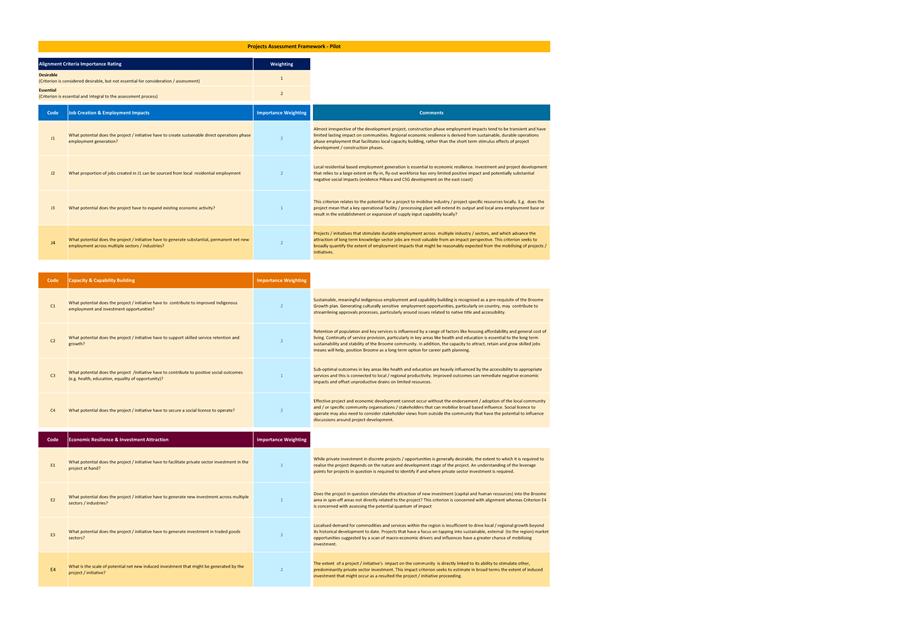
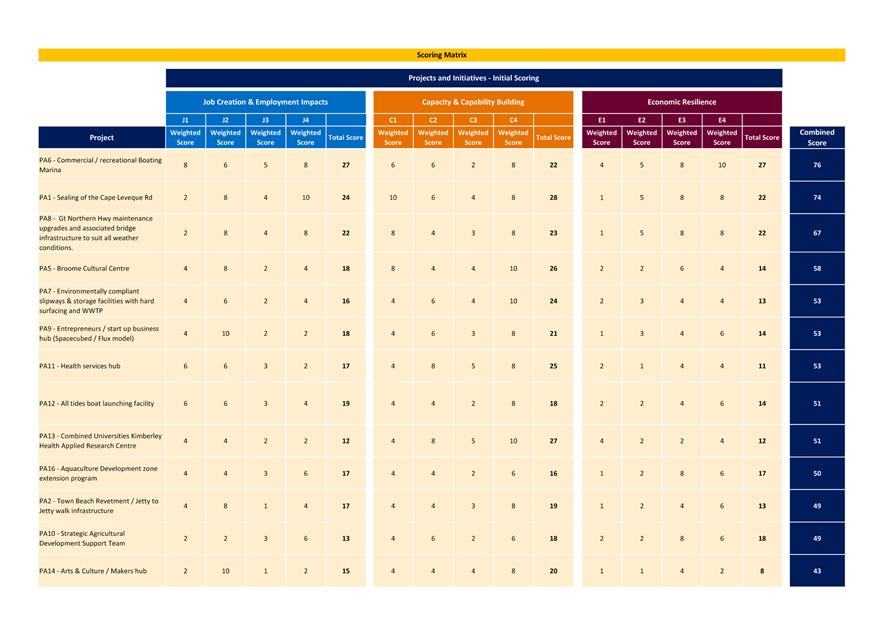
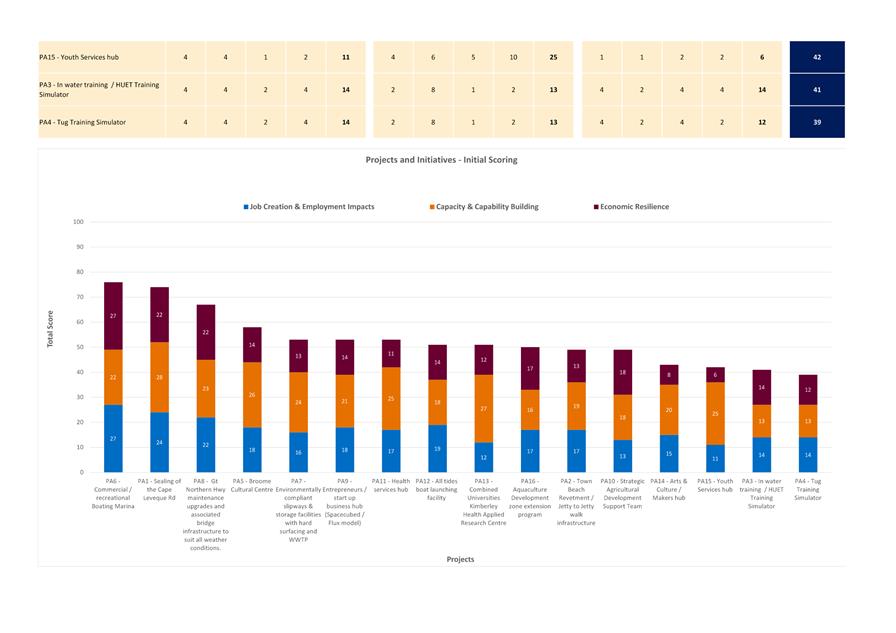
were held with the PCG and GPP regarding the use of the list of projects,
multi-criteria analysis (MCA) tool and business cases in the Growth Plan;
· The PCG
aligned the list of projects with the initiative areas;
· Feedback was
provided on the latest draft of the Health and Wellbeing report and on the
Scenario Planning Report;
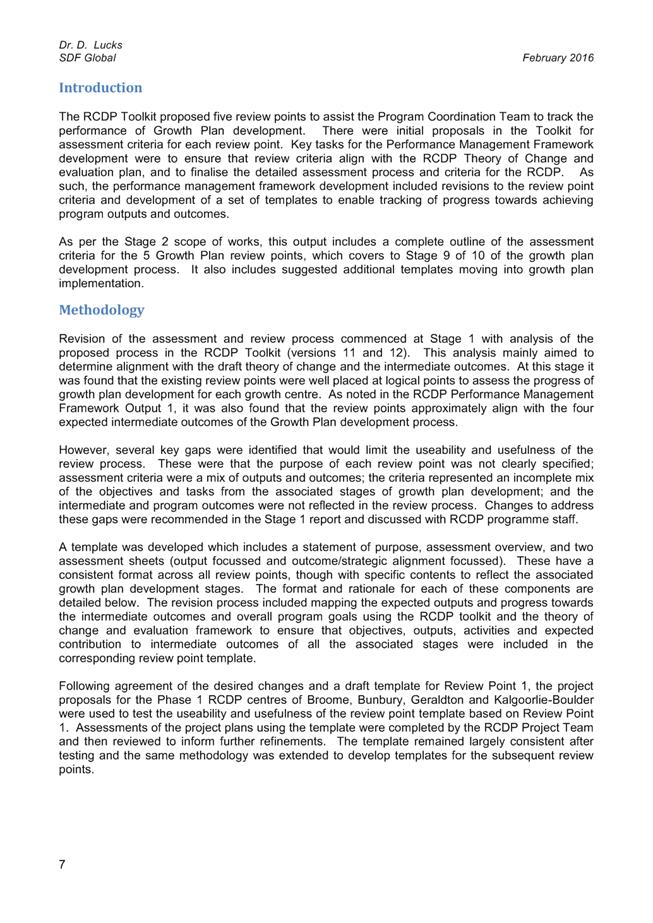
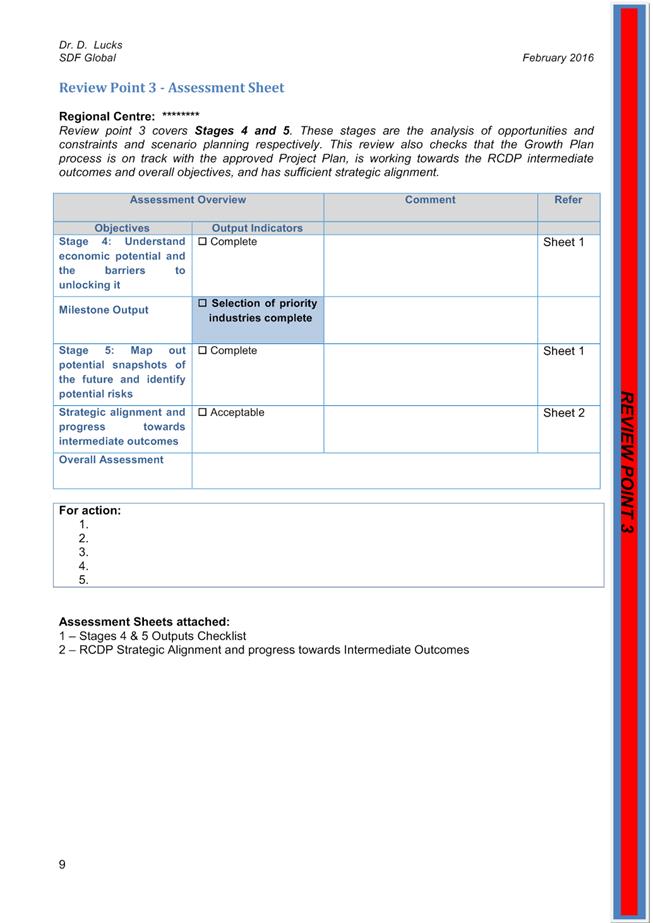
· The Review
Point 3 workshop was held in Perth;
· Assistance
was provided to RPS to obtain data for the environmental sub-consultancy and
feedback was provided on the direction of the sub-consultancy;
· Information
was gathered on issues associated with telecommunications infrastructure and
potential improvements;
· Work was undertaken
on a proposed governance structure for the implementation of the Growth Plan;
· Discussions
were held regarding addressing “Theory of Change” in the Growth
Plan;
· Creating
Communities commenced drafting sections of the Growth Plan;
· Work commenced
on the preparation of a draft terms of reference for the GPP and PCG.
Further detail on the output from
these actions is provided below.
COMMENT
A number of the key elements
informing the Growth Plan have been progressed and work on the Growth Plan
document itself has occurred since the last EDAC meeting. These key
elements and the draft content of the Growth Plan document are discussed below.
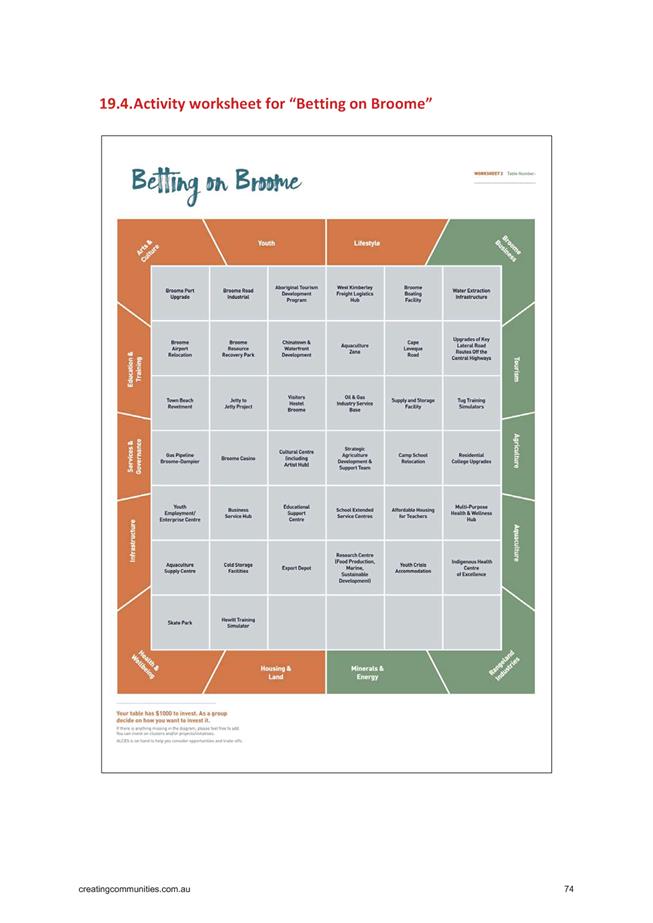
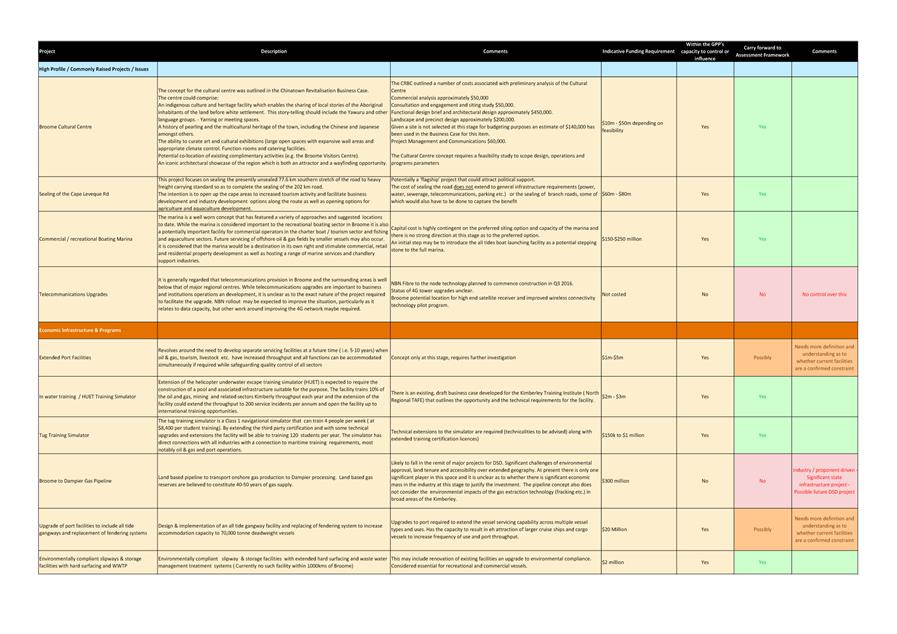
List of projects and project
assessment
At the last EDAC meeting, EDAC
considered a project list for the Broome Growth Plan and made recommendations
to Council in relation to the project list. Council endorsed EDAC’s
recommendations at its OMC on 25 August 2016 in relation to the Growth Plan,
whereby Council resolved that it:
3. Endorses the
draft Project List for the Broome Growth Plan in Attachment 4, subject to:
(1) changes to the list in accordance with
the comments in red in Attachment 5;
(2) the inclusion of the Gray Street
extension as a stand alone project;
(3) the inclusion of two new projects:
a) A new museum for Broome; and
b) Facilitating flights between Asia and
Broome and between East Coast destinations and Broome; and
(4) key enabling infrastructure such as the
Regional Resource Recovery Park and improved aged care programs and facilities being
recognised in the Growth Plan,
This feedback was provided to Urbis,
Creating Communities and the PCG. Additional information on certain Shire
projects was also provided.
The PCG’s intention to draft
the Growth Plan around objectives for Broome, rather than having the project
list as the definition feature of the Growth Plan, was discussed in the agenda
item at the EDAC meeting on 18 August 2016. Since this meeting,
additional concerns regarding the project list and the assessment of projects
against the Project Prioritisation Matrix were raised. GPP members raised
concerns regarding projects being missed, and had reservations about the
subjectivity of assessment against the Matrix. These concerns mirror the
concerns raised by Councillors at the workshop held on 8 August 2016.
Therefore, work has been undertaken
to ensure the Growth Plan focuses on initiative areas, rather than just the
project list. It is proposed that projects on the list will still be
identified in the Growth Plan, but they will be identified as supporting the
initiative areas. Additional projects can then be considered through the
implementation of the Growth Plan, if they support one or more of the
initiative areas.
An overview of the proposed
initiative areas is provided below.
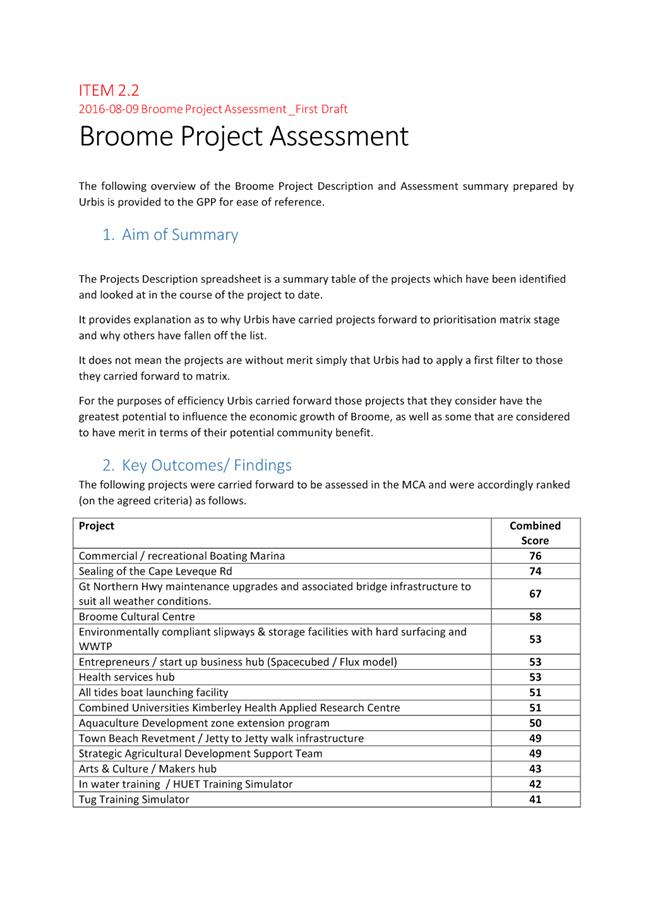
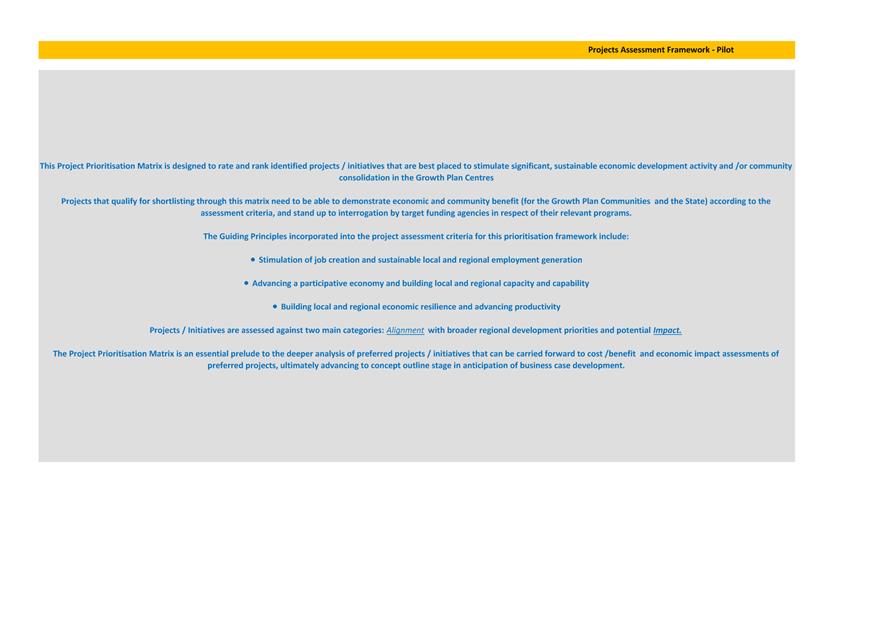
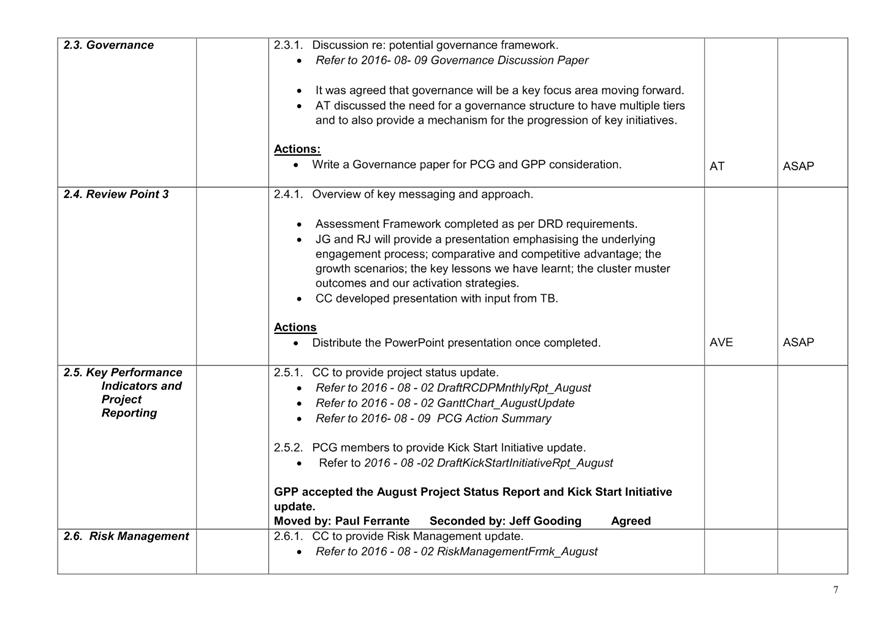
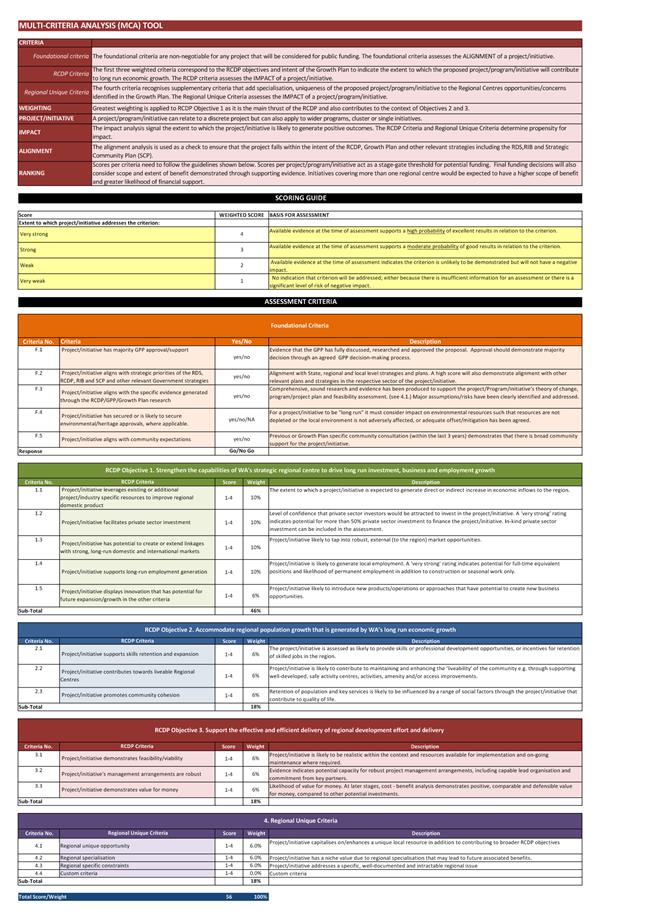
The Project Assessment Matrix
developed by Urbis was used by the Department of Regional Development (DRD)
to develop a multi-criteria analysis (MCA) tool for all the growth plans
being prepared across the State (see Attachment 3 to this report).
Based on the proposed change in approach for the Broome Growth Plan the Matrix
and MCA tool are no longer required to assess and rank projects. Further,
the business case/concept plan template prepared by Urbis are no longer
required, as these were to be used for a small number of the top ranking
projects.
Therefore, it is proposed that the
Matrix, MCA tool and the template business case/concept plan be included in the
Growth Plan as an example of tools that can be used to assess projects as part
of the implementation of the Growth Plan.
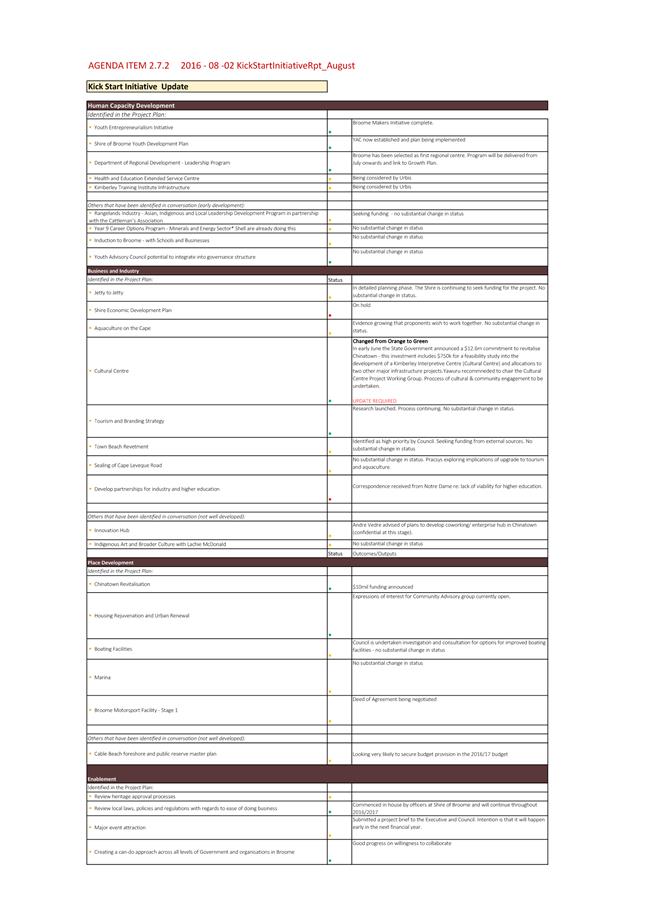
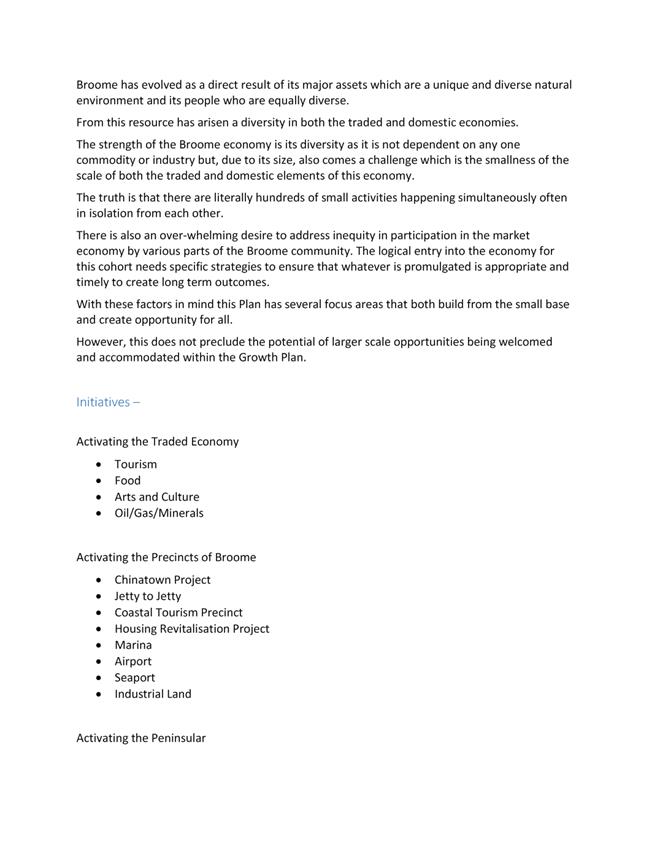
Initiative areas
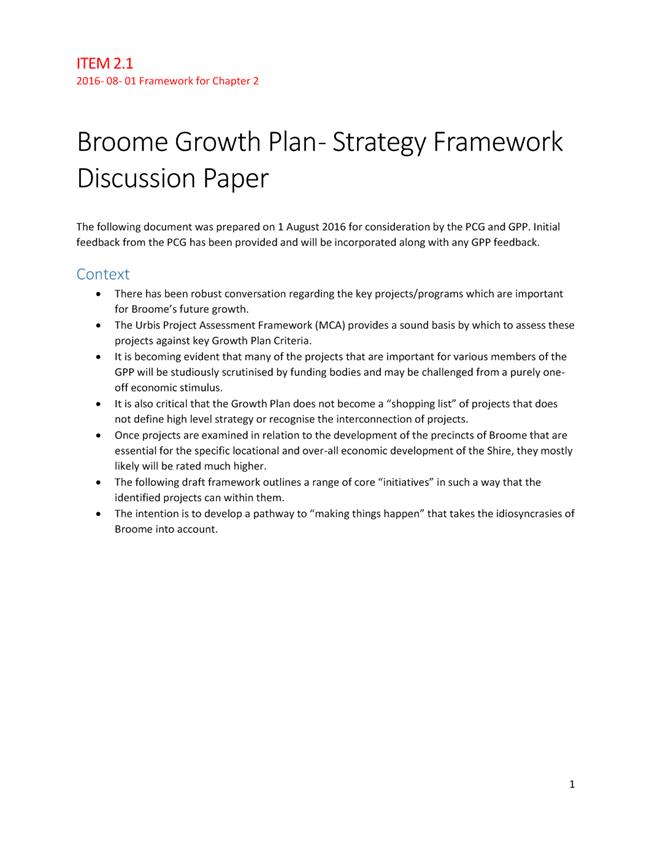
Creating Communities have developed
initiative areas for the Growth Plan. A copy of the discussion paper
prepared by Creating Communities providing an outline of the initiative areas
is shown in Attachment 4 to this report.
In summary, the initiative areas that
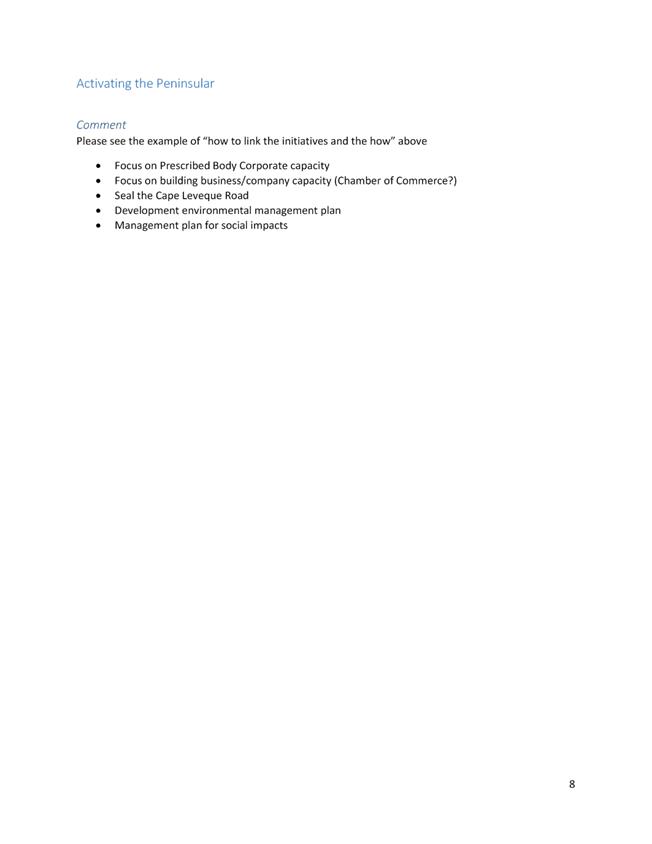
have been developed for the Growth Plan are as follows:
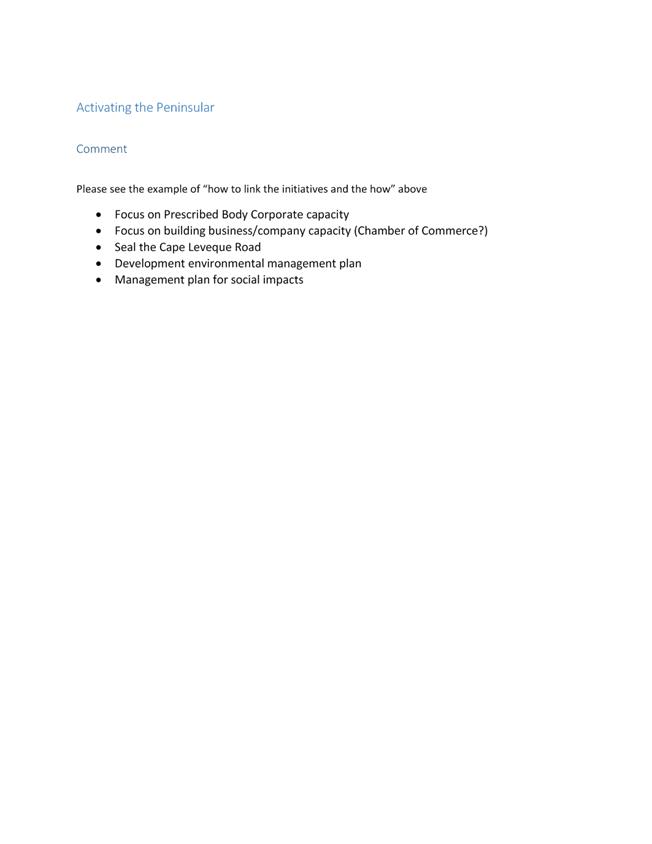
· Activating
the Peninsula - based around the sealing Cape Leveque Road but also involving
the following:
o providing assistance to small businesses
on the Peninsula, particularly those in the tourism industry;
o addressing challenges such as land
tenure, environmental approvals, etc;
o managing of social and environmental
impacts;
o identification of and addressing
infrastructure requirements; and
o developing the skills of residents
so they can benefit.
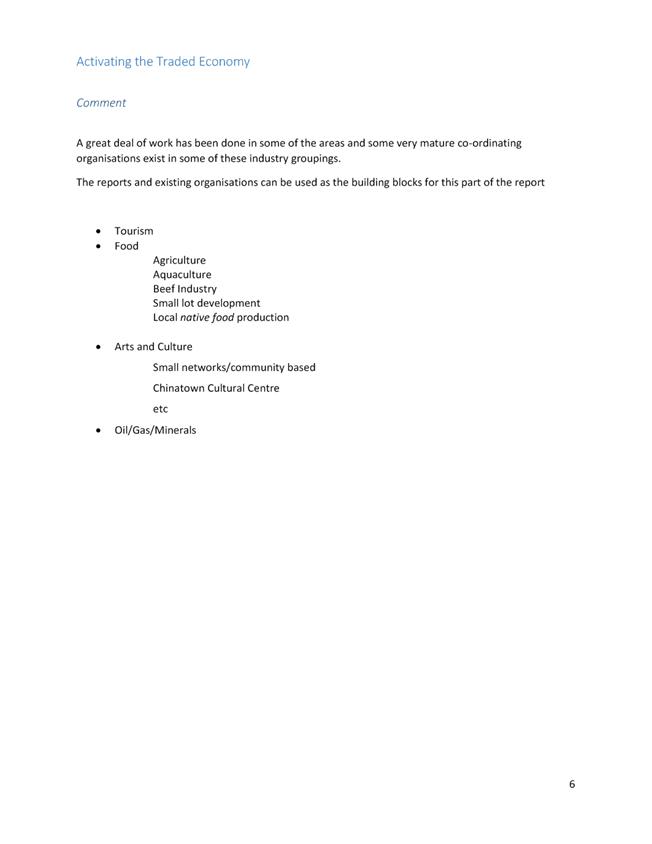
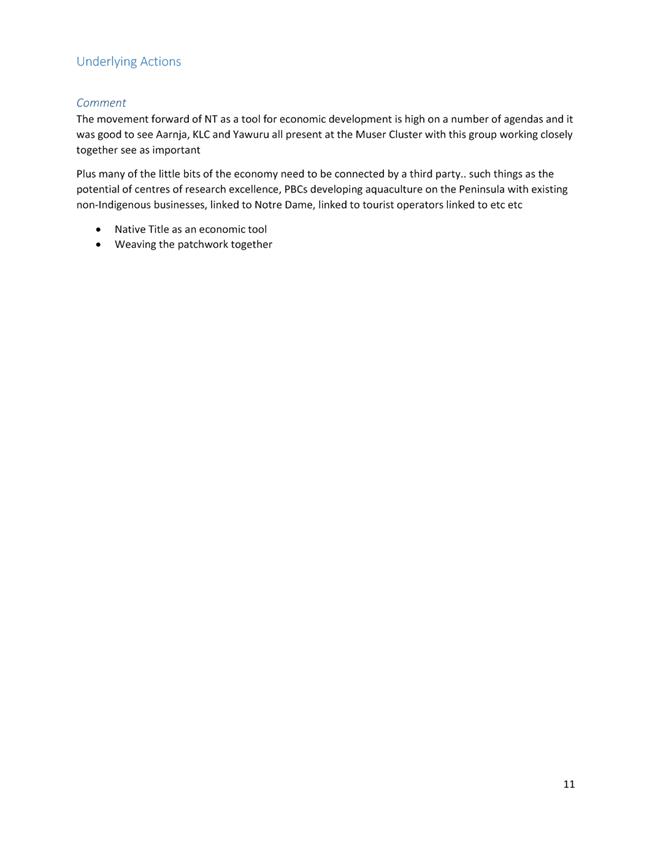
· Activating
the Traded Economy – relates to investment in the existing industry
clusters which are as follows:
o Tourism;
o Food (agriculture, aquaculture, beef
industry, local native food production, etc);
o Arts and culture; and
o Oil/gas/minerals.
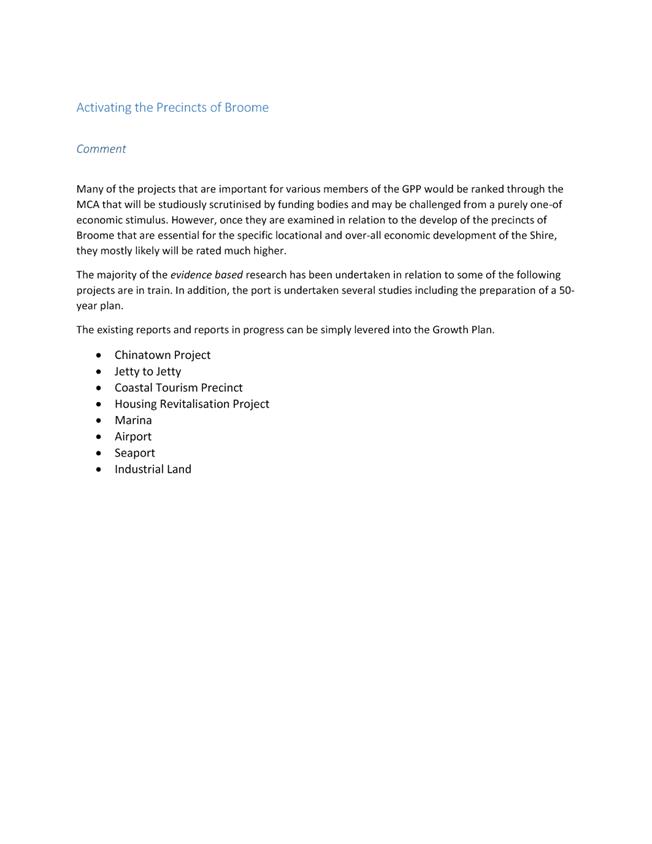
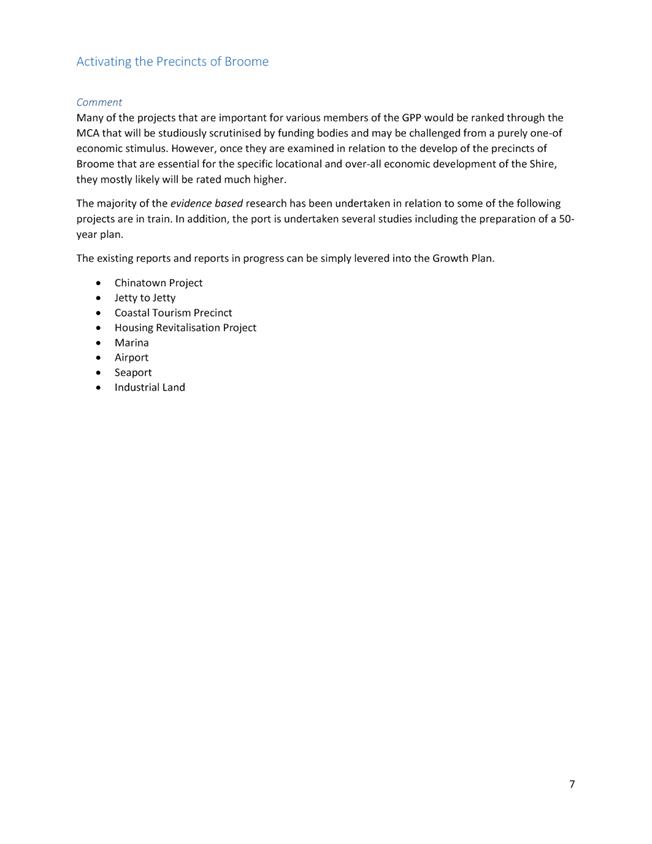
· Activating
the Precincts of Broome – relates to the development of specific
locations as well as the overall development of the Shire and includes:
o Chinatown revitalisation project;
o Jetty to Jetty project;
o Urban renewal project;
o Tourism precinct improvements;
o Marina;
o Airport improvements;
o Sea port improvements; and
o Development of industrial land.
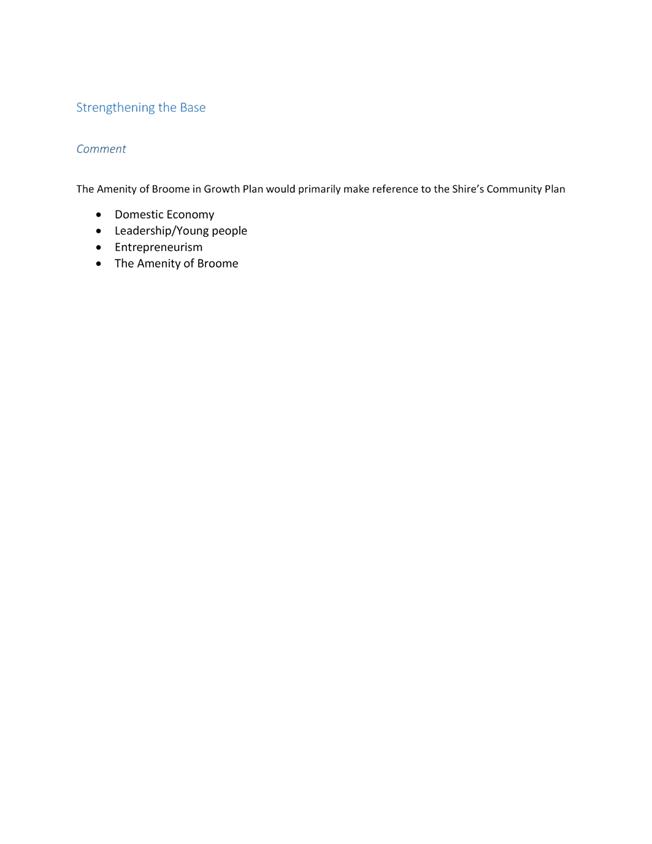
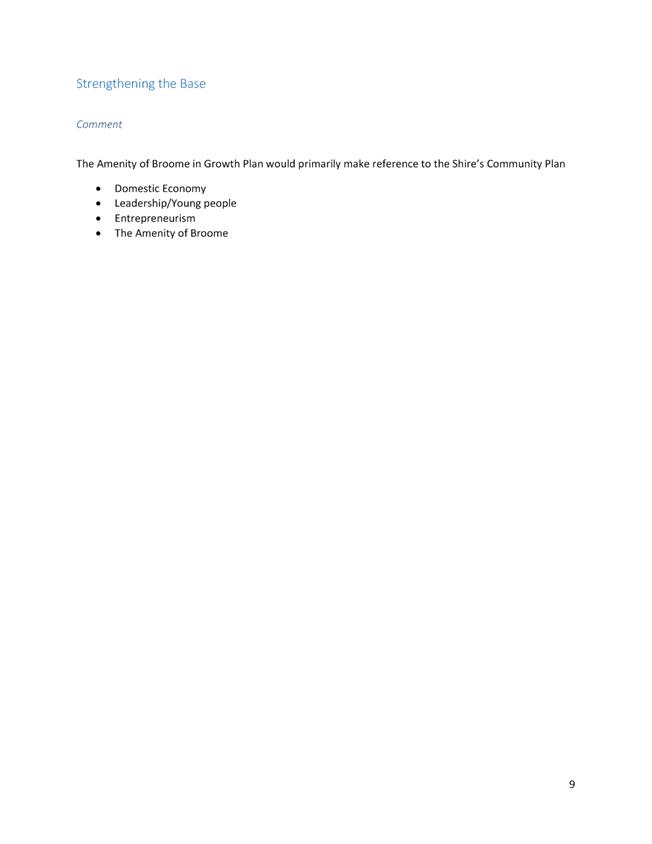
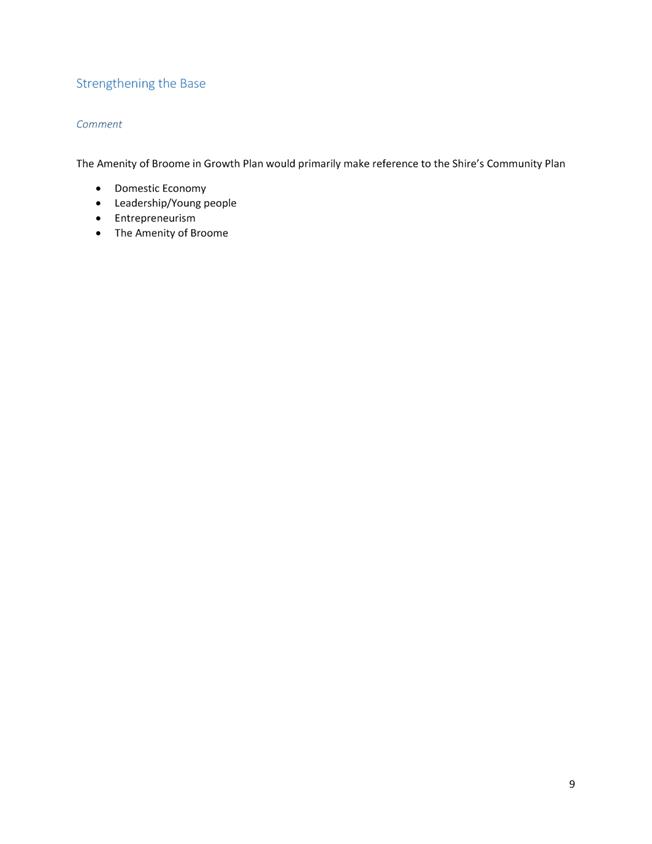
· Strengthening
the base – relates to:
o Improving and ensuring the amenity of
Broome;
o Enhancing the domestic economy;
o Encouraging development of local
leadership and young people; and
o Encouraging entrepreneurism.
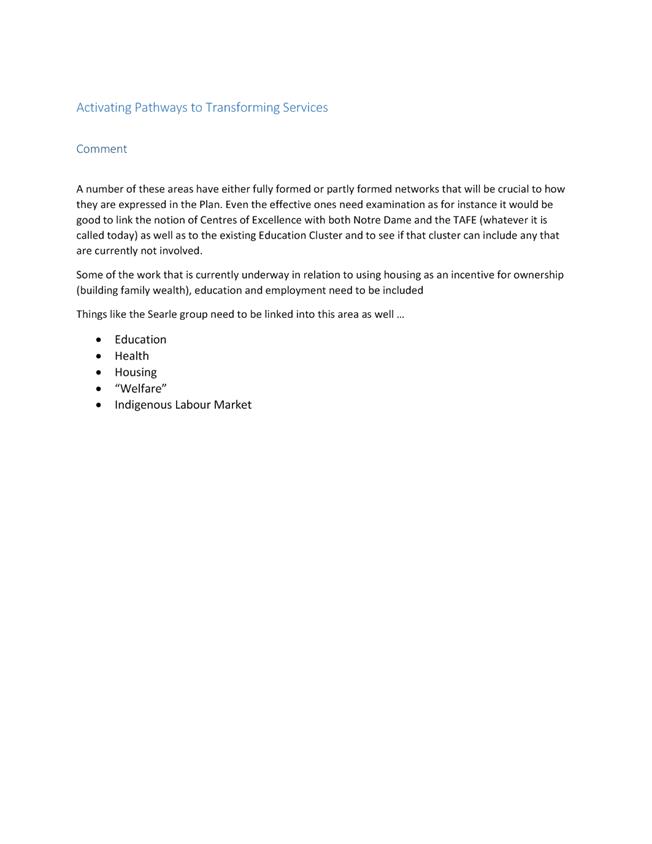
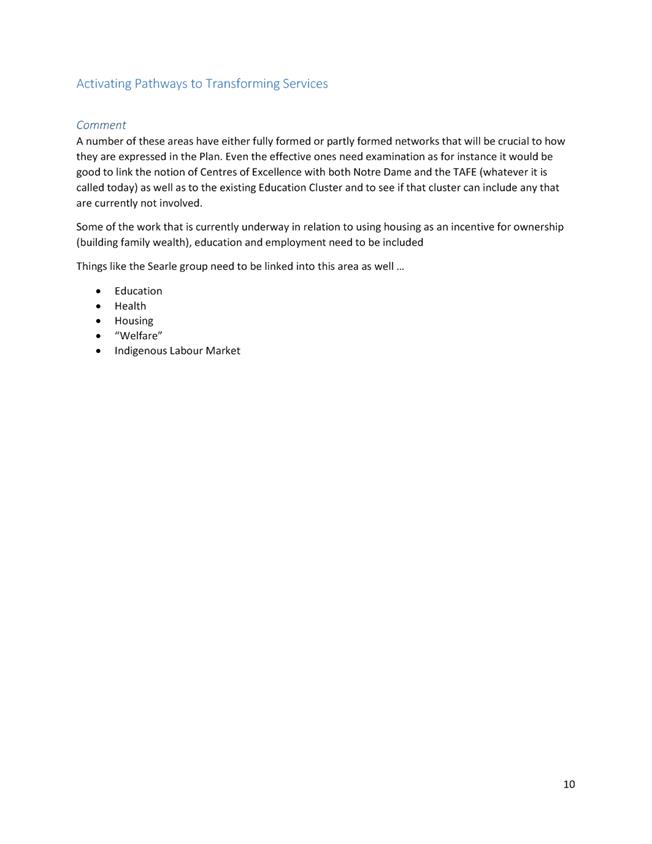
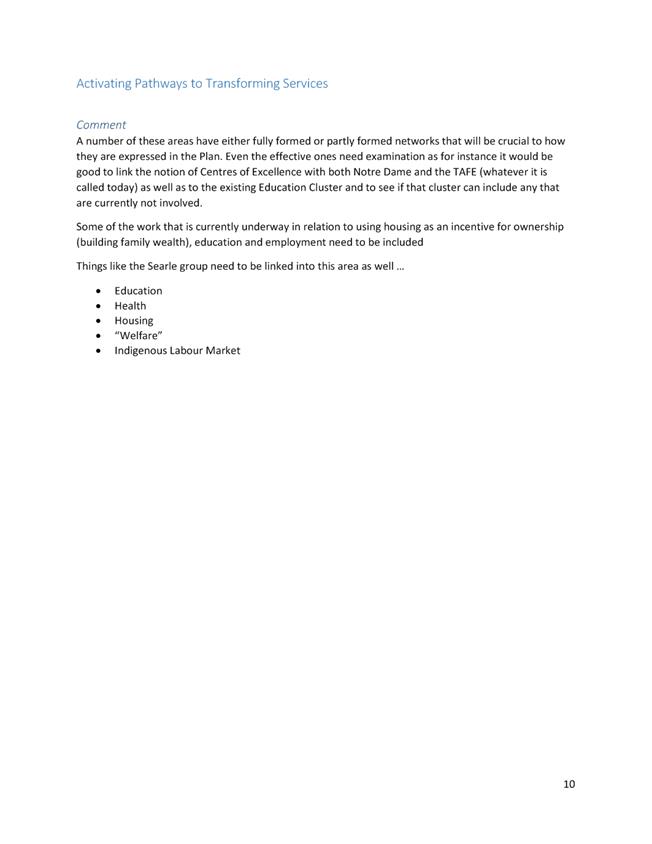
· Activating
Pathways to Transforming Services – includes initiatives to improve
existing services and transition those not engaged in the mainstream economy to
participation in the mainstream economy, with a focus on the following:
o Education;
o Health;
o Housing;
o Welfare dependency; and
o The indigenous labour market.
Some variations in the wording used
for the initiatives above are starting to develop as work on the Growth Plan
progresses, but the substance of the initiative areas remains the same.
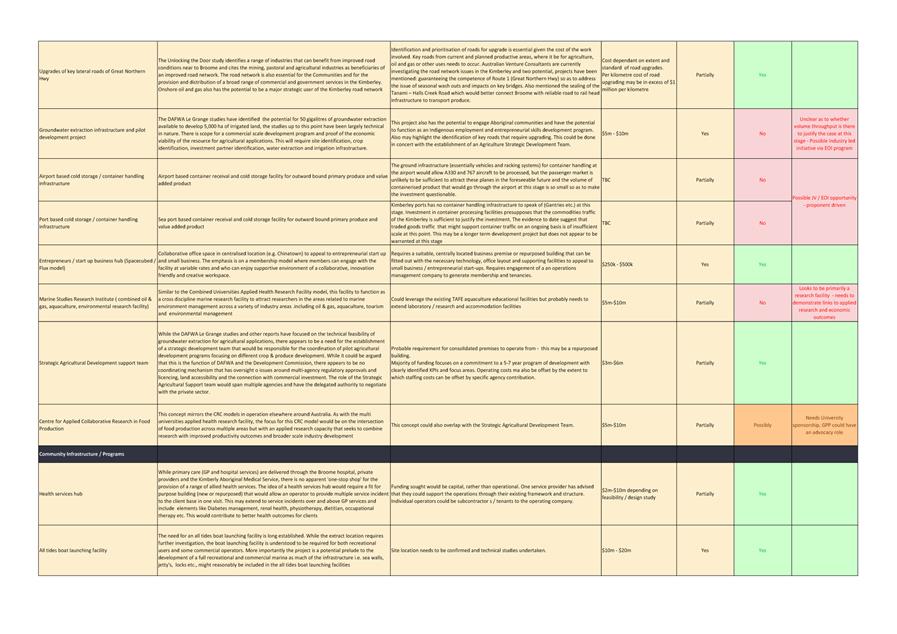
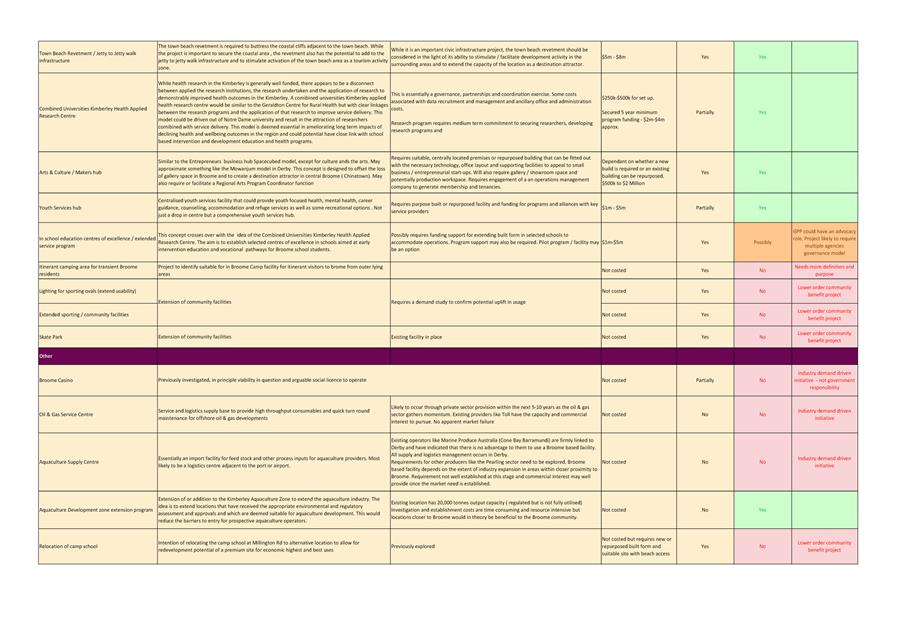
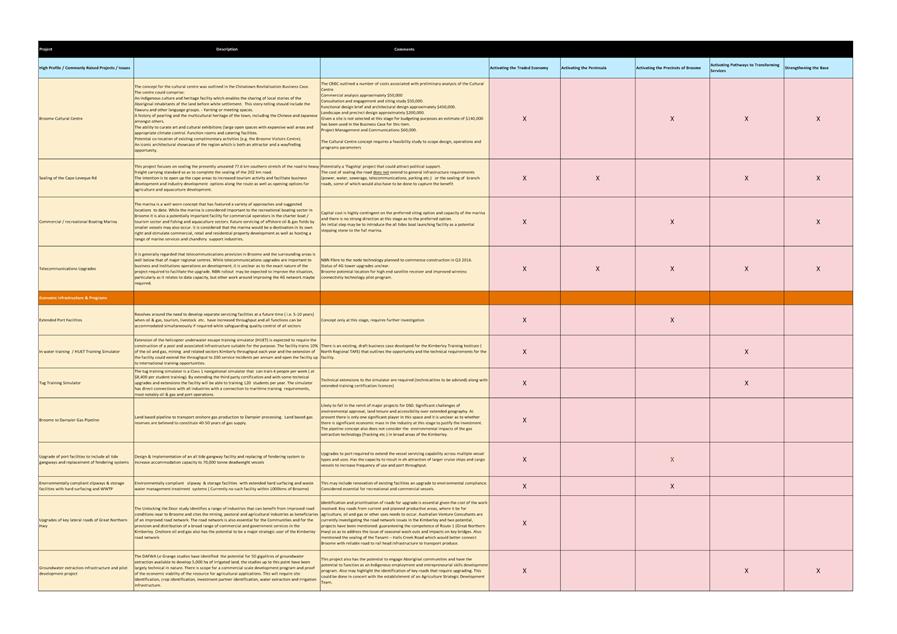
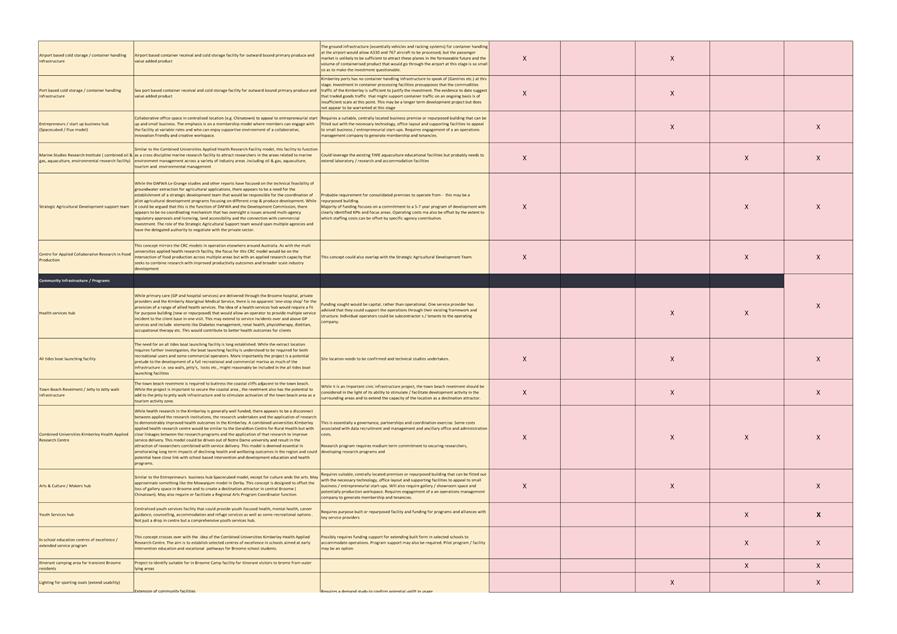
The PCG has gone through the process
of linking projects on the project list with these initiative areas. The resulting
list of projects indicating which initiative areas they are linked to is shown
as Attachment 5 to this report. Note that the additional projects
and feedback provided to EDAC and Council in relation to the project list has
been incorporated in the list of projects shown in Attachment 5.
The proposed linking of projects on
the project list with the initiative areas was discussed at a workshop with
Council on 8 September 2016. Discussion and feedback at this workshop
identified that the following projects should, in addition to what is shown in Attachment
5, be linked to the following initiative areas:
· Broome
Cultural Centre – should also be linked to Activating the Peninsula as
the benefit to the tourism industry generated by the Cultural Centre will
promote visitation to the Peninsula.
· Environmentally
compliant slipways & storage facilities with hard surfacing and WWTP
– should also be linked to Activating the Peninsula as it will benefit
industry on the Peninsula.
· Improved
aged care facilities and infrastructure – should also be linked to
Activating Pathways to Transforming Services as it is linked to health
services.
· Facilitating
flights between Asia and Broome, and between East Coast destinations and Broome
– should also be linked to Activating the Peninsula as it will benefit
the tourism industry and result in increased visitation to the Peninsula.
In addition, based on discussion and
feedback at the Council workshop, it is recommended that the Broome Casino
project be removed from the list as it is recognised as not being a viable
project. Also, a Rehabilitation Centre providing in-patient treatment for
persons addicted to drugs and alcohol should be included on the list. The
Rehabilitation Centre project should be linked to the Activating Pathways to
Transforming Services initiative area.
Therefore, it is recommended that
EDAC recommend to Council that it endorse the linking of the initiative areas
to the projects on the project list, subject to the changes outlined above.
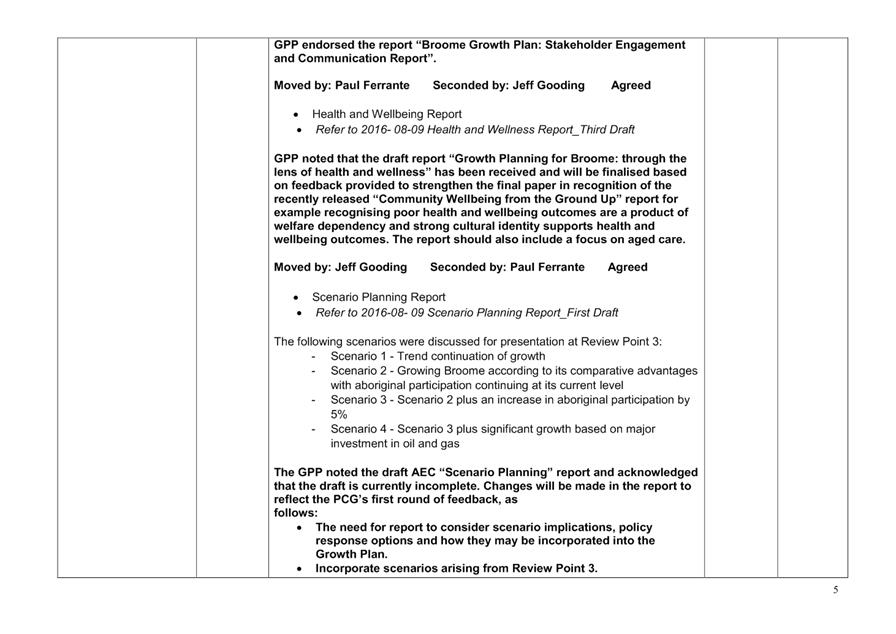
Sub-consultancy reports
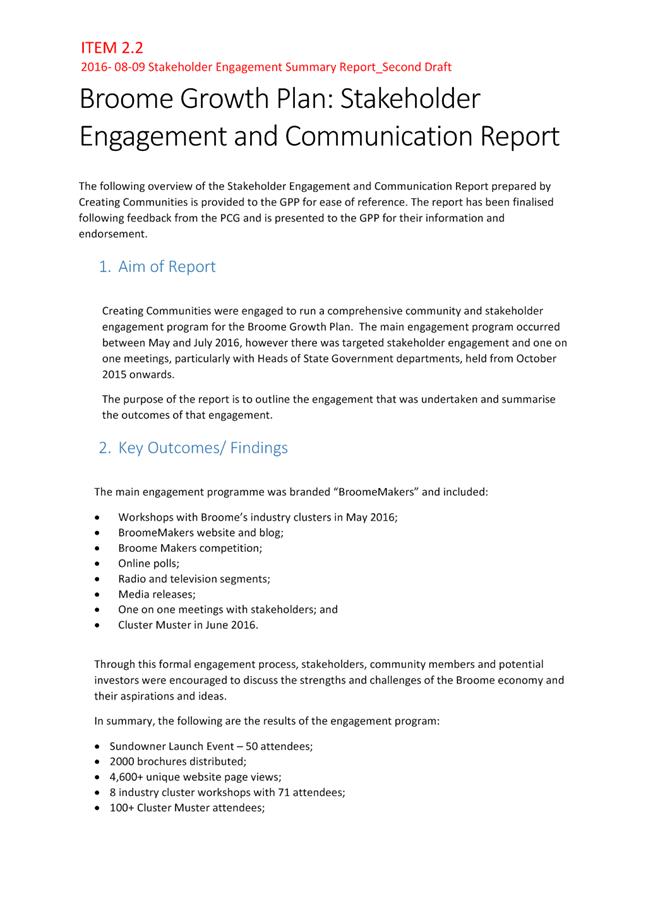
Sub-consultants were engaged for the
Broome Growth Plan to provide specific information on their area of expertise,
as follows:
The following sub-consultants were
engaged for the project:
· Urbis
– economic analysis and project prioritisation and assessment (see
discussion above);
· GHD –
infrastructure;
· Marella
Health Consulting – health and wellbeing;
· RPS -
Environment; and
· Carpe Diem
Consulting - Education and training.
No work has yet been provided by
Carpe Diem Consulting as part of the education and training
sub-consultancy. An update on the status of the other sub-consultancies,
and the sub-consultancy work being undertaken by AEC Group and ALCES, is
provided below.
Sub-consultancy reports –
Urbis
As discussed above, it is no longer
intended that Urbis will undertake an assessment of individual projects and
develop business cases/concept plans for high scoring projects. Instead,
the Project Assessment Matrix and template business case/concept plan developed
by Urbis is intended to be included in the Growth Plan as a tool for the
implementation of the Growth Plan.
Instead of going through this process
for specific projects, it is now intended that Urbis will prepare an economic
rationale or cost benefit analysis for certain initiative areas or strategies
within initiative areas. At present, the following areas/strategies are
intended to be subject to this analysis:
· Activating
the Peninsula (initiative area – Activating the Peninsula);
· Expanding
aquaculture production (initiative area – Activating the Traded Economy);
· Capturing
and engaging Aboriginal capital in economic development (initiative area
– Activating Pathways to Transforming Services).
Shire officers recommended that the
“expanding aquaculture production” economic rationale be expanded
to include agriculture. Advice was provided in response that this would
make the area too broad for the economic rationale to be prepared by
Urbis. Overall, it is considered that preparing an economic rational for
expanding agriculture production would be more beneficial and appropriate given
that this is a very real and current potential growth industry in the region.
Therefore, it is recommended that the
EDAC recommend that Council support an economic rationale being prepared for
the above subject areas, subject to “Expanding aquaculture
production” being replaced with “Expanding agriculture
production”.
The Broome Economic and Situational
Analysis is still in draft form and waiting on information from the GHD and ALCES
sub-consultancies. In summary, the draft report:
· Provides an
overview of the current status of the Broome economy;
· Makes
recommendations regarding encouraging growth and investment;
· Models the
impact of $20 million investment in industry clusters; and
· Looks at
regional strengths and weaknesses.
Overall, the current draft of the
report is much improved on the earlier draft and provides much more detail that
is specific to Broome. A copy of the current draft of the Broome Economic
and Situational Analysis is included as Attachment 6 to this report.
Sub-consultancy reports –
GHD
GHD released an updated draft of the
infrastructure audit they have undertaken (see Attachment 7 to this
report). This draft is an improvement on the previous draft, but there
are still significant gaps in the information contained in the report.
As discussed in the last report to
EDAC on the Growth Plan, it is intended that on completion of this audit, a
further report will be prepared outlining strategies and making recommendations
in relation to the physical and social infrastructure required to support
Broome’s growth.
A number of meetings have been held
with GHD to seek to ensure this sub-consultancy remains on track as there has
been a lack of visible progress. Both GHD and Urbis have been advised
that they need to work together to ensure their reports are aligned, as
follows:
· Urbis is to
identify industries and key investment areas to deliver growth; and
· GHD is to
identify key infrastructure required to support those industries/investment
areas.
Sub-consultancy reports –
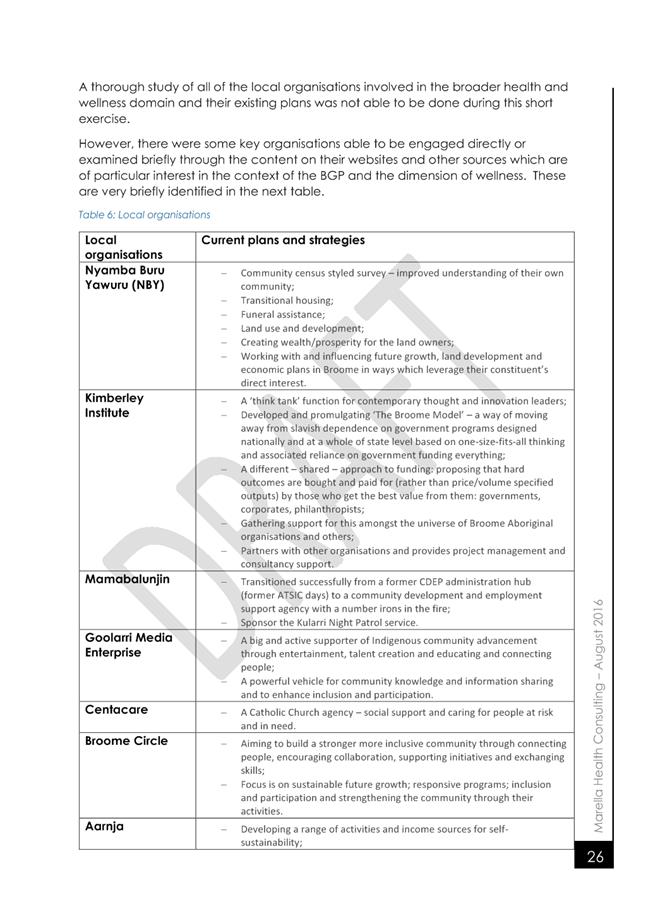
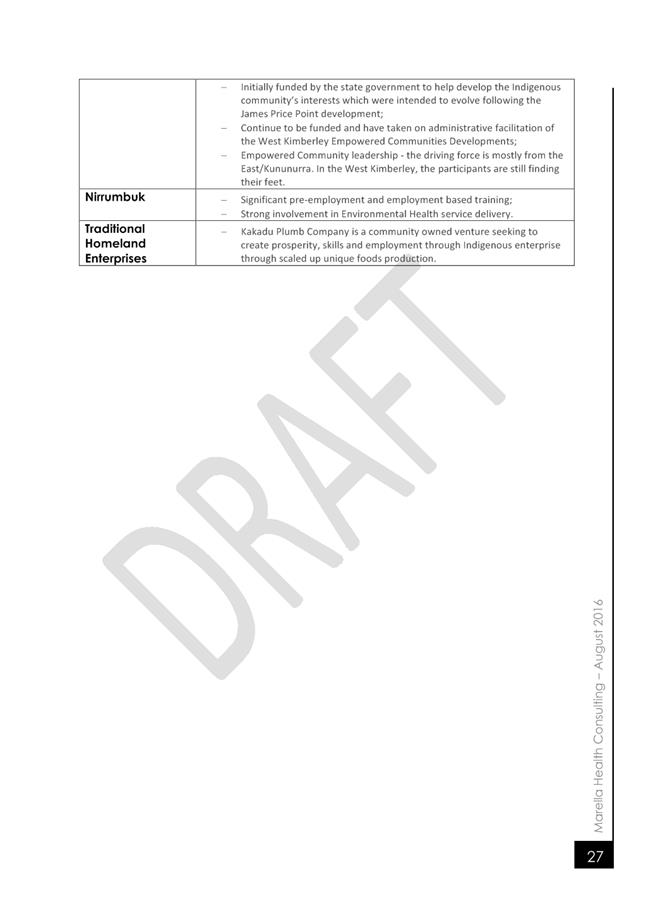
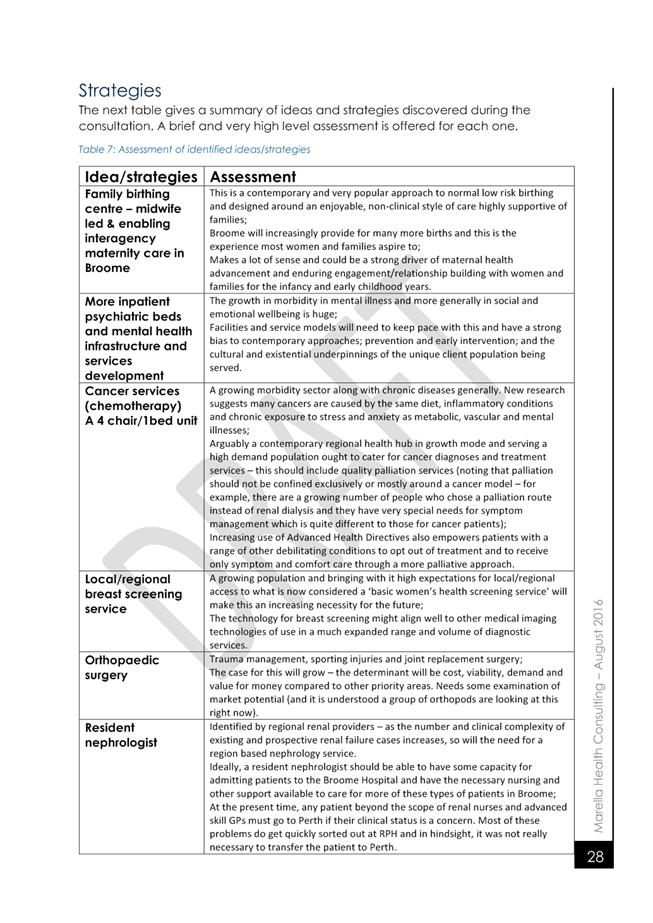
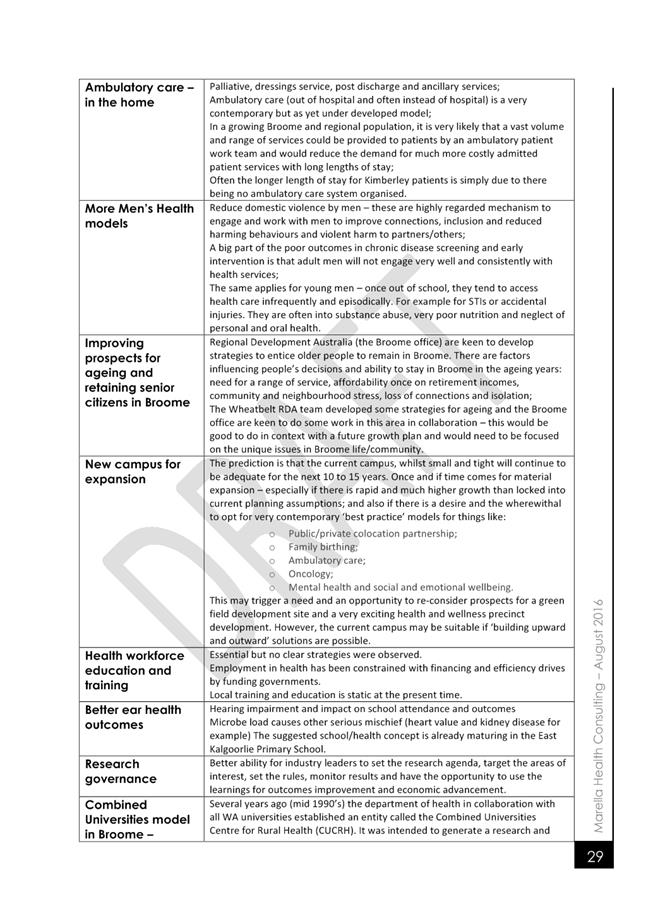
Marella Health Consulting
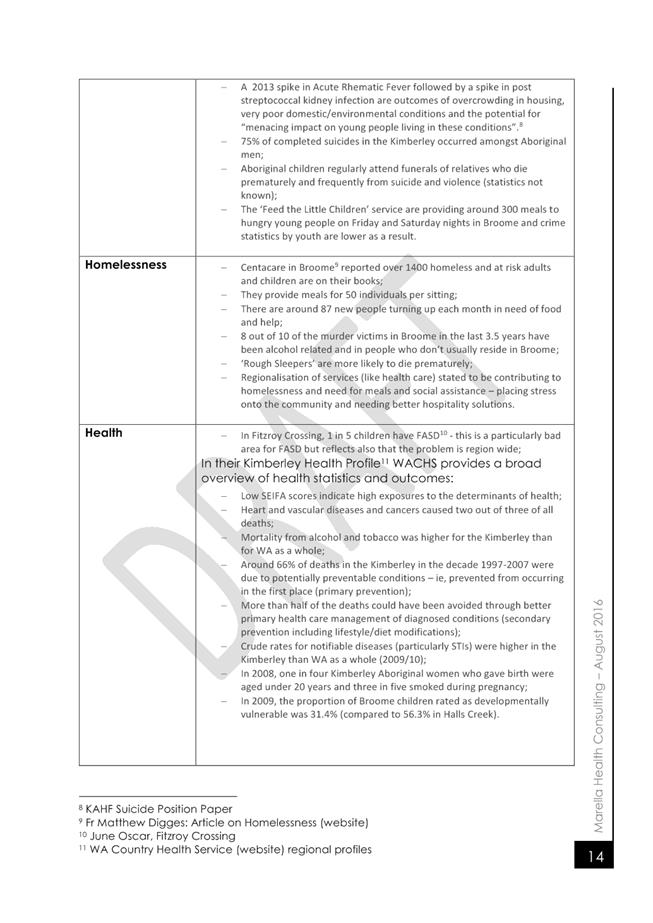
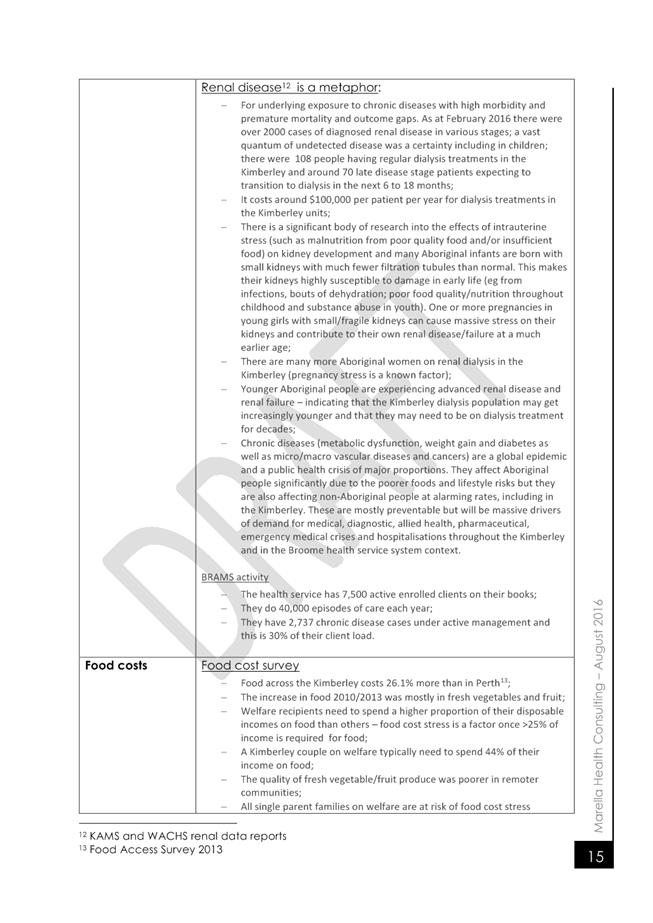
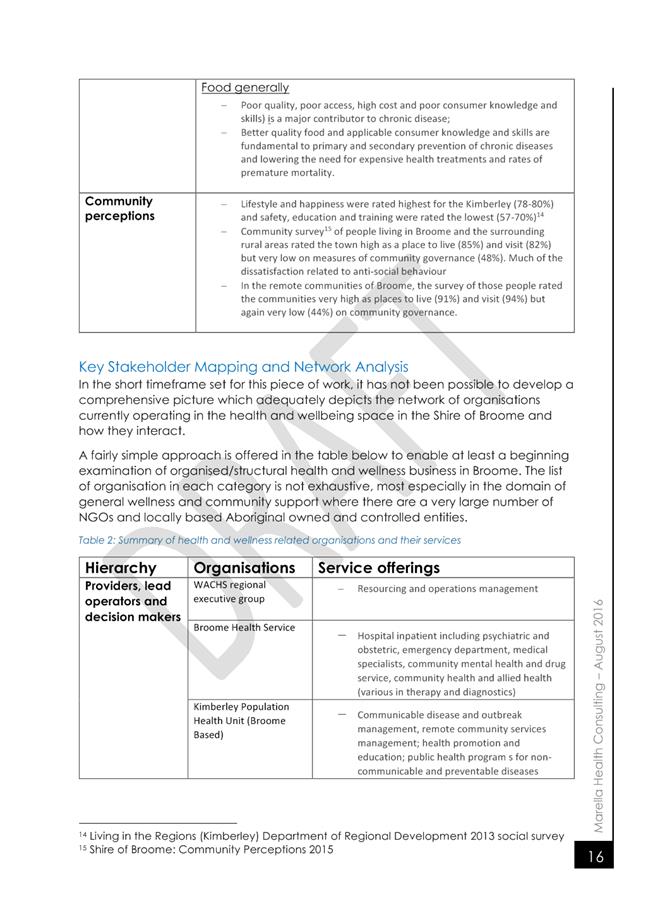
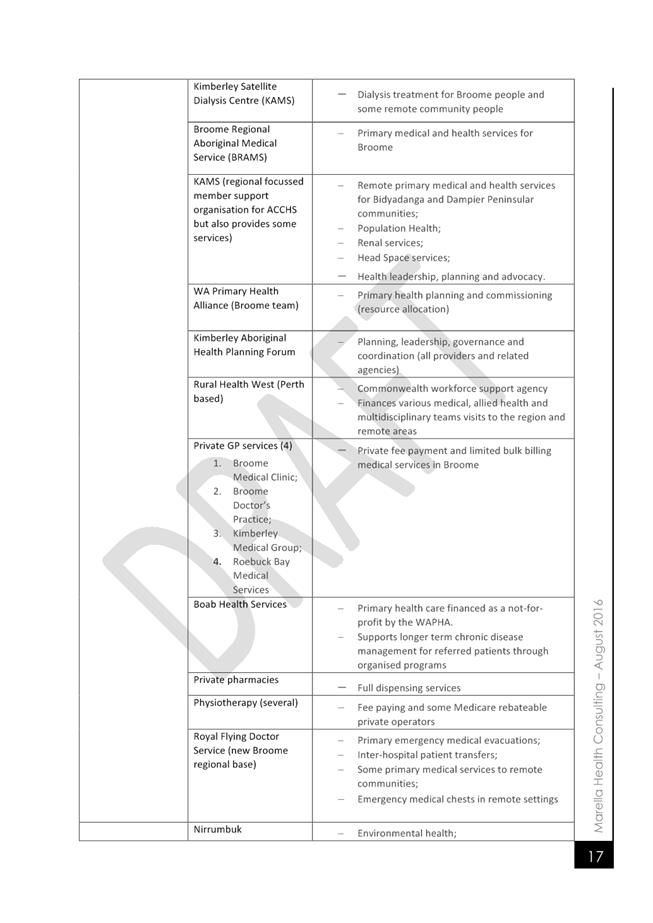
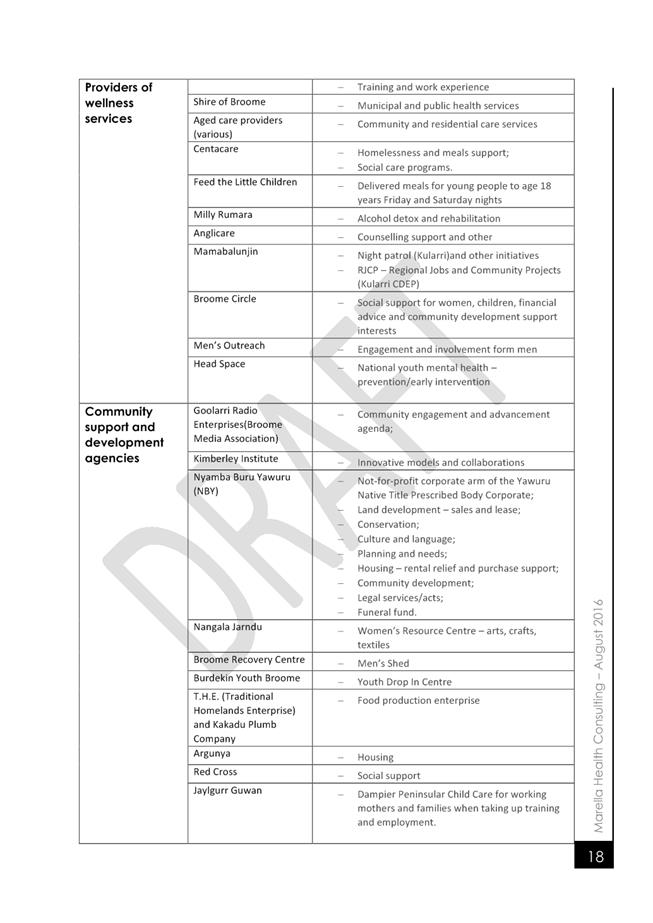
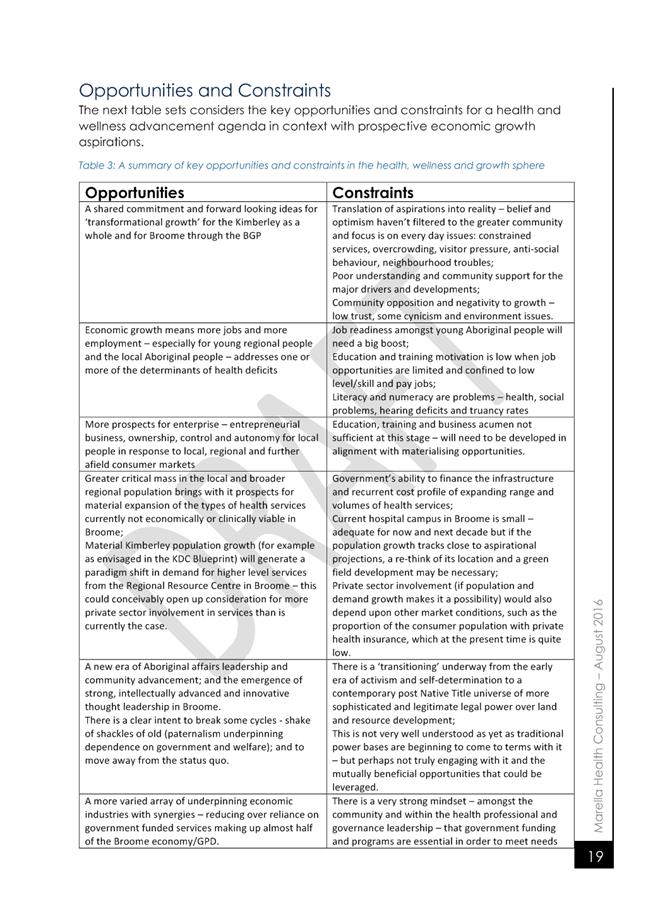
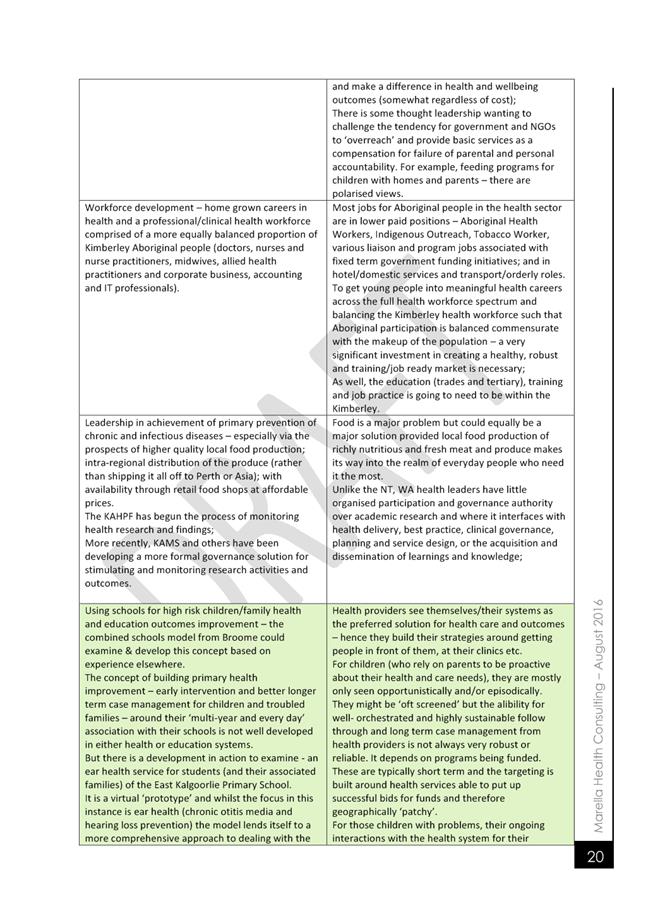
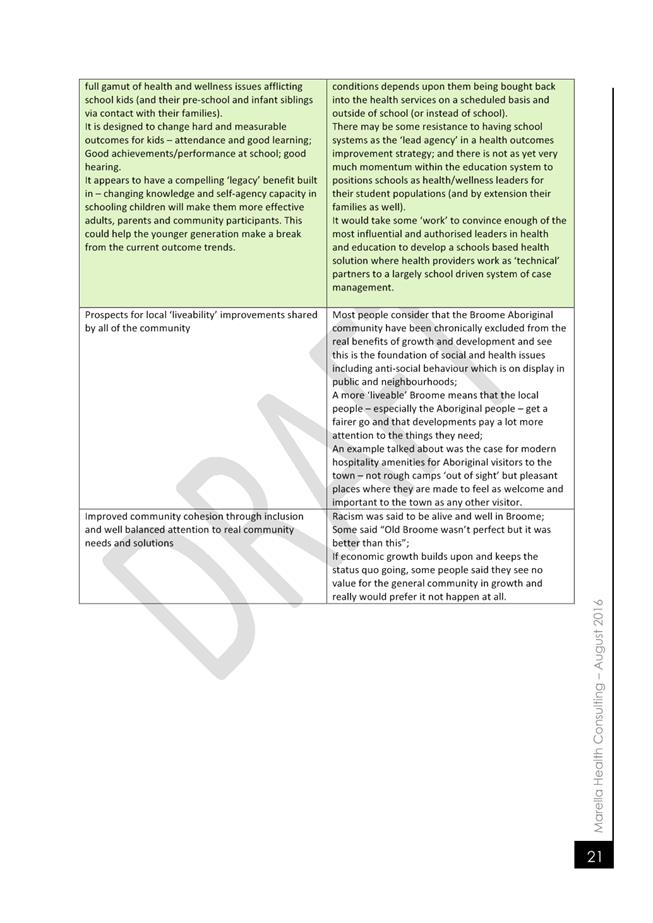
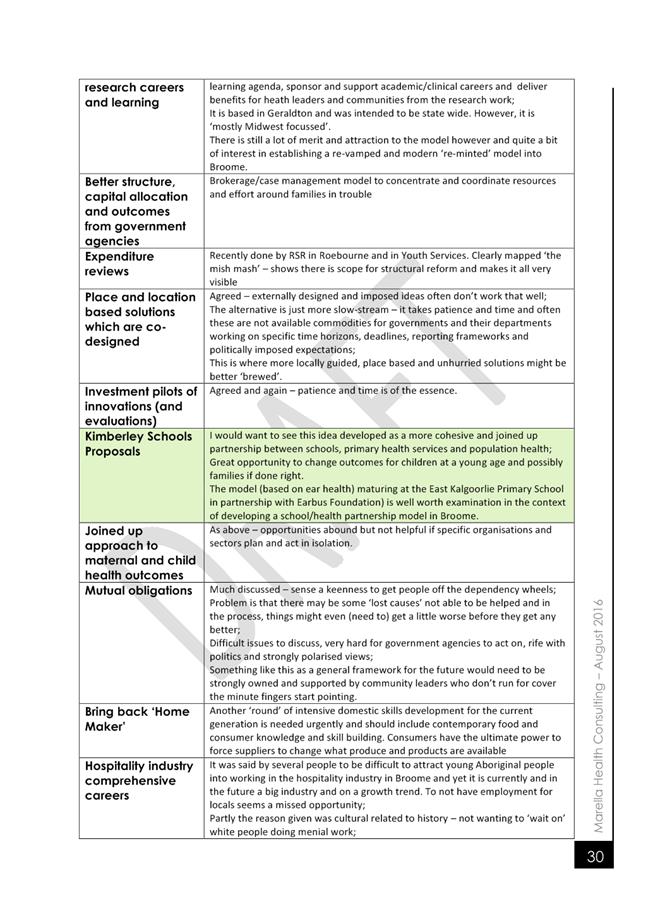
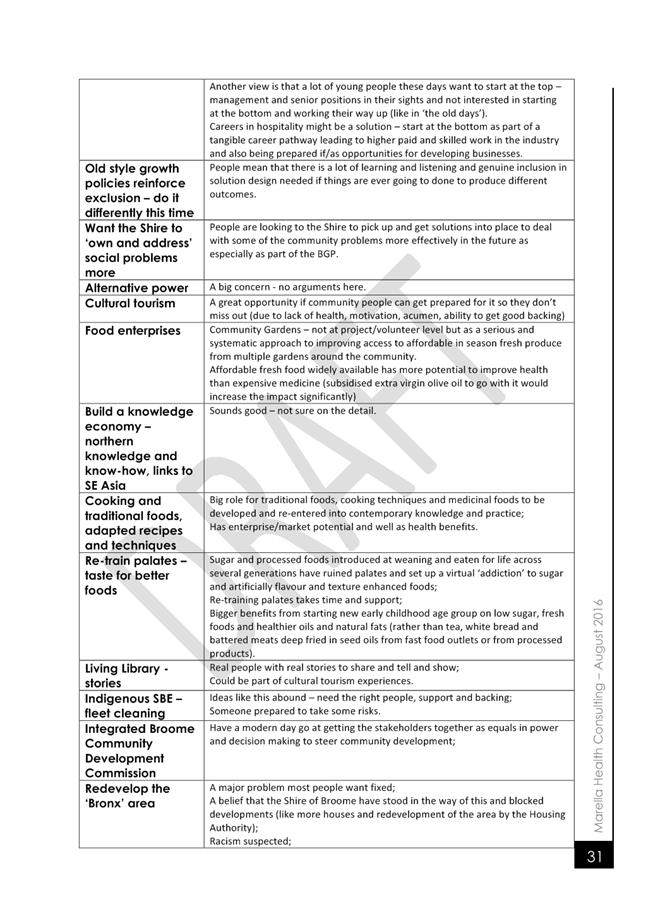
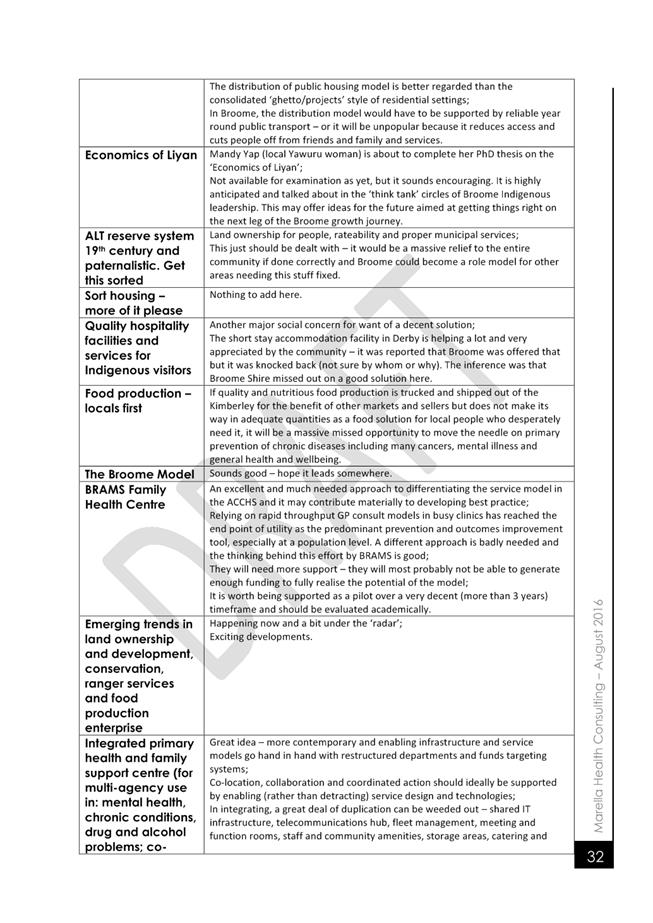
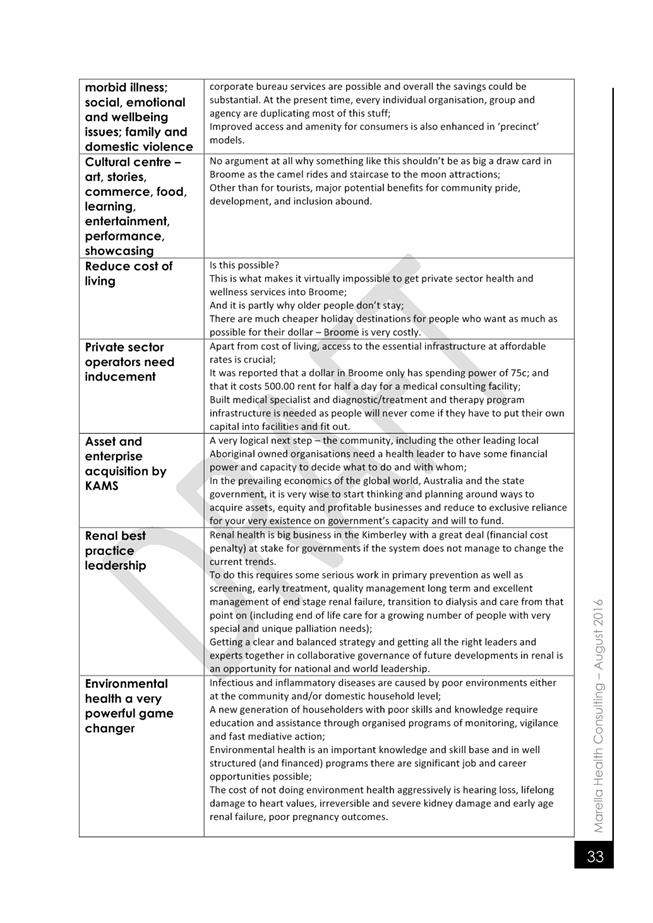
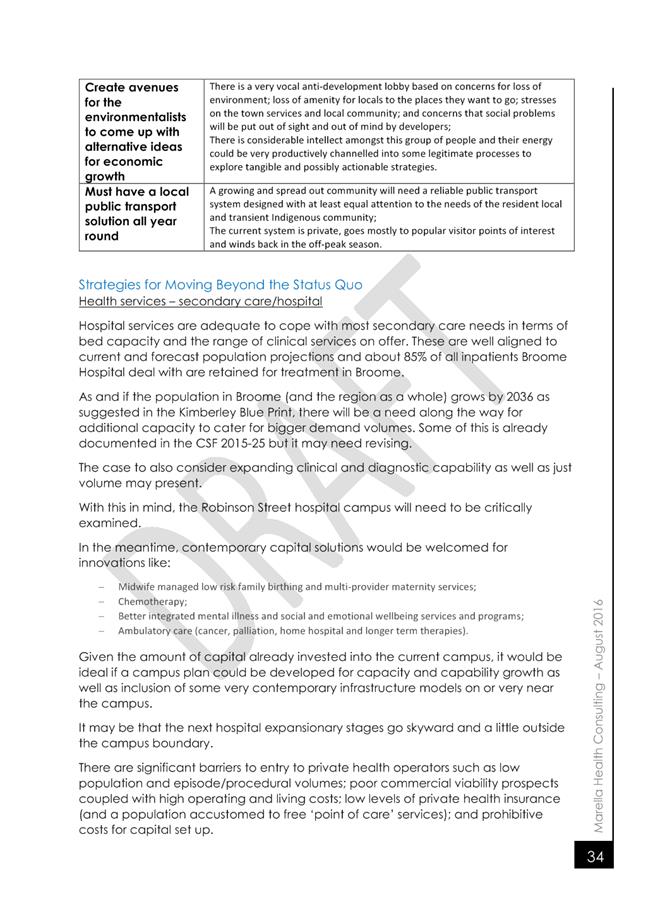
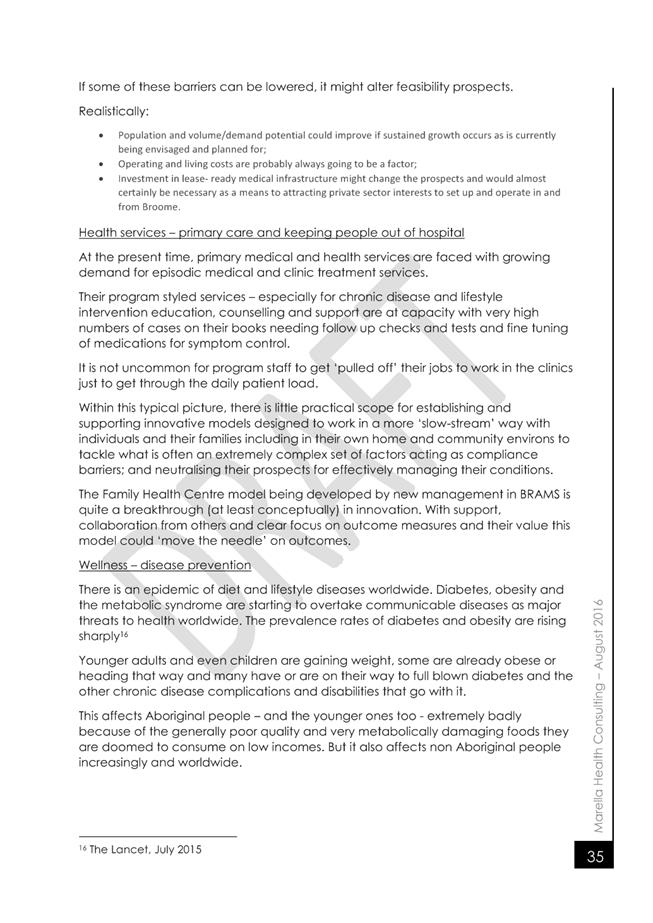
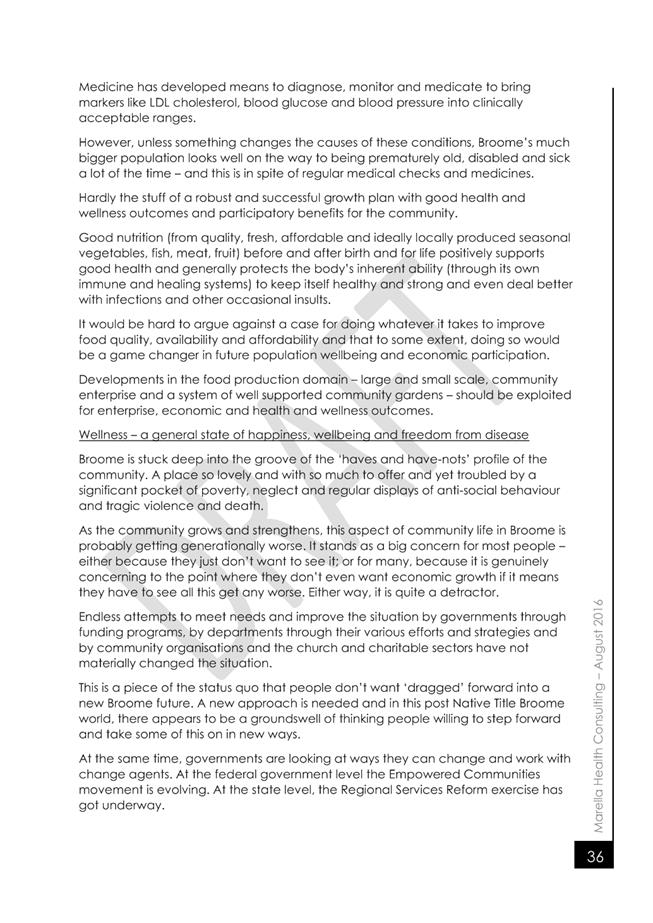
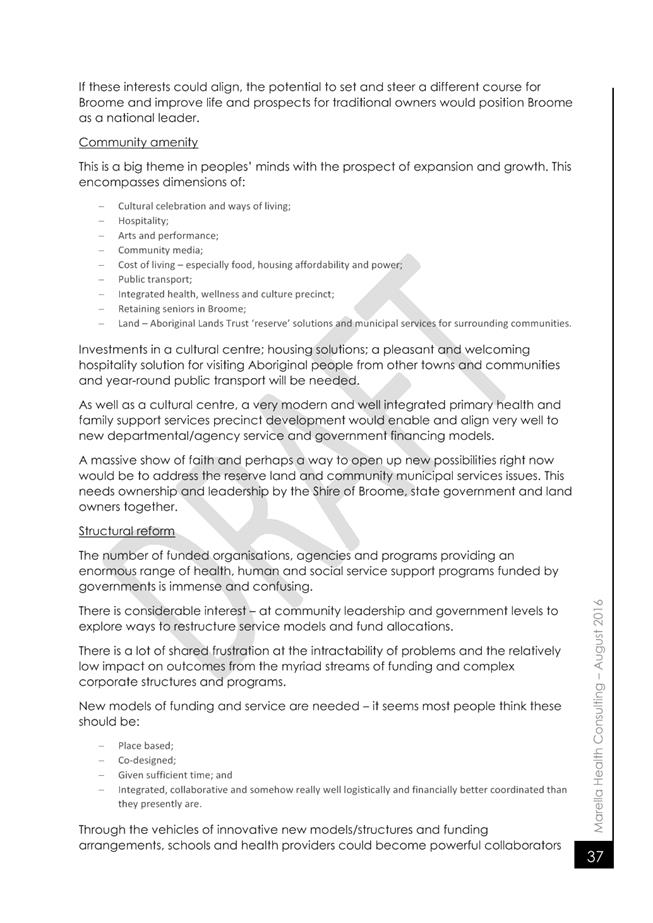
An updated draft of the health and
wellbeing report by Marella Health Consulting has been provided and is shown as
Attachment 8 to this report. The report is considered useful in
informing the Growth Plan by providing a good overview of current issues,
infrastructure and services. It also outlines the elements required to
support the future growth of Broome.
In addition, this updated draft
incorporates the following recent feedback from the PCG and GPP:
· The report
needs to link moving beyond welfare dependence with health and wellbeing;
· The report
needs to link the “Community Wellbeing from the Ground Up: A Yawuru
Example” report by Mandy Yap and Eunice Yu;
· Consideration
needs to be given to strategies aimed at transformation and driving economic
benefit;
· There needs
to be an assessment/inclusion of lack of current aged care provision –
impact on population retention and the need for facilities for both indigenous
and non-indigenous residents;
· Reduce
detail in the report on certain issues to ensure relevance to the growth
planning process; and
· Remove
commentary on matters outside the scope of health and wellbeing.
The key messages from the report are
as follows:
· Aboriginal advancement should be pursued to reduce the number of
lives dependent on welfare and support;
· Structural changes to services and funding are required to reduce
inefficiencies in current funding models;
· Specialist medical, diagnostic and secondary treatment services will
be required as Broome’s population grows;
· Bigger, younger populations expect modern health technologies, eg.
cancer/chemotherapy, diagnostics (eg. MRI and breast screening), palliative
care, ambulatory/in-home hospital treatment, midwife managed low risk birthing,
mental health and social, emotional wellbeing and healing services;
· Healthy ageing and aged care needs attention to attract and retain
more productive retirement aged people to continue living in Broome;
· Health and schools should work together in a collaboration to
leverage the relationship children and their families have with schools;
· Synergies should be formed between industry and education and
training;
· Address health concerns which detract from economic participation
and benefits;
· Leverage government reforms in the area of health and wellbeing;
· Focus on better quality, affordable food for Broome residents;
· There needs to be community led action on health and better
prevention measures;
· Build awareness, optimism and motivation;
· Enhance Broome’s brand as a welcoming and accommodative
regional services and visitor destination centre (eg. through the BASSA).
The report states that health and
wellbeing measures need to:
· Increase employment, business and material prosperity prospects so
people can afford a comfortable and satisfying lifestyle in a modern day world,
resulting in greater economic participation, independence, less reliance on
welfare incomes and social support services;
· Create and leverage intellectual and technical knowledge and
industry know-how;
· Help advance community cohesion, deeper mutual respect and quality
of living, improving sporting and leisure amenities; social and artistic
activities; and a reality of friendly and safe neighborhoods;
· Enable a celebration of the culture of the Indigenous people as well
as that of Broome’s own history which is able to be shared with others;
· Enable freedom to enjoy access to traditional and contemporary
places, lifestyles, pleasures and cultural practices;
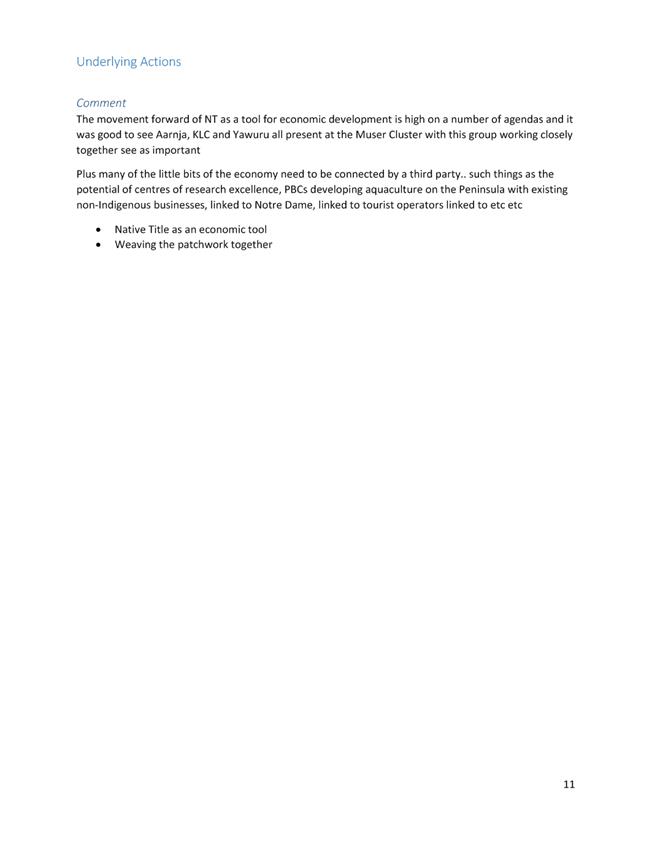
· Leverage the potential of Native Title settlements – the
people, ideas, aspirations and possibilities; their ideas for land development;
their influence; and their financial, intellectual and cultural resources;
· Make Broome an attractive and affordable place for people to live as
they grow older;
· Cater for people’s care needs as advanced age and/or related
disabilities influence their decisions to stay in Broome or return to larger
centres or cities;
· Cater for people’s physical, mental, family/birthing,
community and end of life care needs through an adequate range of general and
specialist medical, diagnostic and therapy technologies and services;
· Reduce public health hazards; early onset preventable diseases and
the high cost/low productivity consequences of the associated disability
burden.
Some final feedback was provided by
Shire officers on the wording of some sections in the report. The report
is intended to be finalised based on this final feedback.
Sub-consultancy reports –
AEC Group
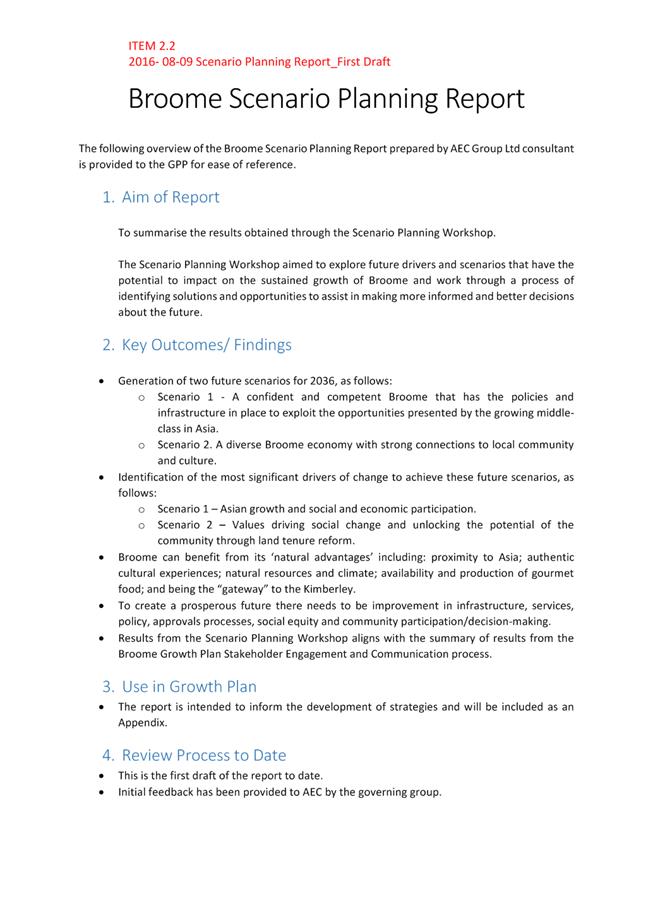
The scenario planning report prepared
by AEC Group has not been updated since the last EDAC meeting. A copy of
the current draft of the report is shown in Attachment 9 to this report.
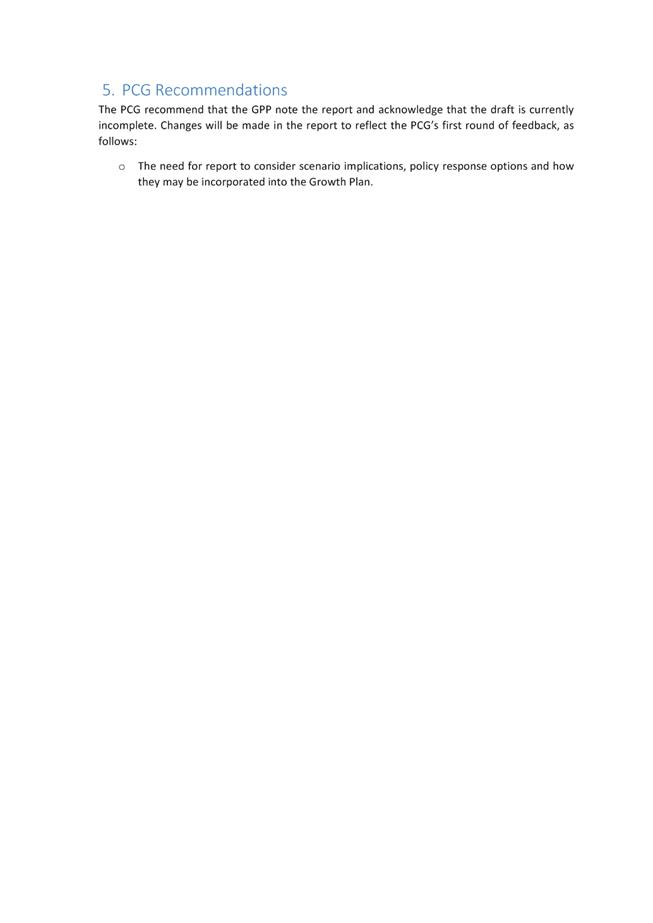
Work has been undertaken by Creating
Communities and the PCG on scenarios upon which the Growth Plan should be based
(this is discussed further below). AEC Group have been asked to consider
these scenarios in their report, based on the outcomes of the scenario planning
workshop. AEC Group have been asked to use this to develop high level
policy response options.
It should be noted that the scenario
planning report is a program level requirement for the Growth Plan, which means
that it is a requirement imposed on all Growth Plans by DRD.
Therefore, the current draft of the scenario planning report needs to be
enhanced to meet program level objectives for the Growth Plan.
Sub-consultancy reports –
RPS
RPS have gathered available and
relevant environmental and boundary data for the Shire of Broome at a fine
grain level and this information has been used to develop a GIS database.
RPS will liaise with ALCES to ensure the data is compatible for use by them
(the ALCES work is discussed further below).
Weightings have been applied to
different datasets for consideration, identifying whether the mapped
environmental data is an extreme, high, medium or low constraint.
The next stage of this
sub-consultancy is to engage with stakeholders to determine if the approach
they are taking is appropriate and if any information has been missed.
RPS then need to develop eight risk/opportunity assessments.
Shire officers provided advice that
some data is missing. Shire officers also recommended that the following
topics could be investigated through the sub-consultancy, with reference to the
relevant initiative area:
· Activating
the Traded Economy - need to balance environmental values with economic
opportunities, i.e. potential impacts of Roebuck Bay Marine Park on operations
of the Port of Broome.
· Activating
the Peninsula:
o Large tracts of land in the
Peninsula are Unallocated Crown Land and increasing visitor pressure will lead
to increased spread of weeds and invasive species, increased litter, illegal
camping etc.
o Addressing the requirements of
the State Planning Policies relating to bushfire and coastal hazards.
o Unmanaged or poorly managed
solid waste disposal and effluent disposal facilities in communities.
· Activating
the Precincts of Broome:
o The Broome Townsite Coastal
Vulnerability Study shows that coastline is at risk of coastal hazards. The
Broome Townsite Coastal Hazard Risk Management Adaptation Plan is being
developed and may identify coastal protection works requiring external funding.
o Broome’s stormwater
management system relies on discharge into receiving bodies such as Roebuck
Bay. Further controls on this may impact on future development.
Sub-consultancy reports –
ALCES
The requirement for this
sub-consultancy arose at a program level. ALCES have developed a GIS tool
which collates existing data sources on land characteristics and
constraints. Different scenarios can be simulated through the GIS tool,
such as showing the effect on the urban extent of Broome under different
population growth scenarios.
At this stage, the work of ALCES for
the Broome Growth Plan has not been released.
Other inputs to the Growth Plan
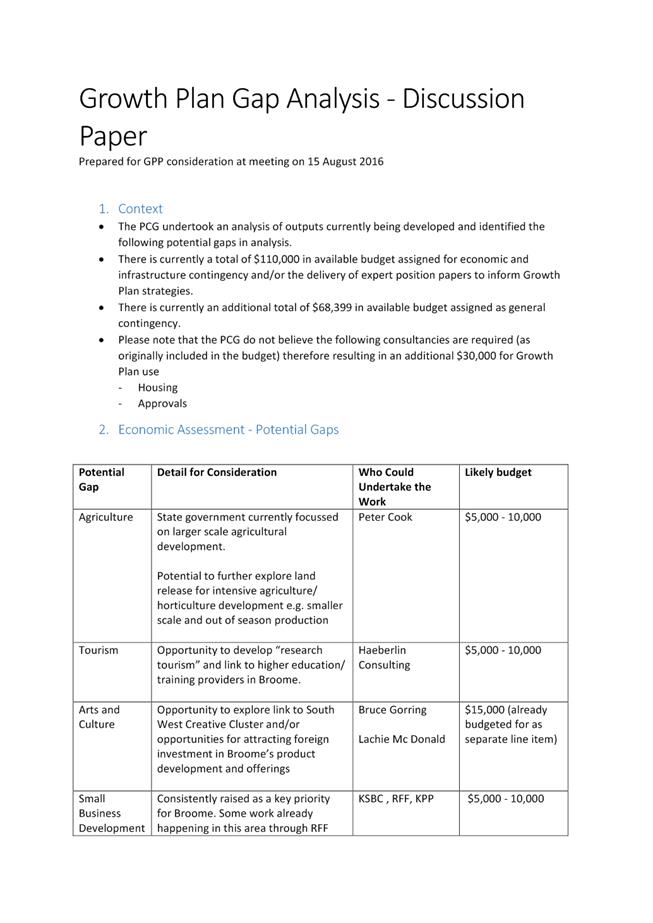
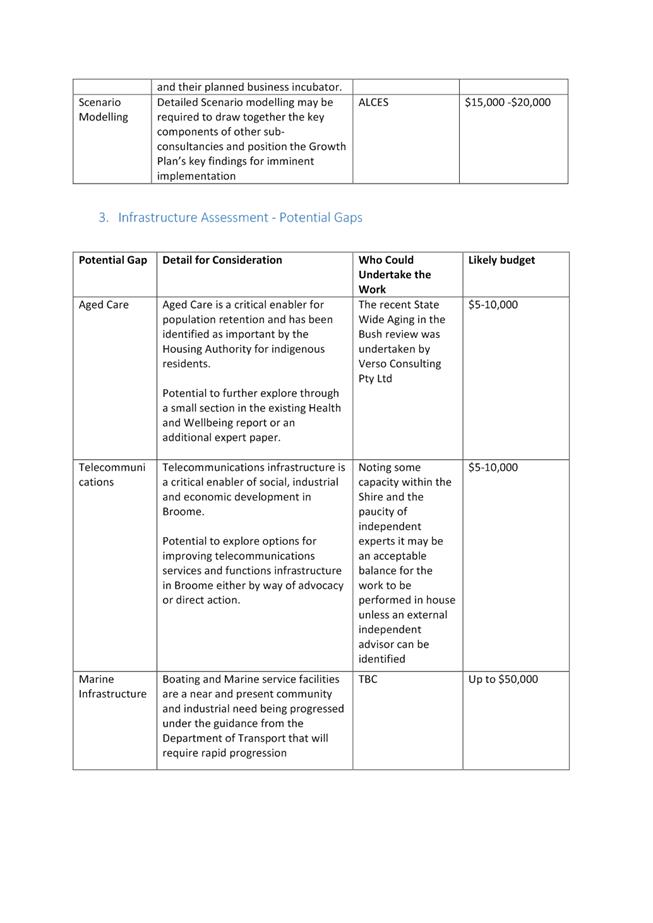
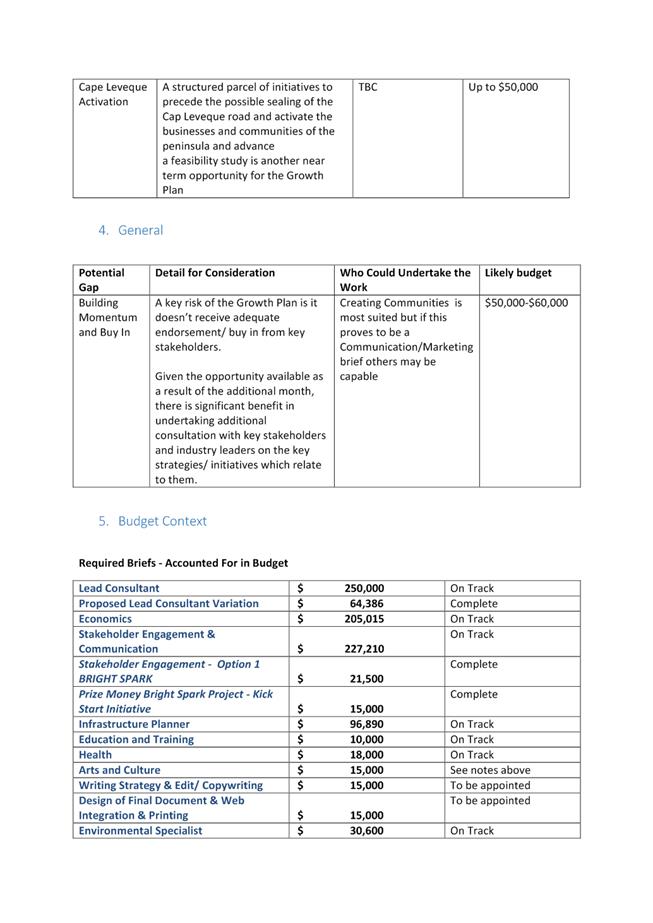
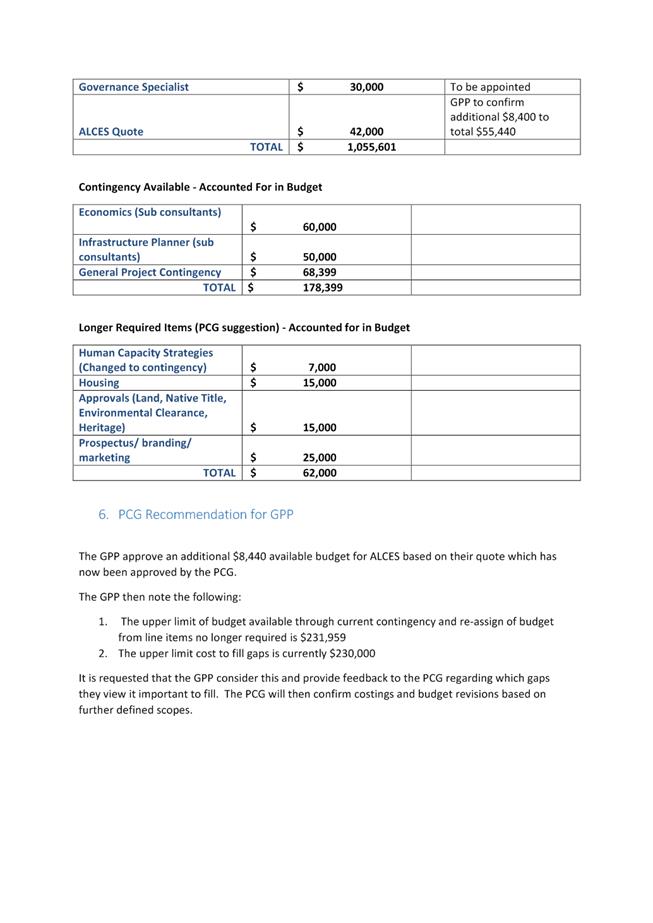
The original budget for the Growth
Plan provided for a range of sub-consultancies to be engaged on different
discrete subject matters. As a result, the above sub-consultants were
engaged. The PCG and GPP have discussed what information gaps remain in
relation to the Growth Plan, with a view to using the remaining
sub-consultancies budget to fill those gaps.
The following approach to identified
information gaps has been developed:
· Arts and culture – engage a sub-consultant to provide advice
on how Broome’s arts and culture industry can contribute further to the
traded economy. The sub-consultant should also consider linkages between
Broome’s arts and culture products and other products in Western
Australia.
· Governance – it is not proposed that any further external
advice on this subject be secured at this time. Consideration can however
be given to whether this funding should be used as part of the implementation
of the Growth Plan.
· Agriculture/Aquaculture – engage a sub-consultant to provide
advice on how to best stimulate growth in this area.
· Aged care – The Ageing in the Bush: An Ageing in place
strategy for Regional Western Australia Report (Regional Development
Council) will be reviewed, along with the final health and wellbeing report
before a determination is made as to whether more information is required.
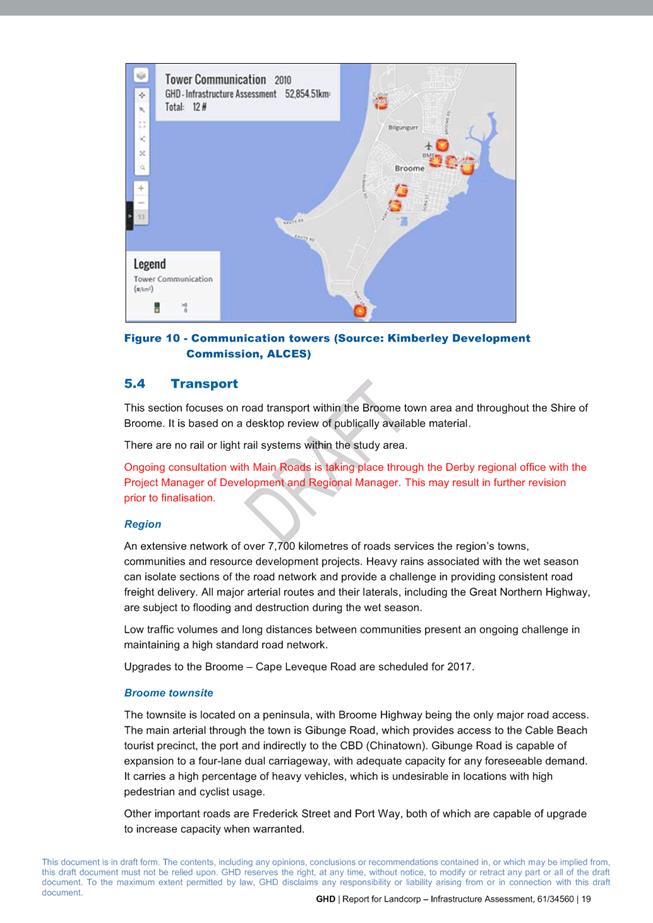
· Telecommunications – information from the Shire’s Smart
Cities project and the work by GHD will be used to inform this element of the
Growth Plan.
· Marine infrastructure – no further information is required,
and the Growth Plan will instead refer to work being undertaken by the
Department of Transport and partners as part of the Broome Boat Harbour
Advisory Group.
· Dampier Peninsula activation – engage a sub-consultant to
provide advice on matters that will need to be considered to activate the
Dampier Peninsula following the sealing of Cape Leveque Road.
Other works required to finalise
the Growth Plan
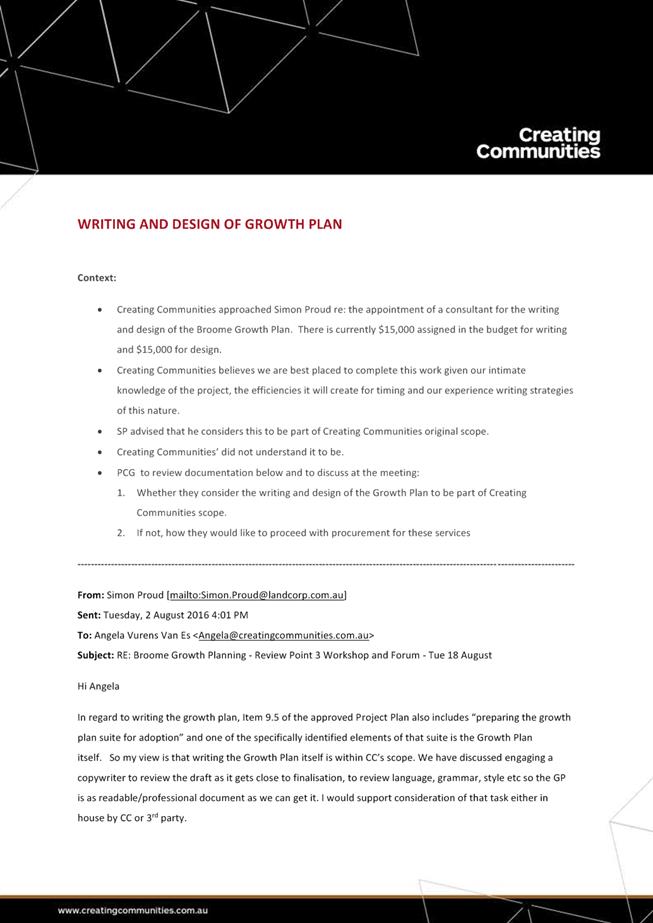
The drafting of the Growth Plan has
commenced. The PCG consider that the lead consultant, Creating
Communities, is best placed to bring together all the information that has been
compiled for the Growth Plan in the drafting of the document. The PCG
will be responsible for reviewing the draft Growth Plan document drafted by
Creating Communities.
A third party will be engaged to
copywrite/proof read the final draft Growth Plan document.
Creating Communities have expertise
in-house to design the Growth Plan document and they will be providing a fee
estimate for this work. Money is also included in the Growth Plan budget
to print and publish the Growth Plan once finalised.
The development of a prospectus for
the Growth Plan was discussed. It was considered that the Shire’s
Inward Investment Prospectus could be used as a basis for this, as part of the
implementation of the Growth Plan.
There is surplus funds available in
the Growth Plan budget, and discussions have been held amongst the PCG
regarding these funds being used by Creating Communities to hold a number of
sessions with stakeholders to provide information on the content of the Growth
Plan. Shire officers have asked that sessions be held with Council and
the general public.
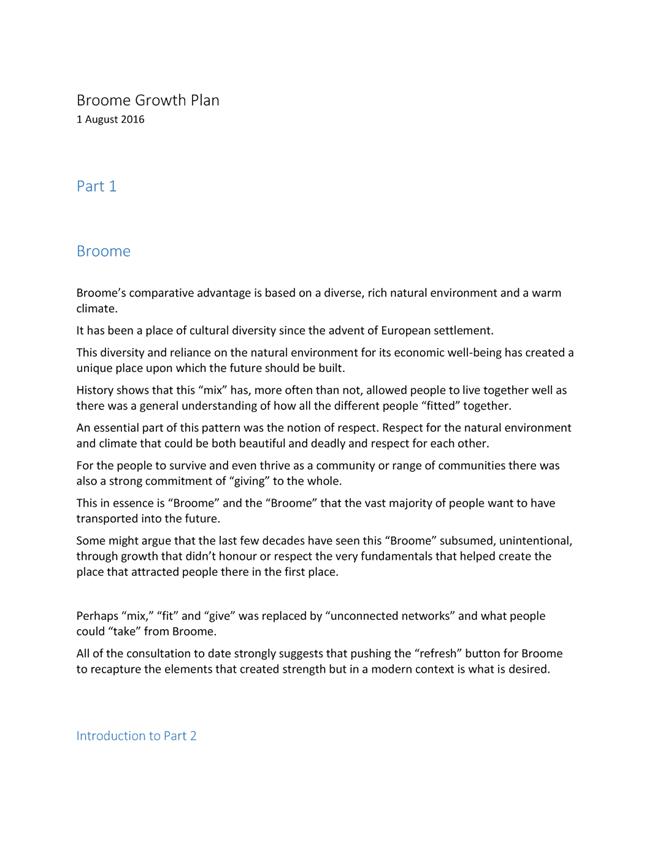
Draft content of the Growth Plan
As discussed above, Creating
Communities has started to draft sections of the Growth Plan. A draft of
the work that has been undertaken by Creating Communities is included as Attachment
10 to this report.
One element to note from these
sections of the Growth Plan that have been drafted is that the following
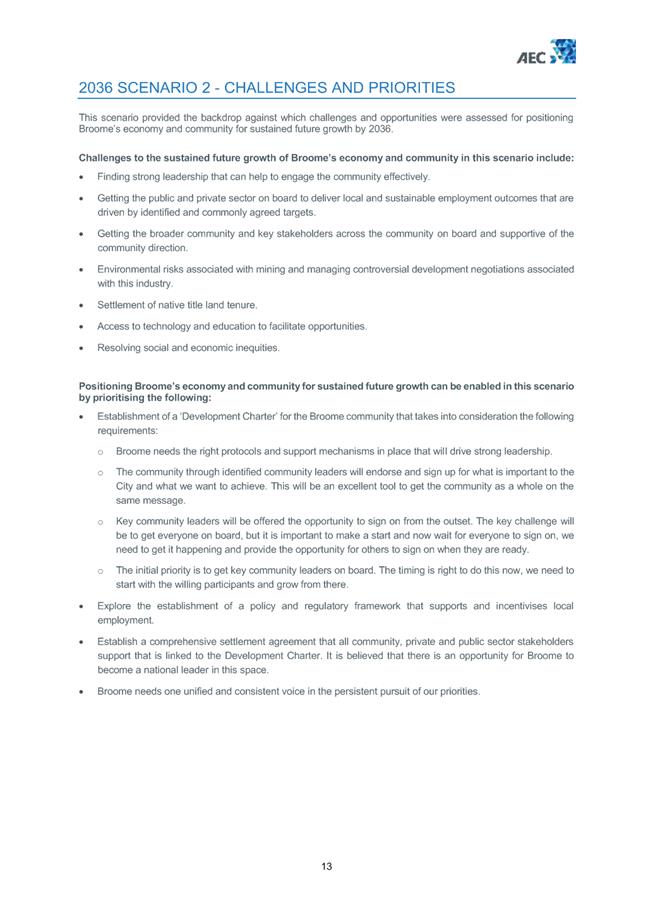
scenarios have been developed to guide the Growth Plan:
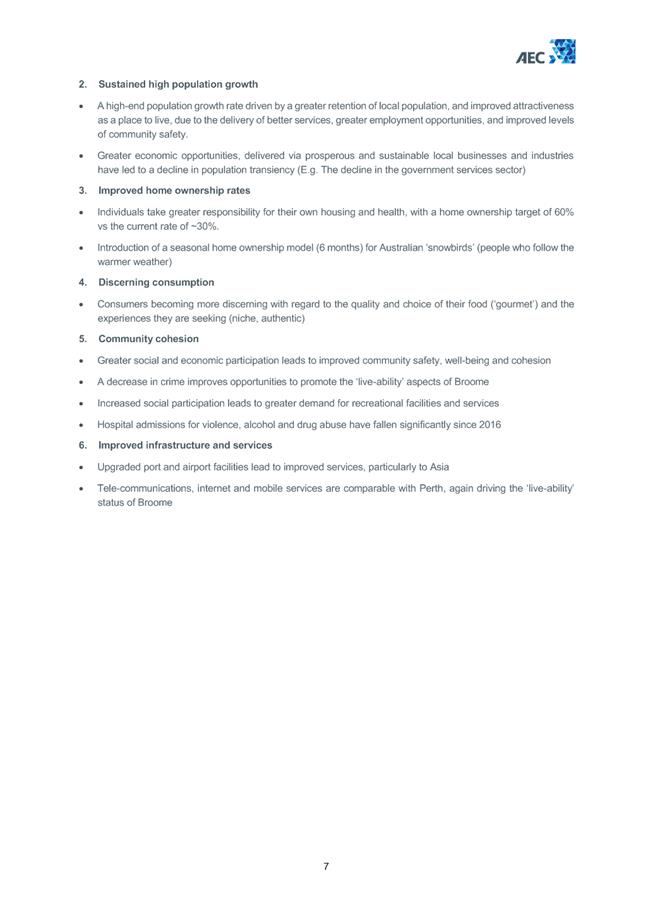
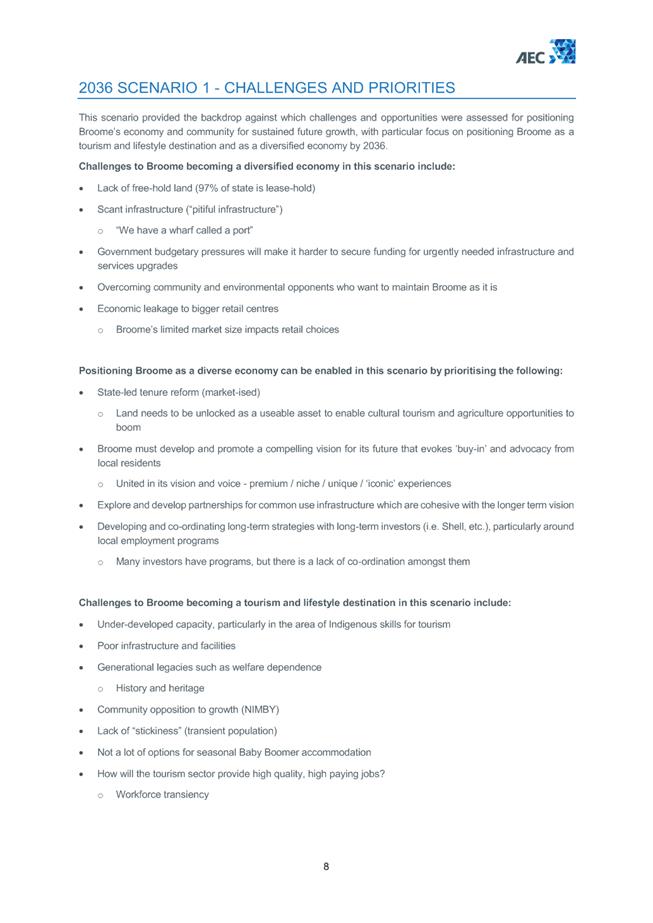
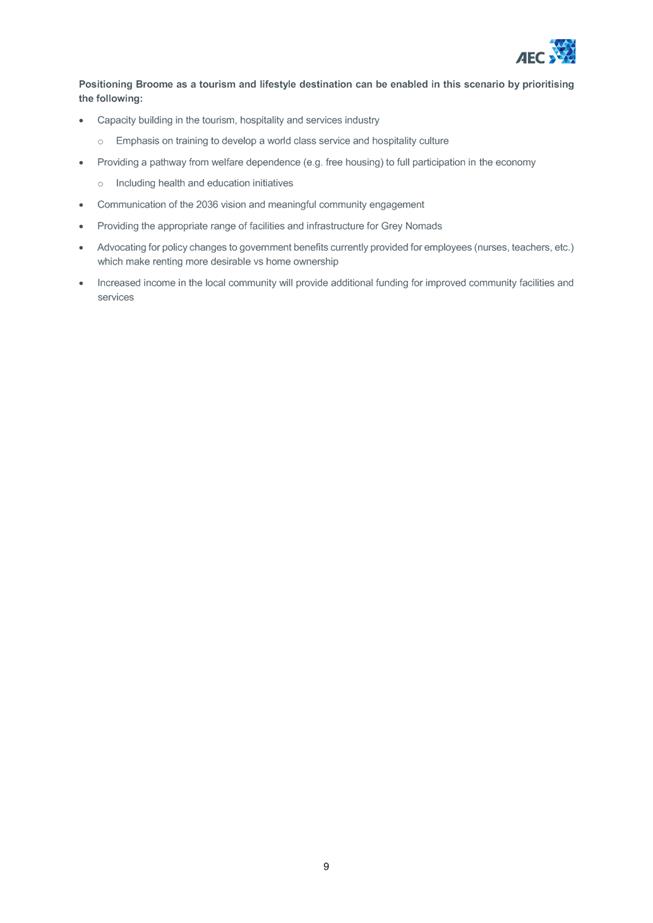
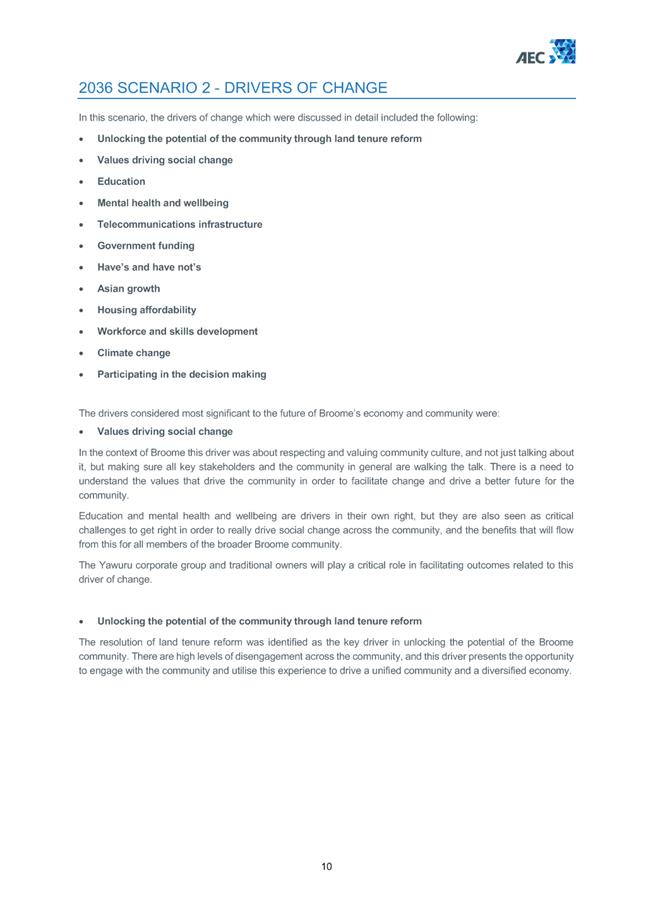
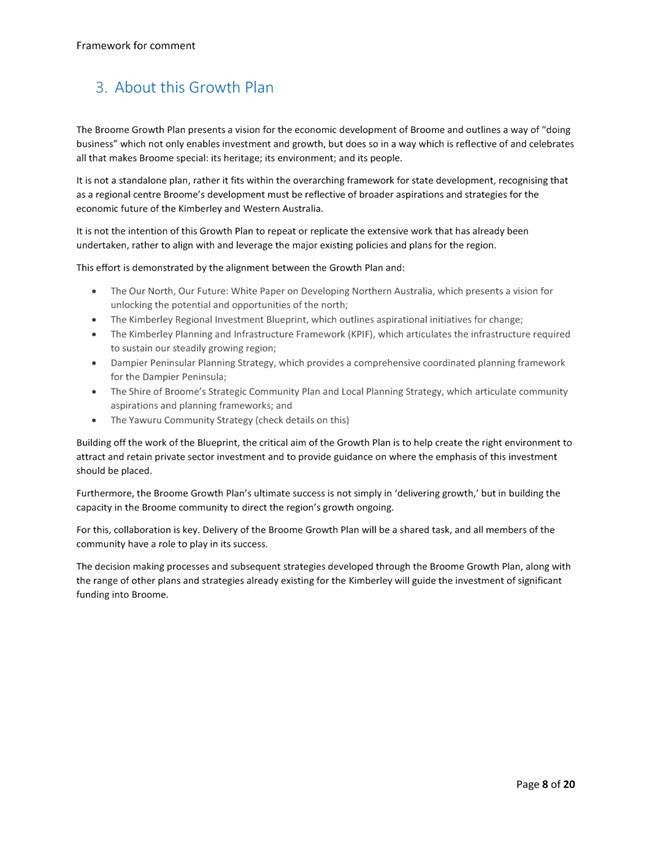
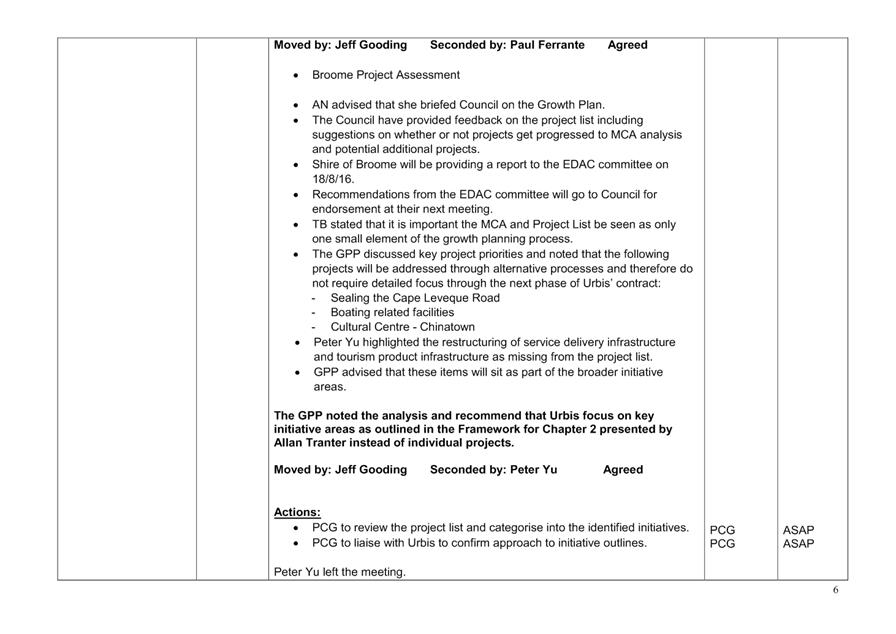
· Scenario 1 – Trend continuation of growth;
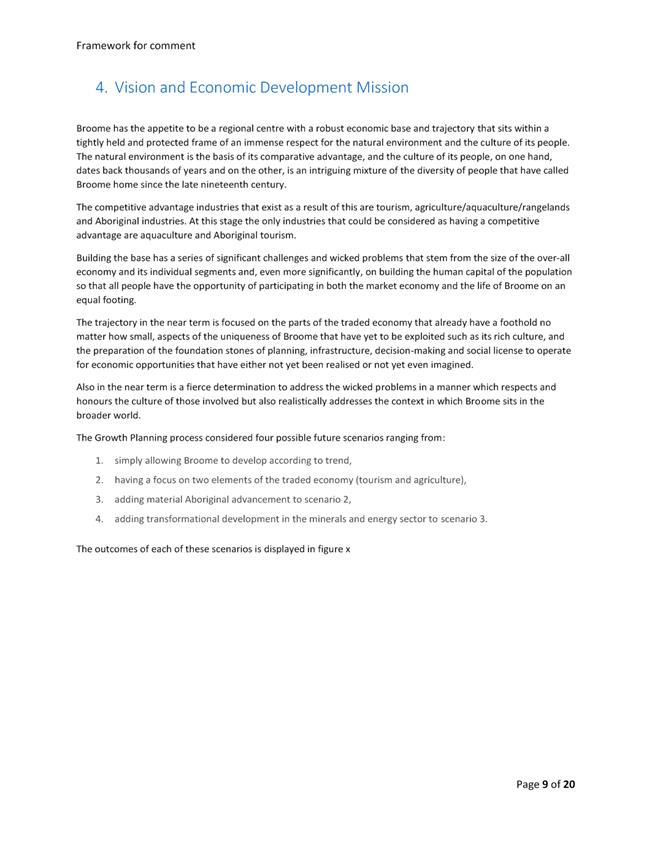
· Scenario 2 – Growing Broome according to its comparative
advantages (tourism and agriculture, with Aboriginal participation continuing
at its current level);
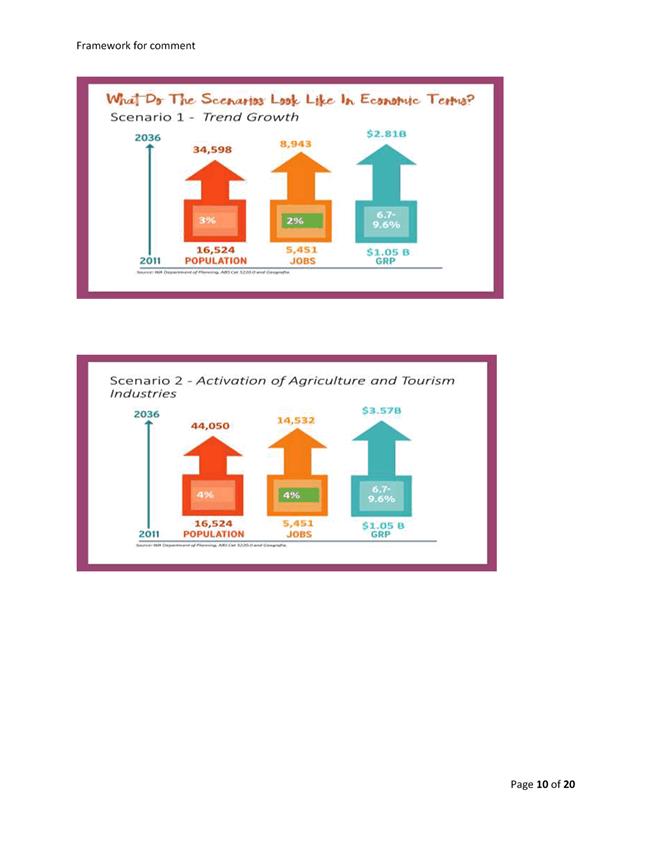
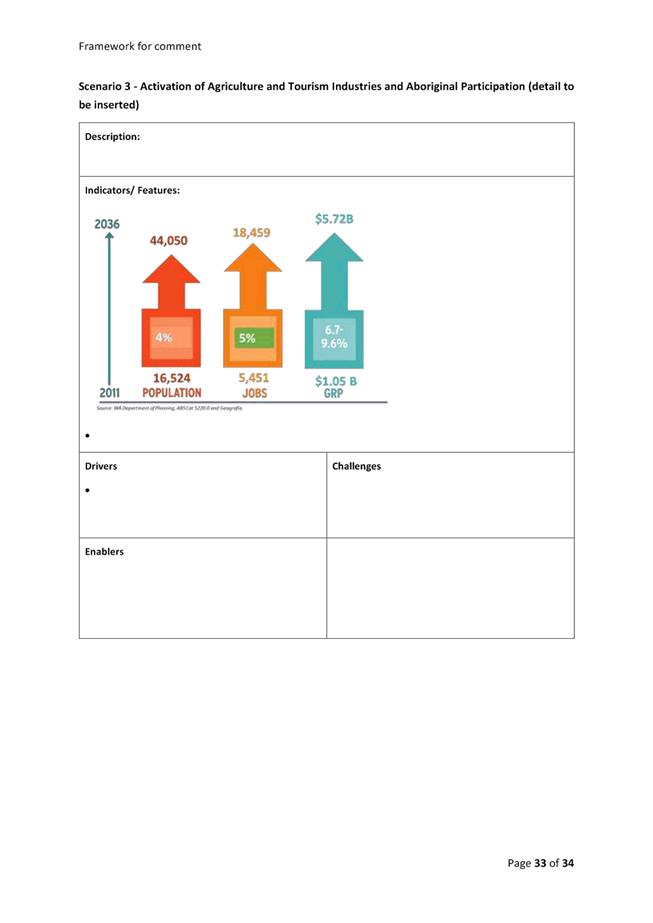
· Scenario 3 – Growing Broome according to its comparative
advantages (tourism and agriculture, with Aboriginal participation increased);
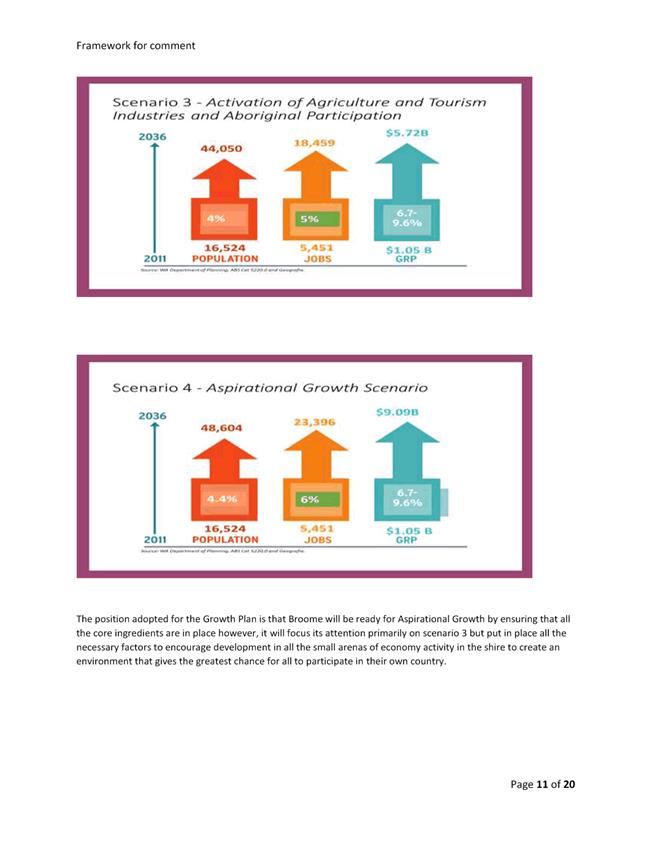
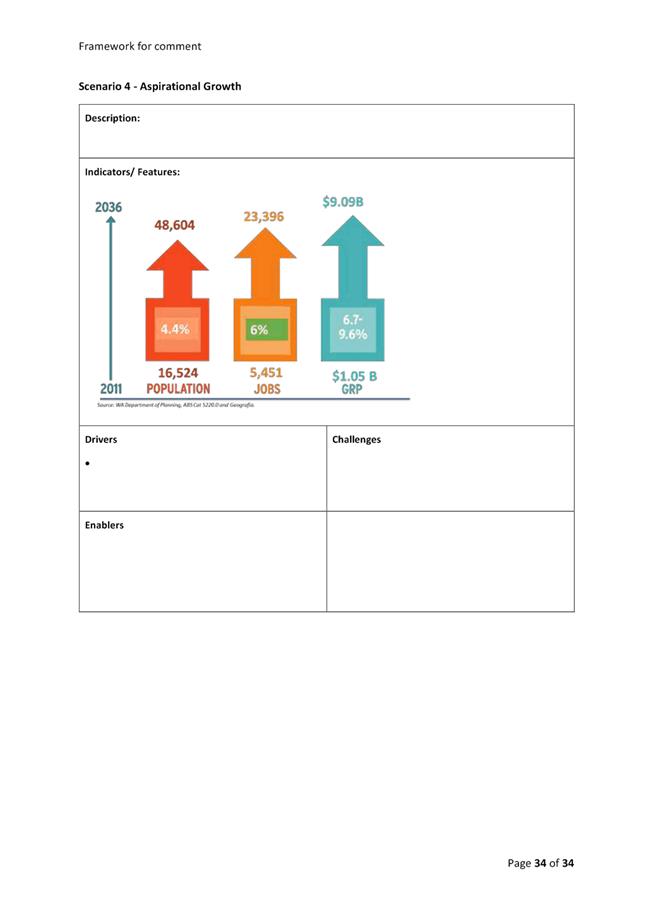
· Scenario 4 – Significant growth based on the above plus major
investment.
The position currently adopted for
the Growth Plan is that Broome should be ready for Scenario 4, however the
focus of the Growth Plan will be on achieving Scenario 3.
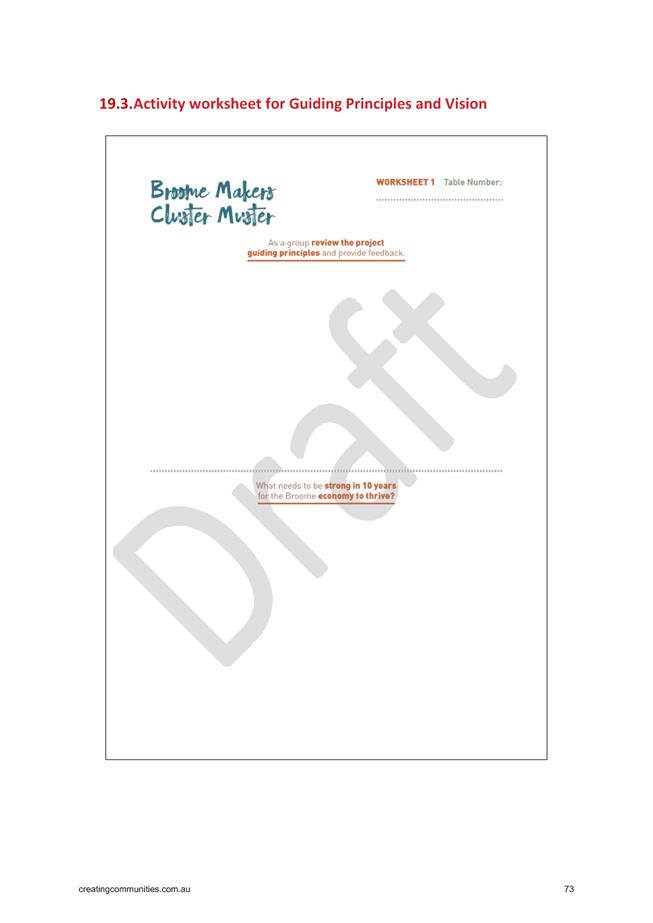
In addition, the following guiding
principles have been identified in the draft Growth Plan:
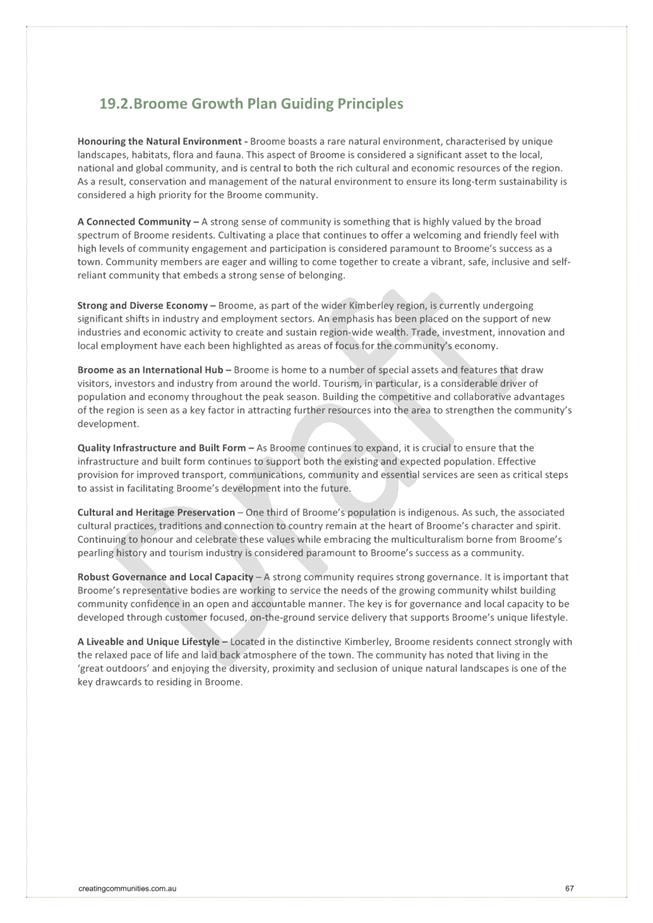
· Honouring the Natural Environment;
· A Connected Community;
· Strong and Diverse Economy;
· Broome as an International Hub;
· Quality Infrastructure and Built Form;
· Cultural and Heritage Preservation;
· Robust Governance and Local Capacity;
· A liveable and Unique Lifestyle.
These guiding principles were
developed in accordance with the project plan for the Growth Plan project and
were used as part of the community and stakeholder engagement for the Growth
Plan.
At the Council workshop on 8
September 2016, it was discussed that the last principle, “A liveable and
Unique Lifestyle”, may be too broad and subjective in its interpretation,
particularly in relation to the use of the work “Unique”.
Therefore, it is recommended that EDAC recommend that Council endorse these
guiding principles, subject to “A liveable and Unique Lifestyle”
being reworded to remove the word “Unique” so it is less subjective
and more suitable as a guiding principle.
The sections of the Growth Plan that
have been drafted refer to the initiative areas as discussed above, and some
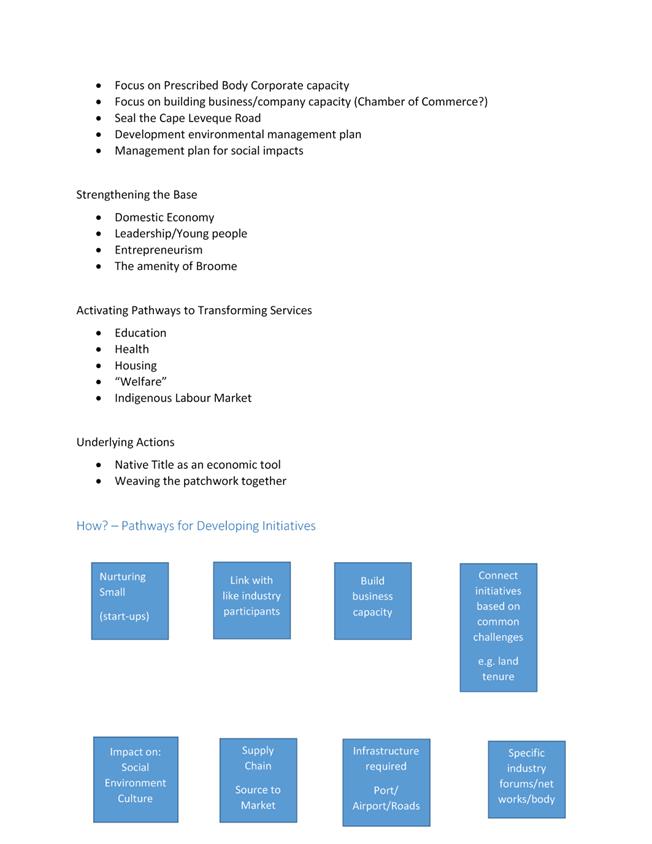
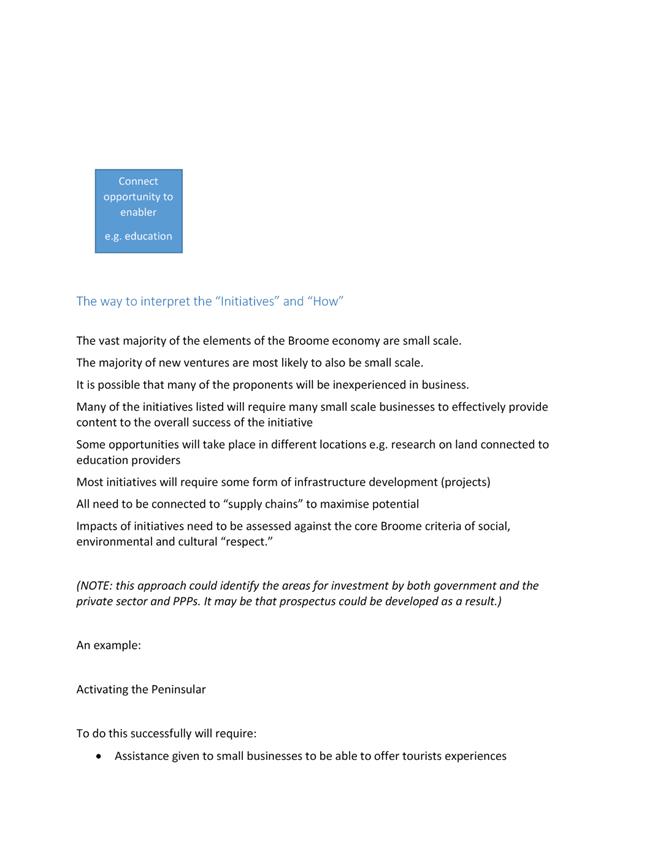
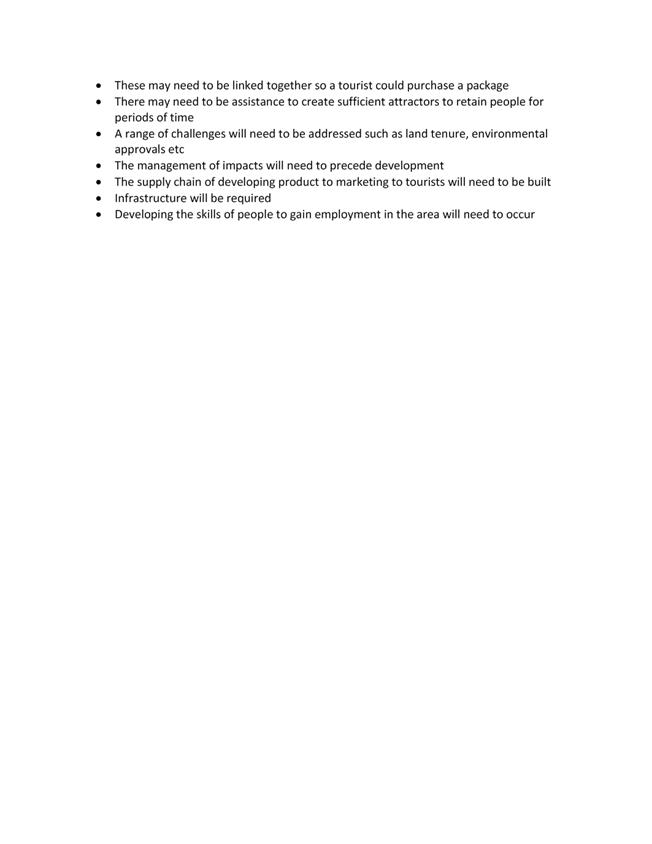
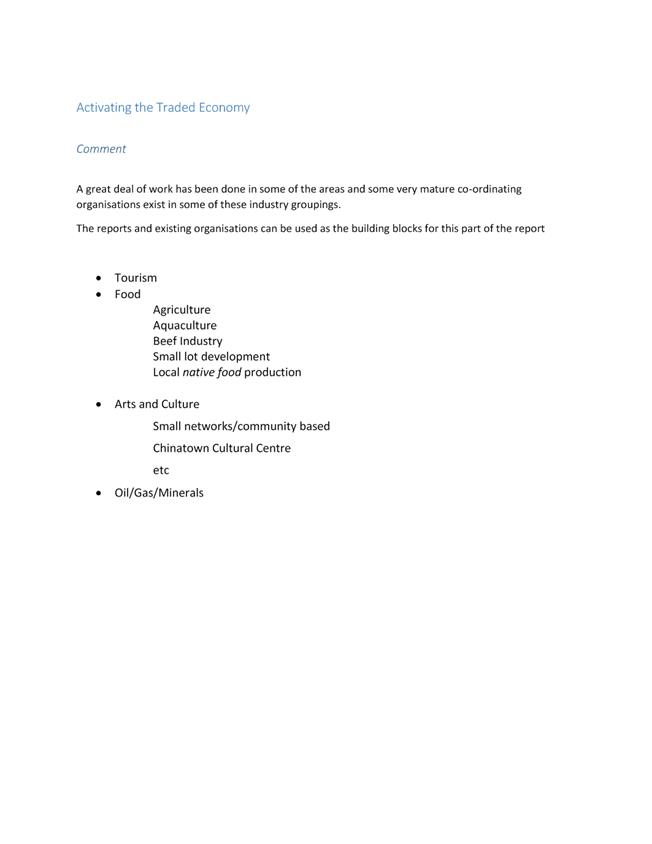
work has been done on pathways for developing those initiative areas.
More information is required, particularly from the sub-consultancies, to
inform these pathways.
A final point to note is the
requirement at a program level that the Growth Plan incorporate the
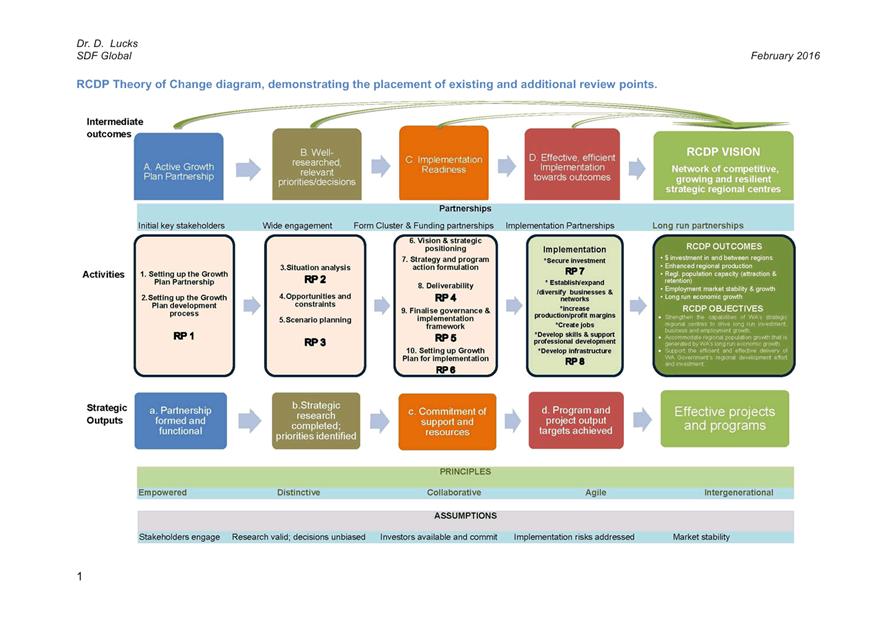
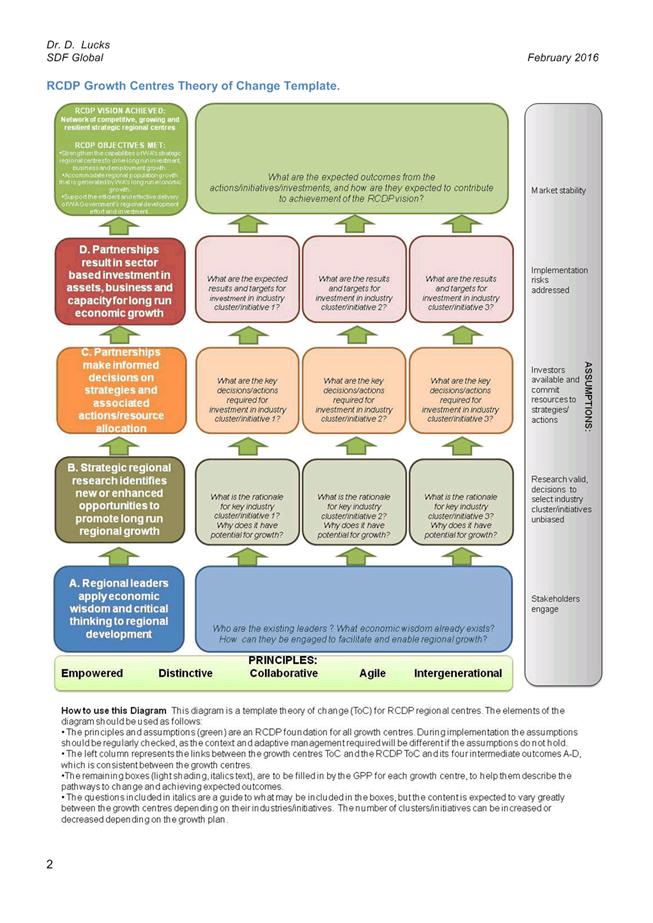
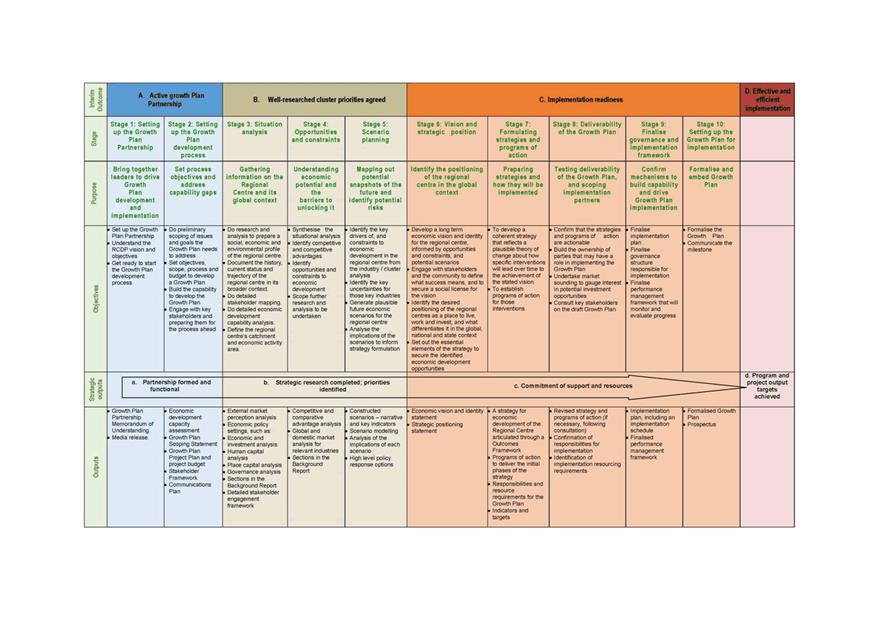
“Theory of Change” principle. Theory of Change represents
sound project/process management principles and the final Growth Plan will be
assessed against this as a requirement. The Theory requires cause/effect
logic from opportunity to implementation to be sound and evidence based.
An example of the required steps to
show the Theory of Change has been applied are as follows:
· Identify the problem/opportunity;
· Develop options to address the problem/take advantage of the
opportunity;
· Select options/actions and rationale for selection of particular
actions;
· Ensure implementation is achievable;
· Implement;
· Review/measure outcomes.
The Growth Plan is already being
prepared in accordance with these principles, as shown in the draft framework
of the Growth Plan in Attachment 10.
Overall, the first draft of these
sections of the Growth Plan give an indication of where the Growth Plan is
headed. The draft sections in Attachment 10 need work and are
lacking in firm detail. Some of the language needs to be modified to be
more appropriate to a professional report and many areas need editing and
expansion. Shire officers will provide feedback on the draft sections on
this basis, and continue to provide feedback and input into drafting of the
Growth Plan as it proceeds.
Review Point 3 Workshop
A workshop was held by DRD in Perth
on 16 August 2016 to allow the Growth Centres to show how they are progressing,
obtain feedback from a panel assembled for the day and learn from other
Centres’ experiences. The Centres who are due to prepare their
growth plans in Stage 2 were also invited to learn more about the growth planning
process.
Information was provided at the
workshop about investor trends, how to facilitate investment opportunities and
how to be “Growth Plan Ready”.
Cr Johnston attended the workshop on
behalf of the Shire, and gave a presentation on the Broome Growth Plan with
Jeff Gooding from the Kimberley Development Commission (KDC). A
copy of the presentation that was provided at the workshop is included as Attachment
11 to this report.
An assessment of the Broome Growth
Plan by the panellists and a Summary of Proceedings Report for the Review Point
3 Workshop is included as Attachment 12 to this report. Overall,
feedback from the workshop on the Broome Growth Plan indicates that it is on
track and meeting the Regional Centres Development Planning State level requirements.
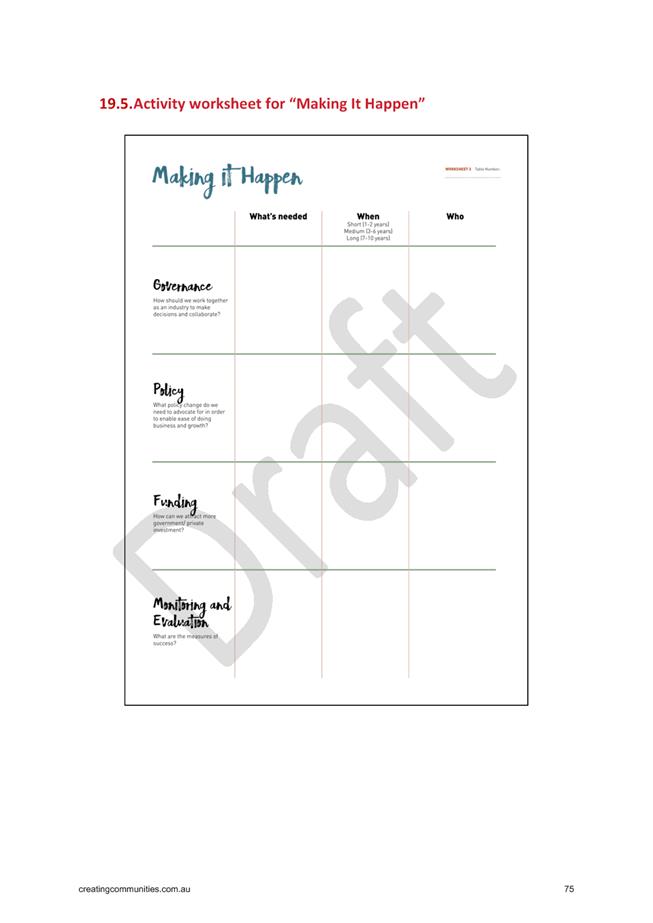
Implementation governance
structure
DRD has advised that a governance
structure to implement the Growth Plan has to be agreed upon and detailed in
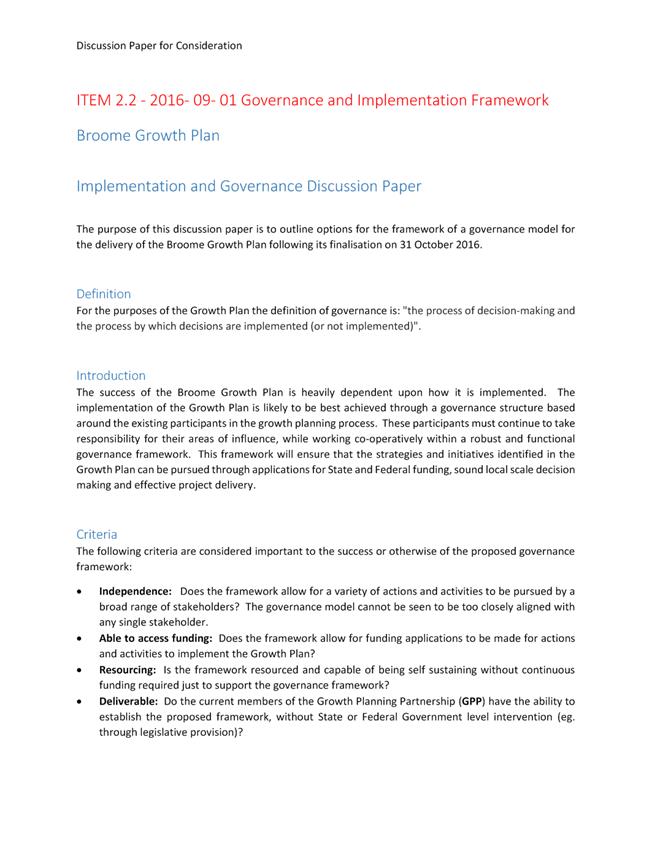
the Growth Plan. Creating Communities developed a discussion paper on the
governance framework for implementing the Growth Plan which was subsequently
included in the draft sections of the Growth Plan shown in Attachment 10
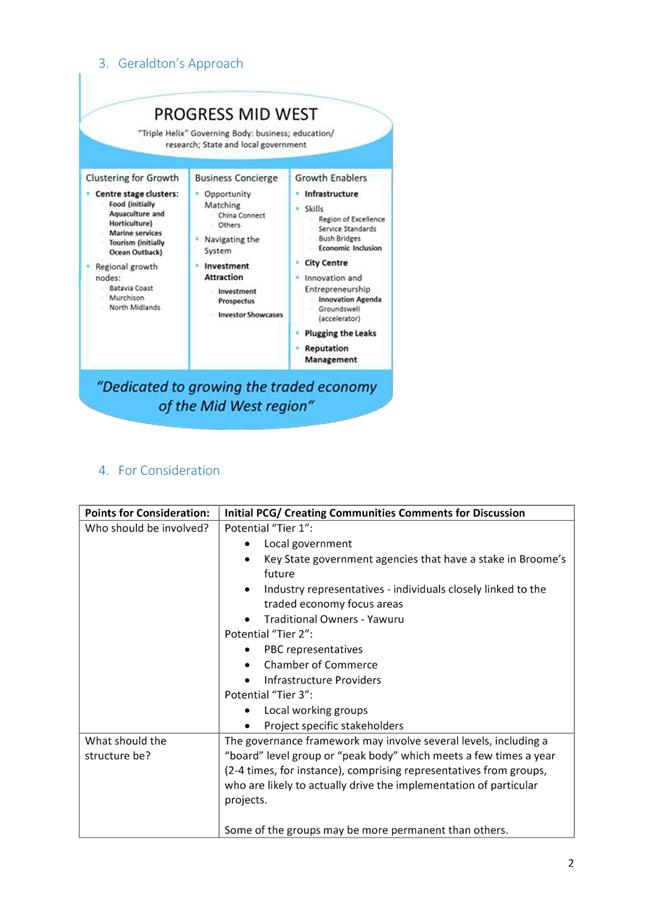
to this report. This discussion paper indicated the governance body may
be “hosted” by the Shire.
Shire officers subsequently prepared
a discussion paper on an implementation governance structure which is shown as Attachment
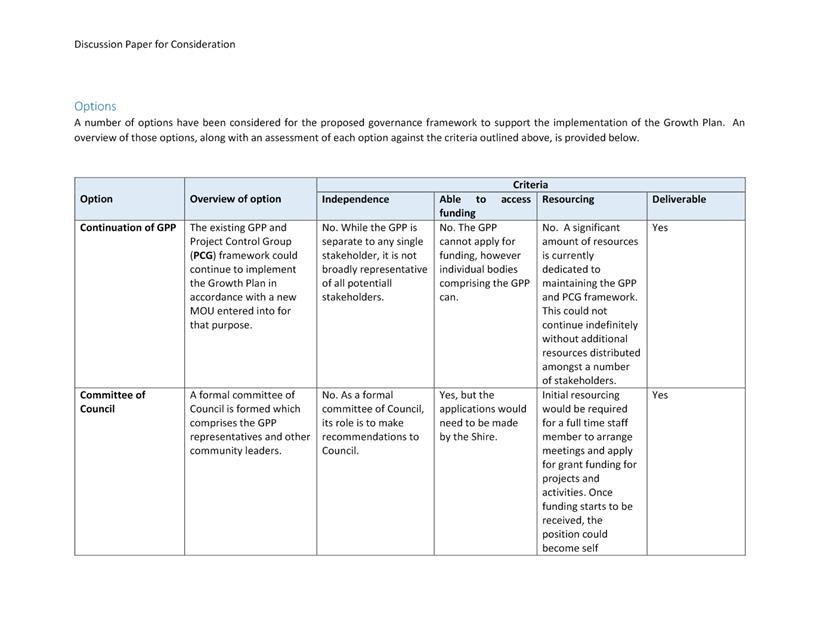
13 to this report. The discussion paper prepared by the Shire
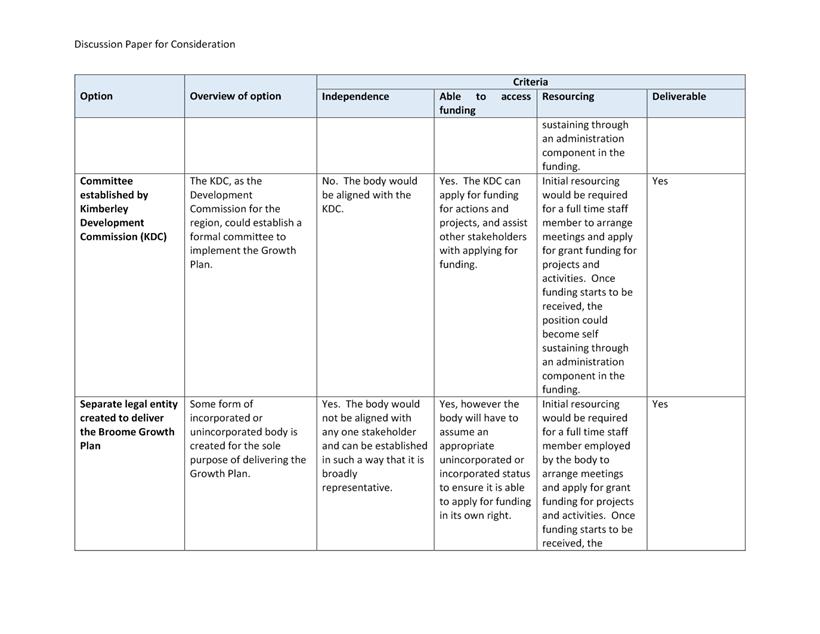
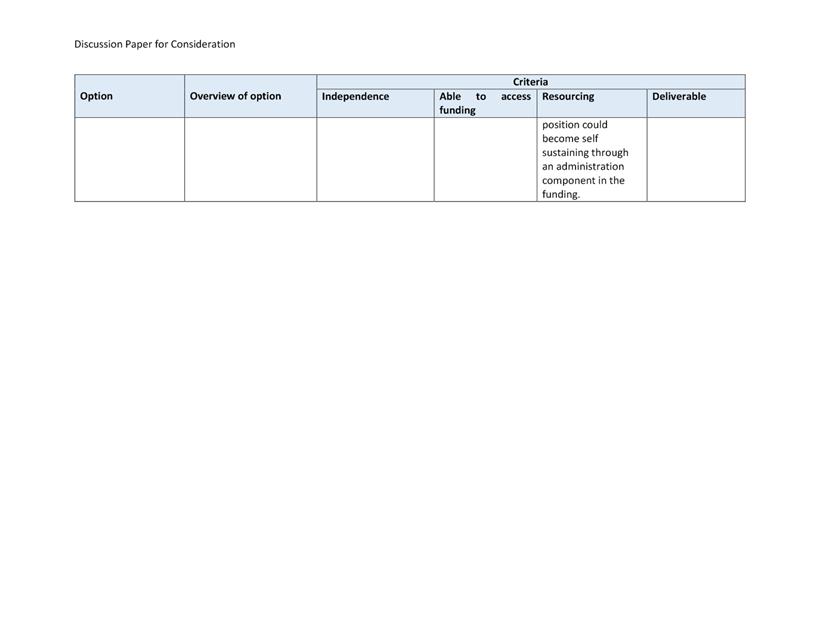
considers the merits of the following governance models:
· Continuation of GPP;
· Committee of Council;
· Committee formed by KDC; or
· Separate legal entity.
Each option was
assessed against the following criteria:
· Independence – does the model allow for a variety of actions
and activities to be pursued by a broad range of stakeholders? Is it too
closely aligned with any single stakeholder?
· Able to access funding – can the model apply for funding in
its own right?
· Resourcing – is the model resourced and capable of being
self-funding?
· Deliverable – Do the current members of the GPP have the
ability to establish the model?
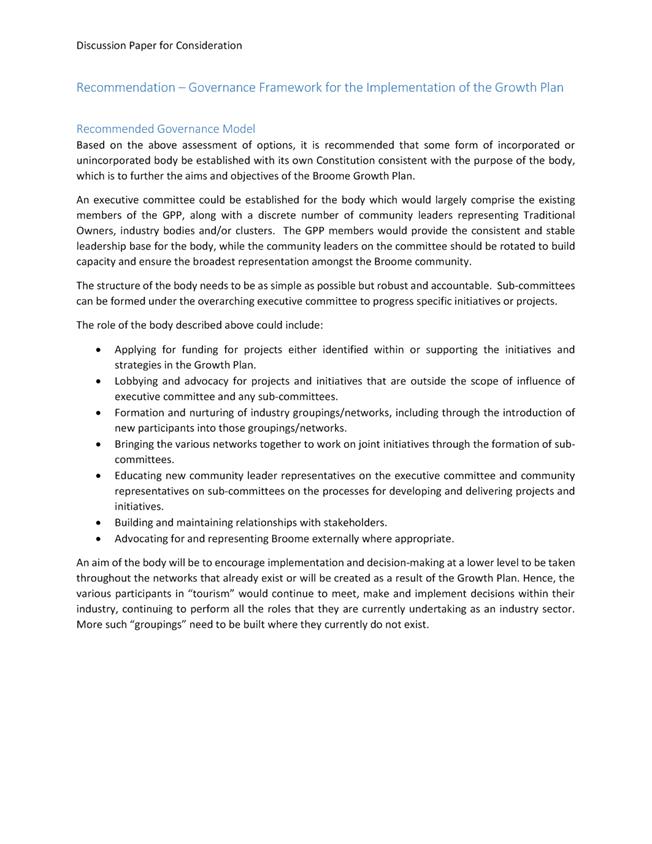
The discussion paper recommends that
an incorporated or unincorporated body is formed to implement the Growth
Plan. The body would have some form of executive committee comprising the
GPP as fixed members, with other community leaders appointed as members on a
rotating membership basis. Sub-committees can be formed for specific
projects and activities.
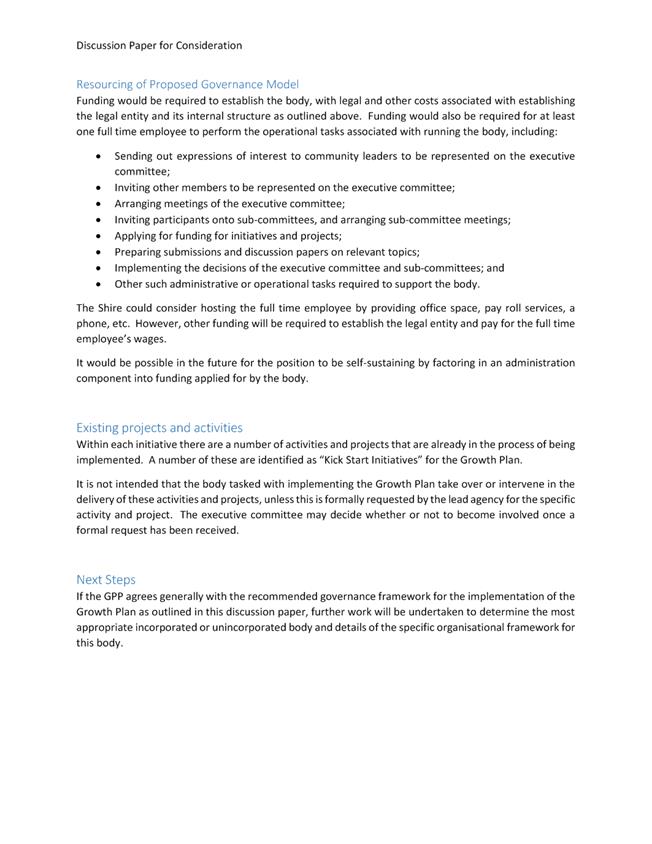
A full time staff member would need
to be employed by the body, and this could potentially be hosted by the Shire
(with funds for wages sourced externally). Some roles and aims of the
body would be:
· Apply for funding;
· Lobbying and advocacy;
· Formation and nurturing of industry groups and networks;
· Education of community leaders and representatives;
· Relationship building with stakeholders;
· Encourage decision making and action by industry groups;
· No intervention in existing projects and activities unless formally
requested.
This proposed governance model was
considered by the GPP at its meeting on 5 September 2016. At this
meeting, the GPP indicated its support for the separate legal entity and there
was discussion regarding the amount of work that should be done on defining
this model further prior to finalisation of the Growth Plan.
Overall, it is recommended that
further work be undertaken for define this governance model prior to
finalisation of the Growth Plan.
Ongoing governance matters
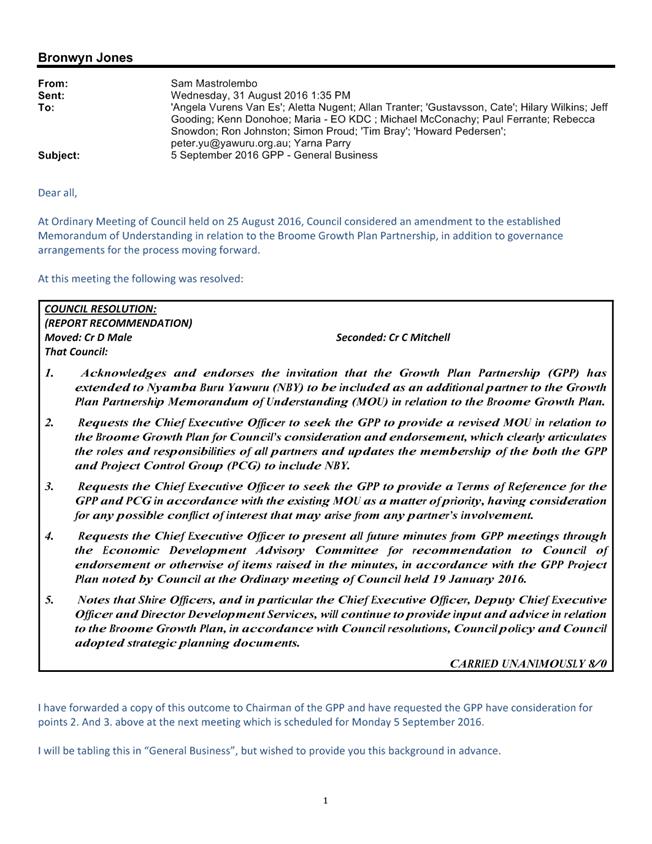
At the OMC on 25 August 2016, Council
resolved as follows:
That
Council:
1. Acknowledges and
endorses the invitation that the Growth Plan Partnership (GPP) has extended to
Nyamba Buru Yawuru (NBY) to be included as an additional partner to the Growth
Plan Partnership Memorandum of Understanding (MOU) in relation to the Broome
Growth Plan.
2. Requests the Chief
Executive Officer to seek the GPP to provide a revised MOU in relation to the
Broome Growth Plan for Council’s consideration and endorsement, which
clearly articulates the roles and responsibilities of all partners and updates
the membership of the both the GPP and Project Control Group (PCG) to include
NBY.
3. Requests the Chief
Executive Officer to seek the GPP to provide a Terms of Reference for the GPP
and PCG in accordance with the existing MOU as a matter of priority, having
consideration for any possible conflict of interest that may arise from any
partner’s involvement.
4. Requests the Chief
Executive Officer to present all future minutes from GPP meetings through the
Economic Development Advisory Committee for recommendation to Council of
endorsement or otherwise of items raised in the minutes, in accordance with the
GPP Project Plan noted by Council at the Ordinary meeting of Council held 19
January 2016.
5. Notes that Shire
Officers, and in particular the Chief Executive Officer, Deputy Chief Executive
Officer and Director Development Services, will continue to provide input and
advice in relation to the Broome Growth Plan, in accordance with Council
resolutions, Council policy and Council adopted strategic planning documents.
In accordance with this resolution,
at the GPP meeting on 5 September 2016 the Deputy Chief Executive Officer
raised as a matter of general business the need to amend the MOU and develop
terms of reference for the PCG and GPP. The GPP agreed that this should
occur, and officers will work with the PCG to ensure the MOU is amended and the
terms of reference are drafted. An agenda item will be presented directly
to Council once drafts have been finalised for its endorsement.
Special Meeting of EDAC in October
2016
An additional meeting of EDAC will be
required in October 2016 to further progress the Growth Plan. Between 2pm
and 4pm on Thursday, 13 October 2016 has been identified as a suitable date for
this meeting. Therefore, it is recommended that EDAC recommend that
Council requests that the Chief Executive Officer call a meeting of EDAC for 13
October 2016.
Summary
A significant amount of work
continues to be undertaken so that the Broome Growth Plan can be finalised by
31 October 2016. Information on the progress of the Growth Plan and input
into its content will be further sought from EDAC at its October 2016 meeting.
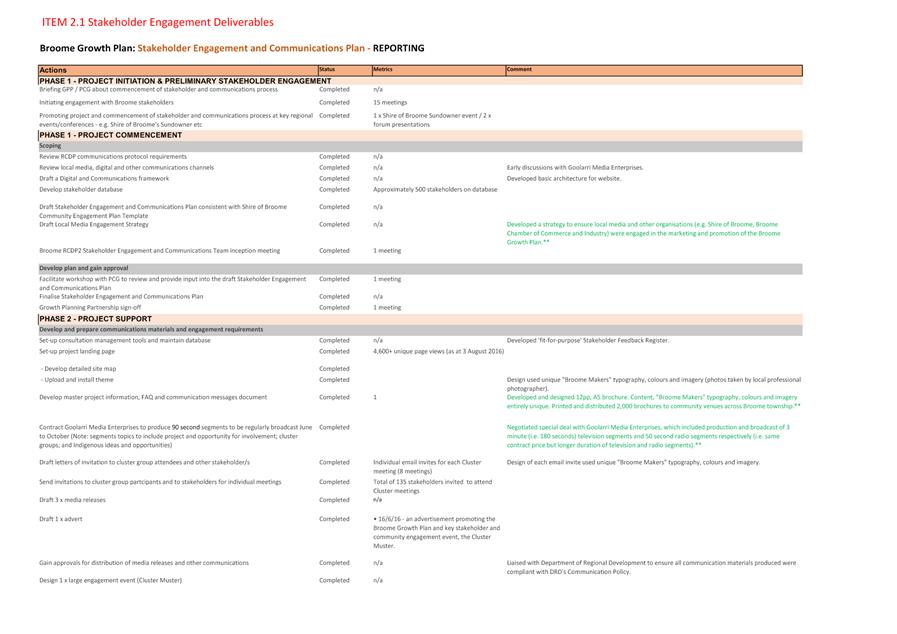
CONSULTATION
Extensive consultation has occurred
as part of the development of the Broome Growth Plan in accordance with a
community and stakeholder engagement plan prepared for the Growth Plan.
STATUTORY ENVIRONMENT
The overarching legislation that
governs the operation of the Shire of Broome is the Local Government Act
1995. The Shire’s role and input into the growth planning
process has to be consistent with its roles and responsibilities as established
by that Act. Local government in Western Australia is established in
accordance with the Constitution Act 1889.
Local Government Act 1995
Section 3.1. General
function
(1) The
general function of a local government is to provide for the good government of
persons in its district.
(2) The
scope of the general function of a local government is to be construed in the
context of its other functions under this Act or any other written law and any
constraints imposed by this Act or any other written law on the performance of
its functions.
(3) A
liberal approach is to be taken to the construction of the scope of the general
function of a local government.
Section 3.18. Performing
executive functions
(1) A
local government is to administer its local laws and may do all other things
that are necessary or convenient to be done for, or in connection with,
performing its functions under this Act.
(2) In
performing its executive functions, a local government may provide services and
facilities.
(3) A
local government is to satisfy itself that services and facilities that it
provides —
(a) integrate
and coordinate, so far as practicable, with any provided by the Commonwealth,
the State or any public body; and
(b) do
not duplicate, to an extent that the local government considers inappropriate,
services or facilities provided by the Commonwealth, the State or any other
body or person, whether public or private; and
(c) are
managed efficiently and effectively.
Constitution Act 1889
52. Elected local governing bodies
(1) The
Legislature shall maintain a system of local governing bodies elected and
constituted in such manner as the Legislature may from time to time provide.
(2) Each
elected local governing body shall have such powers as the Legislature may from
time to time provide being such powers as the Legislature considers necessary
for the better government of the area in respect of which the body is
constituted.
Separate legislation governs the
activities of other members of the GPP. The Regional Development
Commissions Act 1993 governs the activities of the KDC and the Western
Australian Land Authority Act 1992 governs the activities of LandCorp.
Regional Development
Commissions Act 1993
Section 23. Objects
and functions of a commission
(1) The
objects of a commission are to —
(a) maximize
job creation and improve career opportunities in the region;
(b) develop
and broaden the economic base of the region;
(c) identify
infrastructure services to promote economic and social development within the
region;
(d) provide
information and advice to promote business development within the region;
(e) seek
to ensure that the general standard of government services and access to those
services in the region is comparable to that which applies in the metropolitan
area; and
(f) generally
take steps to encourage, promote, facilitate and monitor the economic
development in the region.
(2) For
the purposes of achieving those objects a commission is to —
(a) promote
the region;
(b) facilitate
coordination between relevant statutory bodies and State government agencies;
(c) cooperate
with representatives of industry and commerce, employer and employee
organizations, education and training institutions and other sections of the
community within the region;
(d) identify
the opportunities for investment in the region and encourage that investment;
(e) identify
the infrastructure needs of the region, and encourage the provision of that
infrastructure in the region; and
(f) cooperate
with —
(i) departments
of the Public Service of the State and the Commonwealth, and other agencies,
instrumentalities and statutory bodies of the State and the Commonwealth; and
(ii) local
governments,
in
order to promote equitable delivery of services within the region.
Western Australian Land
Authority Act 1992
Section 16. Functions
(1) The Authority
has the following functions —
(a) to
be an agency which provides, or promotes the provision of, land for the social
and economic needs of the State;
(b) to
be an agency through which the Crown and public authorities may dispose of
land;
(c) to
be an agency through which local governments and regional local governments may
dispose of land in accordance with the Local Government Act 1995;
(d) to
complete the development of the Joondalup Centre, in accordance with the plan
referred to in section 18, on the land described in Schedule 2;
(e) to
identify other potential centres of population, and centres of population in
need of urban renewal, and use its powers to bring about the provision, or
improvement, of land, infrastructure, facilities or services for the same.
(1a) It is
also a function of the Authority —
(a) to
do things that the board determines to be conducive or incidental to the
performance of a function referred to in subsection (1); and
(b) to
do things that it is authorised to do by any other written law.
(2) In
subsection (1) —
Joondalup
Centre means the project for
the provision of infrastructure and facilities for a centre of population
(including infrastructure and facilities for community, cultural, recreational
and sporting purposes) that before the commencement of this section was being
carried on by the Joondalup Development Corporation under the Act repealed by
section 50(1)(c).
(3) The
Authority may perform any of its functions in the State or, with the
Minister’s approval, elsewhere.
POLICY IMPLICATIONS
The draft List of Projects and
initiative areas does not align exactly with the Shire’s Strategic
Community Plan and Corporate Business Plan. Given that the Broome Growth
Plan is not just a Shire of Broome planning document and has input from and
will be delivered by other bodies and organisations, this is not necessarily a
barrier to EDAC and Council supporting the Growth Plan. However, EDAC and
Council still need to be satisfied that the Growth Plan is appropriate to
facilitate the future growth of Broome and will not have an unacceptable impact
on the Shire’s policy direction and operations.
FINANCIAL IMPLICATIONS
At this stage, the Broome Growth Plan
has no direct financial implications to the Shire. However, in
considering the direction of the Growth Plan project, the initiative areas,
strategies and identified projects, EDAC and Council should be mindful of the Shire’s
resources and satisfied that the Growth Plan will not have an unacceptable
impact on the Shire’s financial resources and ability to maintain its
core operations.
The Shire’s Long Term Financial
Plan (LTFP) sets out planned capital projects the Shire intends to
undertake from 2015 to 2030. The following are the only projects on the
Project List (as amended in response to Council feedback) that are identified
in the LTFP:
· Town Beach
Revetment/Jetty to Jetty walk infrastructure and redevelopment of the Town
Beach Precinct;
· Itinerant
camping area for transient Broome residents;
· Lighting for
sporting ovals (extend usability);
· Extended
sporting/community facilities; and
· Chinatown
revitalisation project.
It will need to be clear in the
Broome Growth Plan that all other projects on the Project List will be funded by the State or Federal government, or
private industry.
RISK
There is a risk that the outcomes of
the growth planning project may commit the Shire to a course of action or
investment in projects and initiatives that may impact on the Shire’s
ability to resource other policy initiatives and its core operations. The
risk of this occurring is considered ‘High’. To mitigate this
risk, significant resources are being dedicated by Shire Officers in reviewing
the inputs to the Broome Growth Plan. In addition, the key inputs to the
Growth Plan are being workshopped with Council and are subject to EDAC and
Council’s endorsement to ensure that Council is satisfied that the
direction of the Growth Plan is consistent with the Council’s strategic
direction.
A significant amount of work and
resources have been dedicated, utilising Royalties for Regions funding, to
develop these key inputs to the Growth Plan. Should Council decide that
it wants to alter these key inputs significantly, this may impact on the
ability for the Broome Growth Plan to be finalised by the 31 October 2016
deadline. This may impact on the reputation of the Shire with the State
government and other stakeholders. The risk of this occurring should
Council seek to alter the key inputs significantly is considered
‘High’.
STRATEGIC
IMPLICATIONS
Our People
Goal – Foster a community environment that is accessible, affordable,
inclusive, healthy and safe:
Effective communication
Affordable services and initiatives
to satisfy community need
Accessible and safe community spaces
A healthy and safe environment
Our Place
Goal – Help to protect the nature and built environment and cultural
heritage of Broome whilst recognising the unique sense of the place:
A built environment that reflects
arid tropical climate design principles and historical built form
A unique natural environment for the
benefit and enjoyment of current and future generations
A preserved, unique and significant
historical and cultural heritage of Broome
Retention and expansion of
Broome’s iconic tourism assets and reputation
Our
Prosperity Goal – Create the means to enable local jobs creation and
lifestyle affordability for the current and future population:
Affordable and equitable services and
infrastructure
Affordable land for residential,
industrial, commercial and community use
Key economic development strategies
for the Shire which are aligned to regional outcomes working through recognised
planning and development groups/committees
Our
Organisation Goal – Continually enhance the Shire’s organisational
capacity to service the needs of a growing community:
Sustainable and integrated strategic
and operational plans
Responsible resource allocation
Effective community engagement
VOTING REQUIREMENTS
Simple Majority
|
REPORT RECOMMENDATION:
That the Economic Development Advisory Committee
recommends that Council:
1. Endorses the
Growth Plan focusing on initiative areas rather than a list of projects, with
projects on the project list to be linked to initiative areas;
2. Notes that the
Project Prioritisation Matrix developed by Urbis, the Multi-Criteria Analysis
Tool released by the Department of Regional Development and the draft
business case/concept plan template prepared by Urbis will be included in the
Growth Plan as an example of tools that may be used in the implementation of
the Growth Plan.
3. Endorses the
initiative areas developed for the Growth Plan as described in Attachment 4;
4. Endorses the
linking of projects on the project list to the initiative areas as shown in
Attachment 5, subject to:
(a) The
Broome Cultural Centre project also being linked to Activating the Peninsula;
(b) Environmentally
compliant slipways & storage facilities with hard surfacing and WWTP also
being linked to Activating the Peninsula;
(c) Improved
aged care facilities and infrastructure also being linked to Activating
Pathways to Transforming Services;
(d) Facilitating
flights between Asia and Broome, and between East Coast destinations and
Broome also being linked to Activating the Peninsula;
(e) Removing
the Broome Casino project from the project list; and
(f) Adding
the “Rehabilitation Centre” project to the list, with this
project to be linked to the Activating Pathways to Transforming Services
initiative area;
5. Endorses the
undertaking of an economic rationale for the following subject areas:
(a) Activating
the Peninsula (initiative area – Activating the Peninsula);
(b) Expanding
agriculture production (initiative area – Activating the Traded
Economy);
(c) Capturing
and engaging Aboriginal capital in economic development (initiative area
– Activating Pathways to Transforming Services);
6. Notes the
status and progress of the sub-consultancy reports;
7. Notes the other
inputs required for the Growth Plan and the work required to finalise the
Growth Plan;
8. Endorses the
use of the following scenarios in the Growth Plan:
(a) Scenario 1 – Trend continuation of growth;
(b) Scenario 2 – Growing Broome according to its comparative
advantages (tourism and agriculture, with Aboriginal participation continuing
at its current level);
(c) Scenario 3 – Growing Broome according to its comparative
advantages (tourism and agriculture, with Aboriginal participation
increased);
(d) Scenario 4 – Significant growth based on the above plus
major investment.
9. Endorses the
Growth Plan adopting the position that Broome will be ready for Scenario 4,
with the focus of the Growth Plan being on achieving Scenario 3;
10. Endorses the Guiding
Principles identified in the draft sections of the Growth Plan shown in
Attachment 10, subject to “A Liveable and Unique Lifestyle” being
reworded, with the removal of the word “Unique”;
11. Notes that the Deputy
Chief Executive Officer and Director Development Services will provide
feedback and input on the draft sections of the Growth Plan shown in
Attachment 10 and the draft Growth Plan document as more of the document is
drafted;
12. Notes the outcome of the
Review Point 3 Workshop held on 16 August 2016 as shown in Attachment 12;
13. Requests that the Chief
Executive Officer take steps to secure additional detail on the proposed
separate legal entity that will be identified in the Growth Plan as responsible
for implementing the Growth Plan; and
14. Requests that the Chief
Executive Officer call a meeting of the Economic Development Advisory
Committee for 13 October 2016.
|
Attachments
|
1.
|
Minutes of Project
Control Group meetings
|
|
2.
|
Minutes of Growth Plan
Partnership meeting (includes Agenda and supporting documents for meeting on
5 September 2016)
|
|
3.
|
Multi-Criteria Analysis
Tool released by Department of Regional Development
|
|
4.
|
Broome Growth Plan -
Strategy Framework Discussion Paper
|
|
5.
|
Project list linked to
initiative areas
|
|
6.
|
Broome Economic and
Situational Analysis (draft)
|
|
7.
|
Infrastructure Audit
(draft)
|
|
8.
|
Health and Wellbeing
Report (draft)
|
|
9.
|
Scenario Planning
Report (draft)
|
|
10.
|
Draft sections of
Growth Plan
|
|
11.
|
Power Point
Presentation from Review Point 3 Workshop
|
|
12.
|
Review Point 3
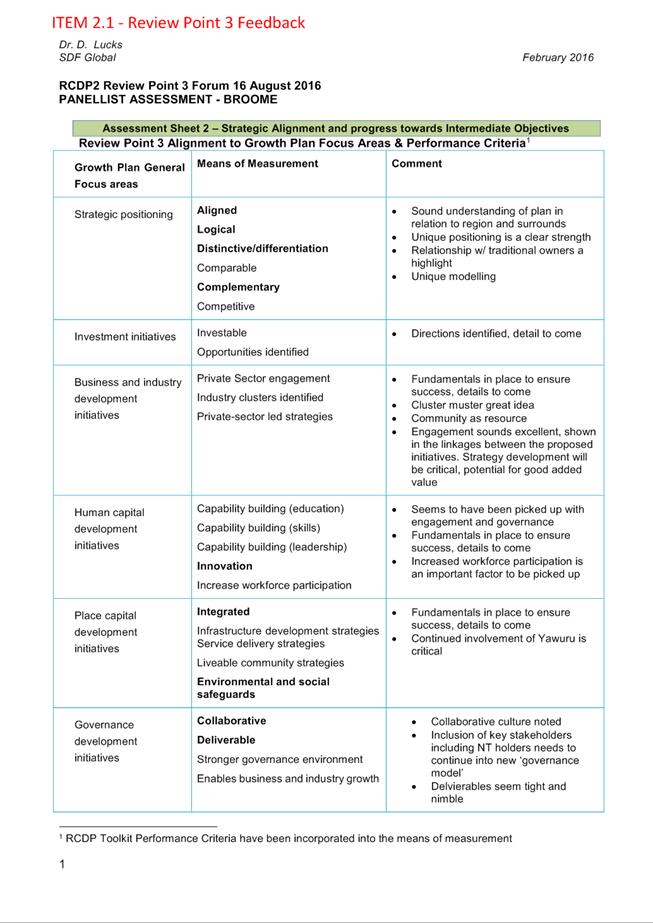
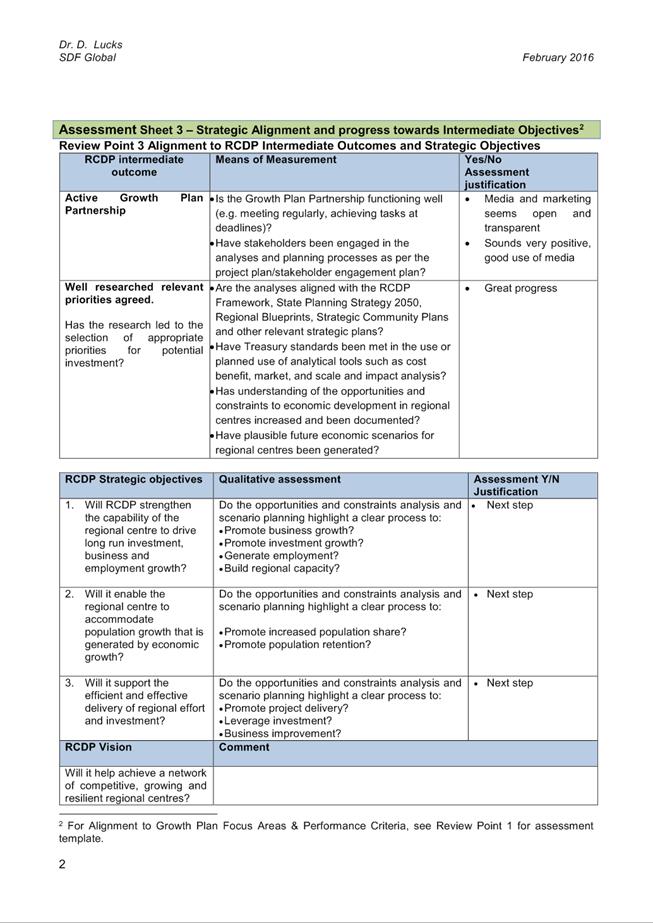
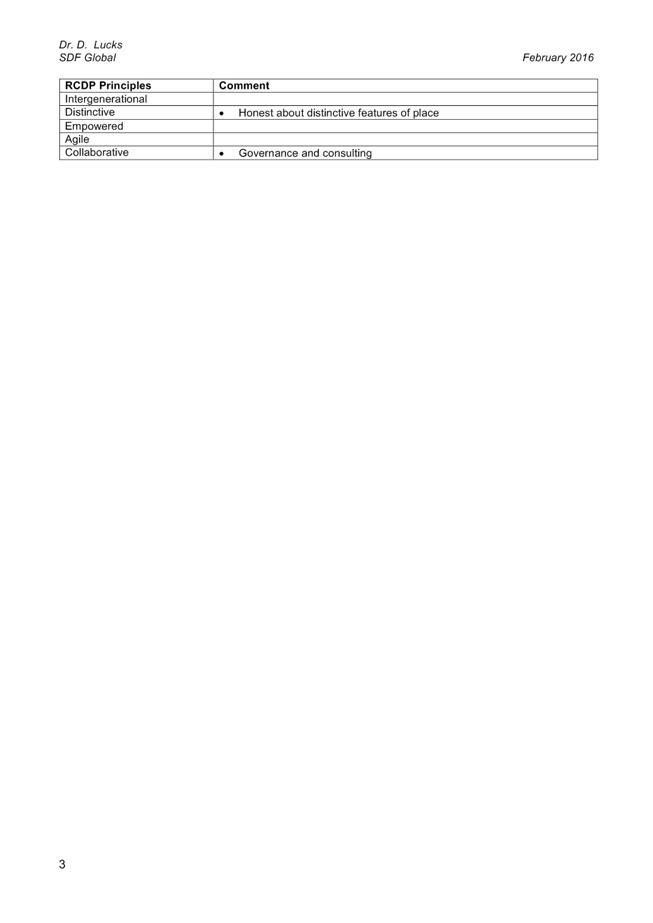
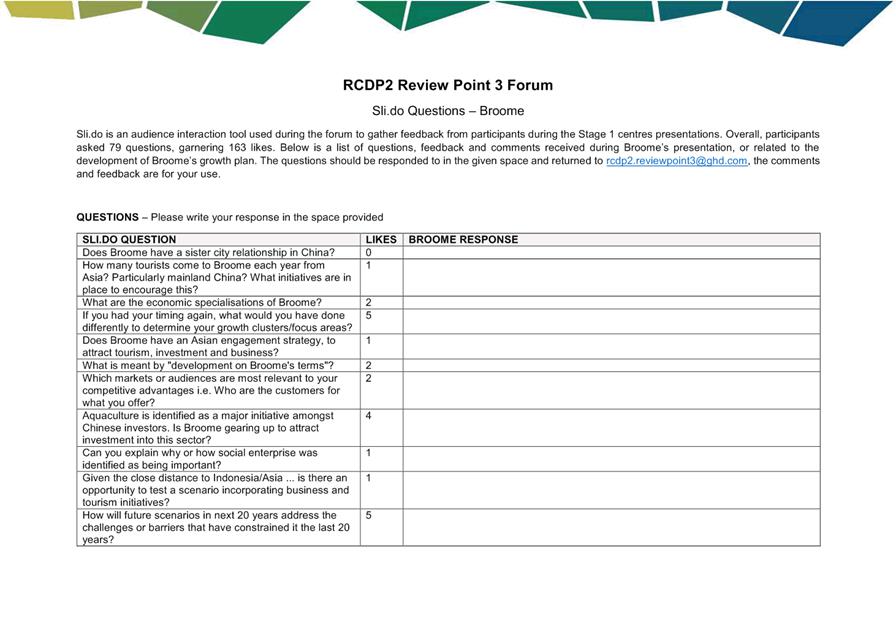
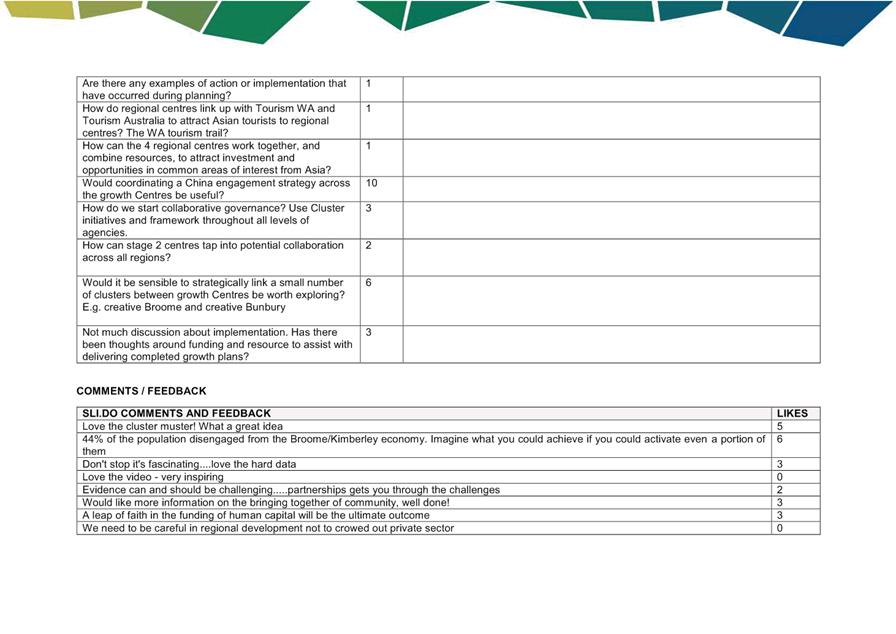
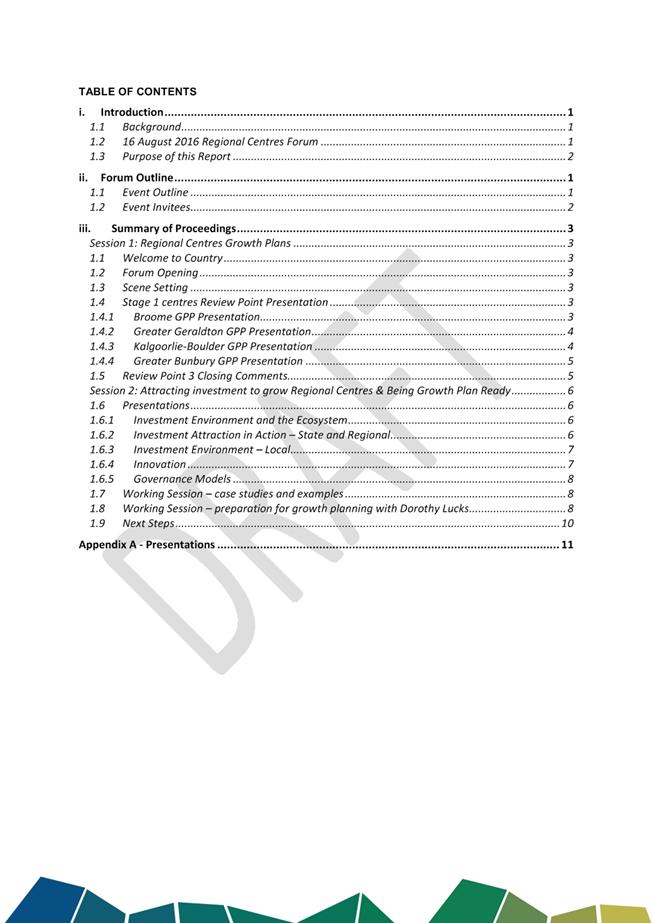
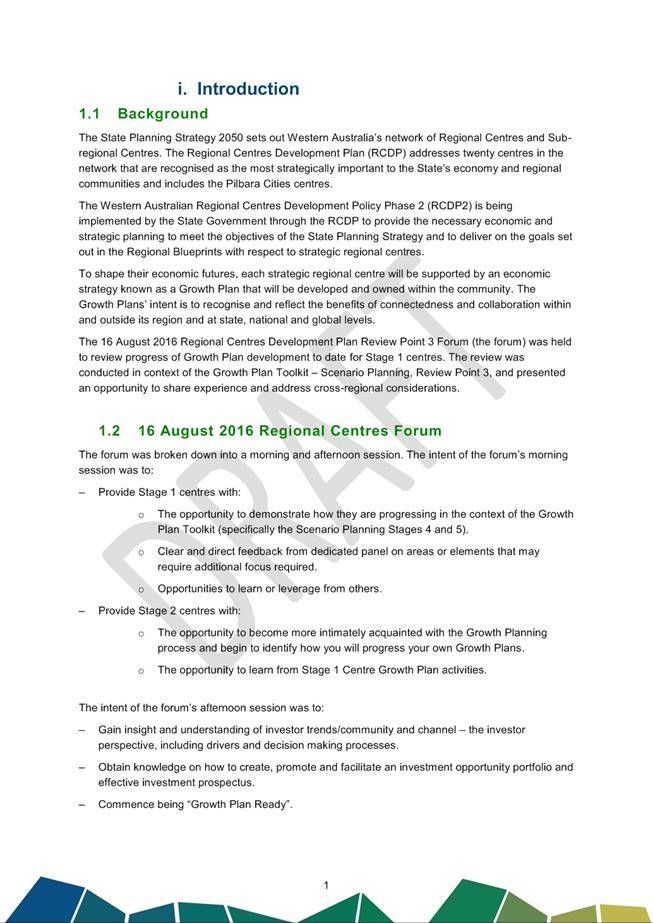
Panellist Assessment and Summary of Proceedings
|
|
13.
|
Discussion Paper -
Governance and Implementation Framework
|
|
Item 5.1 - BROOME GROWTH PLAN - STATUS UPDATE AND KEY
ELEMENTS
|
|
Item 5.1 - BROOME GROWTH PLAN - STATUS UPDATE AND KEY
ELEMENTS
|
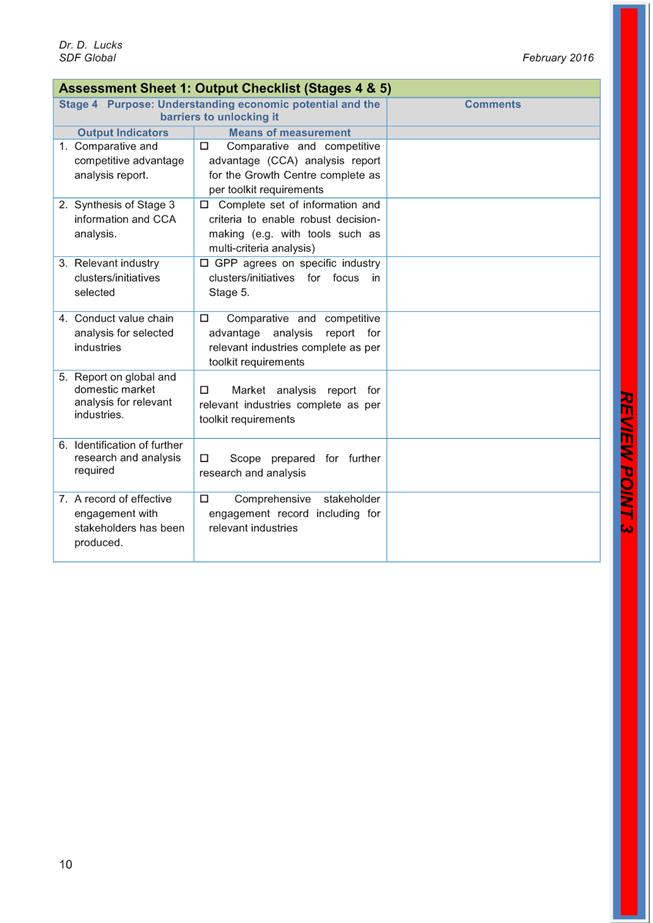
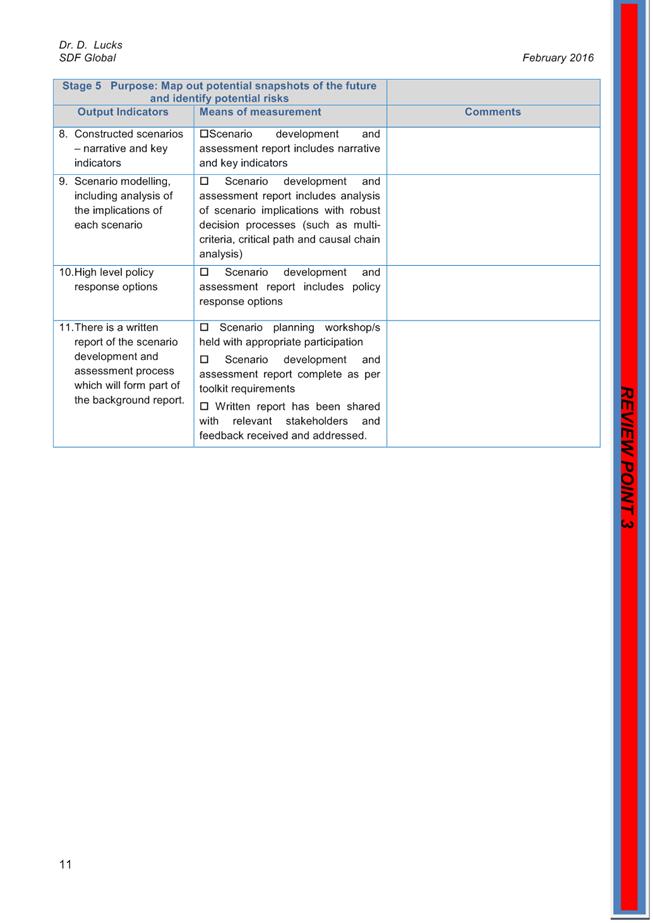
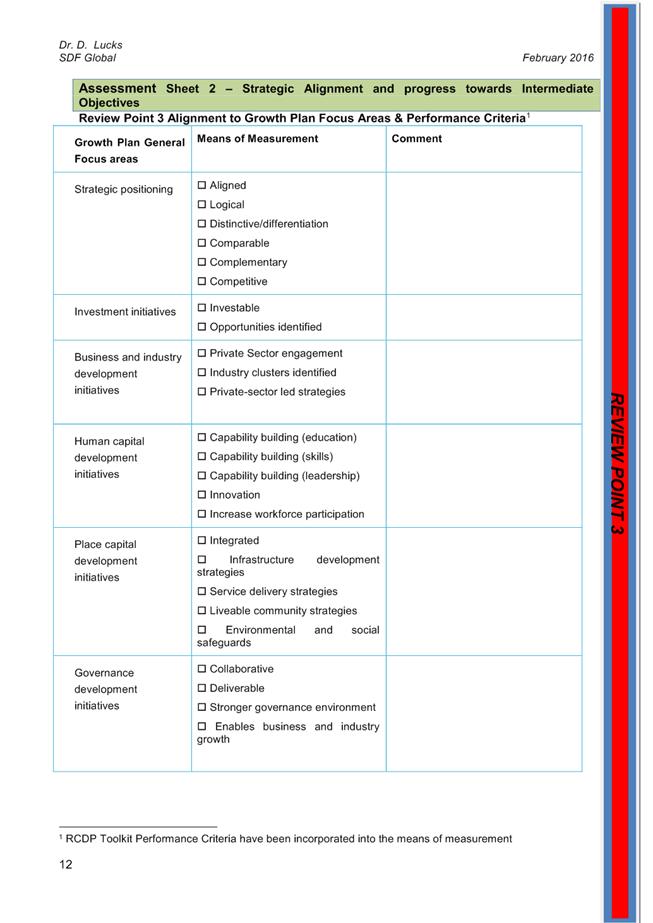
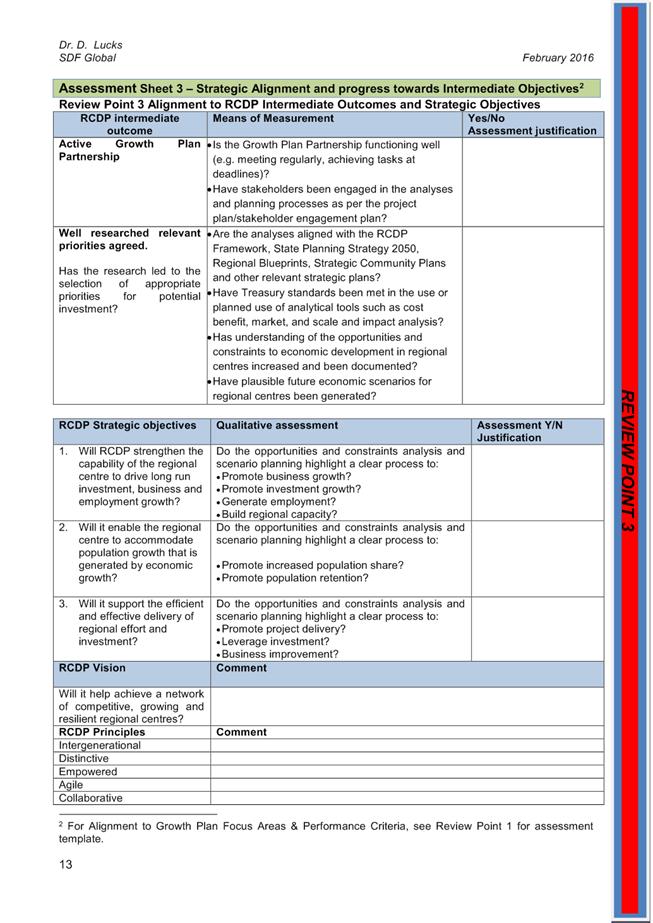

|
Item 5.1 - BROOME GROWTH PLAN - STATUS UPDATE AND KEY
ELEMENTS
|
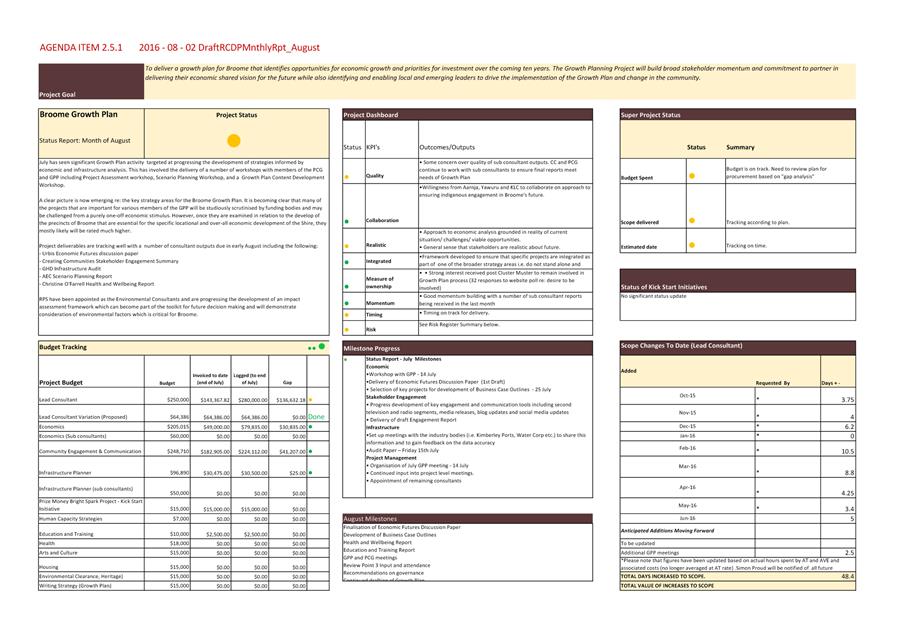
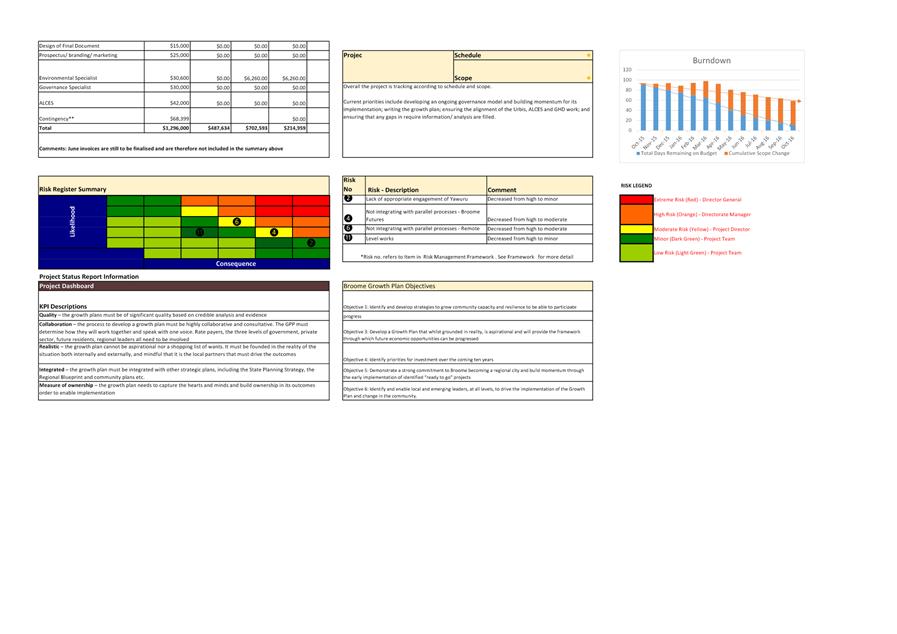
|
Item 5.1 - BROOME GROWTH PLAN - STATUS UPDATE AND KEY
ELEMENTS
|
|
Item 5.1 - BROOME GROWTH PLAN - STATUS UPDATE AND KEY
ELEMENTS
|
|
Item 5.1 - BROOME GROWTH PLAN - STATUS UPDATE AND KEY
ELEMENTS
|
|
Item 5.1 - BROOME GROWTH PLAN - STATUS UPDATE AND KEY
ELEMENTS
|
|
Item 5.1 - BROOME GROWTH PLAN - STATUS UPDATE AND KEY
ELEMENTS
|

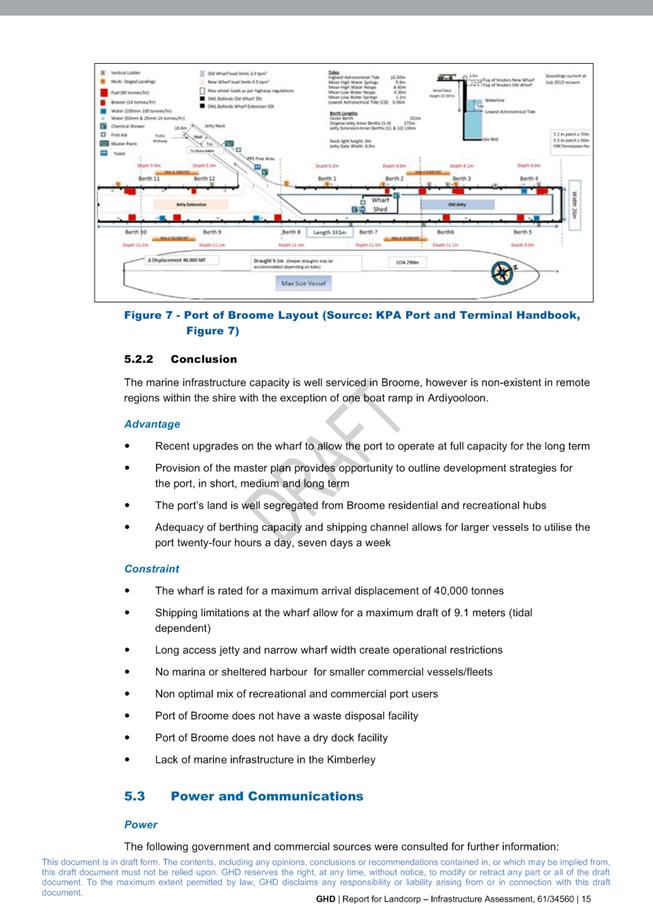
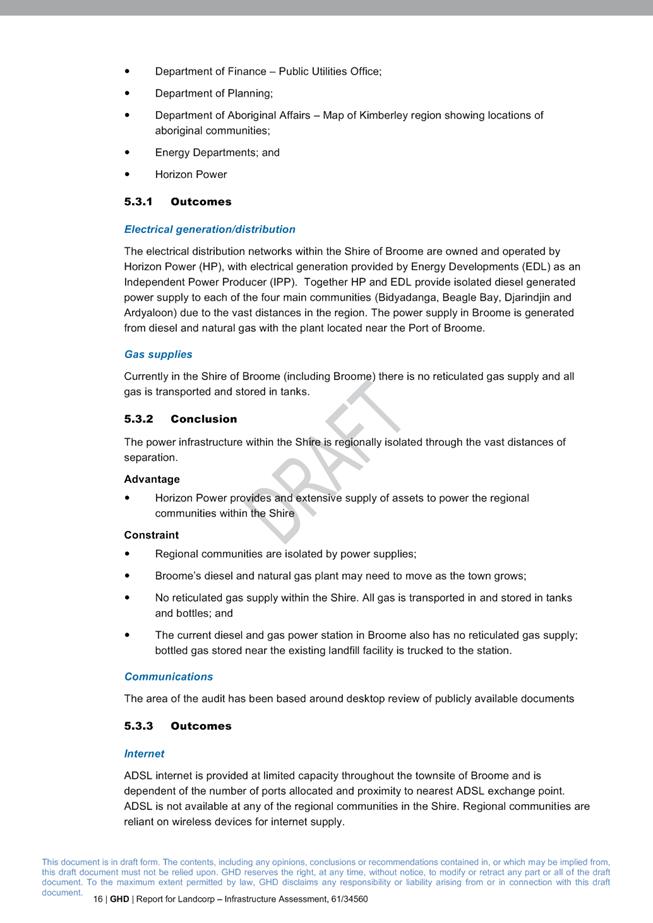
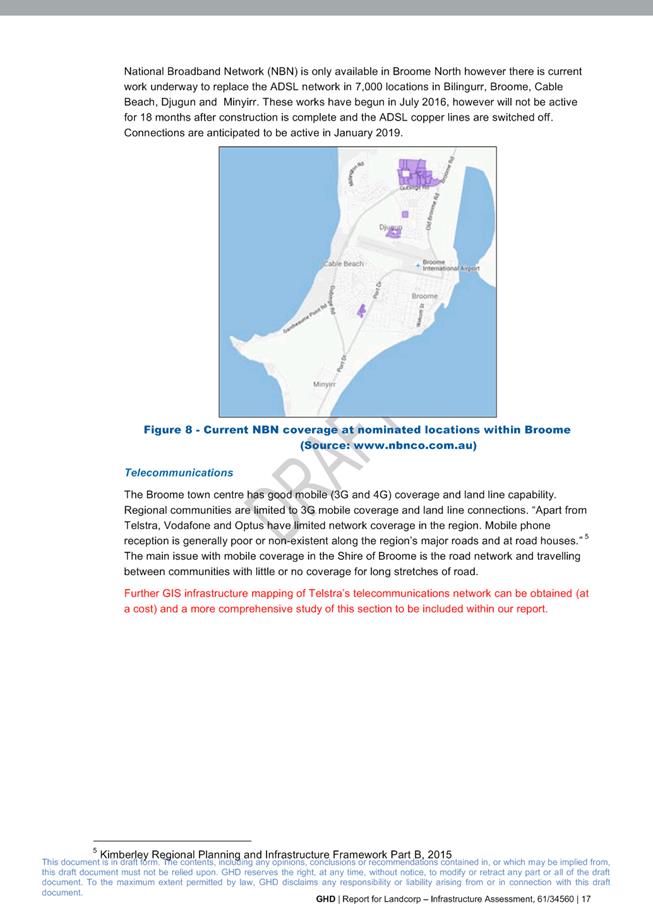
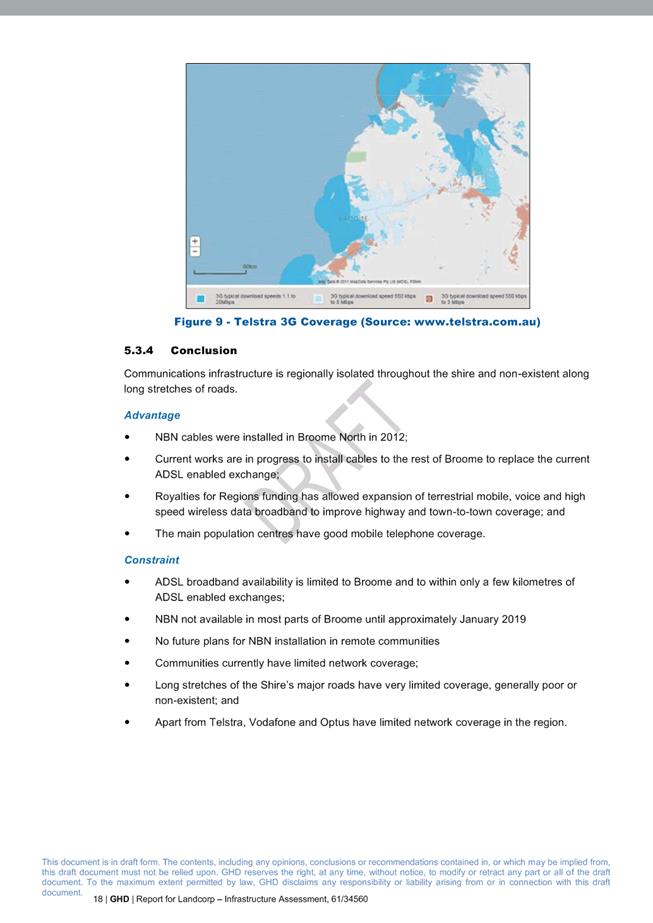
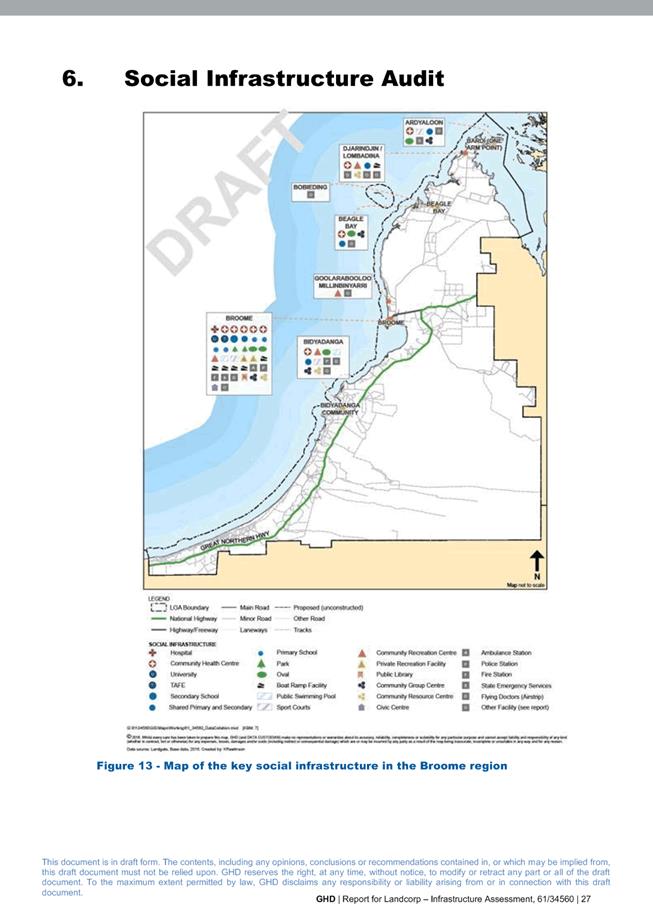
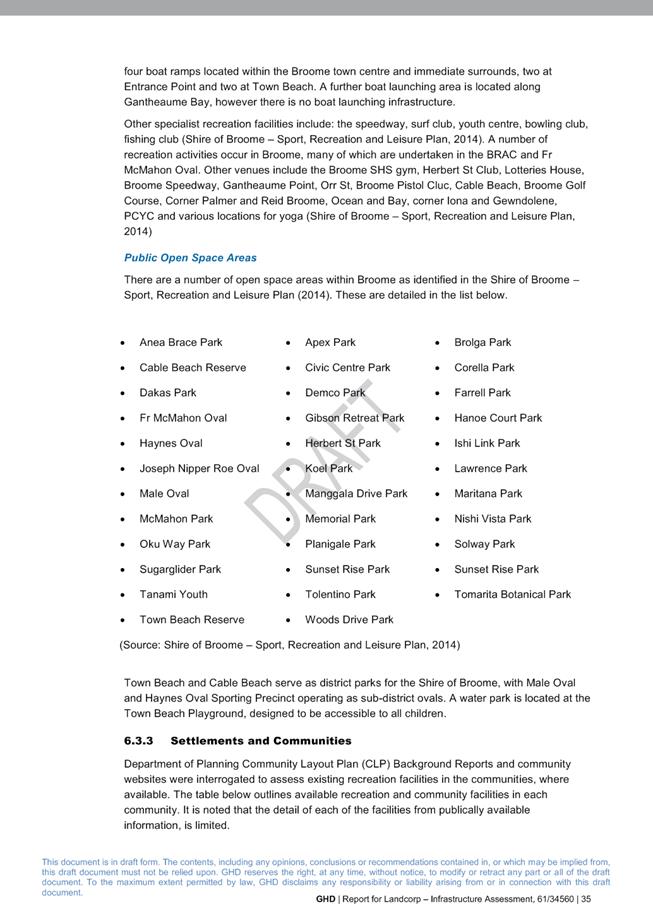
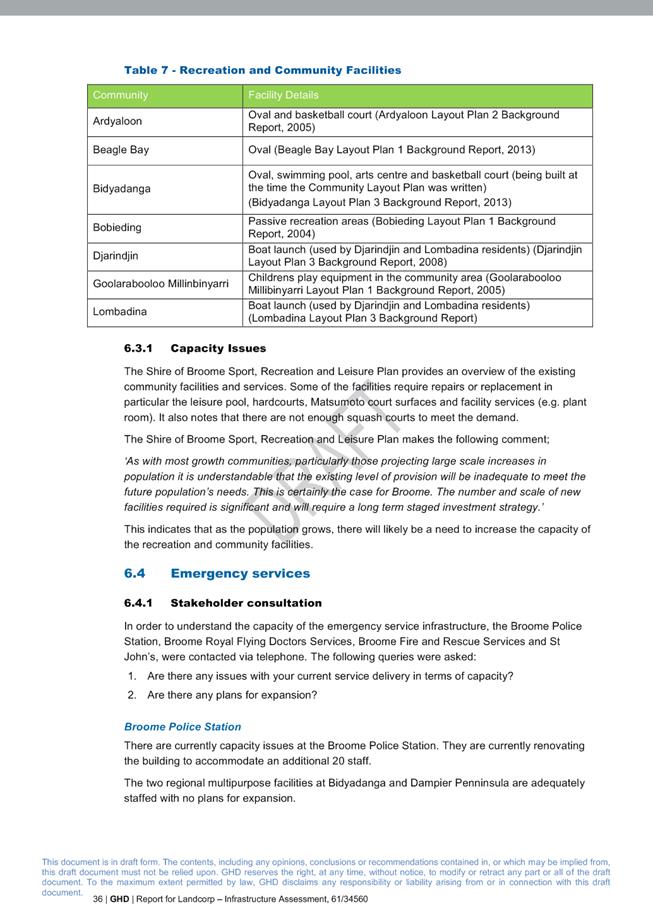
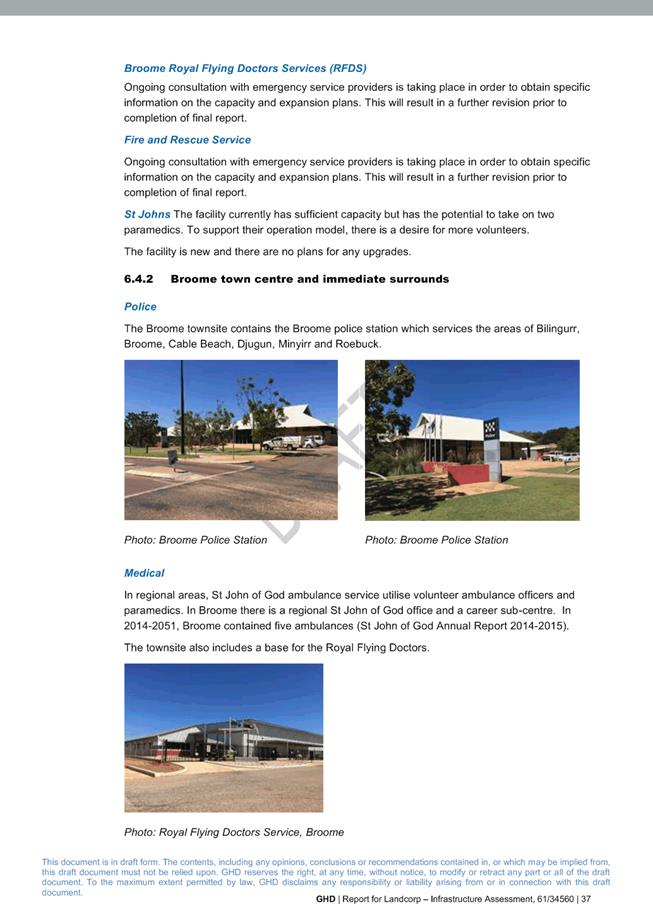
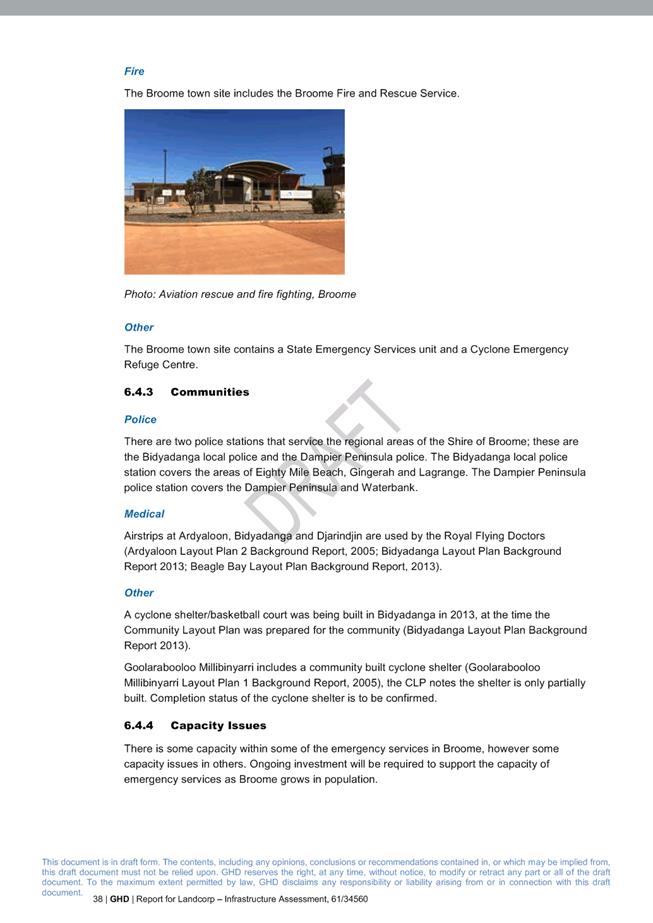
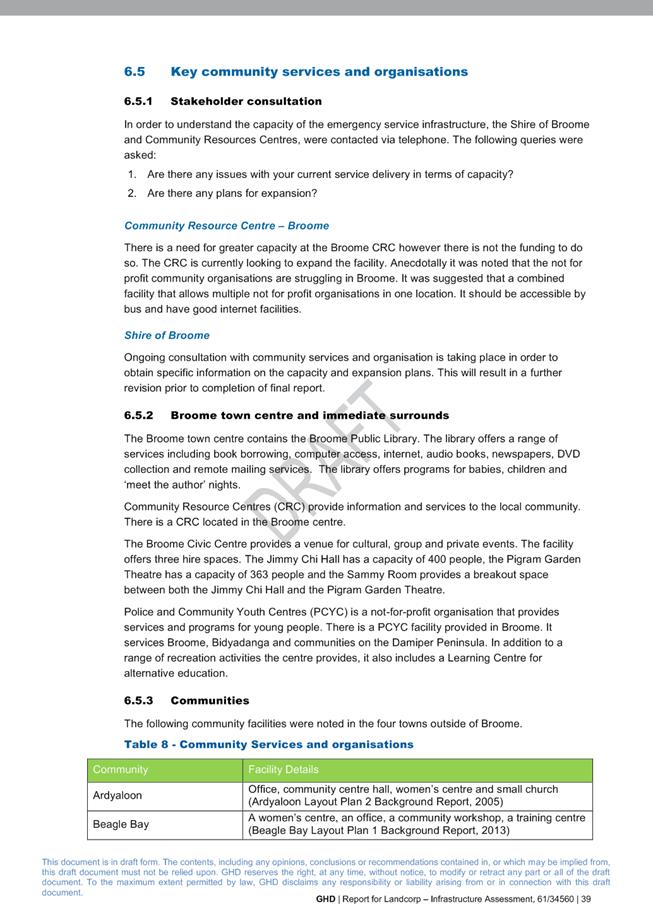
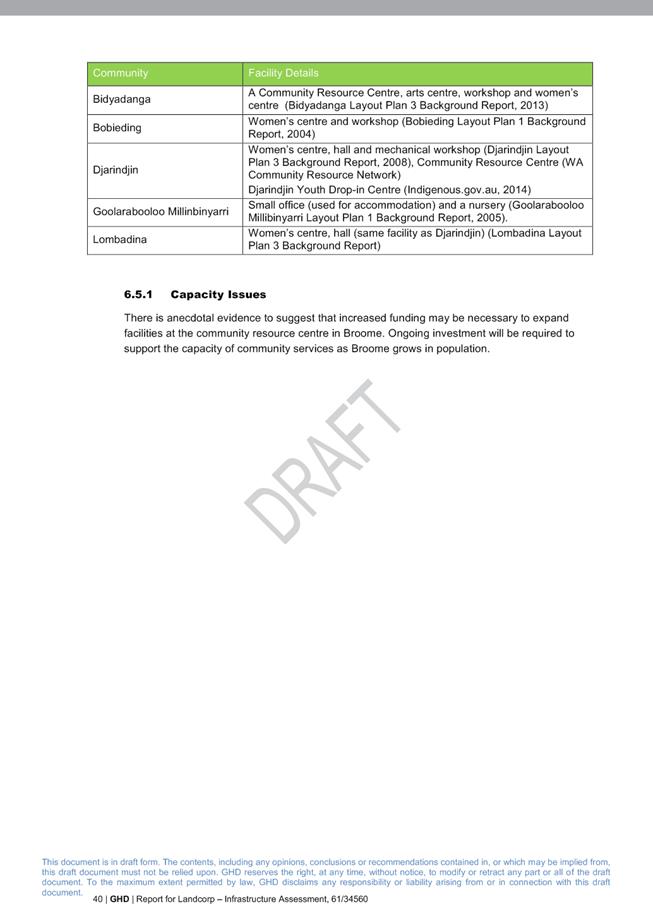
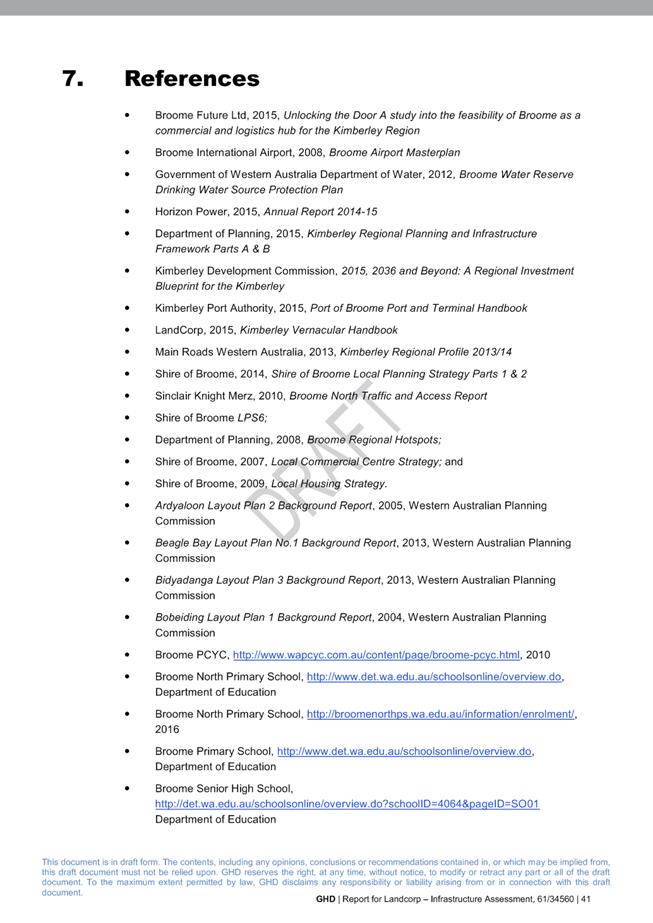
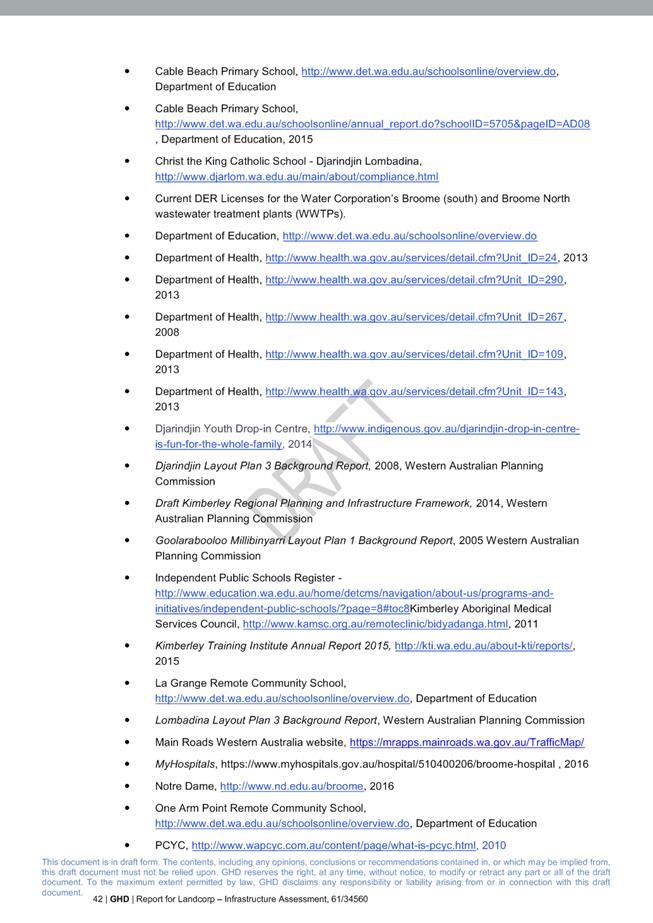
|
Item 5.1 - BROOME GROWTH PLAN - STATUS UPDATE AND KEY
ELEMENTS
|

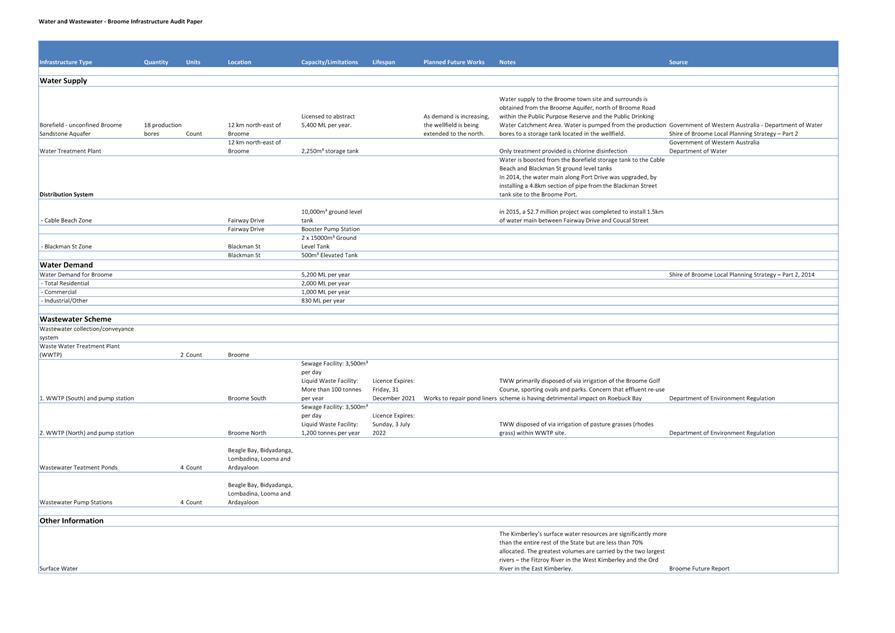
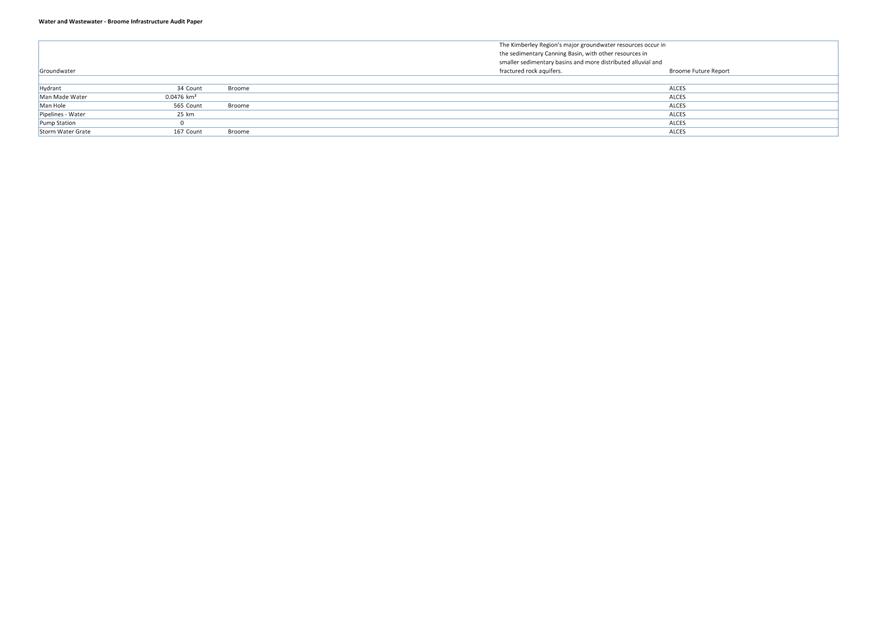
|
Item 5.1 - BROOME GROWTH PLAN - STATUS UPDATE AND KEY
ELEMENTS
|
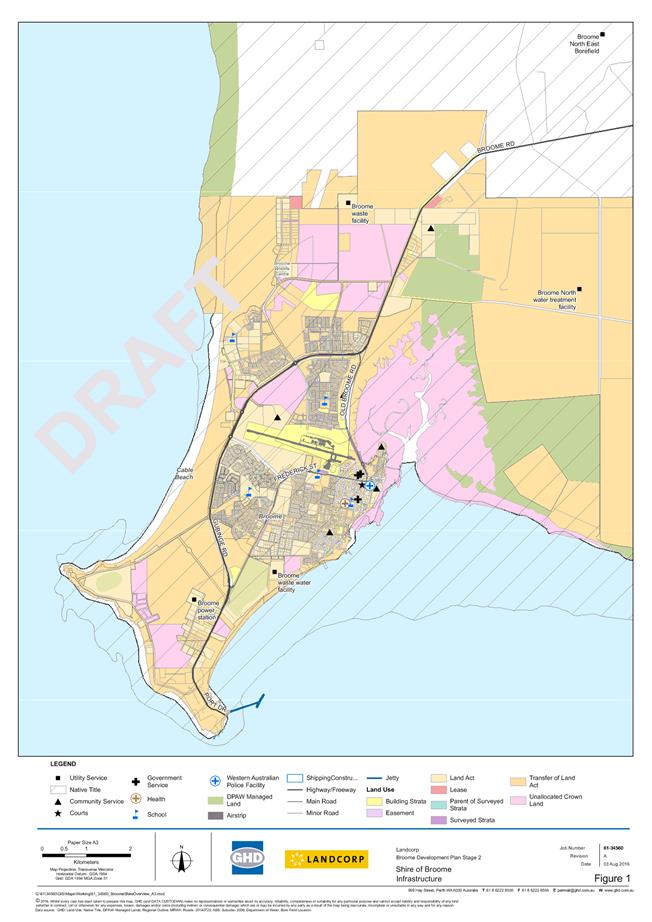
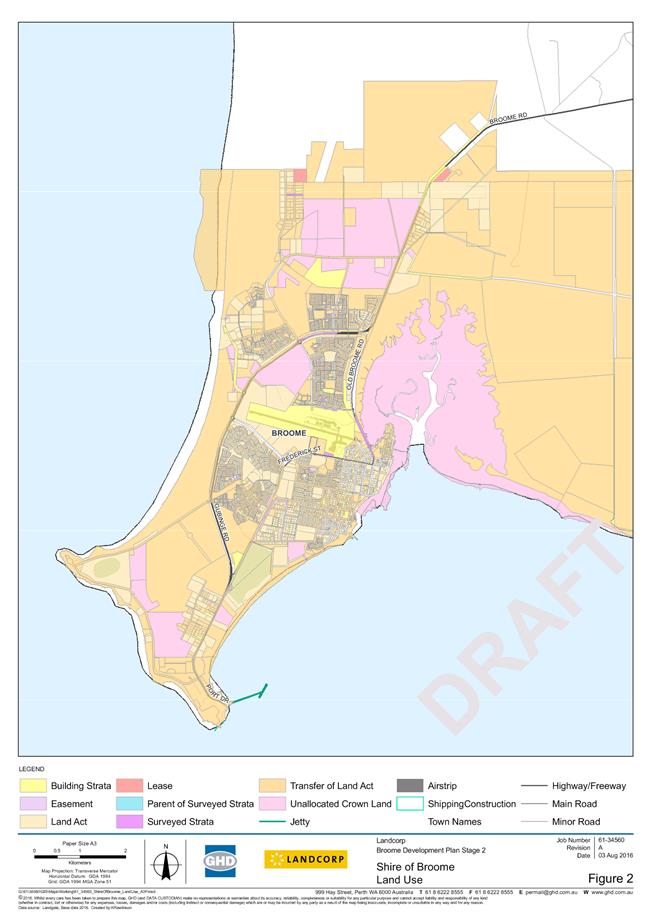

|
Item 5.1 - BROOME GROWTH PLAN - STATUS UPDATE AND KEY
ELEMENTS
|
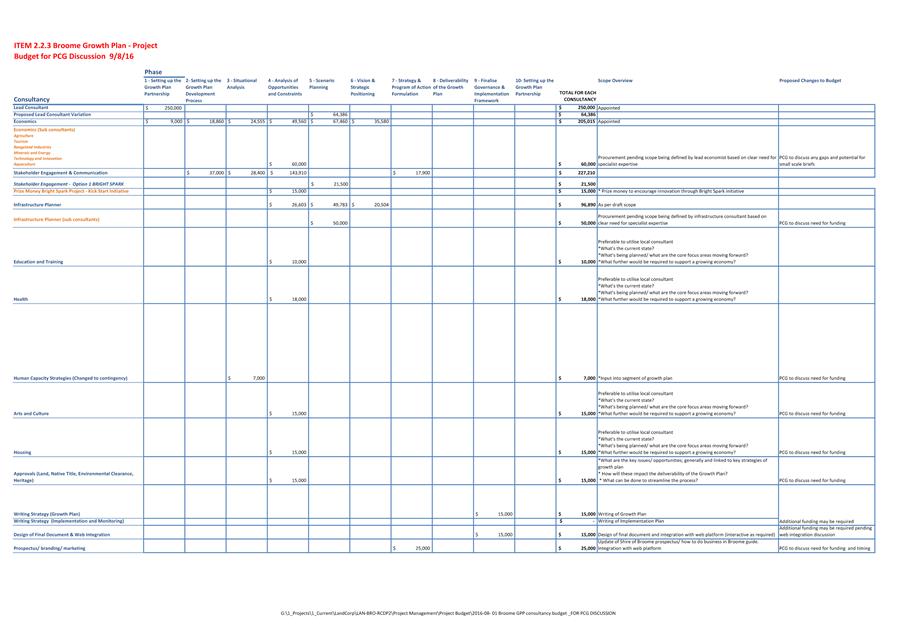
|
Item 5.1 - BROOME GROWTH PLAN - STATUS UPDATE AND KEY
ELEMENTS
|
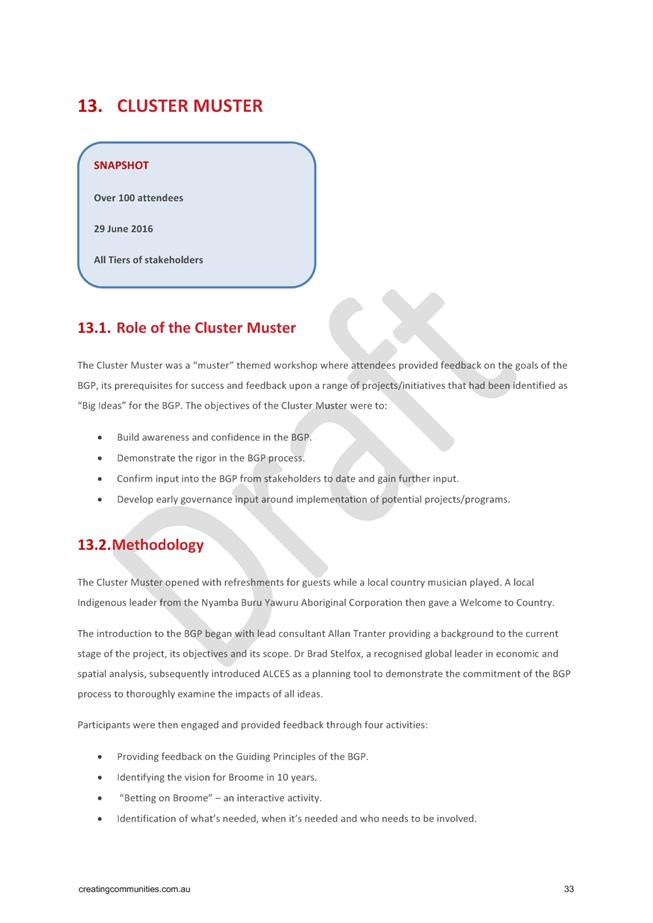
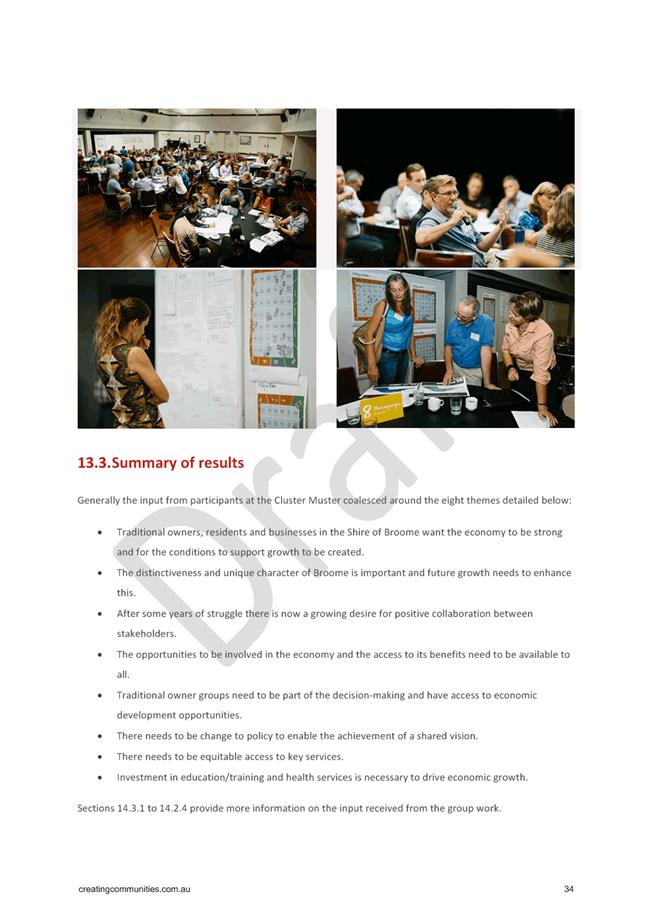
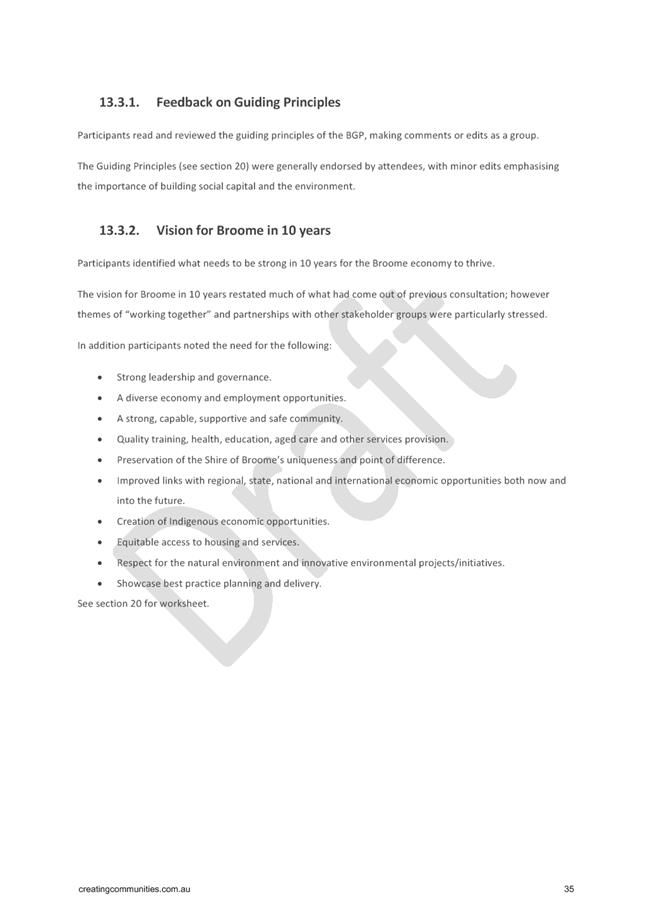
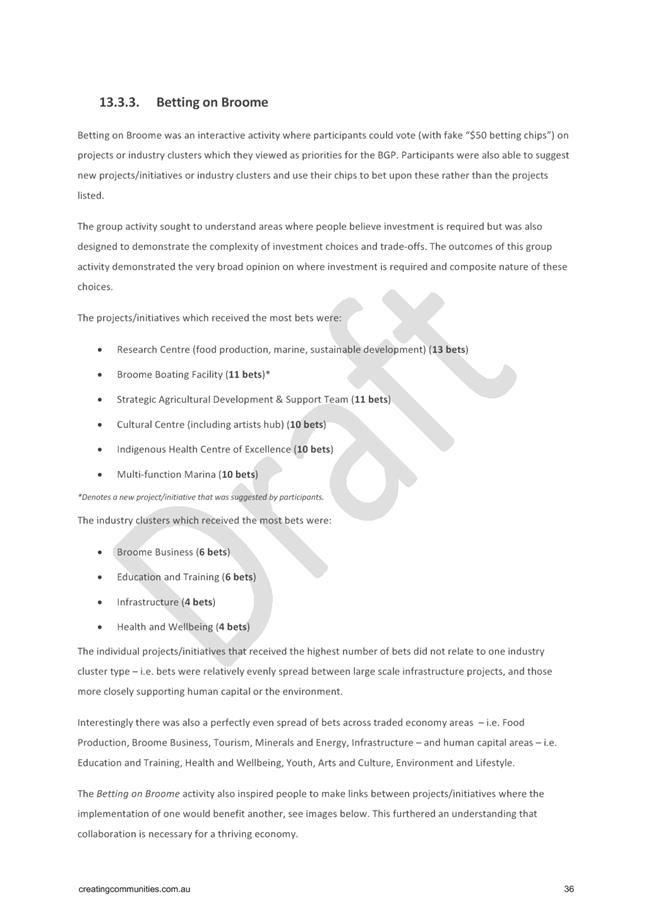
|
Item 5.1 - BROOME GROWTH PLAN - STATUS UPDATE AND KEY
ELEMENTS
|
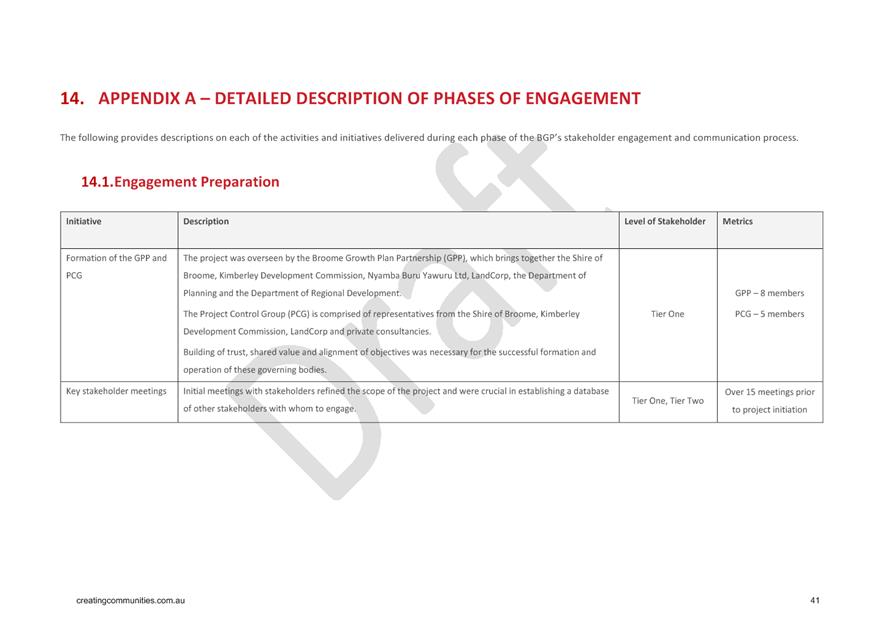
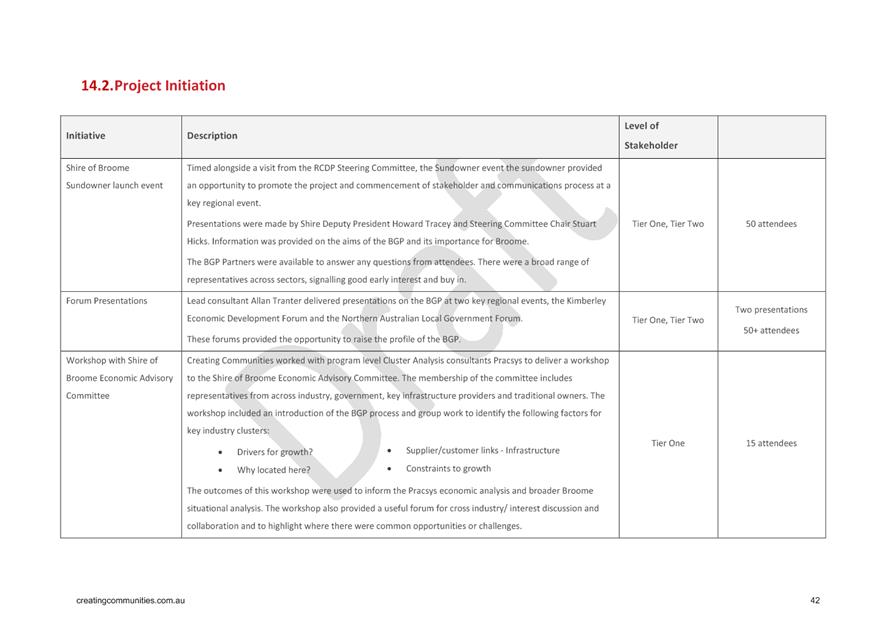
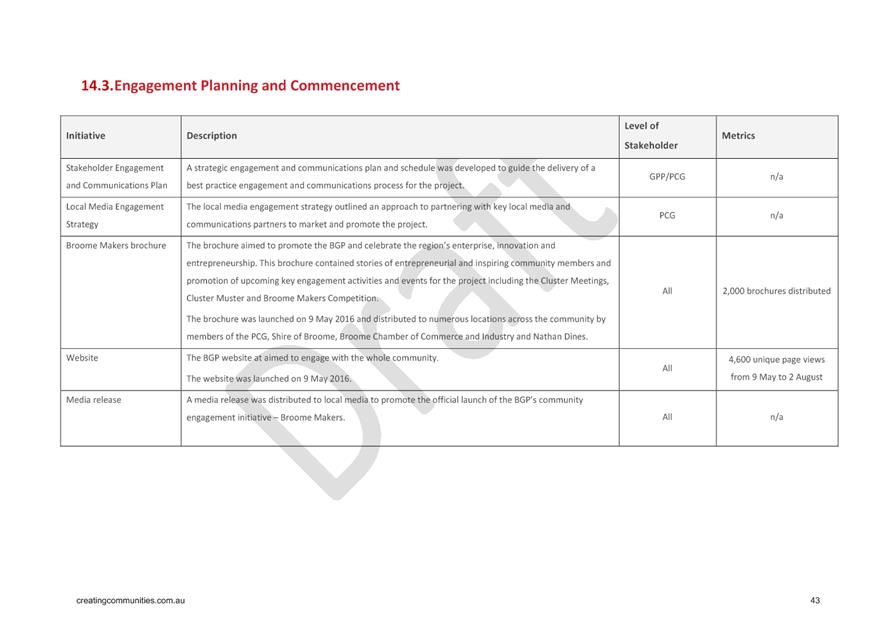
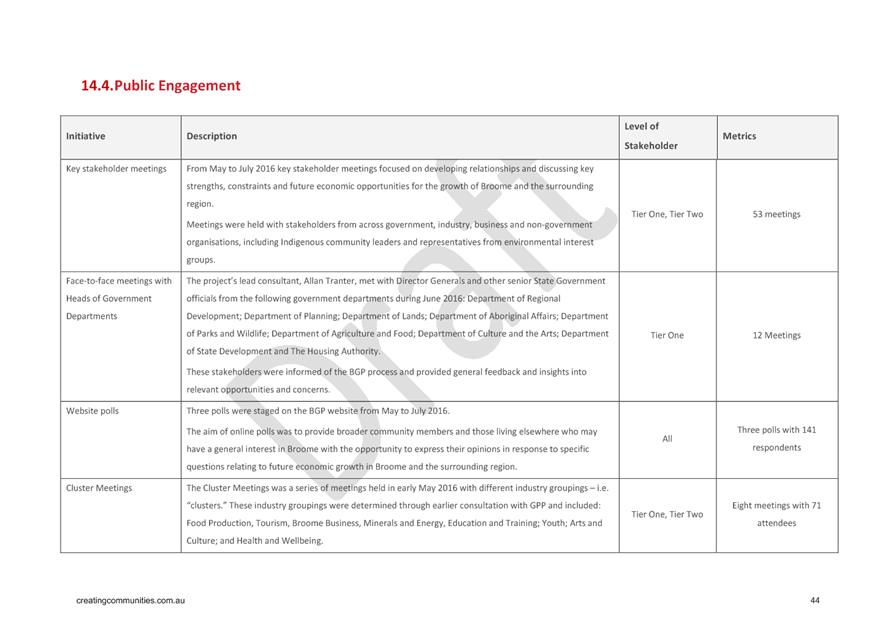
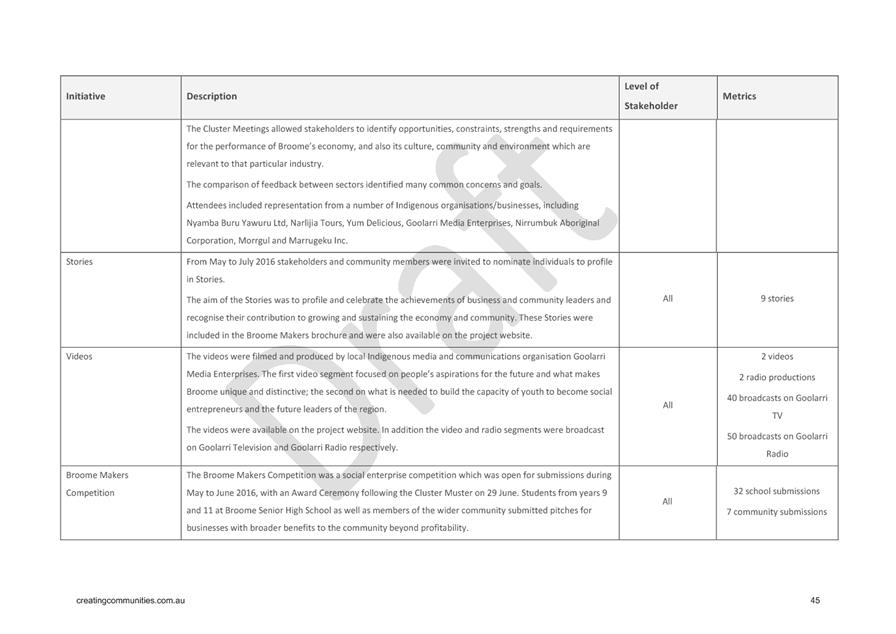
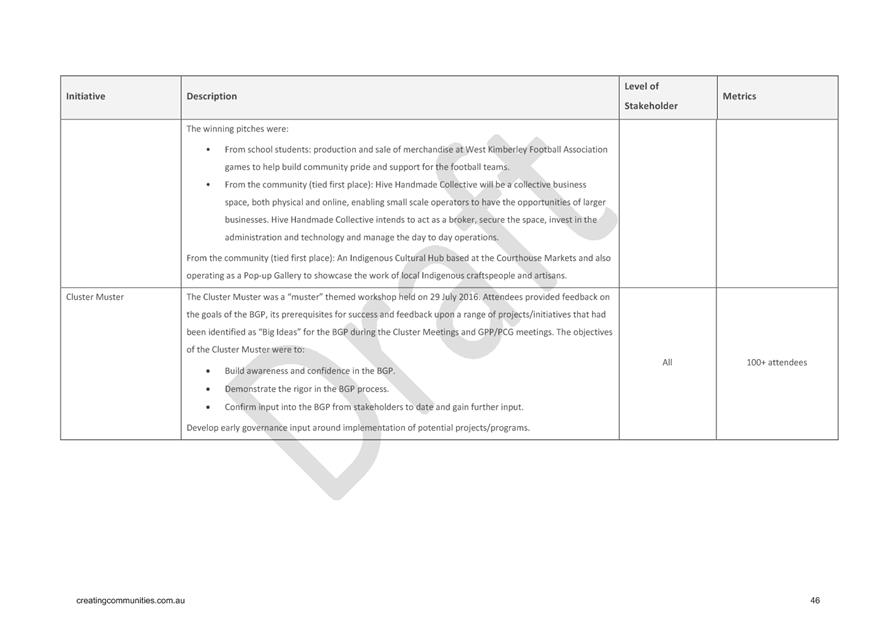
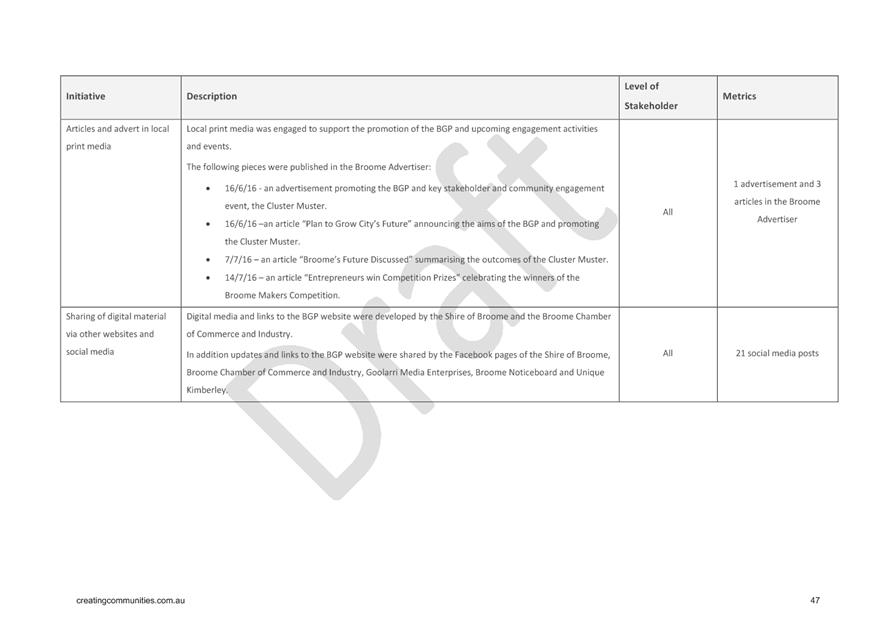
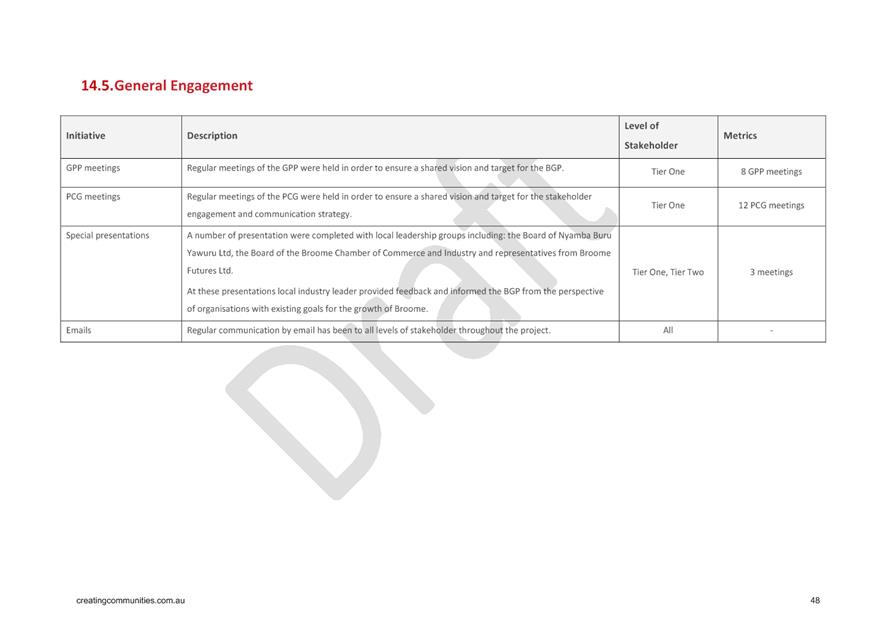
|
Item 5.1 - BROOME GROWTH PLAN - STATUS UPDATE AND KEY
ELEMENTS
|
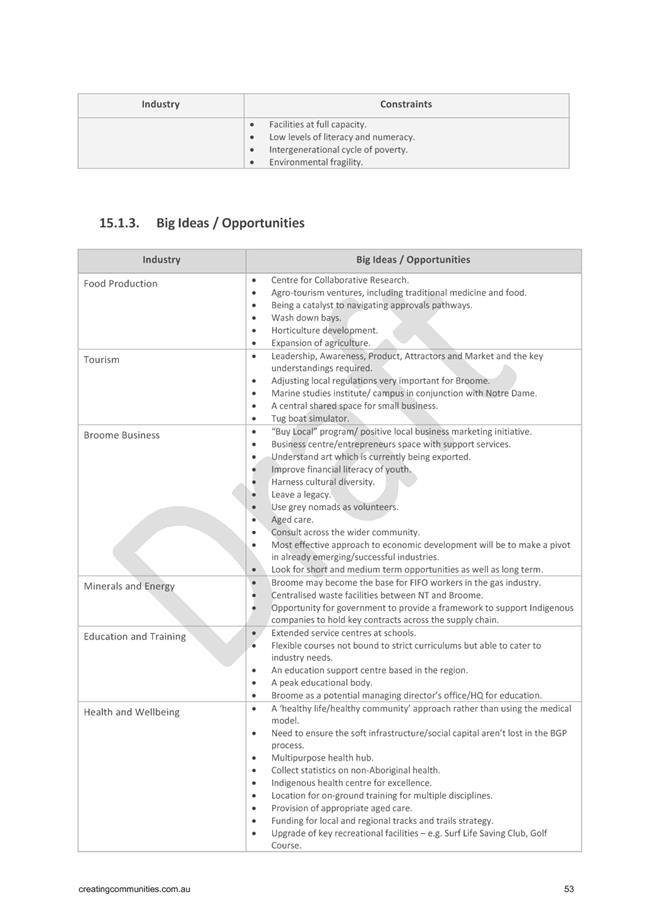
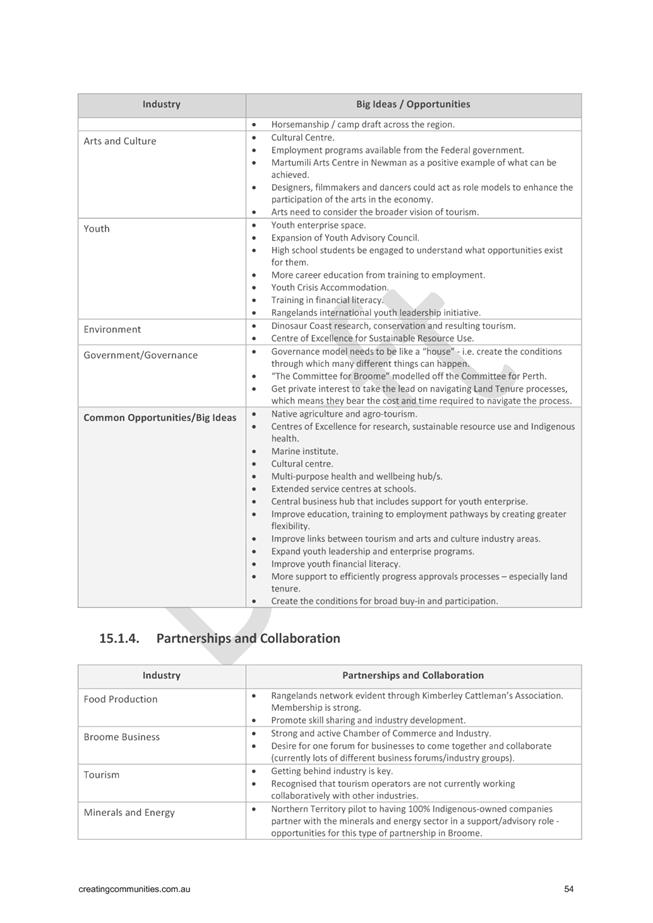
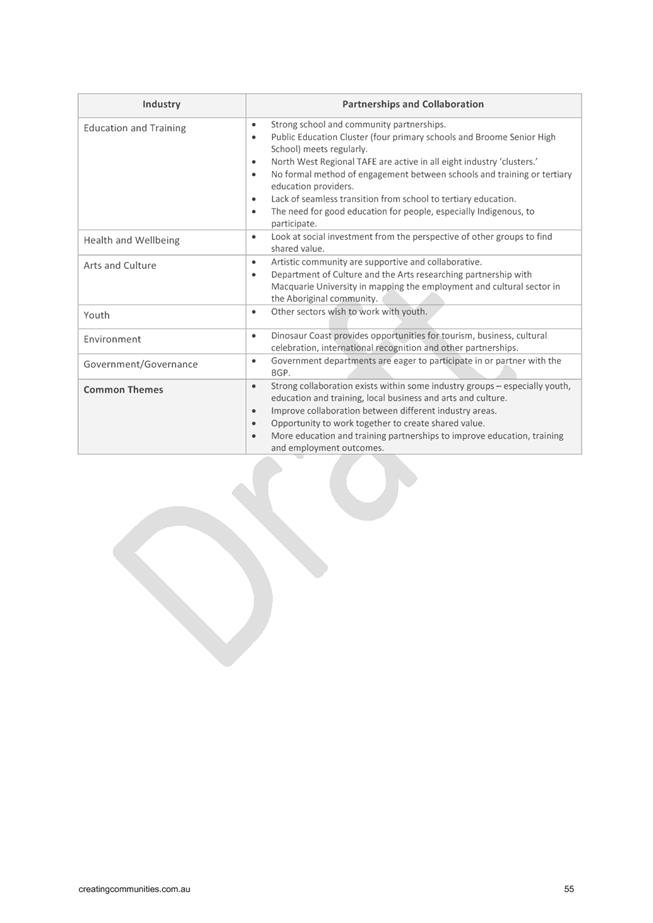
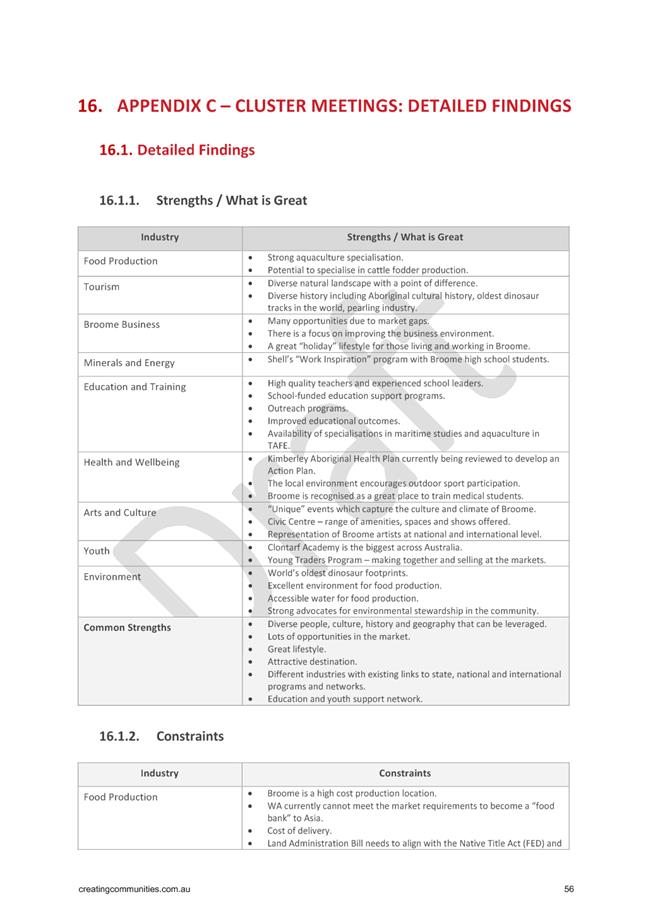
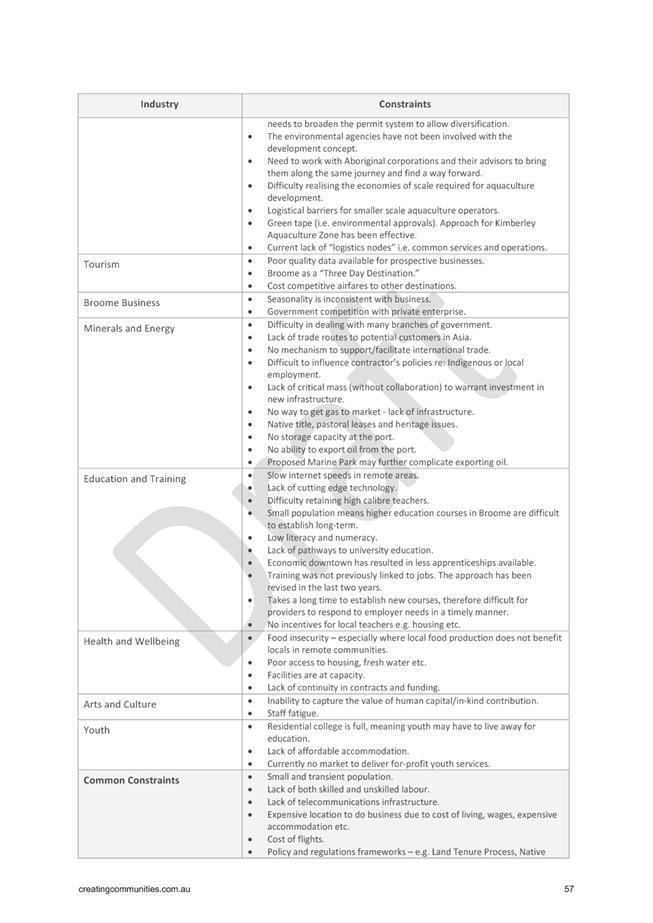
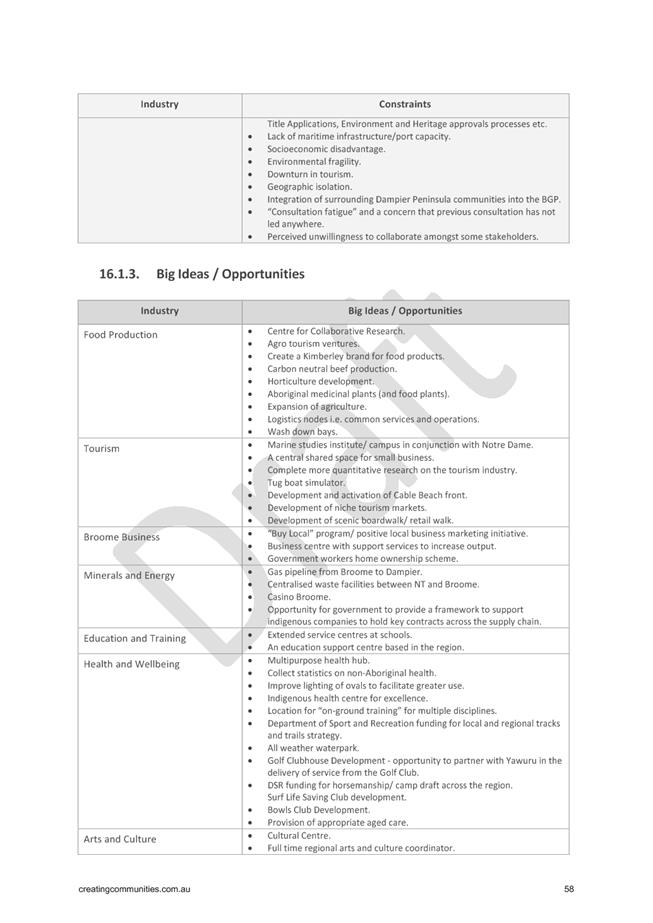
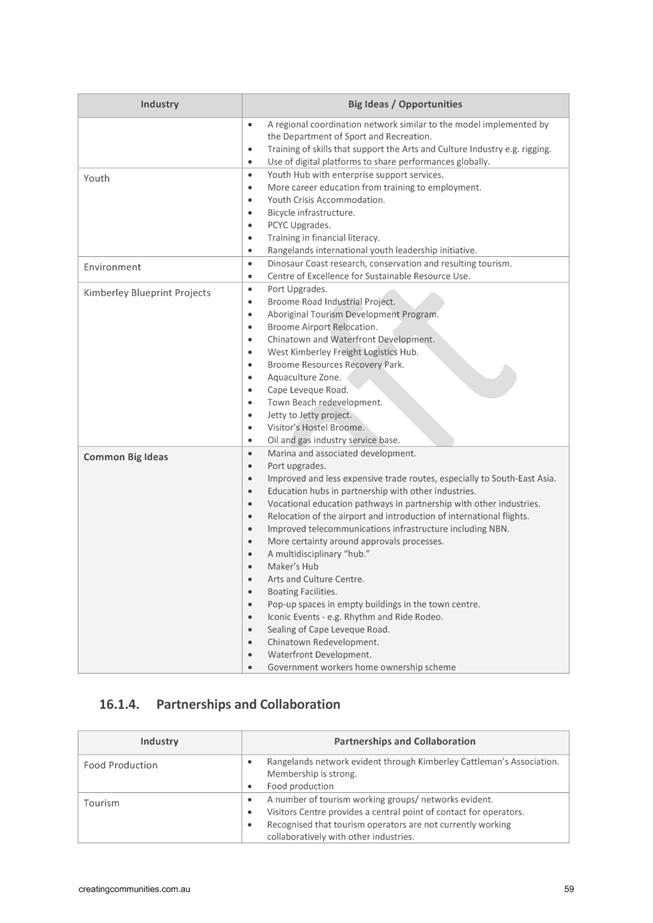
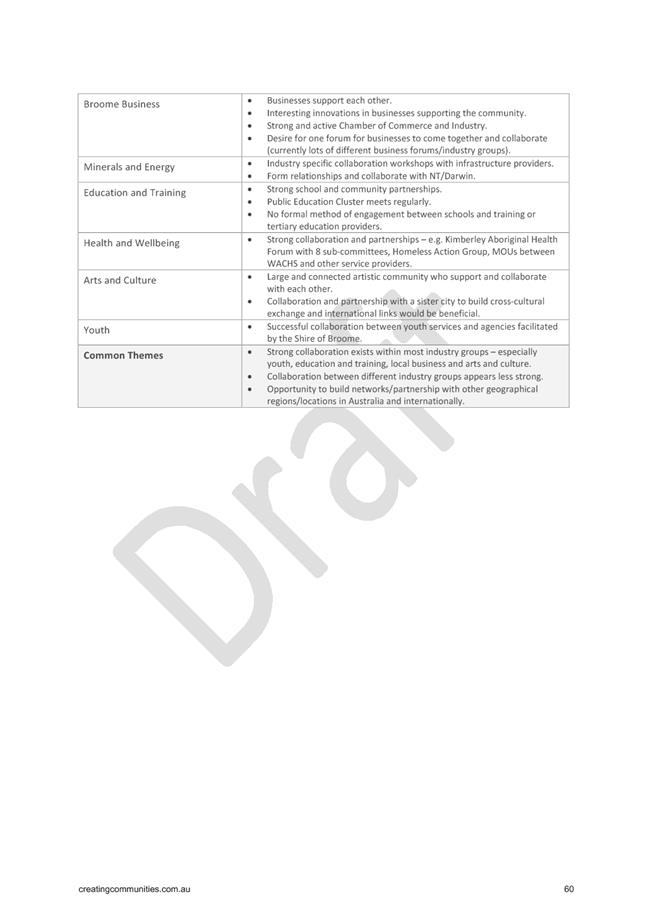
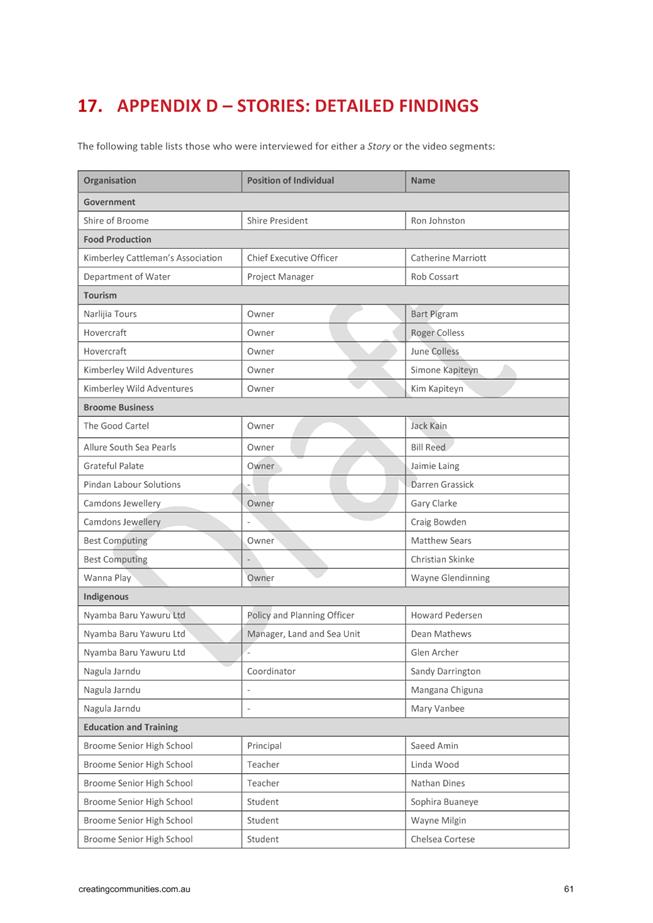
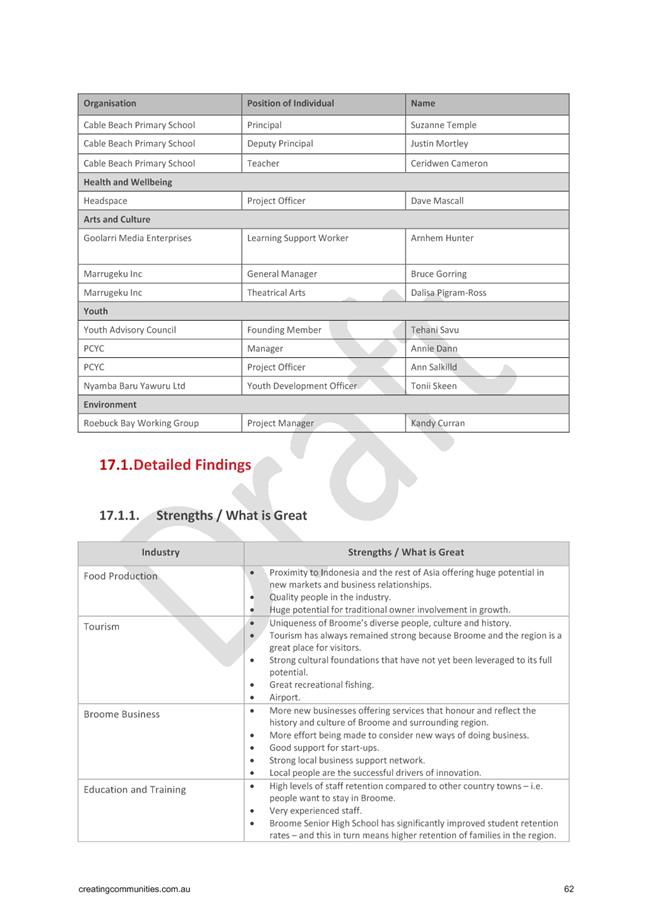
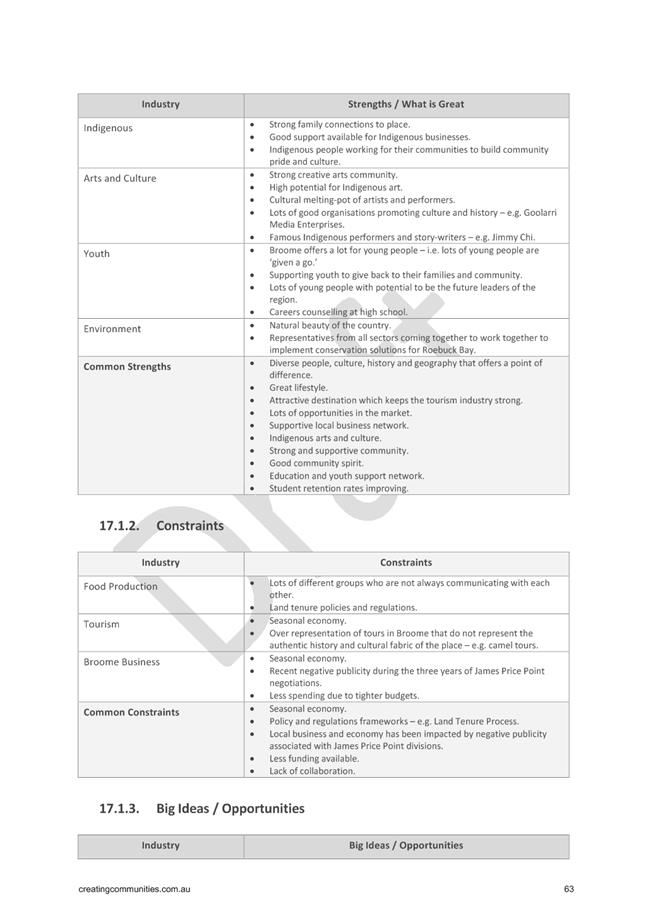
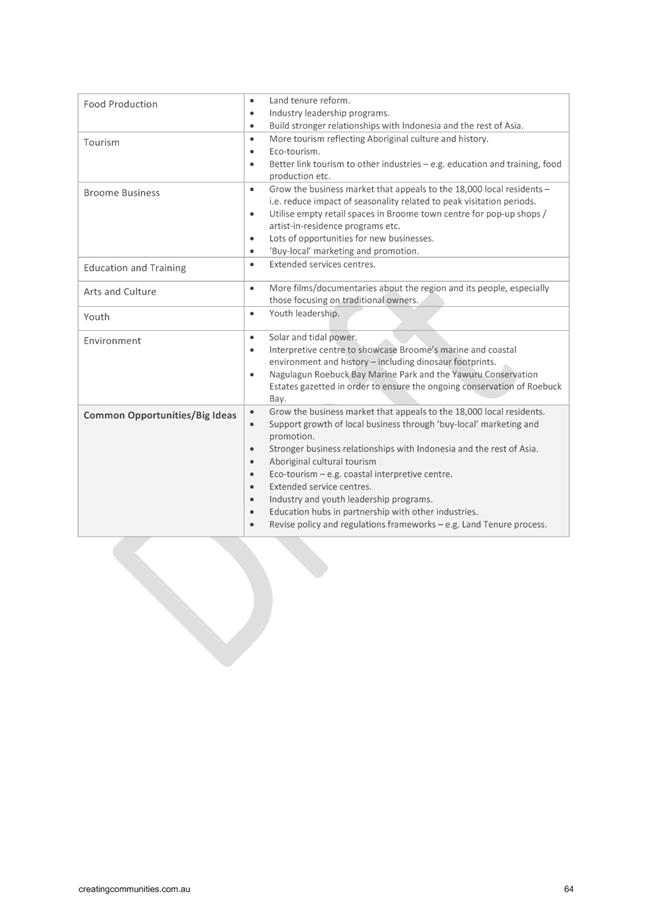
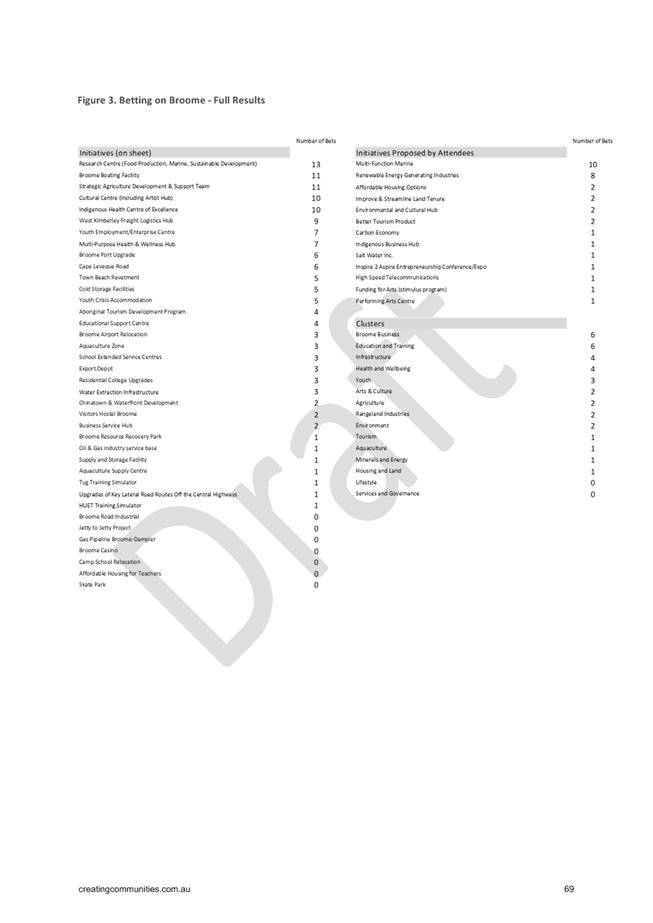
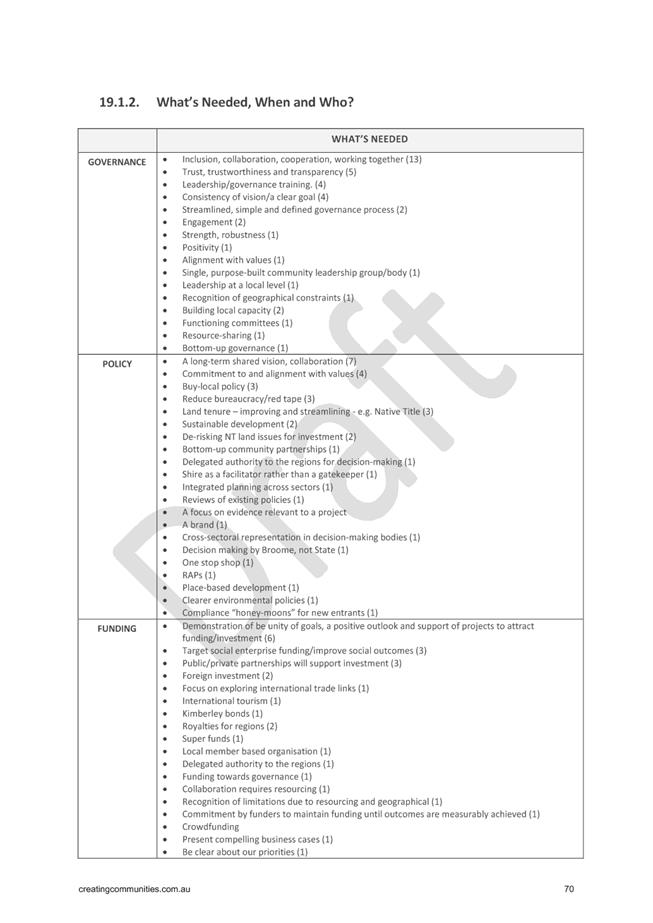
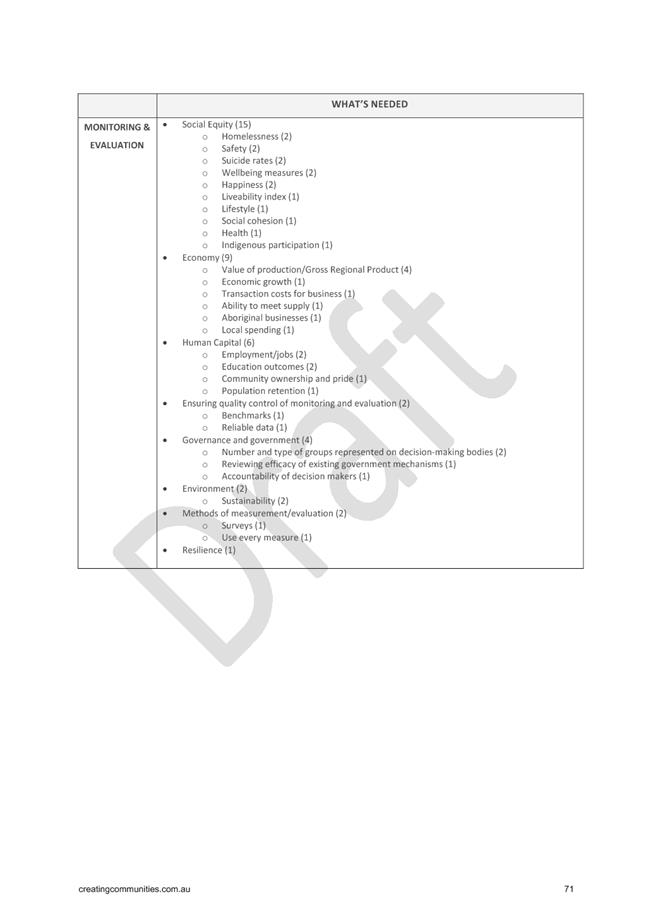
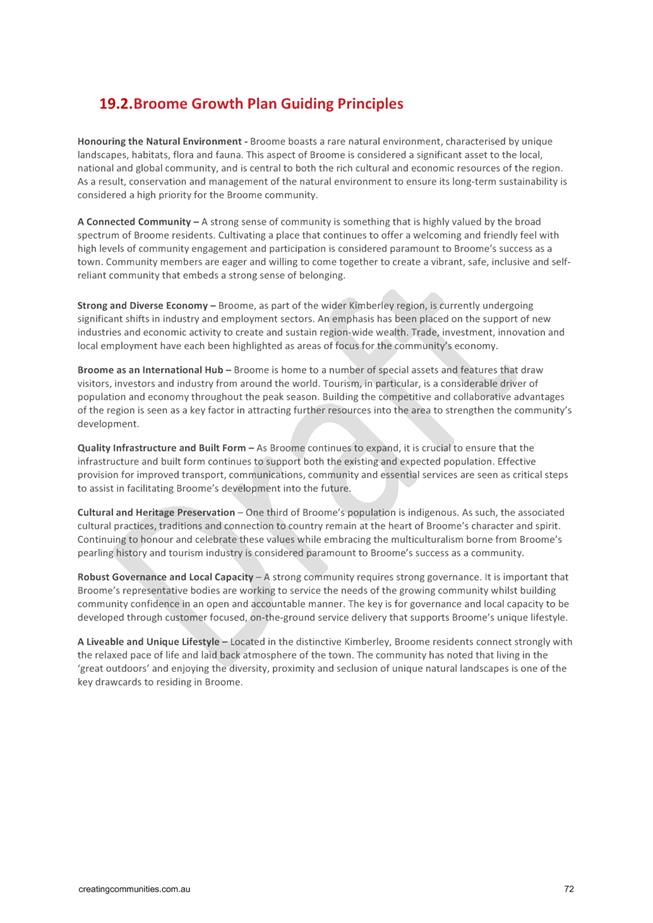

|
Item 5.1 - BROOME GROWTH PLAN - STATUS UPDATE AND KEY
ELEMENTS
|
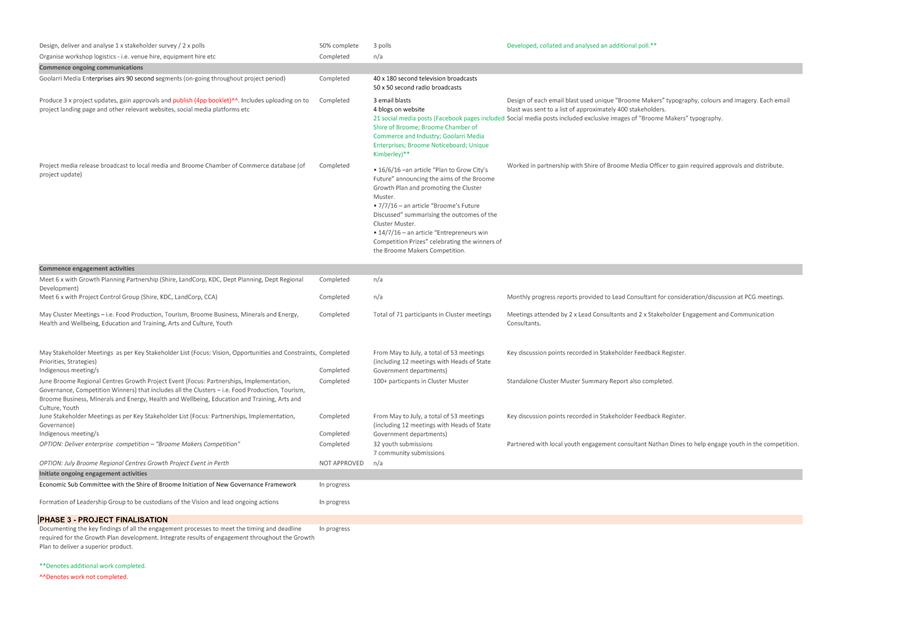
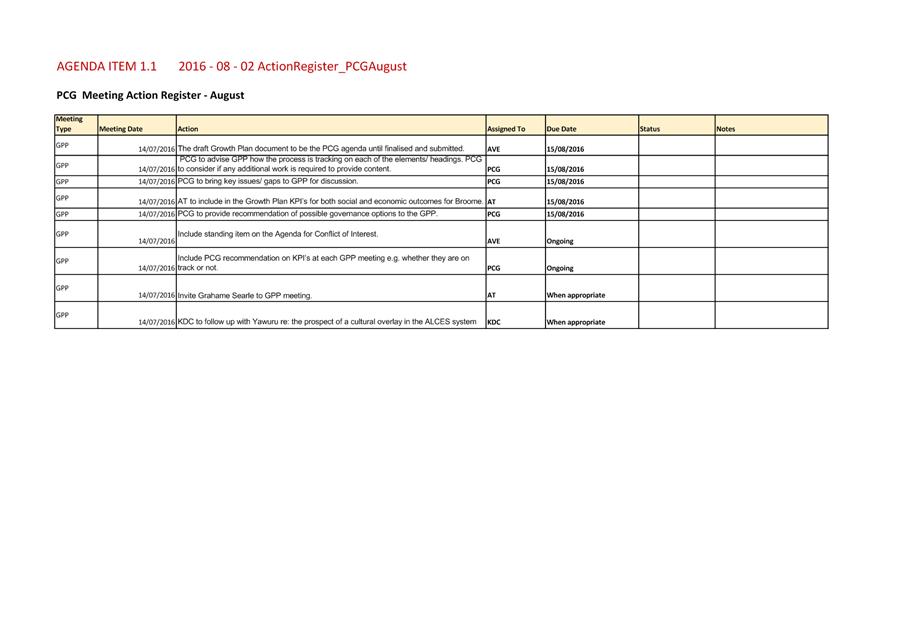
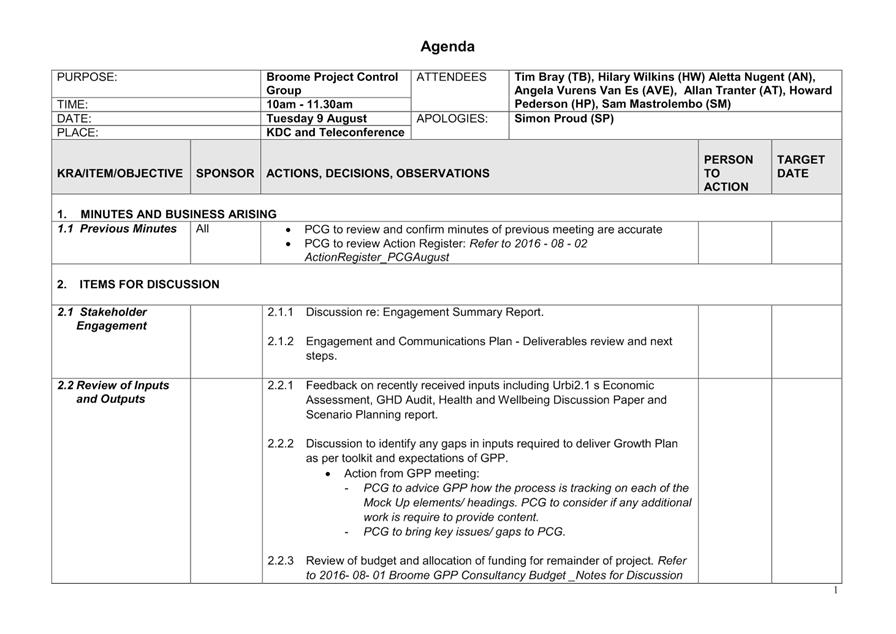
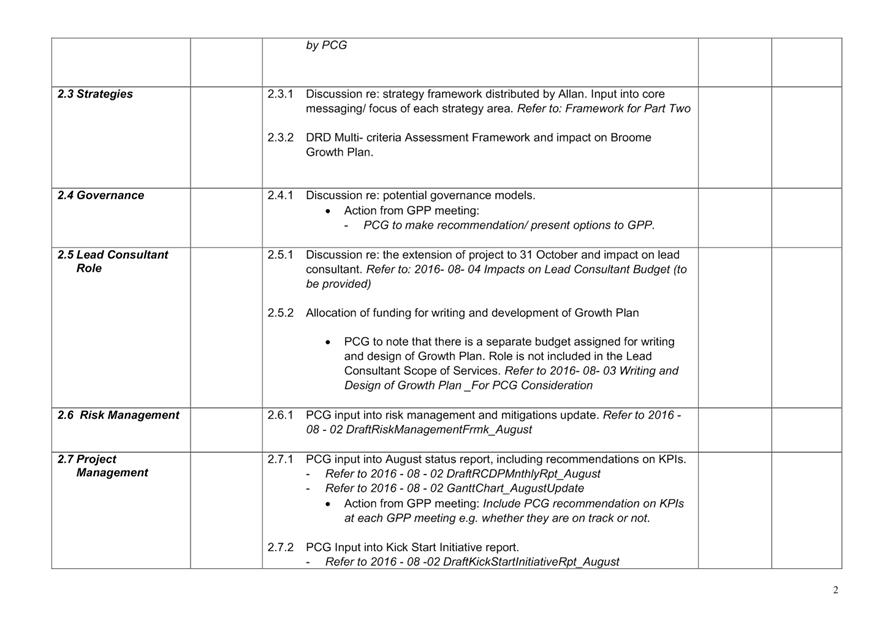
|
Item 5.1 - BROOME GROWTH PLAN - STATUS UPDATE AND KEY
ELEMENTS
|
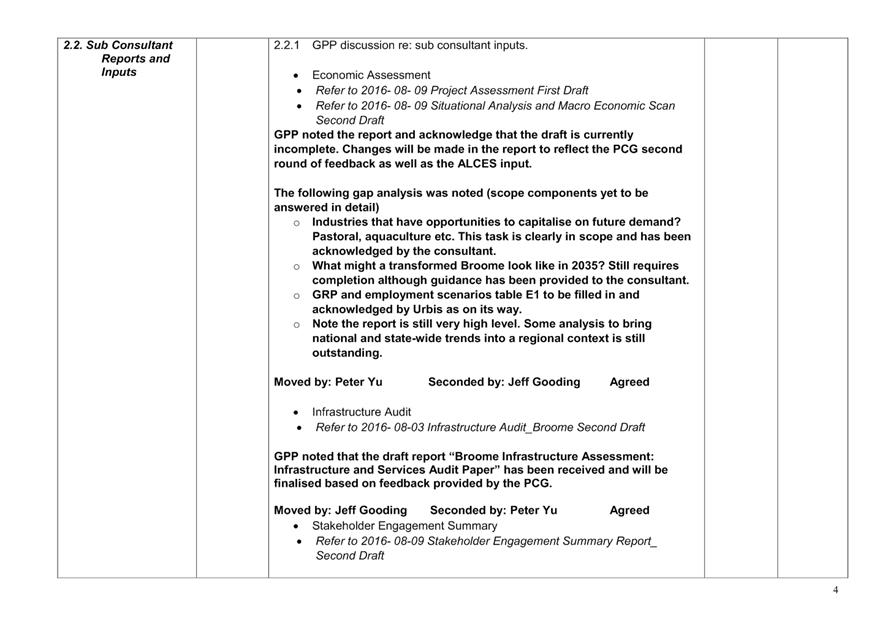
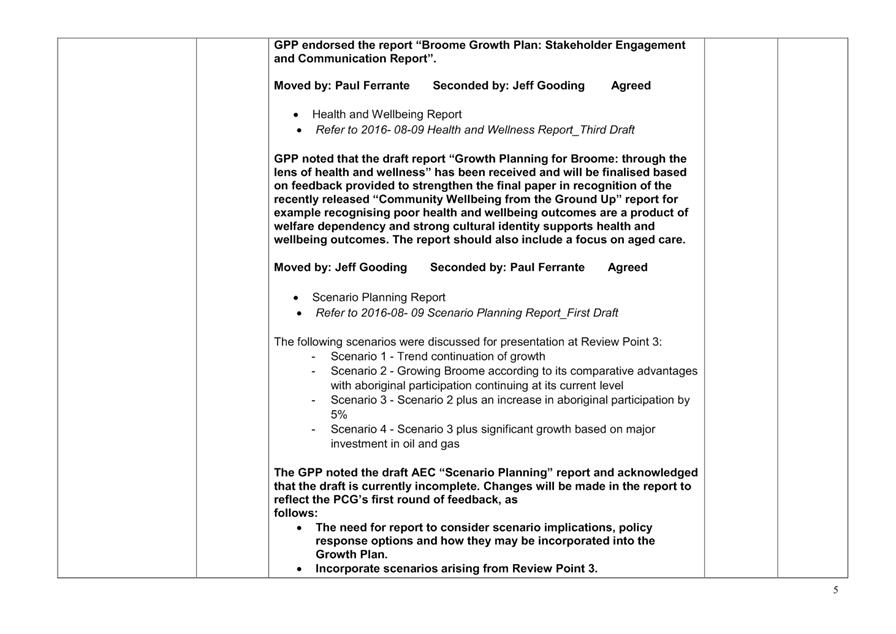
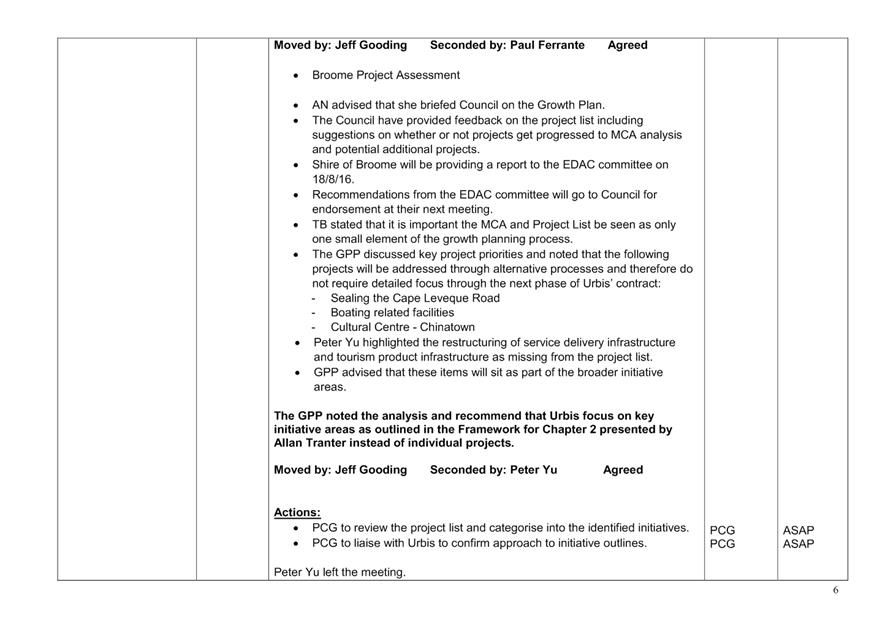
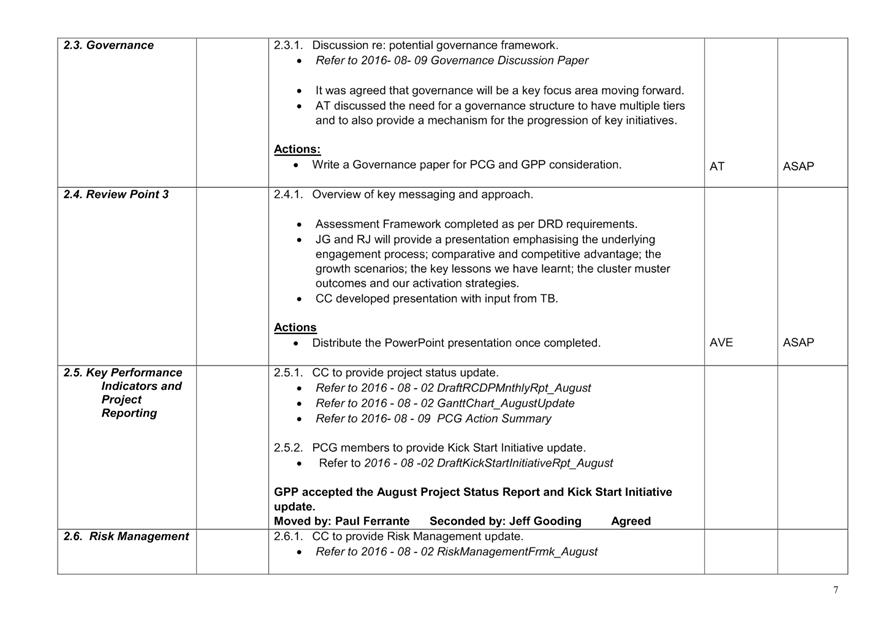
|
Item 5.1 - BROOME GROWTH PLAN - STATUS UPDATE AND KEY
ELEMENTS
|
|
Item 5.1 - BROOME GROWTH PLAN - STATUS UPDATE AND KEY
ELEMENTS
|
|
Item 5.1 - BROOME GROWTH PLAN - STATUS UPDATE AND KEY
ELEMENTS
|
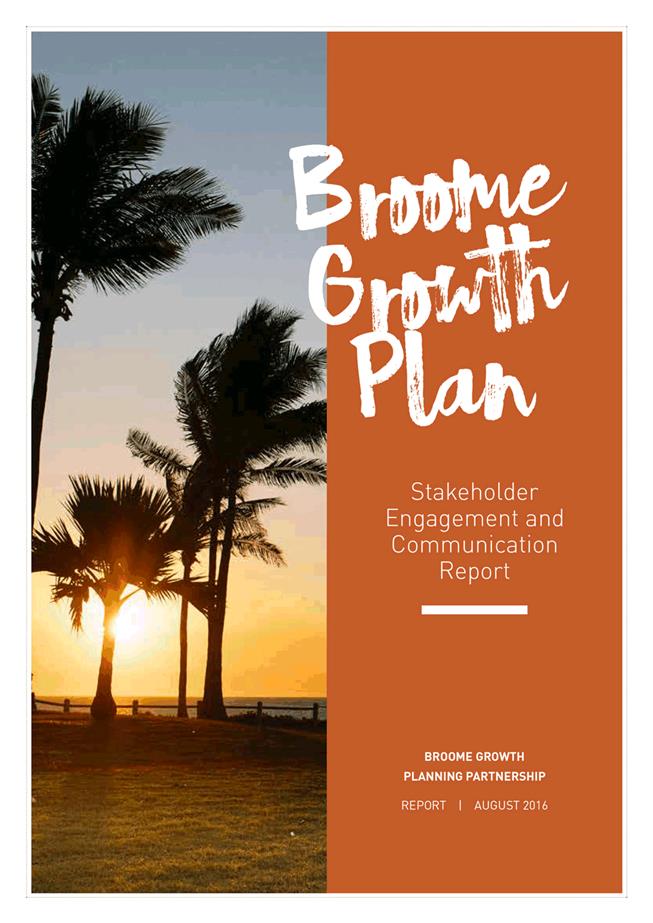
|
Item 5.1 - BROOME GROWTH PLAN - STATUS UPDATE AND KEY
ELEMENTS
|
|
Item 5.1 - BROOME GROWTH PLAN - STATUS UPDATE AND KEY
ELEMENTS
|
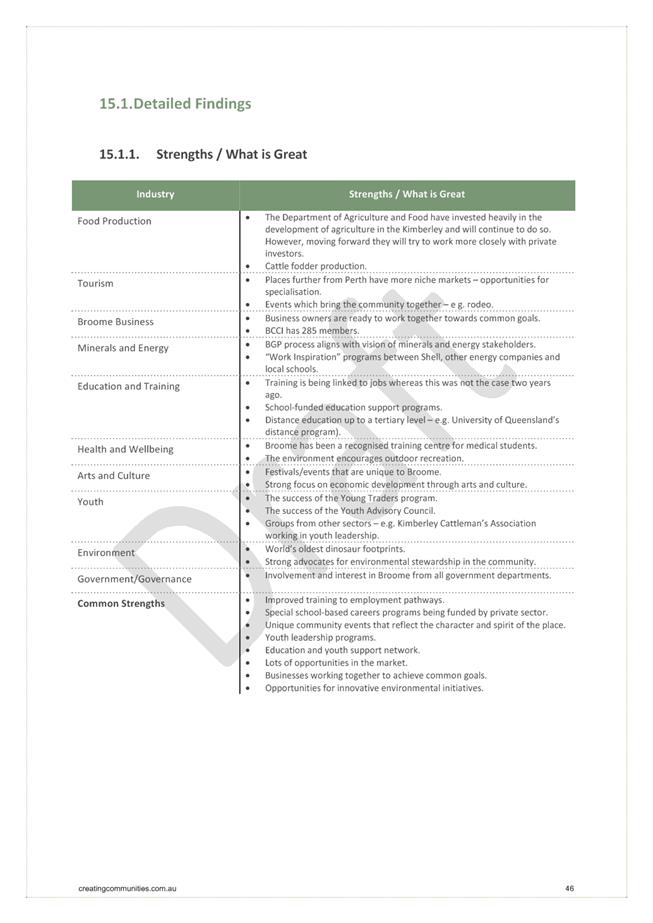
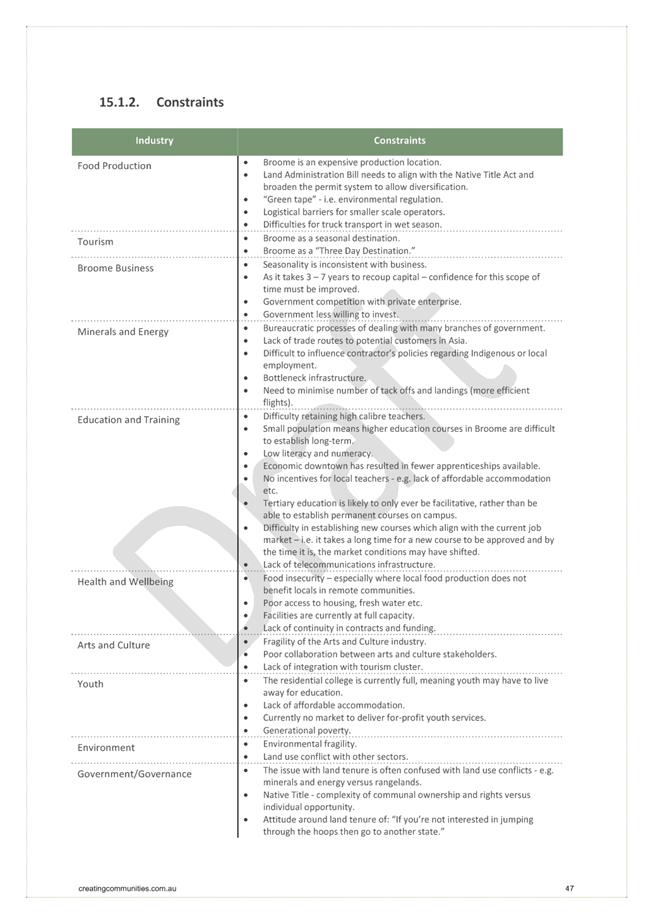
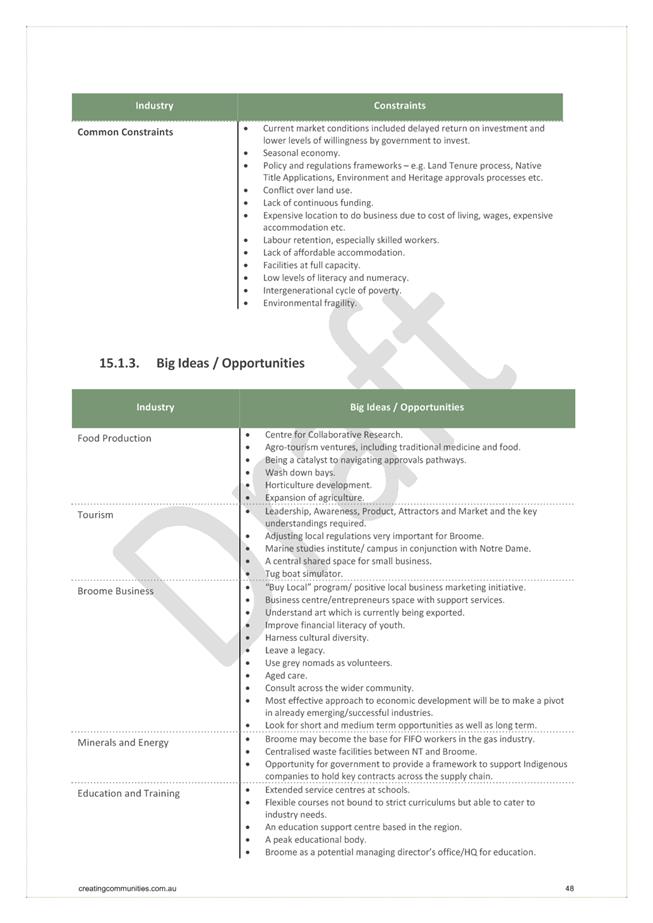
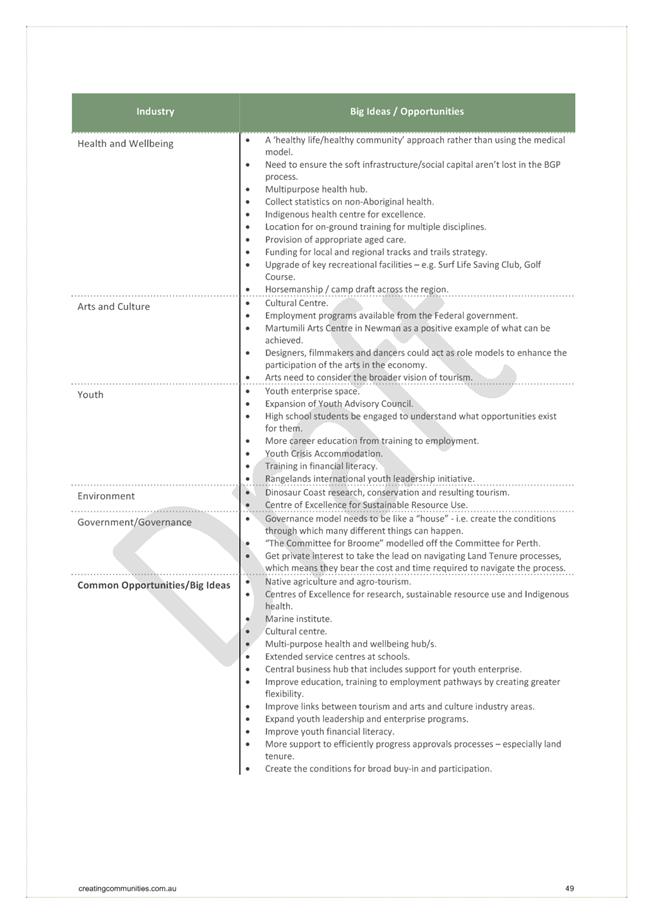
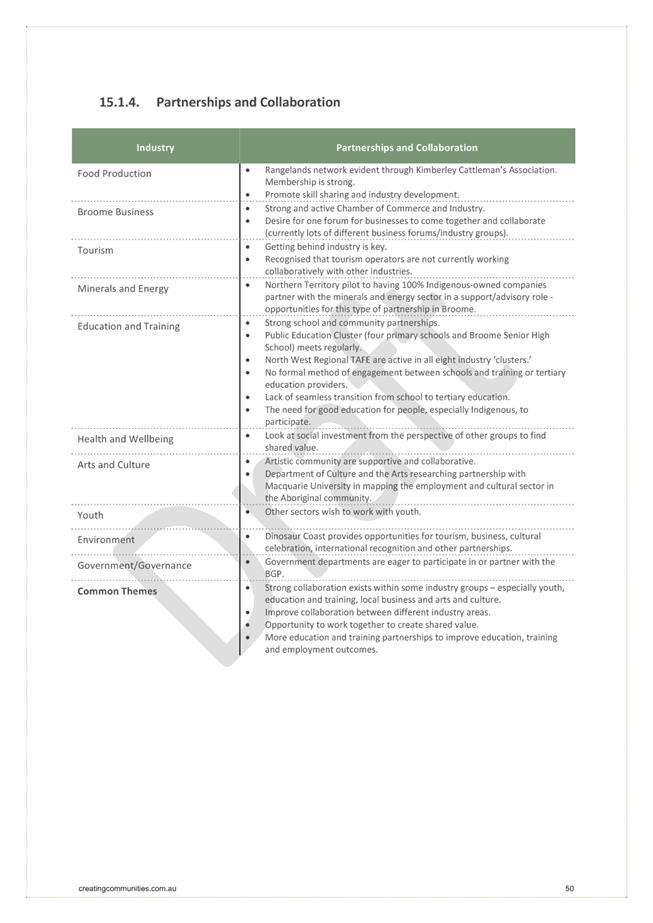
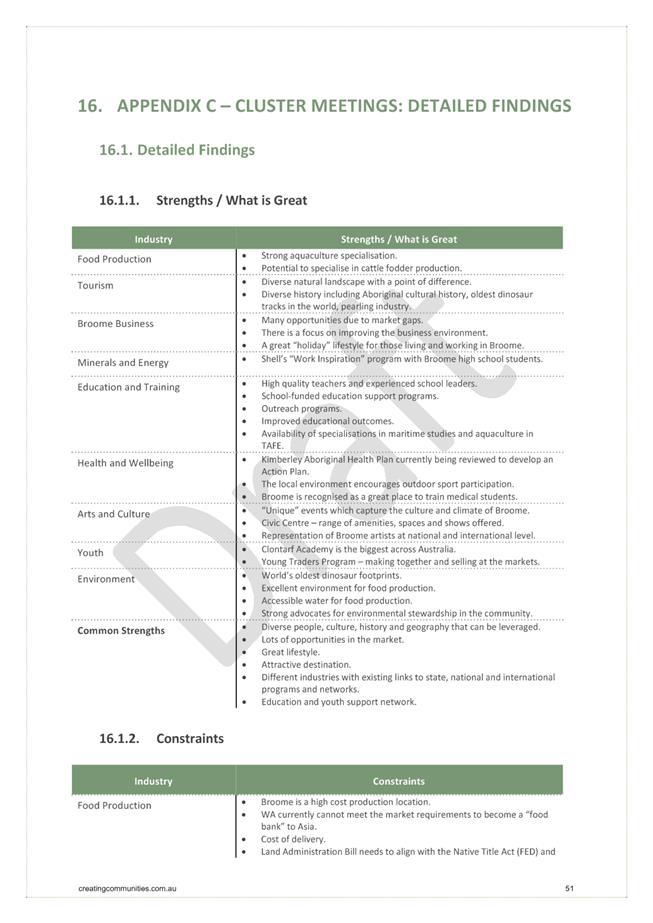
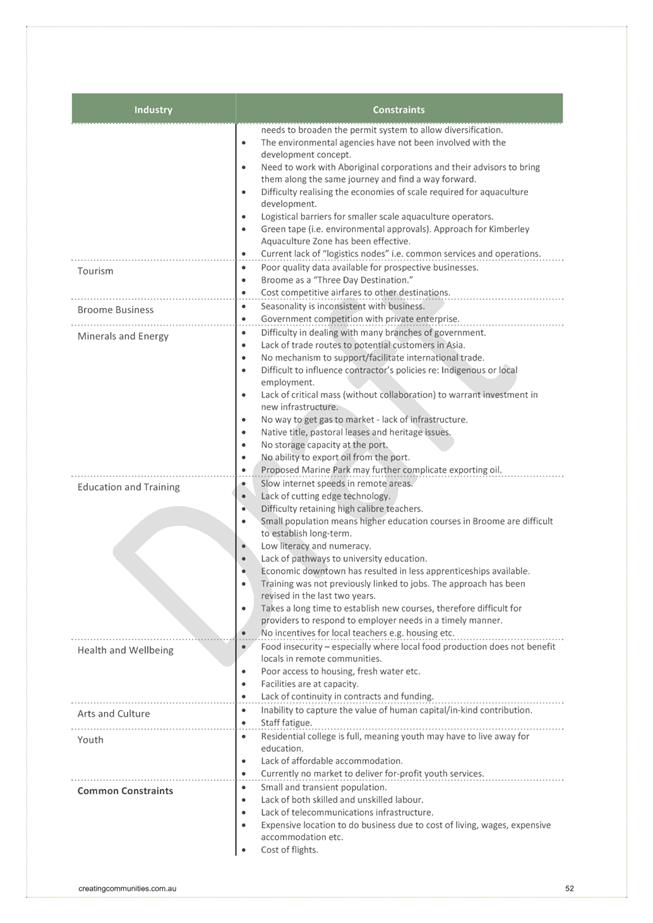
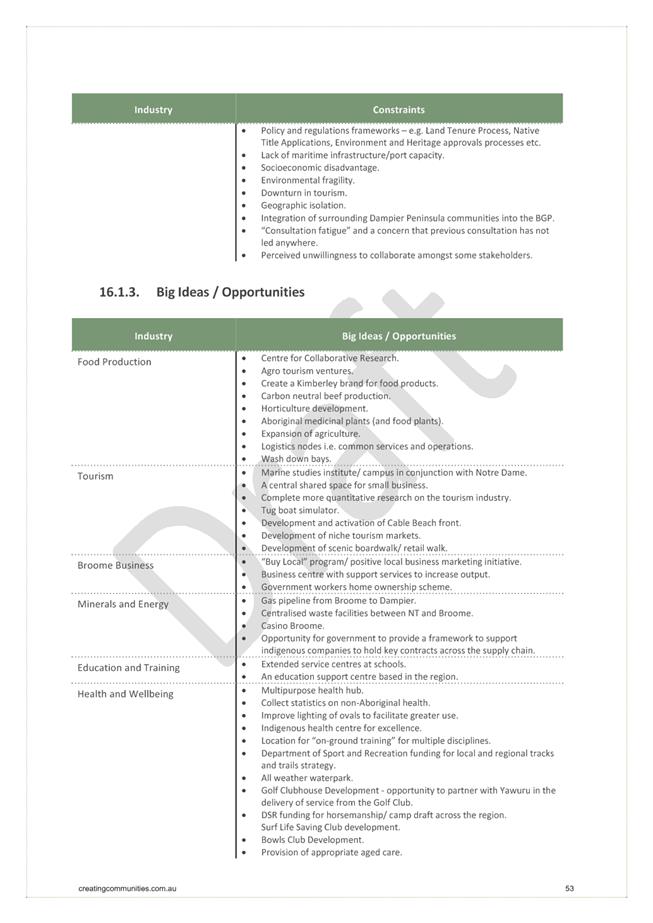
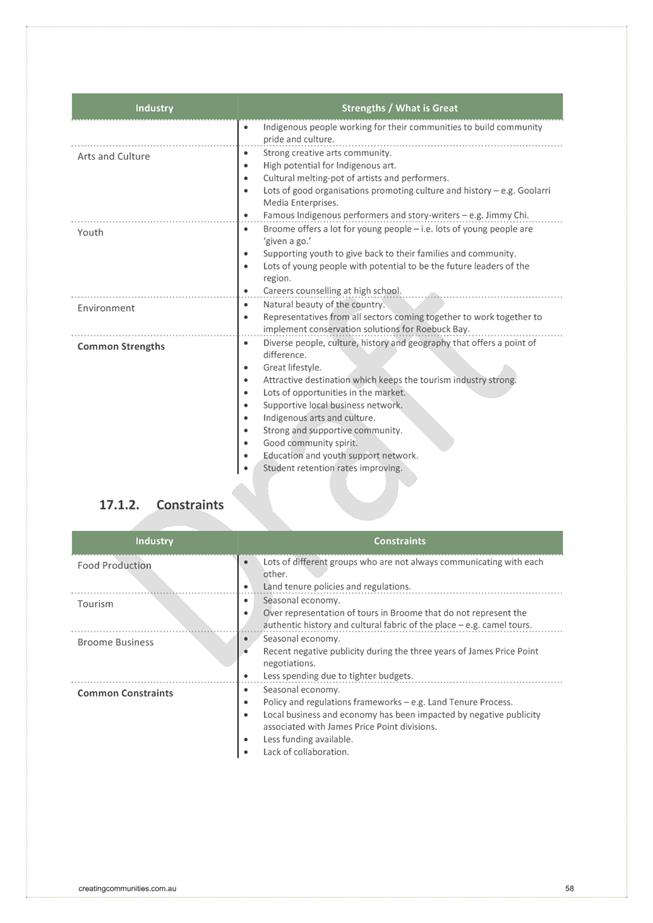
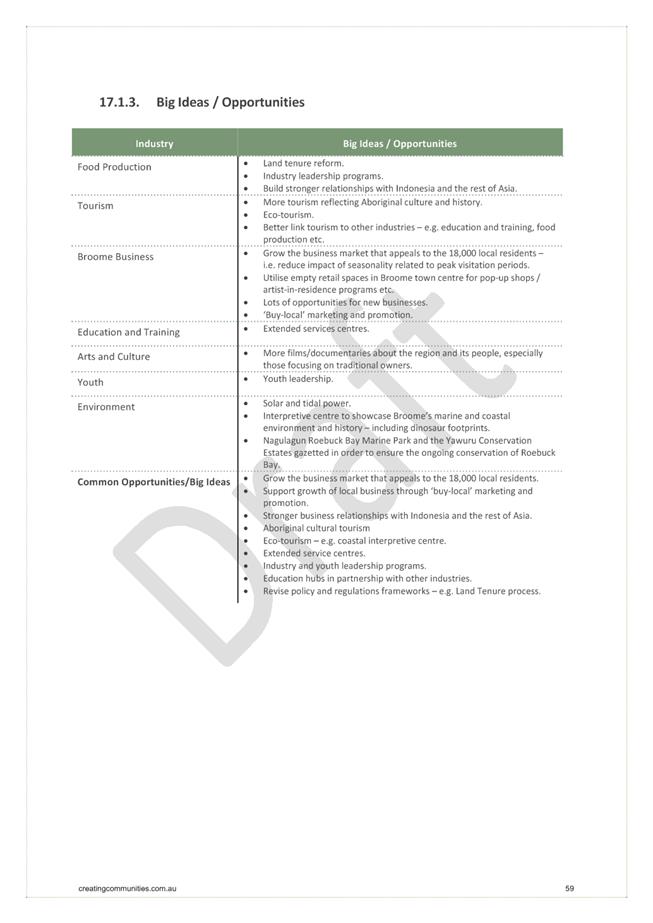
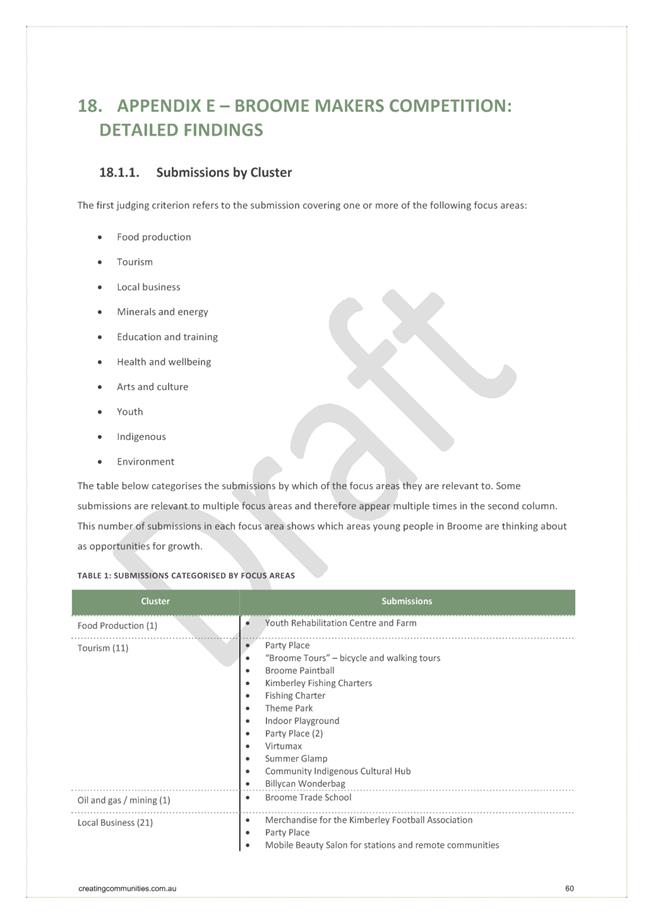
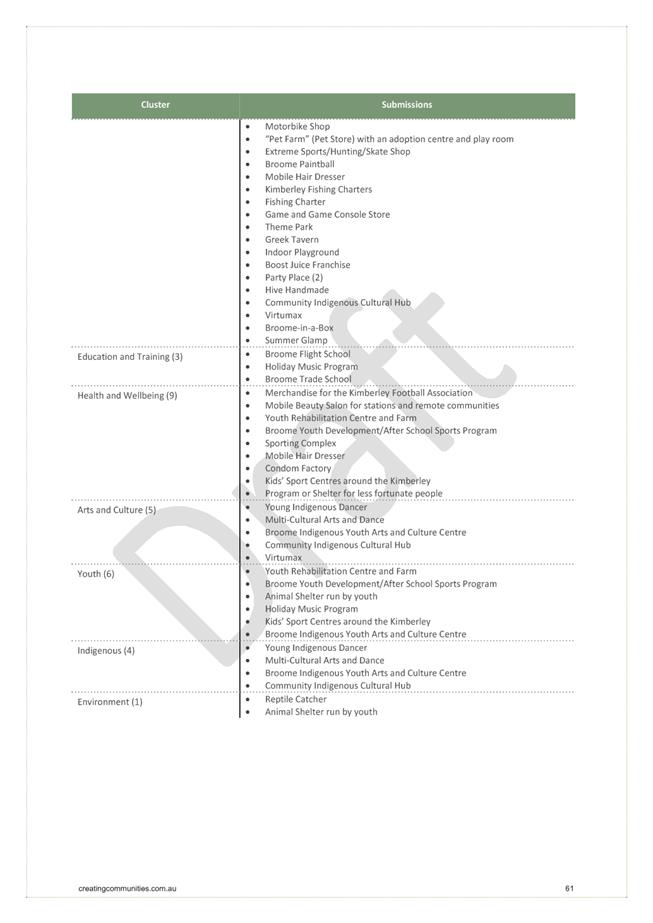



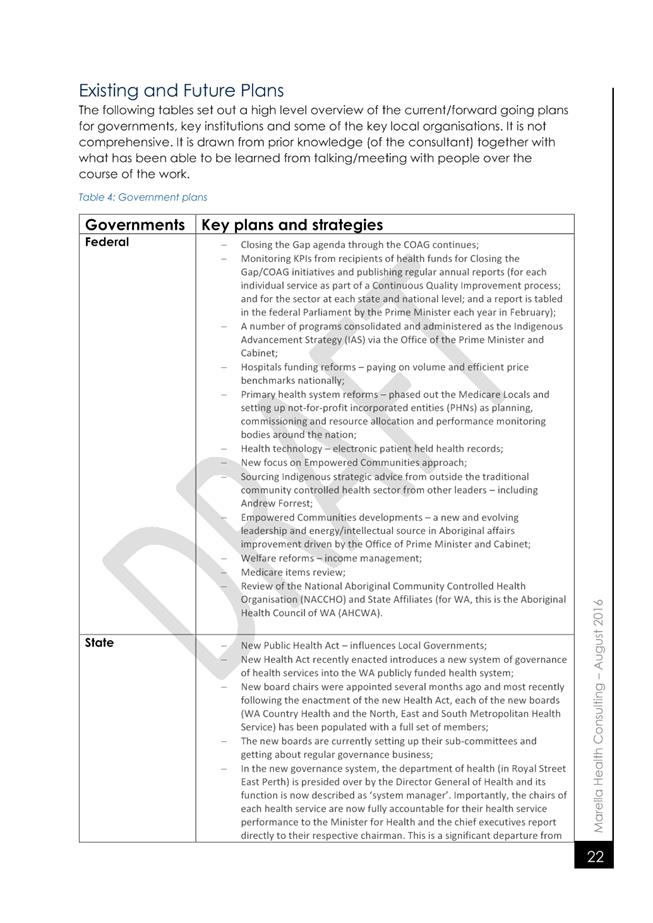
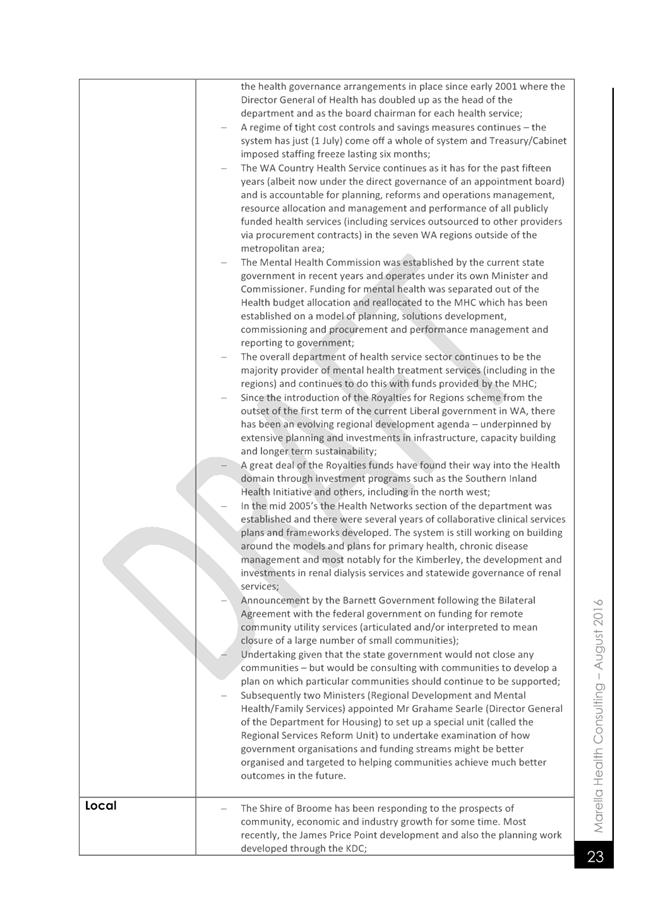
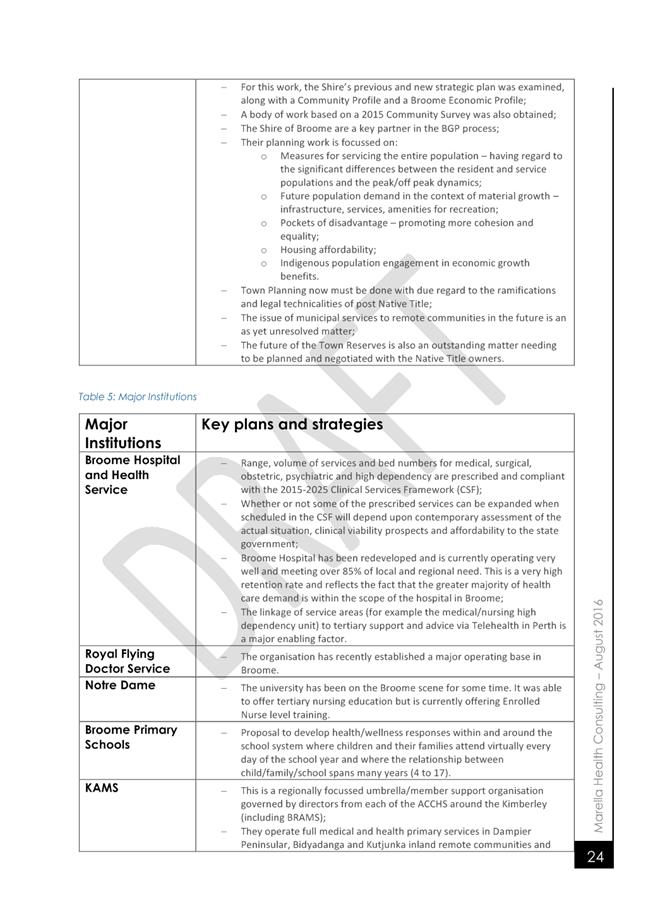
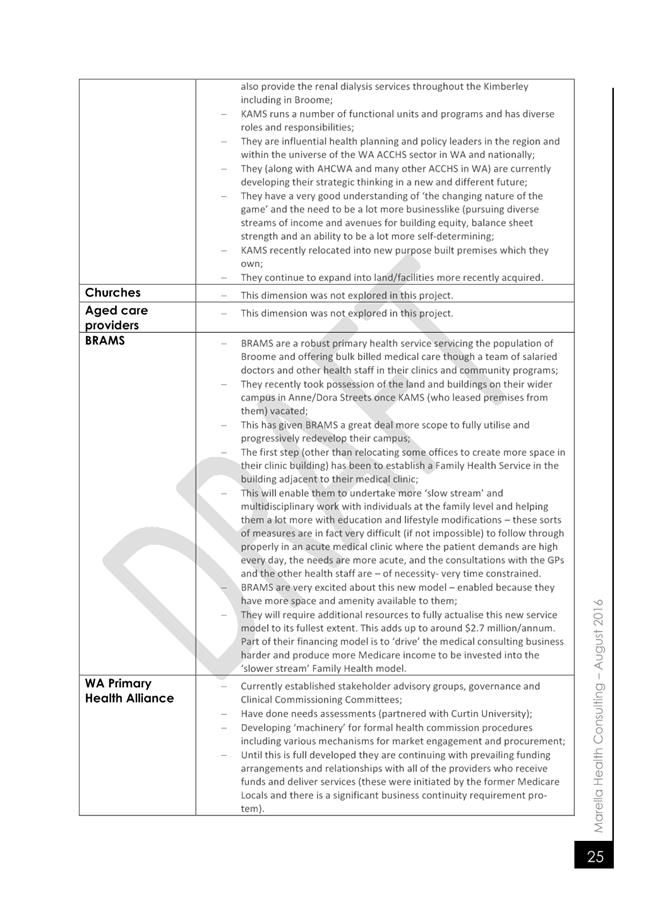
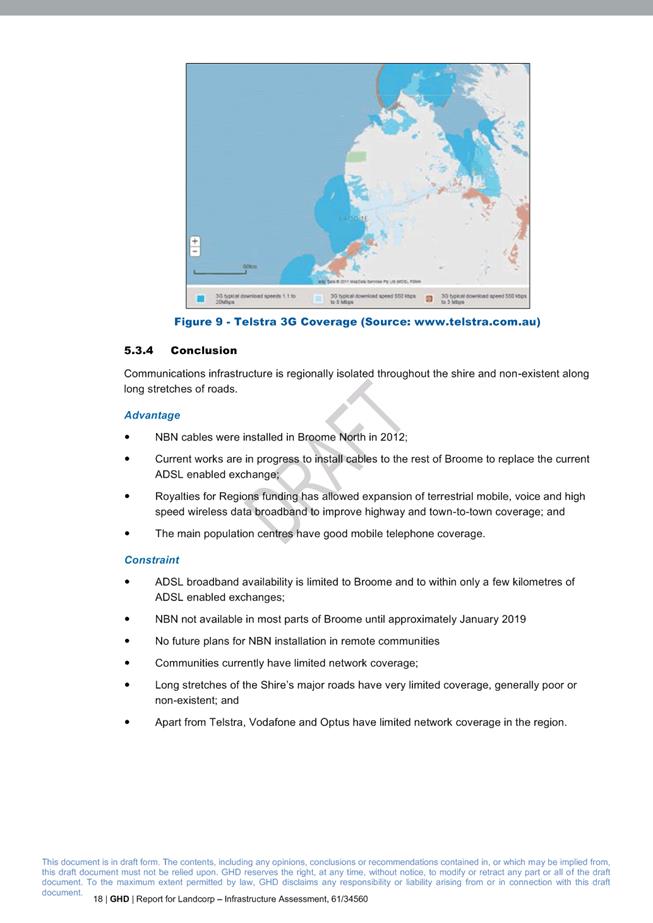
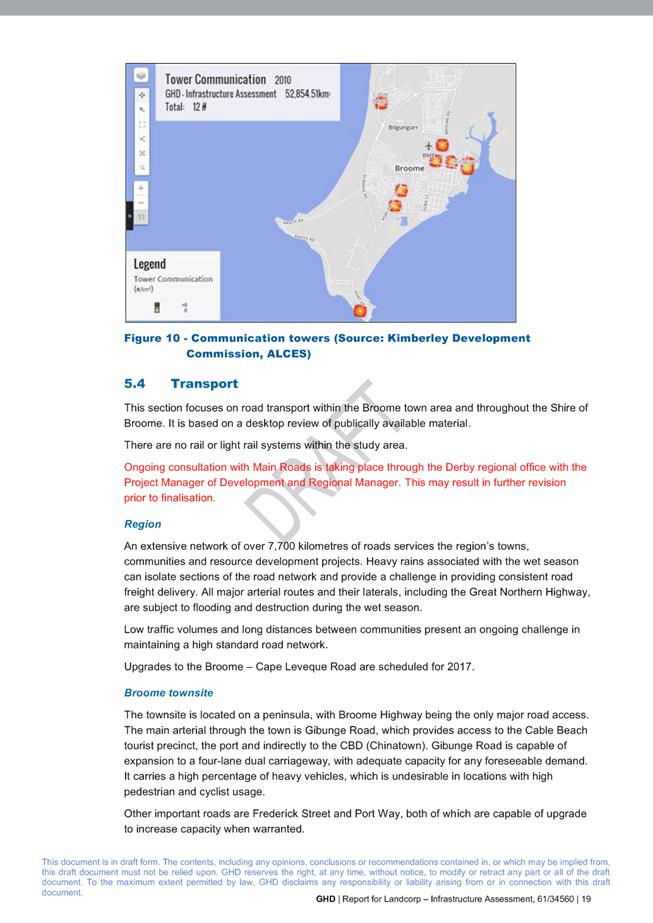
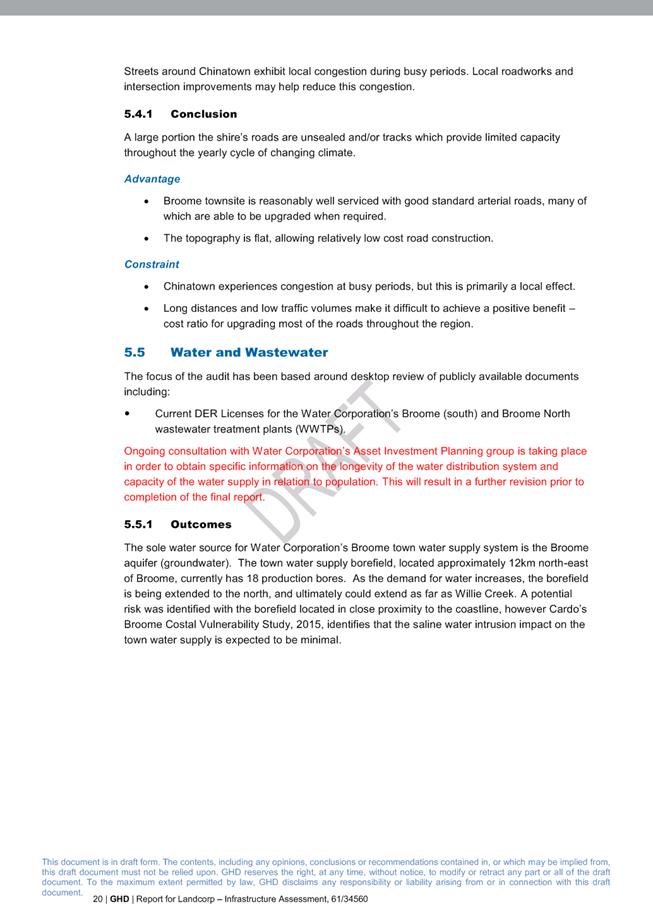
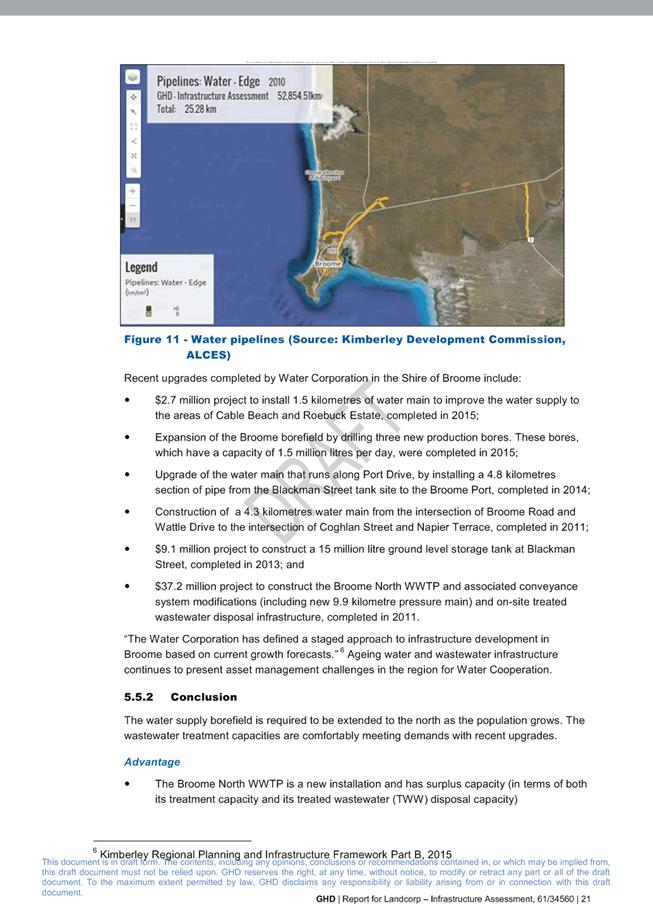
|
Item 5.1 - BROOME GROWTH PLAN - STATUS UPDATE AND KEY
ELEMENTS
|
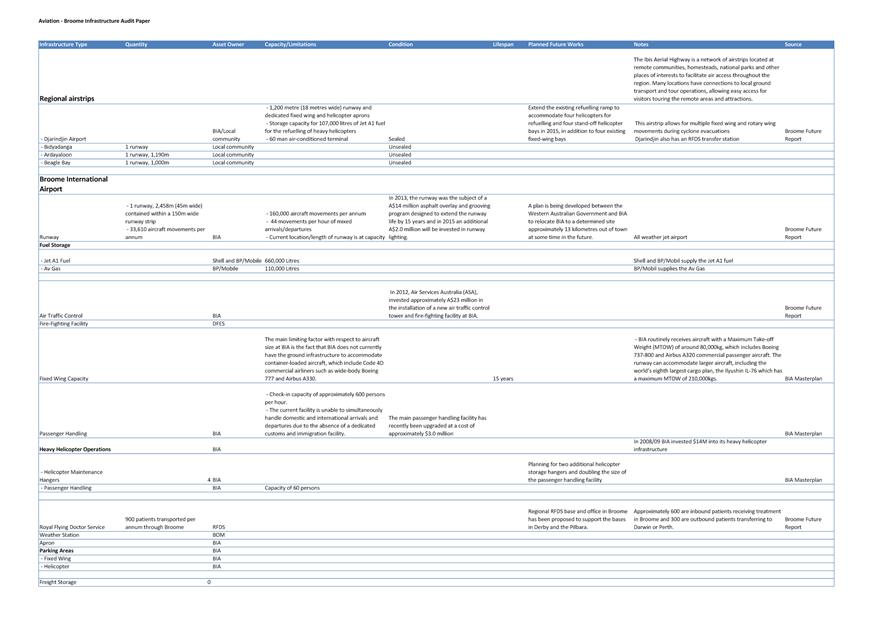
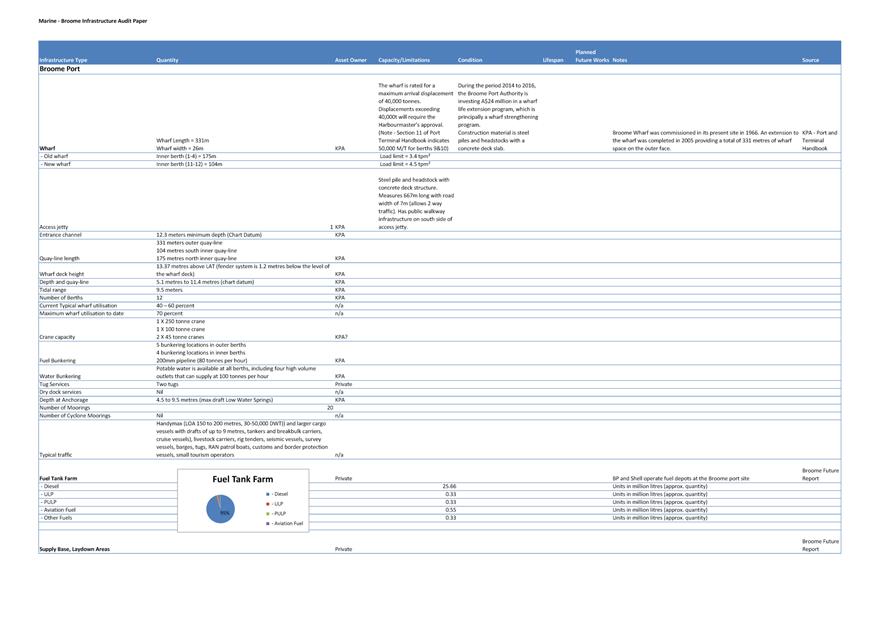
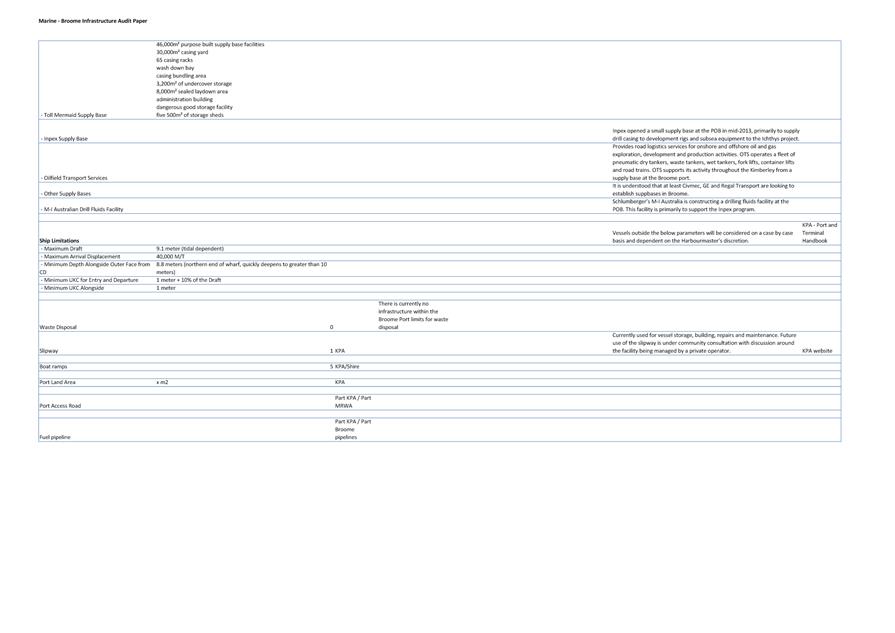
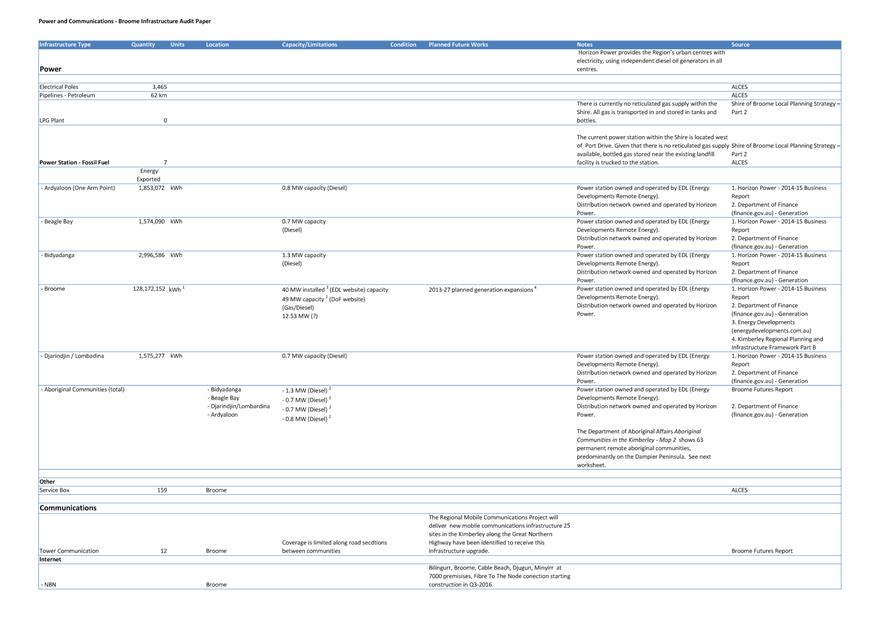

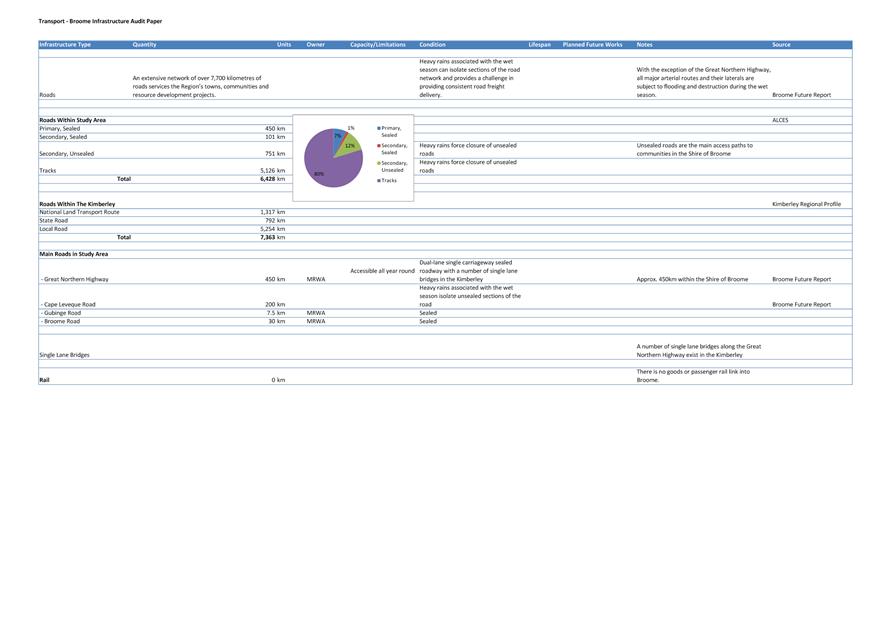
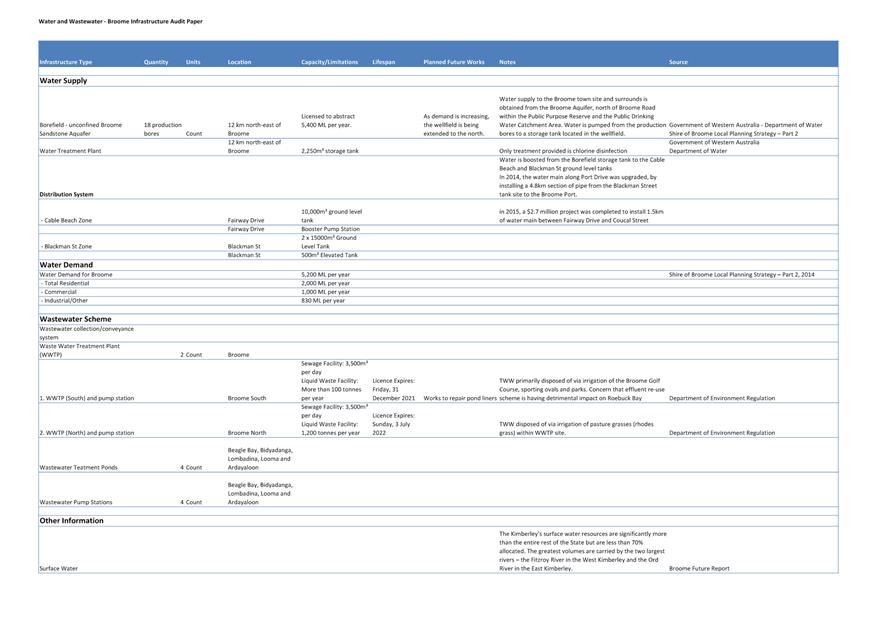
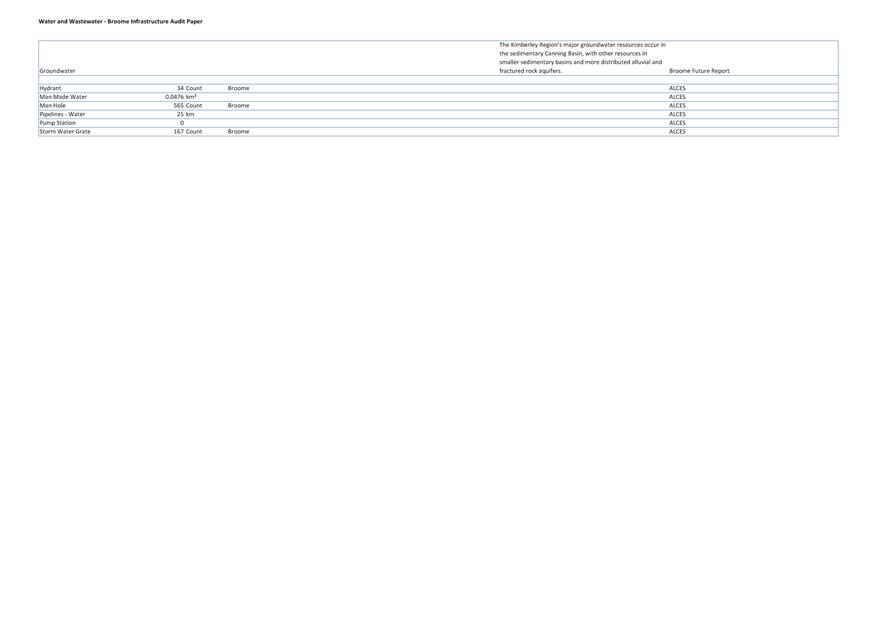
|
Item 5.1 - BROOME GROWTH PLAN - STATUS UPDATE AND KEY
ELEMENTS
|

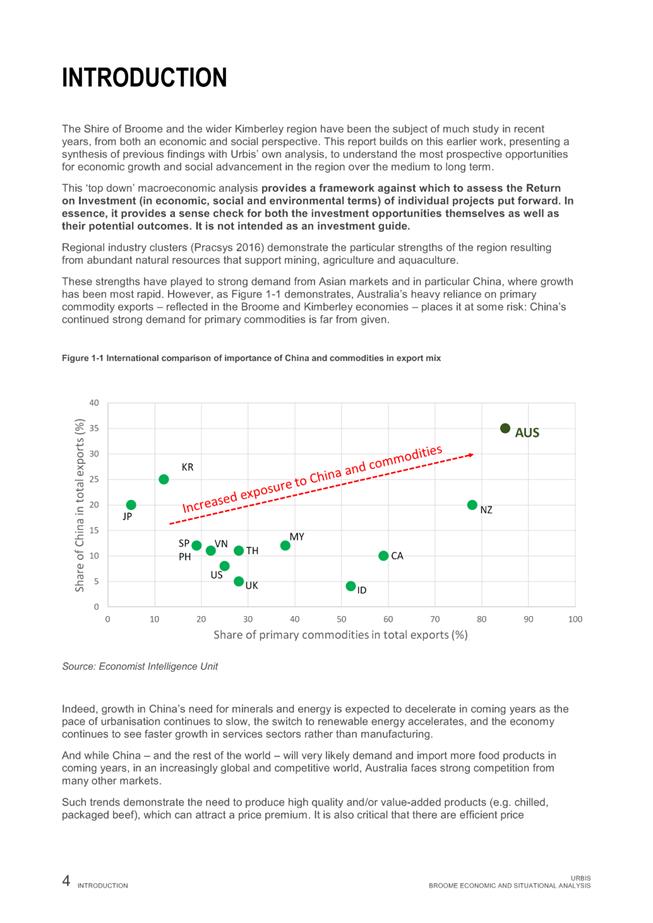
|
Item 5.1 - BROOME GROWTH PLAN - STATUS UPDATE AND KEY
ELEMENTS
|
|
Item 5.1 - BROOME GROWTH PLAN - STATUS UPDATE AND KEY
ELEMENTS
|
|
Item 5.1 - BROOME GROWTH PLAN - STATUS UPDATE AND KEY
ELEMENTS
|
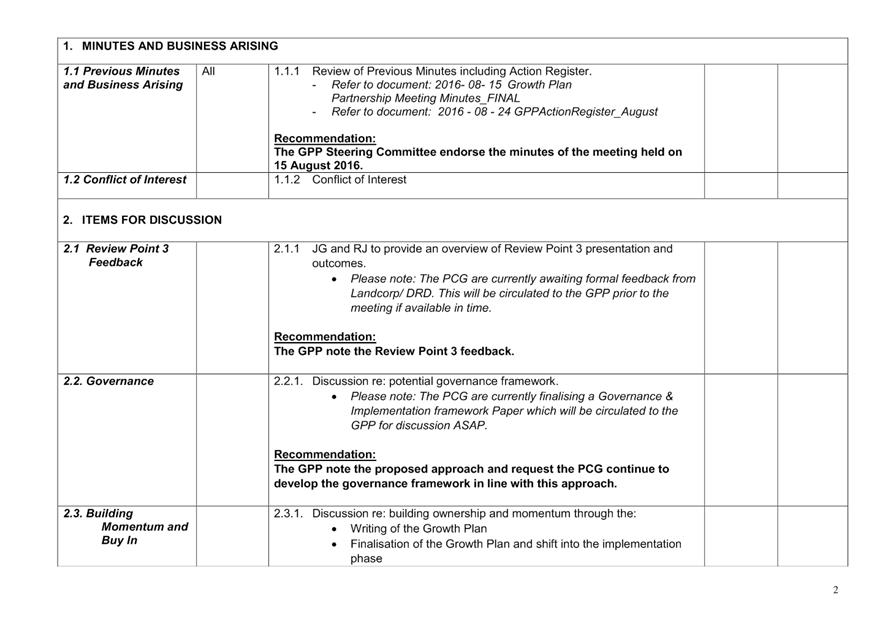
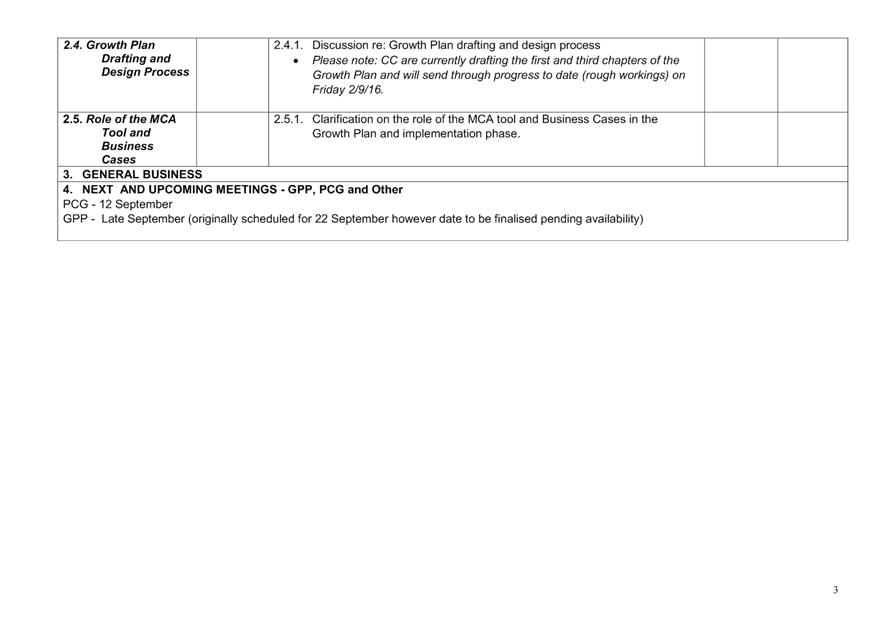
|
Item 5.1 - BROOME GROWTH PLAN - STATUS UPDATE AND KEY
ELEMENTS
|
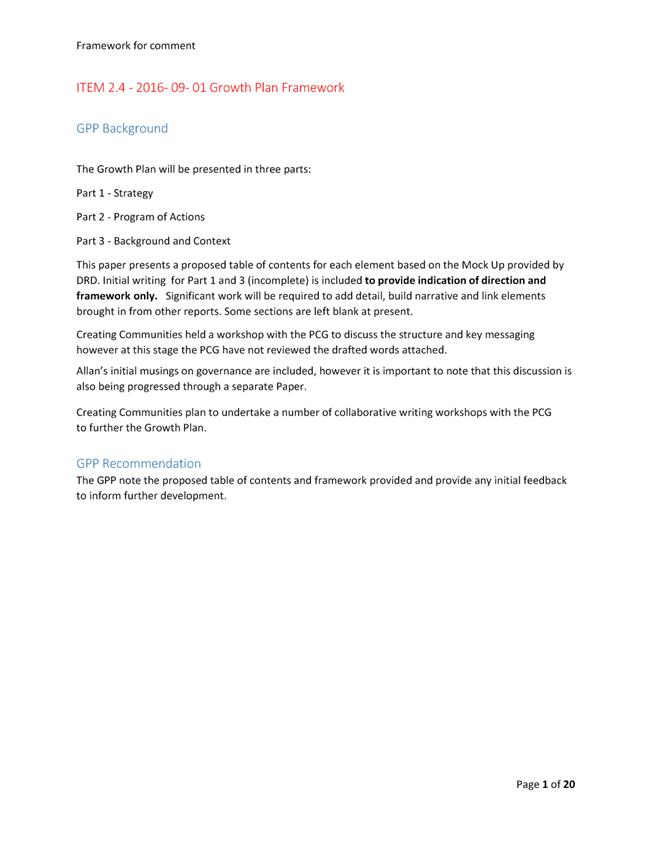
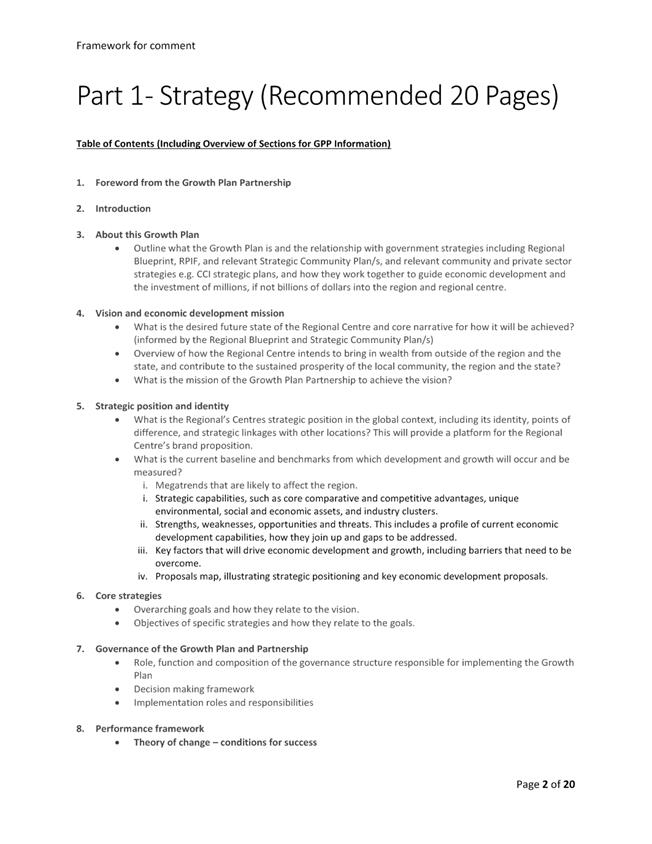

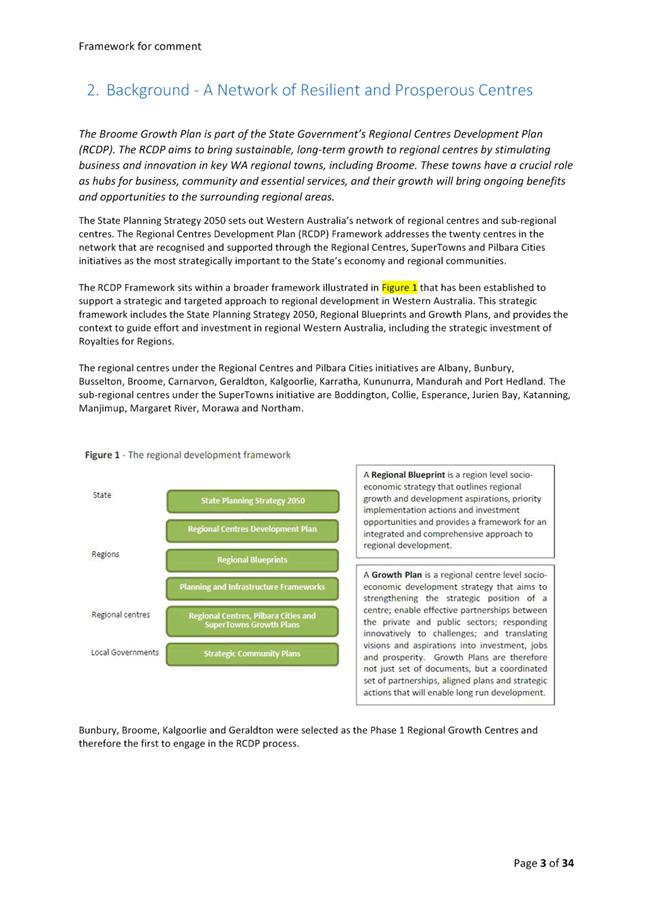
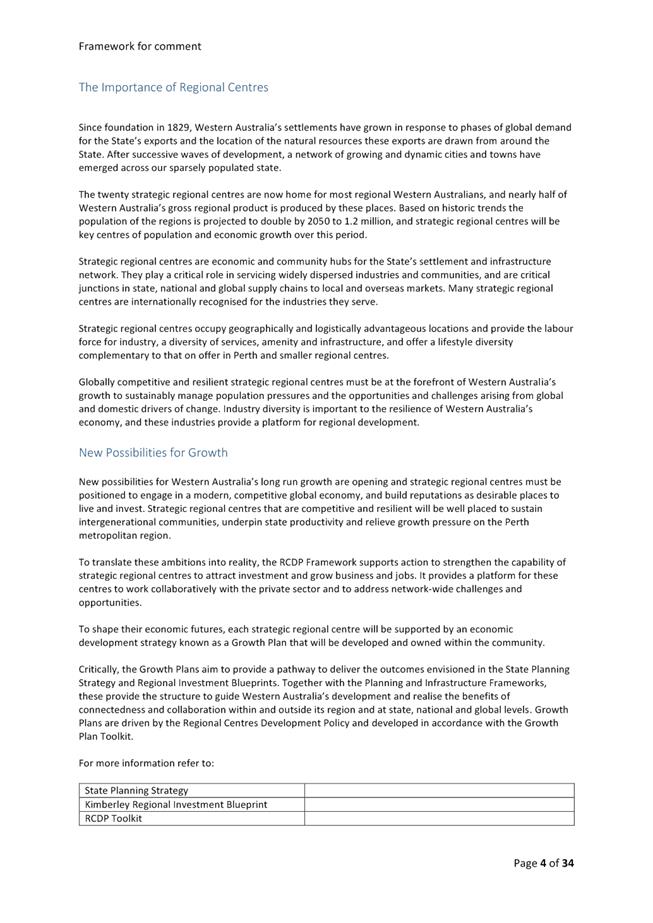
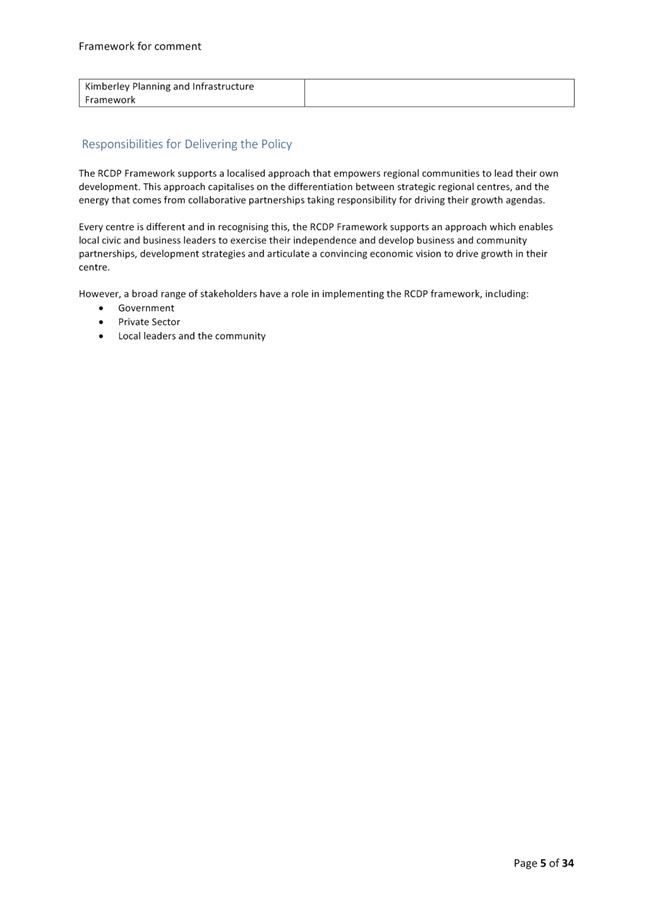
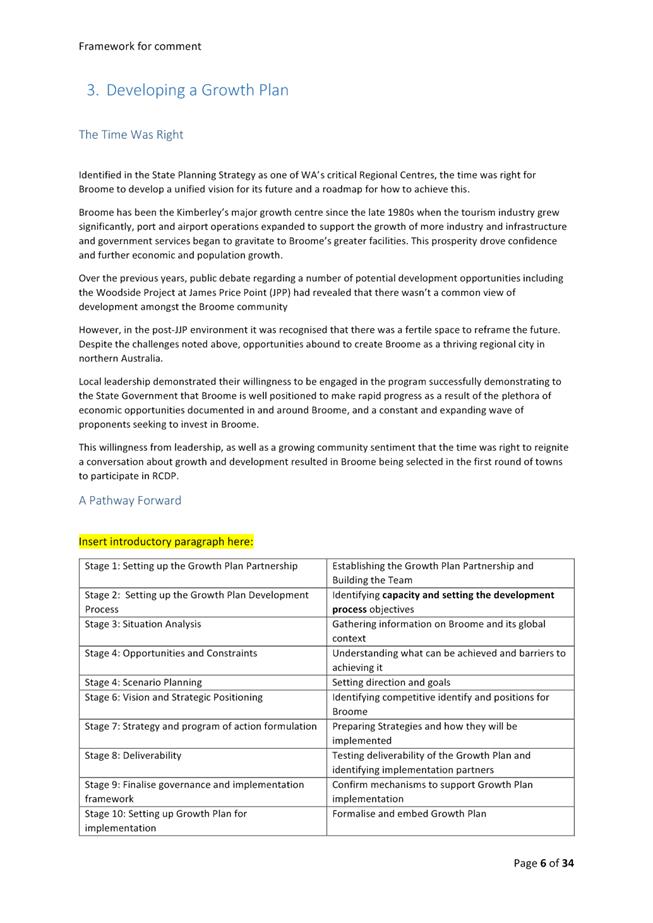
|
Item 5.1 - BROOME GROWTH PLAN - STATUS UPDATE AND KEY
ELEMENTS
|
|
Item 5.1 - BROOME GROWTH PLAN - STATUS UPDATE AND KEY
ELEMENTS
|


|
Item 5.1 - BROOME GROWTH PLAN - STATUS UPDATE AND KEY
ELEMENTS
|
|
Item 5.1 - BROOME GROWTH PLAN - STATUS UPDATE AND KEY
ELEMENTS
|
|
Item 5.1 - BROOME GROWTH PLAN - STATUS UPDATE AND KEY
ELEMENTS
|
|
Item 5.1 - BROOME GROWTH PLAN - STATUS UPDATE AND KEY
ELEMENTS
|


|
Item 5.1 - BROOME GROWTH PLAN - STATUS UPDATE AND KEY
ELEMENTS
|
|
Item 5.1 - BROOME GROWTH PLAN - STATUS UPDATE AND KEY
ELEMENTS
|
|
Item 5.1 - BROOME GROWTH PLAN - STATUS UPDATE AND KEY
ELEMENTS
|
|
Item 5.1 - BROOME GROWTH PLAN - STATUS UPDATE AND KEY
ELEMENTS
|
|
Item 5.1 - BROOME GROWTH PLAN - STATUS UPDATE AND KEY
ELEMENTS
|
|
Item 5.1 - BROOME GROWTH PLAN - STATUS UPDATE AND KEY
ELEMENTS
|

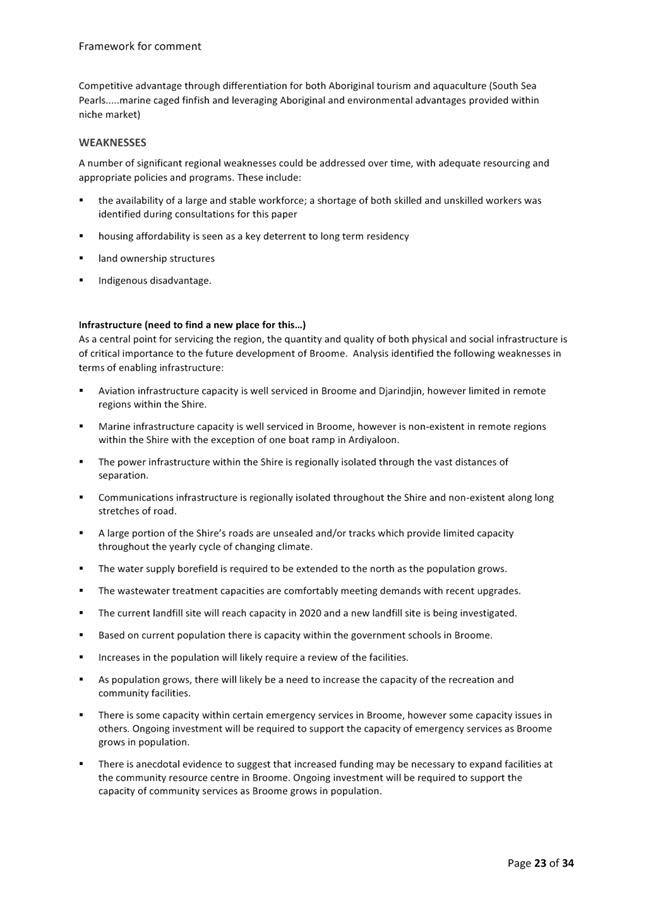
|
Item 5.1 - BROOME GROWTH PLAN - STATUS UPDATE AND KEY
ELEMENTS
|
|
Item 5.1 - BROOME
GROWTH PLAN - STATUS UPDATE AND KEY ELEMENTS
|
|
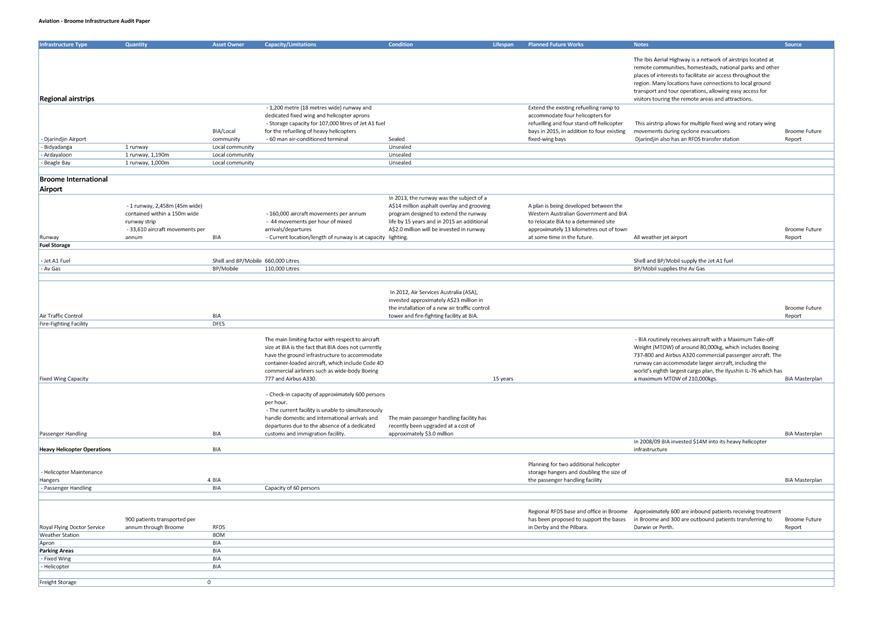
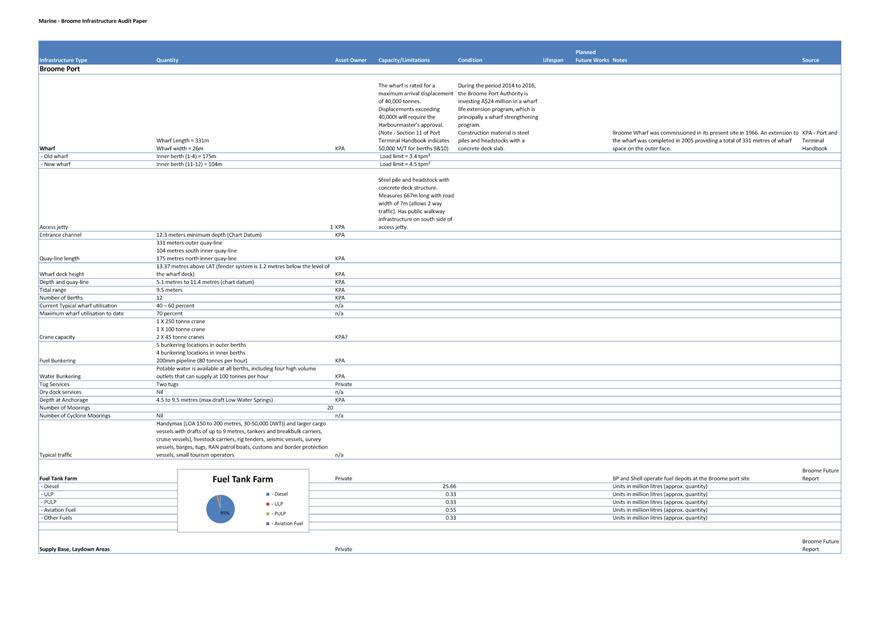
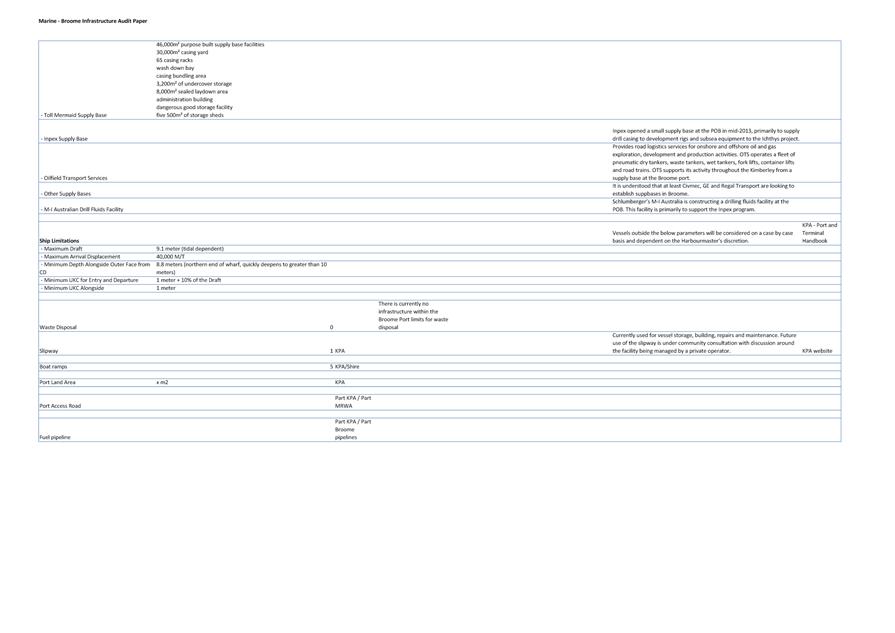
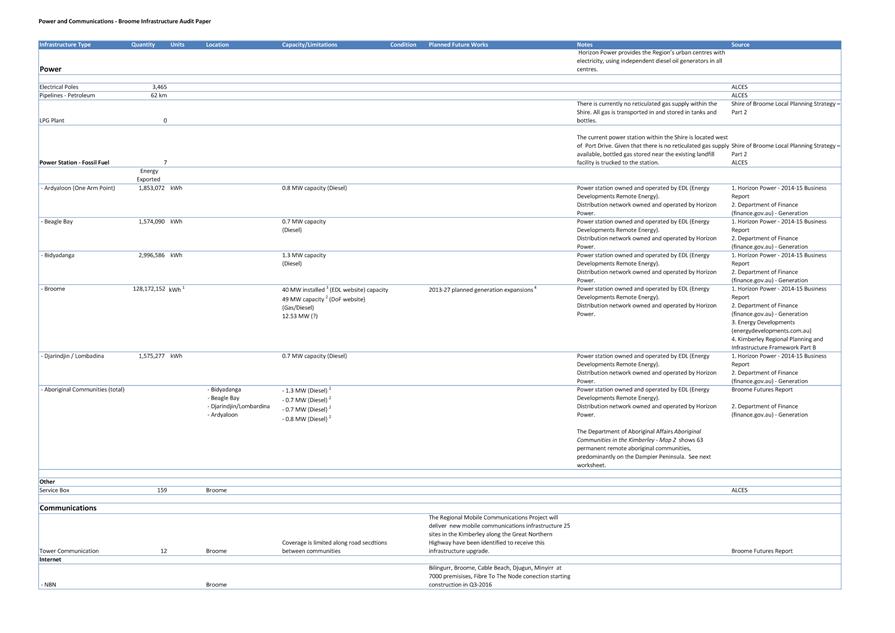
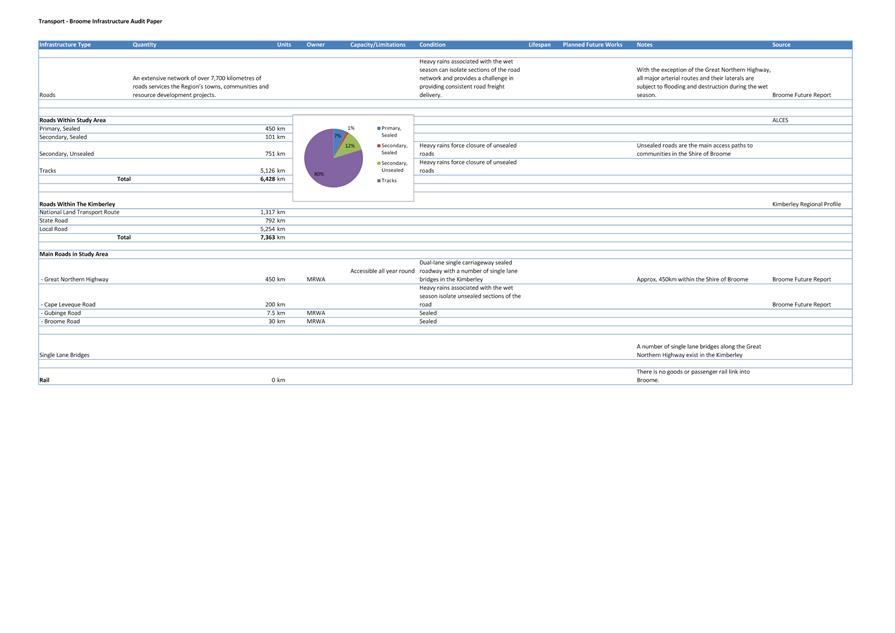
Item 5.1 - BROOME
GROWTH PLAN - STATUS UPDATE AND KEY ELEMENTS
|
|
Item 5.1 - BROOME
GROWTH PLAN - STATUS UPDATE AND KEY ELEMENTS
|
|
25 July 2016
EMR0501
V2
Prepared for Landcorp
|
Broome Economic and Situational Analysis
July 2016
|
|
|
Item 5.1 - BROOME GROWTH PLAN - STATUS UPDATE AND KEY
ELEMENTS
|
URBIS STAFF RESPONSIBLE FOR THIS
REPORT WERE:
|
Director
|
Nicki Hutley
|
|
Associate Director
|
Michael Knight
|
|
Senior Consultant
|
|
|
Consultant
|
Alex Batchen
|
|
Project Code
|
EMR0501
|
|
Report Number
|
Economic and situational analysis
|
|
Item 5.1 - BROOME GROWTH PLAN - STATUS UPDATE AND KEY
ELEMENTS
|
TABLE OF CONTENTS
1.
2.
Executive
Summary. 1
3.
Introduction 4
4. 1.................................................................................................................................. Policy
context 6
1.1. 2036 and
Beyond: A Regional Blueprint for the Kimberley. 6
1.2. Broome
Shire Strategic Community Plan (2015 – 2025) 7
5. 2.............................................................................................. The
Broome and Kimberley economies. 8
2.1. Catchment
area. 8
2.2. Socio-demographic
profile. 9
2.3. Economic
structure. 11
2.4. Markets. 13
6. 3................................................................................................................... Opportunities
for growth. 15
3.1. Export
opportunities. 15
3.2. Domestic
markets. 17
3.3. Potential
barriers. 17
3.4. What might a transformed Broome look like in 2035?. 18
7. 4.................................................................................................. Regional
strengths and weaknesses. 19
4.1. Strengths. 19
4.2. Weaknesses. 19
8. 5..................................................................................................................................... Conclusions. 21
9.
Disclaimer 22
10.
11.
Appendix A................................................................................................... References
Figures:
Figure 1‑1
International comparison of importance of China and commodities in export mix........................ 4
Figure 2‑1
Broome location...................................................................................................................... 8
Figure 2‑2
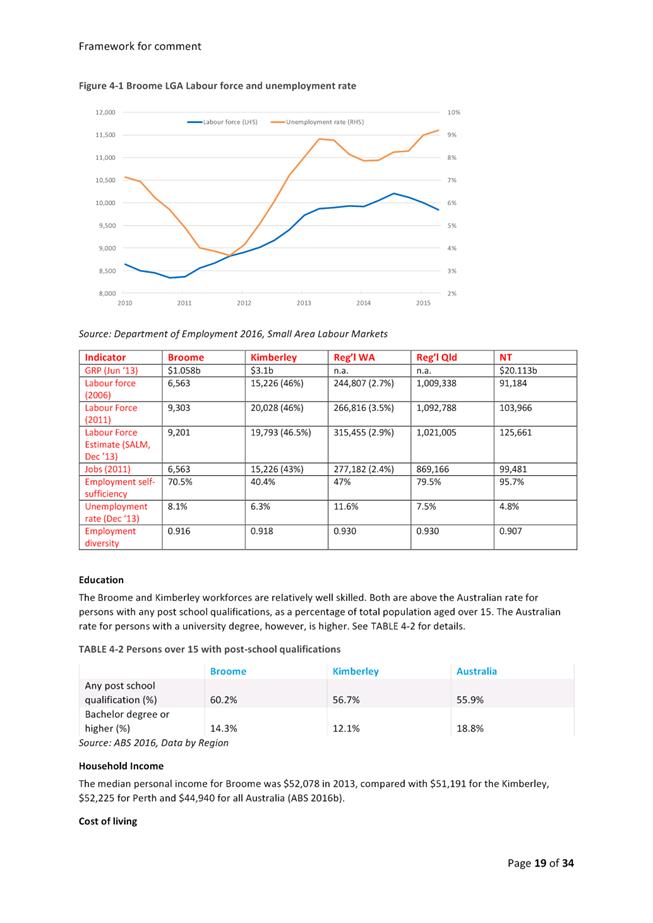
Broome LGA Labour force and unemployment rate.................................................................. 10
Figure 2‑3
Industry contribution to Broome GRP and employment............................................................ 12
Figure 2‑4
Number of businesses by industry, Broome, 2015................................................................... 13
Figure 2‑5
WA exports by destination, 2015............................................................................................ 13
Figure 3‑1
Australian exports and markets (by size and growth)................................................................ 15
Figure 3‑2
China imports by product type (2014, $US1.53 trillion)............................................................. 16
Figure 3‑3
China ‘other’ imports by sub-category (2014, $US462 billion).................................................... 16
Figure 4‑1
Industry share of output*........................................................................................................ 20
Tables:
Table 2‑1
Broome and Kimberley Key Demographics................................................................................ 9
TABLE 2‑2
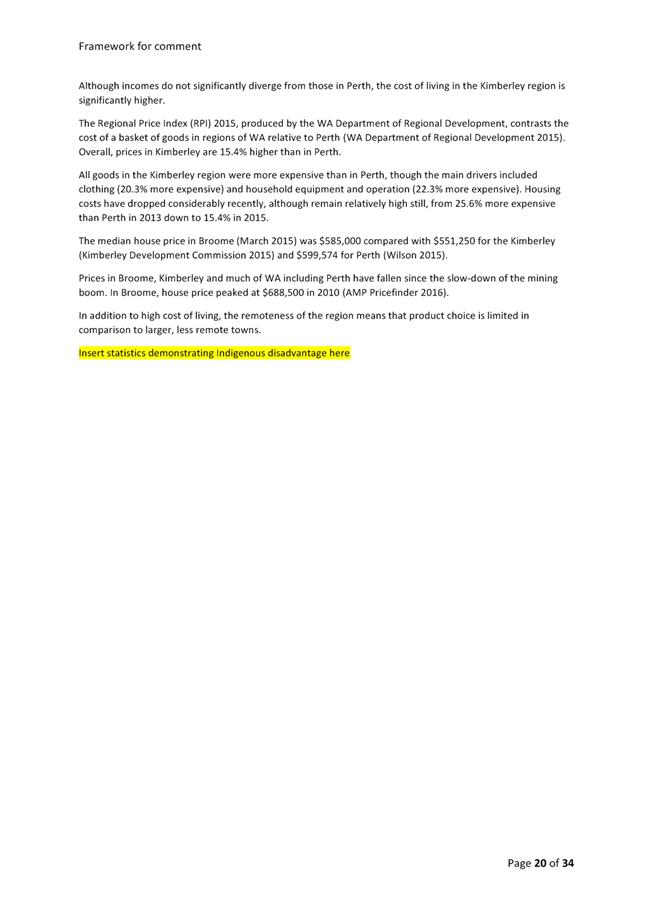
Persons over 15 with post-school qualifications..................................................................... 10
Table 2‑3
Shire of Broome visitor numbers.............................................................................................. 14
|
Item 5.1 - BROOME GROWTH PLAN - STATUS UPDATE AND KEY
ELEMENTS
|
Executive
Summary
The
purpose of this paper is to set out the economic and social trends that are
expected to influence Broome’s growth path over the coming decades.
The
findings will also be used to sense check assumptions underpinning the business
cases for those investments put forward for closer analysis based on the
multi-criteria assessment framework.
The
Broome Economy Now
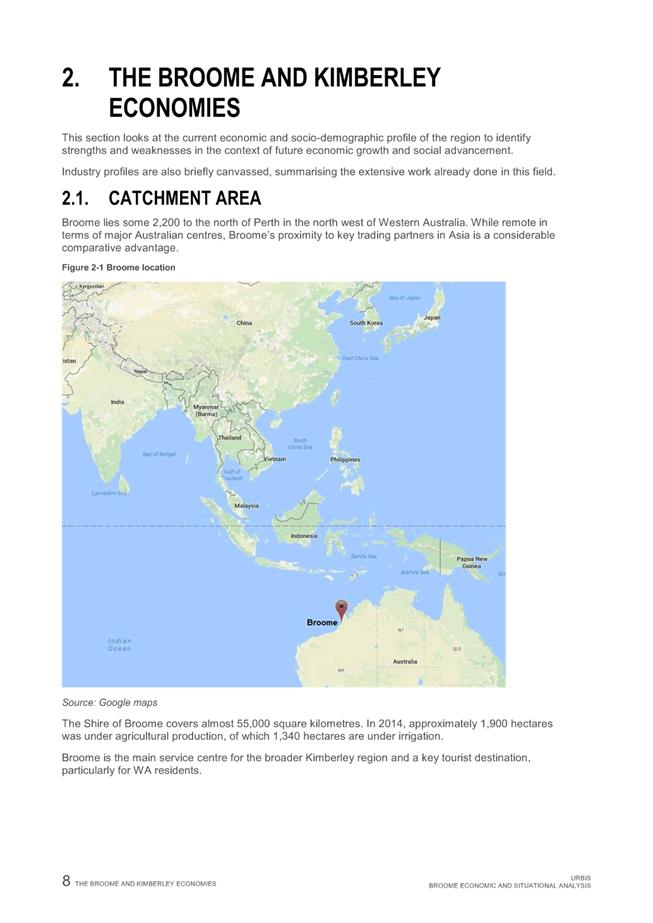
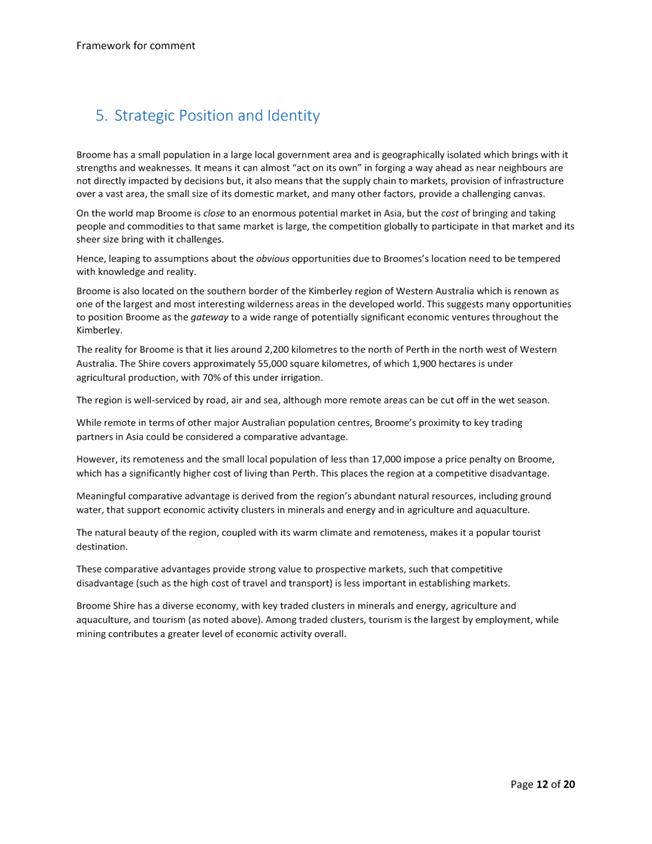
Broome lies around 2,200
kilometres to the north of Perth in the north west of Western Australia. The
Shire of Broome covers approximately 55,000 square kilometres, of which 1,900
hectares is under agricultural production, with 70% of this under irrigation.
The region is
well-serviced by road, air and sea, although more remote areas can be cut off
in the wet season.
While remote in terms of
other major Australian population centres, Broome’s proximity to key
trading partners in Asia is a considerable comparative advantage.
However, its remoteness
and the small local population of just 17,000 impose a price penalty on Broome,
which has a significantly higher cost of living than Perth. This places the
region at a competitive disadvantage.
Meaningful comparative
advantage is derived from the region’s abundant natural resources,
including ground water, that support economic activity clusters in minerals and
energy and in agriculture and aquaculture.
The natural beauty of the
region, coupled with its warm climate and remoteness, makes it a popular
tourist destination.
These comparative
advantages provide strong value to prospective markets, such that competitive
disadvantage (such as the high cost of travel and transport) is less important
in establishing markets.
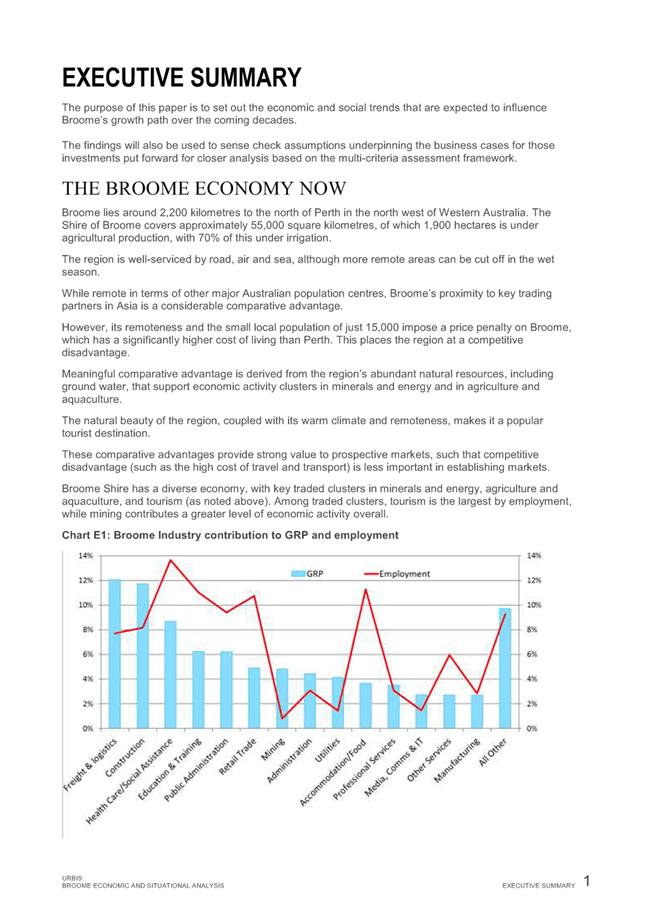
Broome Shire has a diverse
economy, with key traded clusters in minerals and energy, agriculture and
aquaculture, and tourism (as noted above). Among traded clusters, tourism is
the largest by employment, while mining contributes a greater level of economic
activity overall.
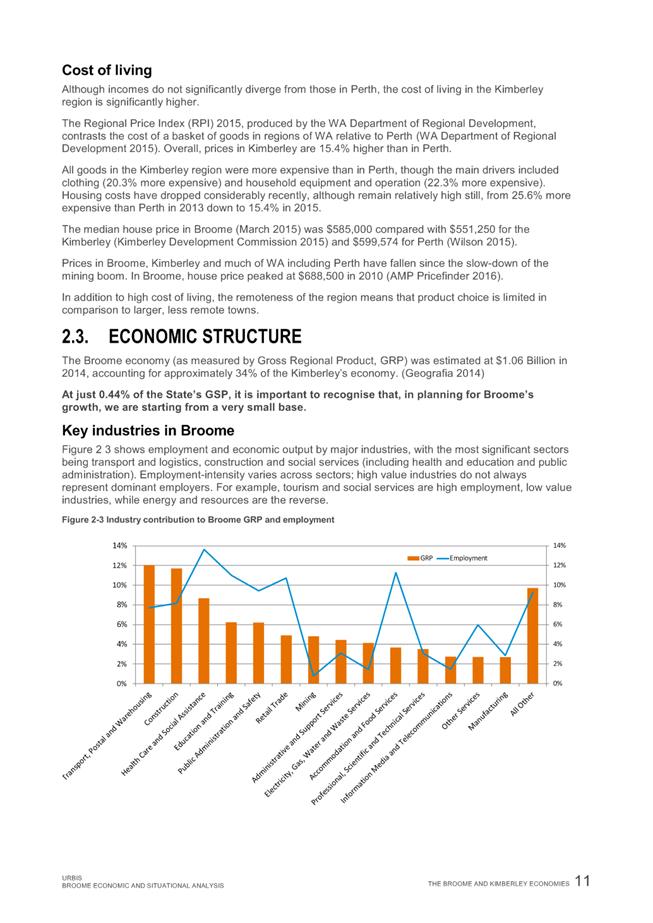
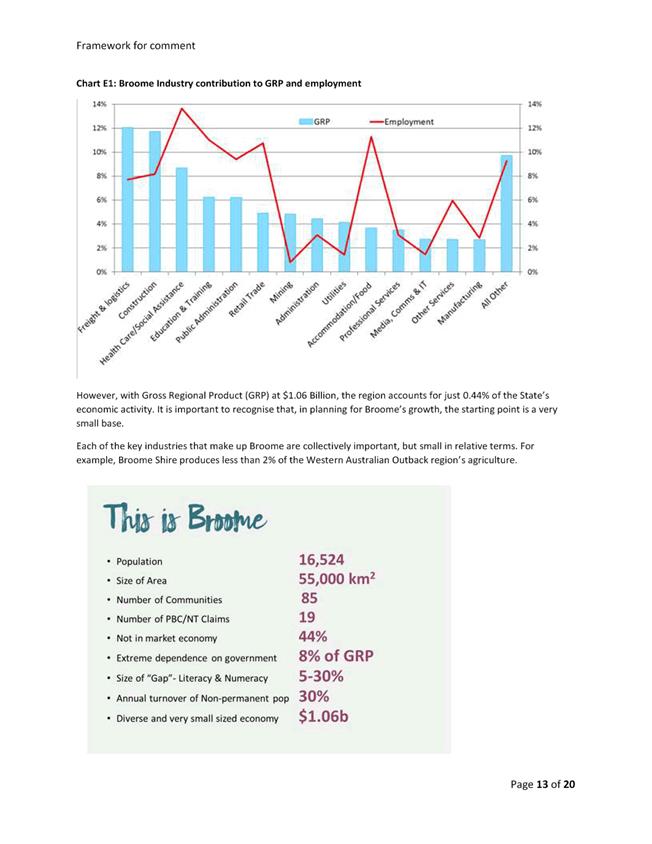
Chart E1: Broome Industry
contribution to GRP and employment
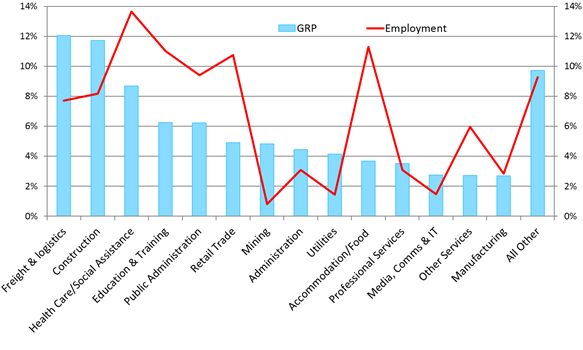
However, with Gross
Regional Product (GRP) at $1.06 Billion, the region accounts for just 0.44%
of the State’s economic activity. It is important to recognise that, in
planning for Broome’s growth, the starting point is a very small base.
Each of the key industries
that make up Broome are collectively important, but small in relative terms.
For example, Broome Shire produces less than 2% of the Western Australian
Outback region’s agriculture.
Opportunities
for growth
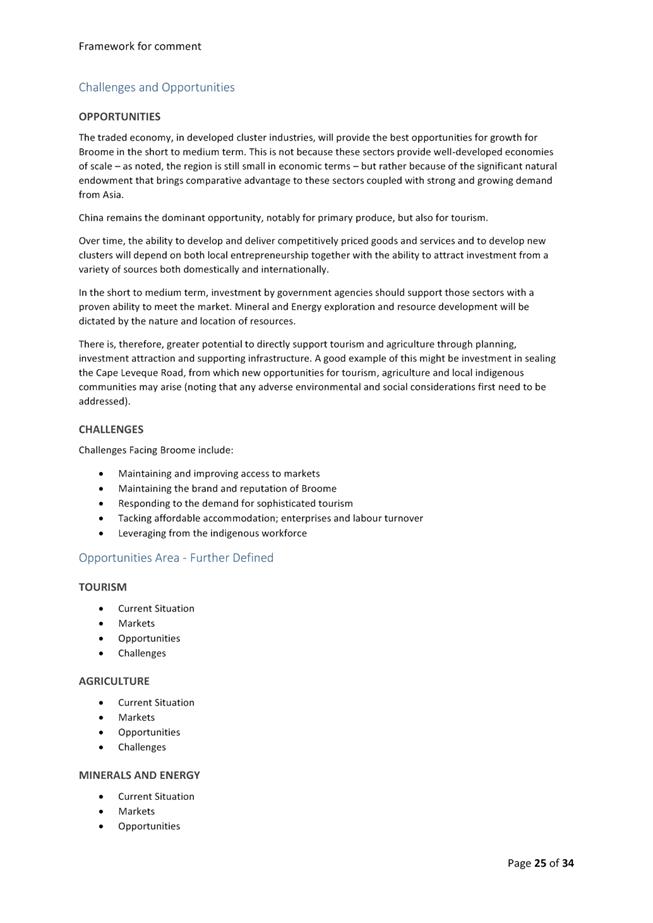
The traded economy, in
developed cluster industries, will provide the best opportunities for growth
for Broome in the short to medium term. This is not because these sectors
provide well-developed economies of scale – as noted, the region is still
small in economic terms – but rather because of the significant natural
endowment that brings comparative advantage to these sectors coupled with
strong and growing demand from Asia.
China remains the dominant
opportunity, notably for primary produce, but also for tourism.
Over time, the ability to
develop and deliver competitively priced goods and services and to develop new
clusters will depend on both local entrepreneurship together with the ability
to attract investment from a variety of sources both domestically and
internationally.
In the short to medium
term, investment by government agencies should support those sectors with a
proven ability to meet the market. Mineral and Energy exploration and resource
development will be dictated by the nature and location of resources.
There is, therefore, greater
potential to directly support tourism and agriculture through planning,
investment attraction and supporting infrastructure. A good example of this
might be investment in sealing the Cape Leveque Road, from which new
opportunities for tourism, agriculture and local indigenous communities may
arise (noting that any adverse environmental and social considerations first
need to be addressed).
Recommendations
Without a developed
regional Growth Plan Strategy, Broome is likely to experience below optimal economic
growth to allow the region to continue to improve the standard of living for
all citizens. The focus of the strategy, however, should be tailored to the
ultimate objectives of the region.
If the primary objective
for Broome is to increase employment opportunities, then the focus should be on
support for those industries that generate the greatest number of on-going new
jobs in the traded goods sectors, such as tourism, rather than those that may
generate high growth but low employment, such as mining.
Conditions can be created
to increase the attractiveness of regional investment by the private sector
through provision of high quality economic and social infrastructure. However,
it would be naïve to imagine that it can have more than a limited influence
on final private sector decisions on whether to invest. These decisions are
based on myriad factors including interest rates, credit markets and
alternative investment opportunities.
An opportunistic approach
should therefore be taken to new opportunities as they arise, assessing each on
its merits in terms of the benefits it can bring to the region through economic
growth and employment as well as any social and environmental impacts.
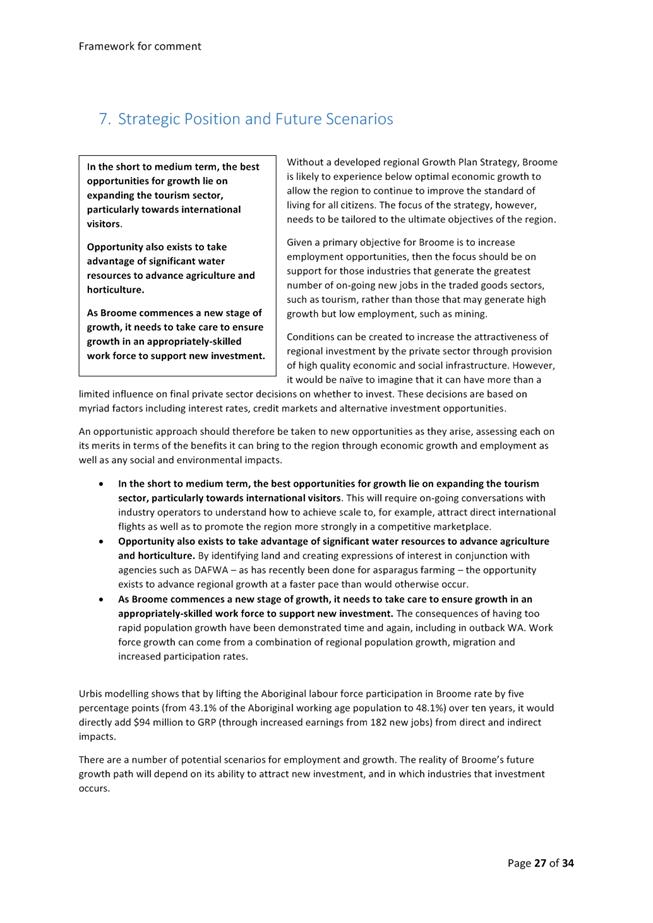
In the short to medium
term, Urbis suggests that the best opportunities for growth lie on expanding
the tourism sector, particularly towards international visitors. This will
require on-going conversations with industry operators to understand how to
achieve scale to, for example, attract direct international flights as well as
to promote the region more strongly in a competitive marketplace.
Opportunity also exists to
take advantage of significant water resources to advance agriculture and
horticulture. By identifying land and creating expressions of interest in
conjunction with agencies such as DAFWA – as has recently been done for
asparagus farming – the opportunity exists to advance regional growth at
a faster pace than would otherwise occur.
As Broome commences a new
stage of growth, it needs to take care to ensure growth in an
appropriately-skilled work force to support new investment. The consequences of
having too rapid population growth have been demonstrated time and again,
including in outback WA. Work force growth can come from a combination of
regional population growth, migration and increased participation rates.
Urbis modelling shows that
by lifting the Aboriginal labour force participation in Broome rate by five
percentage points (from 43.1% of the Aboriginal working age population to
48.1%) over ten years, it would directly add $94 million to GRP (through
increased earnings from 182 new jobs) from direct and indirect impacts.
There are a number of
potential scenarios for employment and growth. The reality of Broome’s
future growth path will depend on its ability to attract new investment, and in
which industries that investment occurs.
To raise the growth rate
from an annual average of 2.5% to 3.5% over a ten-year period, for example,
requires additional investment additional investment of around $240 million.[1]
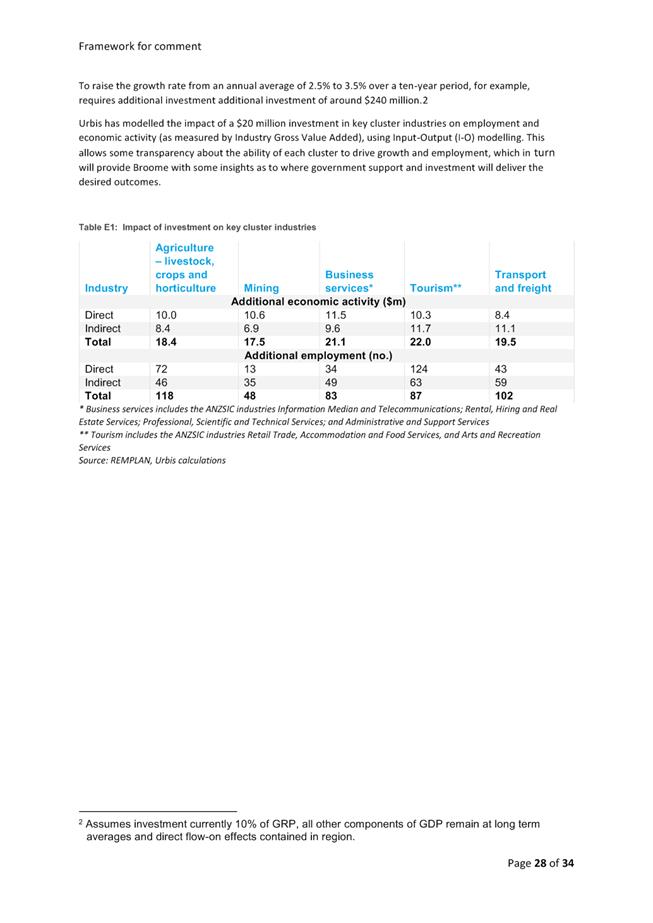
Urbis has modelled the
impact of a $20 million investment in key cluster industries on employment and
economic activity (as measured by Industry Gross Value Added), using
Input-Output (I-O) modelling. This allows some transparency about the ability of
each cluster to drive growth and employment, which in turn will provide Broome
with some insights as to where government support and investment will deliver
the desired outcomes.
Table E1: Impact of
investment on key cluster industries
|
Industry
|
Agriculture
– livestock, crops and horticulture
|
Mining
|
Business
services*
|
Tourism**
|
Transport
and freight
|
|
Additional
economic activity ($m)
|
|
Direct
|
10.0
|
10.6
|
11.5
|
10.3
|
8.4
|
|
Indirect
|
8.4
|
6.9
|
9.6
|
11.7
|
11.1
|
|
Total
|
18.4
|
17.5
|
21.1
|
22.0
|
19.5
|
|
Additional
employment (no.)
|
|
Direct
|
72
|
13
|
34
|
124
|
43
|
|
Indirect
|
46
|
35
|
49
|
63
|
59
|
|
Total
|
118
|
48
|
83
|
87
|
102
|
* Business services
includes the ANZSIC industries Information Median and Telecommunications;
Rental, Hiring and Real Estate Services; Professional, Scientific and Technical
Services; and Administrative and Support Services
** Tourism includes the ANZSIC industries Retail Trade, Accommodation and Food
Services, and Arts and Recreation Services
Source: REMPLAN, Urbis calculations
The implications of these
scenarios are twofold.
§ Firstly,
the higher growth and employment scenarios will require significant investment
in a wider range of infrastructure to create a supporting environment for
economic investment; a large number of such investments have been identified
and are presented in separate analysis provided by Urbis and GHD.
§ Secondly,
a growing workforce and population will generate the need for increasing social
infrastructure, affordable housing and community amenity – such
requirements are the subject of work currently being undertaken by GHD.
Introduction
The Shire of Broome and
the wider Kimberley region have been the subject of much study in recent years,
from both an economic and social perspective. This report builds on this
earlier work, presenting a synthesis of previous findings with Urbis’ own
analysis, to understand the most prospective opportunities for economic growth
and social advancement in the region over the medium to long term.
This ‘top
down’ macroeconomic analysis provides a framework against which to assess
the Return on Investment (in economic, social and environmental terms) of
individual projects put forward. In essence, it provides a sense check for both
the investment opportunities themselves as well as their potential outcomes. It
is not intended as an investment guide.
Regional industry clusters
(Pracsys 2016) demonstrate the particular strengths of the region resulting
from abundant natural resources that support mining, agriculture and
aquaculture.
These strengths have
played to strong demand from Asian markets and in particular China, where
growth has been most rapid. However, as Figure 1-1 demonstrates,
Australia’s heavy reliance on primary commodity exports – reflected
in the Broome and Kimberley economies – places it at some risk:
China’s continued strong demand for primary commodities is far from
given.
Figure 1‑1
International comparison of importance of China and commodities in export mix
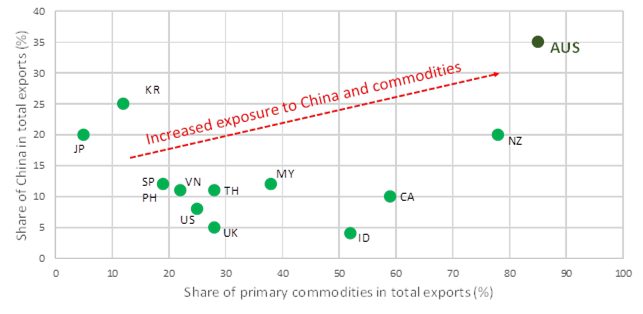
Source: Economist
Intelligence Unit
Indeed, growth in
China’s need for minerals and energy is expected to decelerate in coming
years as the pace of urbanisation continues to slow, the switch to renewable
energy accelerates, and the economy continues to see faster growth in services
sectors rather than manufacturing.
And while China –
and the rest of the world – will very likely demand and import more food
products in coming years, in an increasingly global and competitive world,
Australia faces strong competition from many other markets.
Such trends demonstrate
the need to produce high quality and/or value-added products (e.g. chilled,
packaged beef), which can attract a price premium. It is also critical that
there are efficient price structures across the supply chain, including
optimised freight and logistics infrastructure. The need to identify
sustainable markets and establish direct relationships is also paramount.
Further, diversification
over the longer term, where possible, will be to Broome’s advantage.
Investment in the region that can be leveraged by strong industry clusters will
likely deliver the best short term economic outcomes. However, longer terms
benefits will be delivered by ensuring the right conditions exist to support
growth in sectors other than primary commodities, where comparative advantage
exists but is yet to be fully exploited, such as tourism.
Indeed, one of the most
prospective sectors for Broome is Tourism and Recreation services. To fully
capture the potential market for visitors, whether domestic or international,
Broome’s ‘unique proposition’ needs to be well-constructed
and marketed, with investment in the supporting infrastructure of
accommodation, attractions and cost-competitive transport.
Regardless of regional
cluster strengths and ultimate market opportunities, a significant barrier to
growth in Broome is a sustainable workforce – both skilled and unskilled.
This is a constant theme that runs through the literature and consultations.
There is also significant
social disadvantage in the region that, if mitigated, has the potential to
unlock both social and economic benefits. To that end, optimal investments will
include those that can address disadvantage and inequality, develop workforce
capabilities, and improve the cost of living including housing affordability.
These essentially ‘social’ measures will deliver long term economic
benefit to the region by attracting a stable and growing population.
The Kimberley Regional
Blueprint is an aspirational plan to guide and shape development in the Kimberley
to 2036. The Blueprint articulates a vision of the region as one of the
world’s most successful and sustainable.
This document helps to
articulate the global macroeconomic drivers creating the opportunities for
Broome Shire to achieve this vision. The report also articulates the local
economic and socio-demographic conditions which can help – or, if
unaddressed, may hinder – the maximisation of those opportunities.
|
Item 5.1 - BROOME GROWTH PLAN - STATUS UPDATE AND KEY
ELEMENTS
|
1. Policy context
There are numerous policy
documents that assess various aspects of Broome’s potential economic
development from a range of perspectives – particularly in relation to
the various forms of transport that are so critical to a remote region, as well
as various state, regional and local economic development strategies.
There are two key
documents providing context for this report.
1.1. 2036 and Beyond: A
Regional Blueprint for the Kimberley
The
Kimberley Regional Blueprint is an aspirational plan to guide and shape
development in the Kimberley to 2036 to achieve:
- population of 92,000 by 2036
- 34,000 new jobs, including 19,000 for Aboriginal people
The
Kimberley aspires to a long term future transformed into one of the
world’s most successful and sustainable regions.
The
Blueprint (specifically the stated vision, goals and strategies) seeks to
provide an investment framework for prioritising and assessing investment in
the region.
The
Blueprint is a response to the Duncan Review of Regional Development Commissions.
Blue
identifies 6 high-level “agendas” to transform the region:
1.
Regional Leadership and development-readiness
2.
Enhancing the Capability Services Sector
3.
Aboriginal Advancement
4.
Industry and Resources Development
5.
Developing our Regional Centres
6.
Infrastructure for driving growth
The
Blueprint identifies a range of areas where the Kimberley region has
comparative advantages (Section 4), and the accompanying challenges to
unlocking those advantages:
§ Industries
(agriculture and food, rangeland/pastoral industries, tourism, minerals and
energy)
§ People
and capability (resourcefulness, diversity, culture)
§ Natural
resources and environment (proximity to Asia, high environmental value, strong
biodiversity, climate for food production, mineral and energy endowment)
§ How
people interrelate and interact (sense of community, networked leadership)
The
Blueprint identifies has prioritised eight key sectors:
§ Minerals
& Energy
§ Agriculture
& Food
§ Tourism
§ Rangeland
Industries
§ Housing
§ Education
& Training
§ Health
& Wellbeing
§ Infrastructure,
Service & Governance (this cuts across all sectors)
For each
sector, the Blueprint identifies the 2036 transformational targets, strategies
to achieve those targets, and priority actions categorised by
‘infrastructure’, ‘services’ and
‘governance’.
1.2. Broome Shire
Strategic Community Plan (2015 ‑ 2025)
The Shire of Broome also
points to its Community Plan as a guiding document. The Plan recognises the
challenges facing, and community aspirations of, the region.
Challenges identified were
broad, but included:
§ upgrading
infrastructure (roads, drainage, public transport etc.) and services
(especially “facilities, programs and activities for young people”
as well as health, education and aged care facilities
§ Improving
social outcomes and reducing crime
§ the high
cost of living
§ housing
affordability and supply
§ finding
balance between protecting the environment while increasing resource
development and industrialisation.
2. The
Broome and Kimberley economies
This section looks at the
current economic and socio-demographic profile of the region to identify
strengths and weaknesses in the context of future economic growth and social
advancement.
Industry profiles are also
briefly canvassed, summarising the extensive work already done in this field.
2.1. Catchment area
Broome lies some 2,200 to
the north of Perth in the north west of Western Australia. While remote in
terms of major Australian centres, Broome’s proximity to key trading
partners in Asia is a considerable comparative advantage.
Figure 2‑1
Broome location
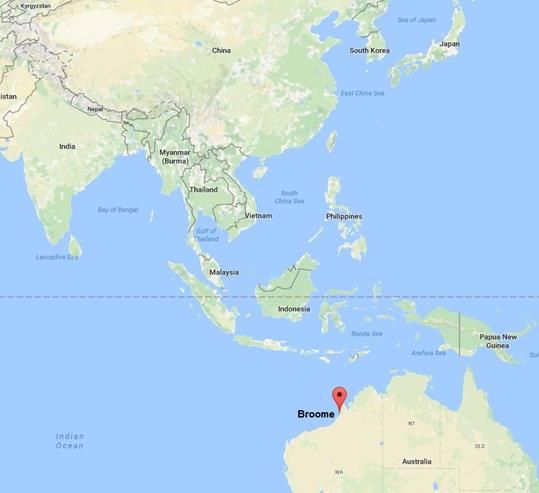
Source: Google maps
The Shire of Broome covers
almost 55,000 square kilometres. In 2014, approximately 1,900 hectares was
under agricultural production, of which 1,340 hectares are under irrigation.
Broome is the main service
centre for the broader Kimberley region and a key tourist destination,
particularly for WA residents.
2.2. Socio-demographic
profile
Population
The Kimberley region is a
large area with a relatively sparse population. Broome is the largest city in
the region, with a population of 17,308. The total population of the Kimberley
region is 38,801, some 1.5% of the total WA population (ABS 2016a).
Broome, and the Kimberley
region, have a younger than average population. The median age in Broome is
32.1, compared to 37.1 in Australia (ABS 2016b).
Broome and the Kimberley
region also have significant Indigenous populations – 29.1% of the people
in Broome are Indigenous and 40.0% of people across the entire Kimberley
region. This compares with 2.6% across Australia as a whole (ABS 2016b).
The disadvantage
experienced by Indigenous populations in the region includes poorer outcomes
for health, employment, income, incarceration and suicide. A critical component
of Broome’s future economic success will depend on being able to
meaningfully address social disadvantage and raise social and economic
inclusion for these peoples.
There is a significant
migrant population in Broome, albeit lower than the national average, with
22.8% of the population born overseas.
Table 2‑1 details
demographic statistics for Broome and the Kimberley, compared with Australia.
Table 2‑1 Broome
and Kimberley Key Demographics
|
|
Broome
|
Kimberley
|
Australia
|
|
Population
|
17,308
|
38,801
|
23.8 million
|
|
Median age
|
32.1
|
31.4
|
37.3
|
|
Working age
|
71.2%
|
71.5%
|
66.5%
|
|
Indigenous
|
29.1%
|
40.0%
|
2.6%
|
|
Migrant
|
22.8%
|
23.1%
|
30.2%
|
Note: Population as of
2015. All other statistics correct as of 2014.
Source: ABS 2016, Estimated Resident Population, cat. no. 3218.0; ABS 2016,
Data by Region
While population growth in
Broome has been solid – growing by 20% between 2006 and 2013 – the
long term annualised growth rate in non-boom periods has hovered around just
1.5% per annum and the region has a high rate of turnover of population. May
2016 research (Painted Dog Research 2016) suggests that 50% of the population
were either seriously considering leaving Broome (38%) or felt that this was
possible (12%).
Labour force
As a
result of the younger median age in Broome, the working age population of 71.2%
(12,320) in Broome is higher than the Australian average of 66.5%.
Broome is home to half of
the labour force for the Kimberley region. Broome labour force stood at 9,848
as of March 2016, a fall of 3.5% from a high of 10,202 in June 2015.
Unemployment has been steadily rising since the end of the mining boom,
standing at 9.2% in March 2016. This offers a silver lining – while
unemployment is growing people are still looking for work rather than exiting
the workforce entirely (Department of Employment 2016).
Across the whole Kimberley
region, the labour force has seen a similar fall, down 3.4% from 20,628 in June
2015 to 19,926 in March 2016. Unemployment is also rising, and currently stands
at 14.5% (Department of Employment 2016).
The 2011 Census data (most
recent data available) outlines the differences in labour force outcomes for
the Indigenous and non-Indigenous populations in Broome. In 2011, Indigenous
labour force participation was 43.1% and unemployment at 16.4%. In stark
contrast, non-Indigenous labour force participation was 81.7% and the
unemployment rate at 2.3%. (ABS Census 2011).
Urbis modelling shows that
lifting indigenous labour force participation in Broome by five percentage
points (from 43.1% of the Aboriginal working age population to 48.1%) over a
ten-year period, would:
§ directly
add $52 million to GRP through increased earnings as a result of 182 new
Aboriginal jobs
§ add a
further $42 million indirectly from the flow-on impact of new expenditure of
those wages (noting that some of this indirect increase will accrue outside the
Broome region).
This estimation is based
on unemployment remaining at 16.4%. If participation increases and unemployment
falls to 9% (the average for all Broome), employment would increase by 200,
with a direct contribution of $57 million and indirect of $46 million.
Figure 2‑2 Broome
LGA Labour force and unemployment rate
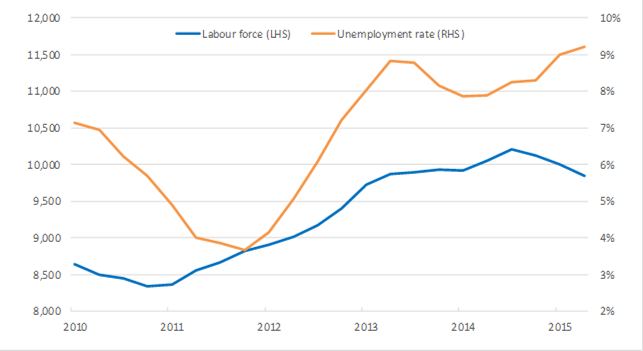
Source: Department of
Employment 2016, Small Area Labour Markets
Education
The Broome workforce is
relatively well skilled (Table 2‑2) in terms of post school
qualifications. The Broome rate of persons with a university degree, however,
is lower in than the national average.
Table 2‑2 Persons
over 15 with post-school qualifications
|
|
Broome
|
Kimberley
|
Australia
|
|
|
% of
total population aged 15 and over
|
|
Any post school
qualification
|
60.2
|
56.7
|
55.9
|
|
Bachelor degree or
higher
|
14.3
|
12.1
|
18.8
|
Source: ABS 2016, Data by
Region
Despite above-average
levels of post-school qualifications, a common complaint of regional employers
is a lack of skills. Some employers also noted the lack of unskilled workers,
particularly in seasonal industries (tourism, agriculture) that may not be able
to offer permanent employment and career progression. There is therefore a
significant reliance on ‘backpackers’ on 457 visas for this work.
Household Income
The median personal income
for Broome was $52,078 in 2013, compared with $51,191 for the Kimberley,
$52,225 for Perth and $44,940 for all Australia (ABS 2016b).
Cost of living
Although incomes do not
significantly diverge from those in Perth, the cost of living in the Kimberley
region is significantly higher.
The Regional Price Index
(RPI) 2015, produced by the WA Department of Regional Development, contrasts
the cost of a basket of goods in regions of WA relative to Perth (WA Department
of Regional Development 2015). Overall, prices in Kimberley are 15.4% higher
than in Perth.
All goods in the Kimberley
region were more expensive than in Perth, though the main drivers included
clothing (20.3% more expensive) and household equipment and operation (22.3%
more expensive). Housing costs have dropped considerably recently, although
remain relatively high still, from 25.6% more expensive than Perth in 2013 down
to 15.4% in 2015.
The median house price in
Broome (March 2015) was $585,000 compared with $551,250 for the Kimberley (Kimberley
Development Commission 2015) and $599,574 for Perth (Wilson 2015).
Prices in Broome,
Kimberley and much of WA including Perth have fallen since the slow-down of the
mining boom. In Broome, house price peaked at $688,500 in 2010 (AMP Pricefinder
2016).
In addition to high cost
of living, the remoteness of the region means that product choice is limited in
comparison to larger, less remote towns.
2.3. Economic structure
The Broome economy (as
measured by Gross Regional Product, GRP) was estimated at $1.06 Billion in
2014, accounting for approximately 34% of the Kimberley’s economy. (Geografia
2014)
At just 0.44% of the
State’s GSP, it is important to recognise that, in planning for Broome’s
growth, we are starting from a very small base.
Key industries in Broome
Figure 2‑3 Industry
contribution to Broome GRP and employment
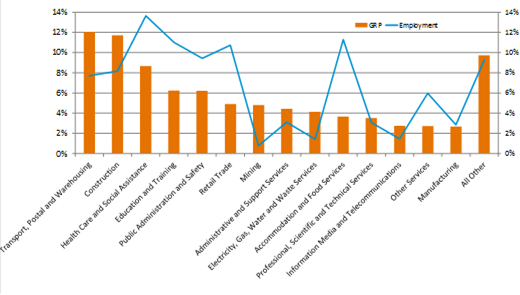
Source: ABS, Urbis
calculations
Figure 2 3 above shows
employment and economic output by major industries.
Employment-intensity varies
across sectors; high value industries do not always represent dominant
employers. For example, tourism and social services are high employment, low
value industries, while energy and resources are the reverse. (For more on the
implications of this, see Section 3.4)
Significant cluster
analysis has already been undertaken and the findings will not be repeated at
length here.
If the primary objective
for Broome is to increase employment opportunities, then the focus should be on
those industries that generate the greatest number of on-going new jobs. While
Broome can create conditions to attract investment in the form of high quality
economic and social infrastructure, it will have limited influence on final
private sector decisions. An opportunistic approach should therefore be taken
to new opportunities as they arise, assessing each on its merits in terms of
the benefits it can bring to the region through economic growth and employment
as well as any social and environmental impacts.
Traded clusters –
those that export outside the Broome and Kimberley region – have the
greatest potential to value add, while local clusters are constrained by local
population and income trends.
Mining, as elsewhere in
WA, dominates traded clusters in Broome. Other key traded clusters include
agriculture and aquaculture, and hospitality and tourism
The scale of dominant
sectors means they may be better able to deliver strong economic returns in the
short term, by leveraging new infrastructure investment, than smaller and
younger sectors.
Longer term, however, the
optimal growth opportunities may well lie not in what is being produced and
exported, but with what can be produced to satisfy national and international
demand for goods and services. These opportunities are not obvious at this
point in time, but the pre-conditions need to be in place to allow
opportunities to be taken as they arise. This means investment in good
economic and community infrastructure, encouraging a skilled and stable
workforce, and ensuring Broome is an attractive and affordable place to live.
Further, growth
opportunities will be influenced by the number and size of businesses that make
up a sector.
There were approximately
1,230 business in the Broome SA2 (June 2015). Small and medium enterprises
(SMEs) dominate, with firms made up as follows:
§ Sole
operators – 58%
§ Less than
5 employees – 23%
§ Less than
6-19 employees – 15%
Figure 2‑4
Number of businesses by industry, Broome, 2015
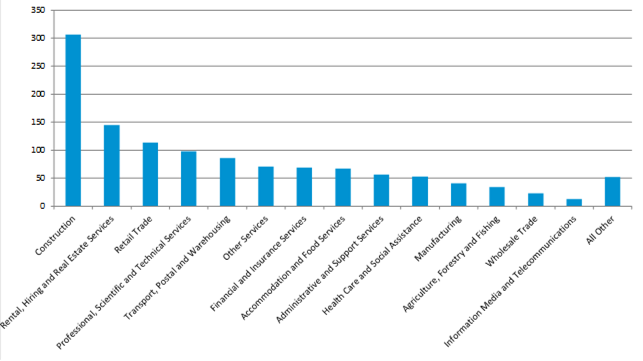
Source: ABS
2.4. Markets
Figure 2‑5 WA exports by destination, 2015
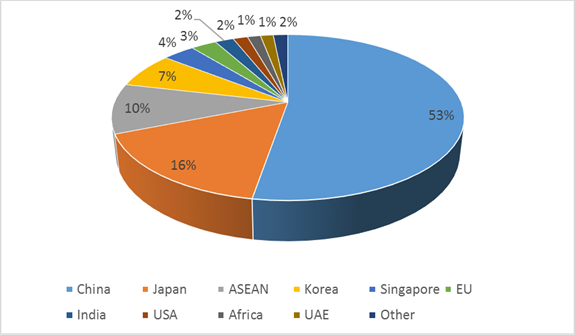
Source: ABS
As Figure 2‑5
clearly shows, WA exports are heavily focussed on China, Japan and Asia more
broadly. Given the proximity to Australia, economic structure and growth rates
of these markets, this focus is not surprising.
Key exports include:
Beef
The majority of beef is
exported to South-East Asia – “At least once a week we’re
approached by people who are desperate for supply” (Edwards 2015). Major
markets for live cattle and beef include (WA Department of State Development
2016):
§ Indonesia
– longstanding trade partner and WA’s second largest export market
for live cattle and fourth for beef
§ China
– in response to high demand for Australian beef there is support
continuing along the supply chain to establish and expand the export of live
cattle to China
§ Japan
– overall the state’s second largest export market, and the largest
export market for live cattle and beef.
LNG
Western Australia
currently exports most of its LNG production to Japan. New contracts with China
and India will diversify the distribution of LNG. WA has a comparative
advantage in shipping LNG to Japan – the shipping distance is much
shorter than major export competitors Qatar and USA (WA Department of State
Development 2016).
Iron Ore
WA is also a major iron
ore producer; however, the Kimberley region does not produce significant
amounts. In 2015 the Pilbara region produced 94% of the total iron ore shipped (WA
Department of Mines and Petroleum 2015).
Tourism
The majority of tourists
visiting Broome are intrastate visitors. International tourists represent a
relatively small portion of visitors (Table 2‑3). The top international
markets for Broome are Germany, the UK and NZ. In 2014, these three countries
accounted for almost half of a total of international visitors.
Table 2‑3 Shire of
Broome visitor numbers
|
|
2014 and
2015 Annual Average
|
|
Intrastate
|
154,000
|
58%
|
|
Interstate
|
79,000
|
30%
|
|
International
|
31,300
|
12%
|
|
Total
|
264,300
|
100%
|
Source: TRA
Reflecting the
attractiveness of the destination as a retreat from colder parts of Australia
during the winter, occupancy rates are highest in July and August, Peaking at
around 80%. During the wet season months, rates fall to around 40%, with an
annual average of approximately 57% over 2013 and 2014. (Tourism Research
Australia 2015).
3. Opportunities
for growth
3.1. Export
opportunities
The prevailing wisdom
regarding global opportunities remains unchallenged at present, with China,
India and Indonesia representing the strongest growth markets over the next
three decades, while the USA and Europe will fall in GDP rankings, according to
leading global economic research house, the Economist Intelligence Unit.
Over the medium term,
then, these markets will remain strong for Australian exporters, although
competition for access can be expected to continue to rise – especially
in primary commodities exports where low wage countries represent a challenge.
Established competitors from developed markets, such as the USA, also pose a
continuing threat in certain agricultural markets, notably beef and grains
– notwithstanding the advent of Free Trade Agreements between Australia
and China, Japan and Korea.
Figure 3‑1 Below
shows how regional opportunities play well to Broome’s strengths. The
horizontal axis shows the relative strength of Australia exports to key
markets, while the vertical axis shows expected annual growth rates in GDP over
the medium term. The size of the bubbles represents the comparative size of the
export destination country.
Figure 3‑1 Australian exports and markets
(by size and growth)
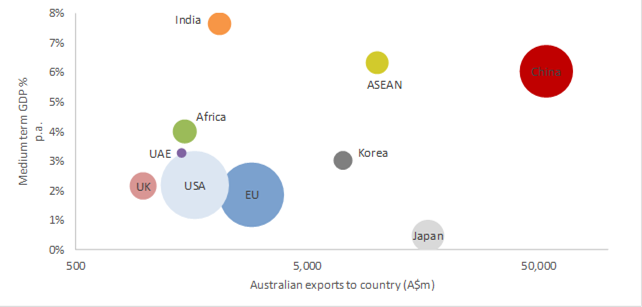
|
Source:
|
IMF
World Economic Outlook Database 2016
|
The chart shows the strong
relationship between Australian exporters and our Asian trading partners. With
strong population and economic growth anticipated in India, the Economist
Intelligence unit forecasts that India will be the third largest economy globally
by 2050, at roughly nine tenths the size of the US. India therefore remains an
opportunity for further strong export growth in coming years.
By 2030 the
top three economies of the world will be the US, China and India. Such will be
the growth of the two latter countries, in particular, that by 2050 they will
each be richer than the next five (Indonesia, Germany, Japan, Brazil, and the
UK) put together. This will represent a scale of wealth relative to the rest of
the top ten that is unique in recorded history.
(Economist Intelligence
Unit 2015)
The opportunities
presented by China may not be as large as some of the hyperbole suggests. As
Figure 3‑2 below shows, China’s goods imports are dominated by
minerals and metals, as well as machines and transport. Crude oil and
integrated circuits – the top two imports – account for more than a
fifth of China’s goods imports. (Observatory of Economic Complexity 2016)
Figure 3‑2 China imports by product type
(2014, $US1.53 trillion)
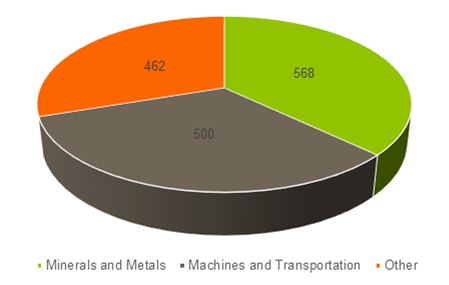
Source:
Observatory of Economic Complexity
Among ‘other’
imports (Figure 3‑3), such as beef, the story is more subdued. Frozen and
fresh beef accounted for just 0.1% of total Chinese imports in 2014, although
the value of this market is US$1.7 billion and Australia dominates this market,
accounting for almost half of all China’s imports. Wheat is also a
dominant market for Australia, with a 49% share of US$875 million in imports.
Figure 3‑3 China ‘other’
imports by sub-category (2014, $US462 billion)
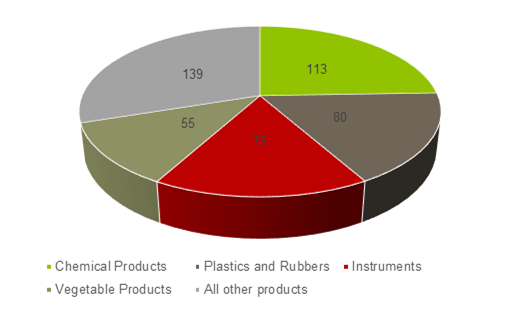
Source:
Observatory of Economic Complexity
From agricultural
products, soybeans represent the largest import group at 2.3% of total imports.
However, all product originates from the US and South and Central America.
Other agricultural product imports include malt, sugar, animal meal and
pellets, wine and chocolate. Many of Australia’s exports to China
represent a tiny portion of overall trade conducted: they are nevertheless
important and include products such as nuts, crustaceans and animal fats.
China’s services
imports are a much smaller proportion of its overall trade balance,
representing approximately US$118 billion in 2013 (PRC Ministry of Commerce),
with travel representing just under 65% of the total. China is
Australia’s second largest inbound market for tourism in 2014, increasing
50% in just four years. Points of entry are capital cities, Cairns and Gold
Coast. Chinese visitors look for:
§ ”interesting
attractions” (45%)
§ “world
class beauty” (45%)
§ “a
safe and secure destination” (44%).
Top attractions are:
§ Australian
beaches (56%)
§ wildlife
(47%)
§ food and
wine (46%) (Tourism Australia 2015)
These preferences suggest
that Broome has the opportunity to significantly expand tourism services.
Discussions with key industry operators (accommodation, transport providers)
and Austrade will assist in scoping this opportunity beyond the ideas already
put forward.
Across other Asian
markets, product demand from Australia is similar, relying largely on primary
produce. The relatively high wages structure in Australia compared to these
countries means that most producers will export unprocessed goods for further
processing offshore.
For Broome to expand
market opportunities beyond current levels will require a range of actions
beyond investment in hard and soft regional infrastructure, including trade and
investment facilitation (see Section 3.3).
3.2. Domestic markets
There are no published
data on trade flows between Broome and other regions of Australia, beyond
tourism figures. However, the most prospective domestic opportunities for
trading for Broome appear to be in agriculture and aquaculture (notably,
supplying food to the hospitality industry and wholesalers/retailers) and
tourism (Broome already attracts healthy demand from domestic travellers, as
discussed previously, but could attract larger numbers of interstate and
international visitors through investment in additional air routes).
3.3. Potential barriers
The opportunity afforded
Broome and Australia in general by the ‘Asian Century’ is large.
Free Trade Agreements negotiated with China, Japan and Korea will over time
make those markets more accessible. However, trade and non-trade barriers still
exist. While tariffs are being reduced over time in these markets, regulatory
requirements including biosecurity and labelling requirements can prove a
significant impediment. Most critical is the need for security of supply to new
markets; volumes must be sufficient.
However, there is no
reason that Broome cannot overcome such challenges; the impediments are raised
for awareness. It is not just a case of “grow it and they will
come”. The current success of many smaller-scale producers across
Australia demonstrates both the potential as well as the challenges.
In addition, Asian tastes
differ significantly from Australian ones. It cannot be assumed that processed
food products or even particular tourist activities that are successful in
domestic markets will appeal to Asian customers.
Access to markets is also
another challenge for new producers. ‘China’ is made up of
thousands of smaller markets. Trade facilitation typically plays an important
role in establishing new markets.
|
Item 5.1 - BROOME GROWTH PLAN - STATUS UPDATE AND KEY
ELEMENTS
|
3.4. What might a
transformed Broome look like in 2035?
ALCES to
provide inputs for this section, demonstrating potential additional production
capability.
GHD
inputs needed re Social Infrastructure to support additional workforce/population
Urbis has modelled the
impact of a $20 million investment in key cluster industries on employment and
economic activity (as measured by Industry Gross Value Added), using
Input-Output (I-O) modelling. This allows some transparency about the ability
of each cluster to drive growth and employment, which in turn will provide
Broome with some insights as to where government support and investment will
deliver the desired outcomes.
Table 3‑1 Impact of
investment on key cluster industries
|
Industry
|
Agriculture
– livestock, crops and horticulture
|
Mining
|
Business
services*
|
Tourism**
|
Transport
and freight
|
|
Economic
activity ($m)
|
|
Direct
|
10.0
|
10.6
|
11.5
|
10.3
|
8.4
|
|
Indirect
|
8.4
|
6.9
|
9.6
|
11.7
|
11.1
|
|
Total
|
18.4
|
17.5
|
21.1
|
22.0
|
19.5
|
|
Employment
(no.)
|
|
Direct
|
72
|
13
|
34
|
124
|
43
|
|
Indirect
|
46
|
35
|
49
|
63
|
59
|
|
Total
|
118
|
48
|
83
|
87
|
102
|
* Business services
includes the ANZSIC industries Information Median and Telecommunications;
Rental, Hiring and Real Estate Services; Professional, Scientific and Technical
Services; and Administrative and Support Services
** Tourism includes the ANZSIC industries Retail Trade, Accommodation and Food
Services, and Arts and Recreation Services
Source: REMPLAN, Urbis calculations
|
Item 5.1 - BROOME GROWTH PLAN - STATUS UPDATE AND KEY
ELEMENTS
|
4. Regional strengths and
weaknesses
As with any region, Broome
Shire and the Kimberley region have a number of strengths and weaknesses which
need to be taken into consideration when assessing the true extent of the
growth potential to be leveraged from investment in infrastructure.
4.1. Strengths
Comparative advantage for
the Broome region lies predominantly in its natural endowments which support
energy and resources, agriculture and aquaculture, and tourism. These are
critical advantages that will support the growth of Broome over the short to
medium term, allowing the region to gain critical population and workforce mass
and to potentially support further local and export opportunities over the
longer term.
Additional advantage is
delivered through:
§ geographical
proximity to Asia
§ access to
port infrastructure with spare capacity
§ access to
airport infrastructure capable of hosting international flights and low volume,
high value air freight
§ extensive
water resources to support horticulture and agriculture
§ an
educated workforce (with higher than average post-secondary qualifications).
Relatively high cost
structures that characterise Australia in general are exacerbated for Broome by
its remoteness. However, the high quality of primary commodities produced and
strong demand from key export markets typically enables a price premium.
4.2. Weaknesses
As already noted,
Australia has a number of significant competitive disadvantages due to
cost structures and remoteness from many markets. The latter is somewhat offset
by proximity to Asian markets, but these disadvantages have seen the shape of
the economy change markedly over the past 30 years across all regions.
Figure 4‑1 Industry
share of output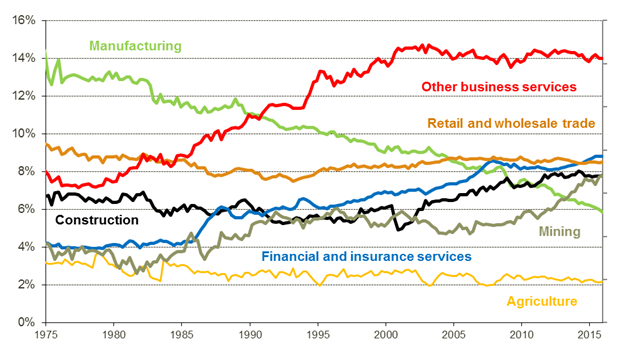
Source: ABS, Urbis
calculations
As shown in Figure 4-1,
strongest growth has occurred in the services sectors, including tourism, while
manufacturing and wholesale and retail trade have lost significant shares of
national output over time.
The reliance on primary
commodities also places the region at risk to the inherent volatility in
commodity prices and the Australian dollar.
A number of significant regional
weaknesses could be addressed over time, with adequate resourcing and
appropriate policies and programs. These include:
§ the
availability of a large and stable workforce; a shortage of both skilled and
unskilled workers was identified during consultations for this paper
§ housing
affordability is seen as a key deterrent to long term residency
§ land
ownership structures
§ access to
internet
§ indigenous
disadvantage.
5. Conclusions
Broome Shire enjoys a
number of strong advantages which make it well-placed to embrace the
significant opportunities for growth offered by Asian economic growth in
particular.
With a population of just
17,000 – and a significant proportion of those facing social and economic
disadvantage – those opportunities will only be realised with appropriate
investment in both hard and soft infrastructure.
Challenges and
opportunities presented will not be met overnight; a long term strategy is
appropriate. In assessing a list of potential investments, the macro factors
presented in this report should be considered.
These factors should be
used to inform and sense check assessments of individual investment
propositions by understanding the potential opportunities for, and barriers to,
optimising investment, growth and employment outcomes.
|
Item 5.1 - BROOME GROWTH PLAN - STATUS UPDATE AND KEY
ELEMENTS
|
Disclaimer
This report is dated 25 July 2016 and incorporates information
and events up to that date only and excludes any information arising, or event
occurring, after that date which may affect the validity of Urbis Pty
Ltd’s (Urbis) opinion in this report. Urbis is under no obligation
in any circumstance to update this report for events occurring after the date
of this report. Urbis prepared this report on the instructions, and for the
benefit only, of Landcorp (Instructing Party) for the purpose of
Economic analysis (Purpose) and not for any other purpose or use. To the
extent permitted by applicable law, Urbis expressly disclaims all liability,
whether direct or indirect, to the Instructing Party which relies or purports
to rely on this report for any purpose other than the Purpose, and to any other
person which relies or purports to rely on this report for any purpose
whatsoever (including the Purpose).
In preparing this report, Urbis was required to make judgements
which may be affected by unforeseen future events, the likelihood and effects
of which are not capable of precise assessment.
Urbis has recorded any data sources used for this report within
this report. These data have not been independently verified unless so noted
within the report.
All surveys, forecasts, projections and recommendations
contained in or associated with this report are made in good faith and on the
basis of information supplied to Urbis at the date of this report.
Whilst Urbis has made all reasonable inquiries it believes
necessary in preparing this report, it is not responsible for determining the
completeness or accuracy of information provided to it. Urbis (including its
officers and personnel) is not liable for any errors or omissions, including in
information provided by the Instructing Party or another person or upon which
Urbis relies, provided that such errors or omissions are not made by Urbis
recklessly or in bad faith.
This report has been prepared with due care and diligence by
Urbis and the statements and opinions given by Urbis in this report are given
in good faith and in the reasonable belief that they are correct and not
misleading and taking into account events that could reasonably be expected to
be foreseen, subject to the limitations above.
Appendix A References
ABS
(2016a). Estimated Resident Population, Australian Bureau of Statistics.
ABS
(2016b). Data by Region, Australian Bureau of Statistics.
ABS
Census (2011). Broome Indigenous Profile, Australian Bureau of Statistics.
AMP
Pricefinder (2016). Suburb Sales Report.
Department
of Employment (2016). Small Area Labour Markets.
Economist
Intelligence Unit (2015). Long-term macroeconomic forecasts Key trends to 2050.
Edwards,
T. (2015). "First Kimberley abattoir since 1993 set to open in
April." Retrieved 12 August, 2016, from
http://www.abc.net.au/news/2015-12-16/jack-burton-prepares-to-open-kimberley-abattoir/7022660.
Geografia
(2014). Shire of Broome, Economic Profile, Shire of Broome, KDC and Landcorp.
Kimberley
Development Commission (2015) Housing.
Observatory
of Economic Complexity (2016). China, MIT.
Painted
Dog Research (2016). Migration in Regional WA: Primary Research Results –
Broome, Landcorp.
Pracsys
(2016). Regional Cluster Analysis, Phase 5 Report, Landcorp.
Tourism
Australia (2015). China Market Profile. Tourism Australia.
Tourism
Research Australia (2015). Shire of Broome, Overnight visitor fact sheet
2014/15, TRA.
WA
Department of Mines and Petroleum (2015). Value by Region by Commodity.
WA
Department of Regional Development (2015). Regional Price Index.
WA
Department of State Development (2016). "Established regional trade."
Retrieved 12 August, 2016, from
http://www.dsd.wa.gov.au/about-the-state/close-to-asian-markets/established-regional-trade/china.
WA
Department of State Development (2016). "LNG Fact Sheet." Retrieved
12 August, 2016, from
http://www.dsd.wa.gov.au/docs/default-source/default-document-library/lng-18-fact-sheet---western-australia's-lng-industry---march-2016?sfvrsn=4
Wilson,
A. (2015). House price report March quarter.
|
Item 5.1 - BROOME
GROWTH PLAN - STATUS UPDATE AND KEY ELEMENTS
|
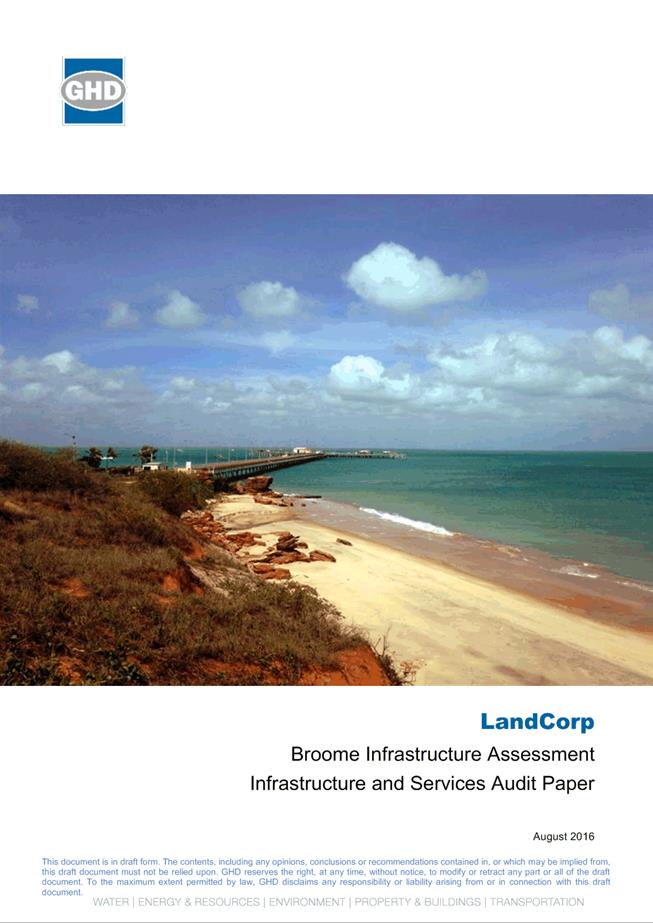
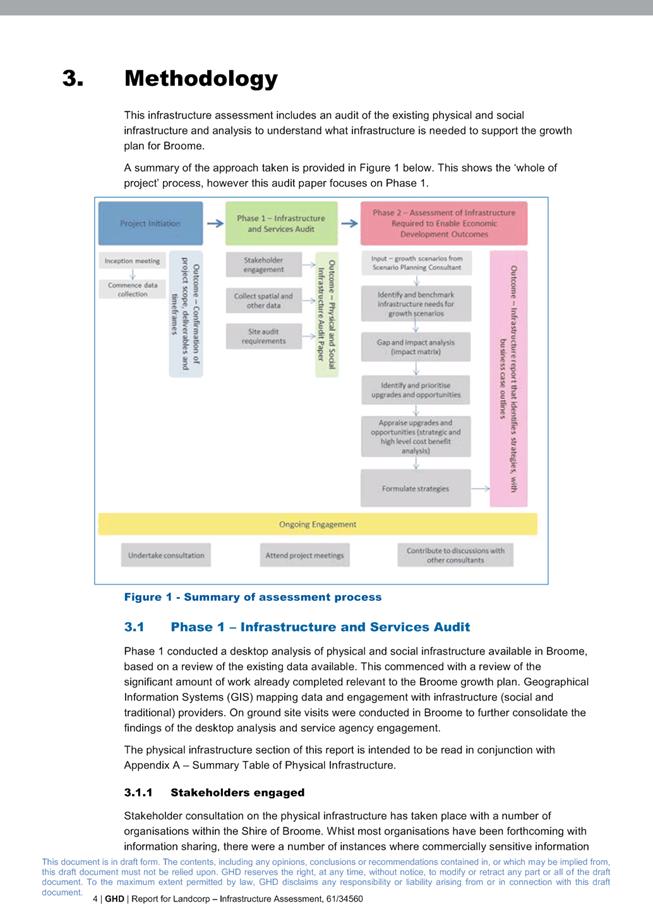
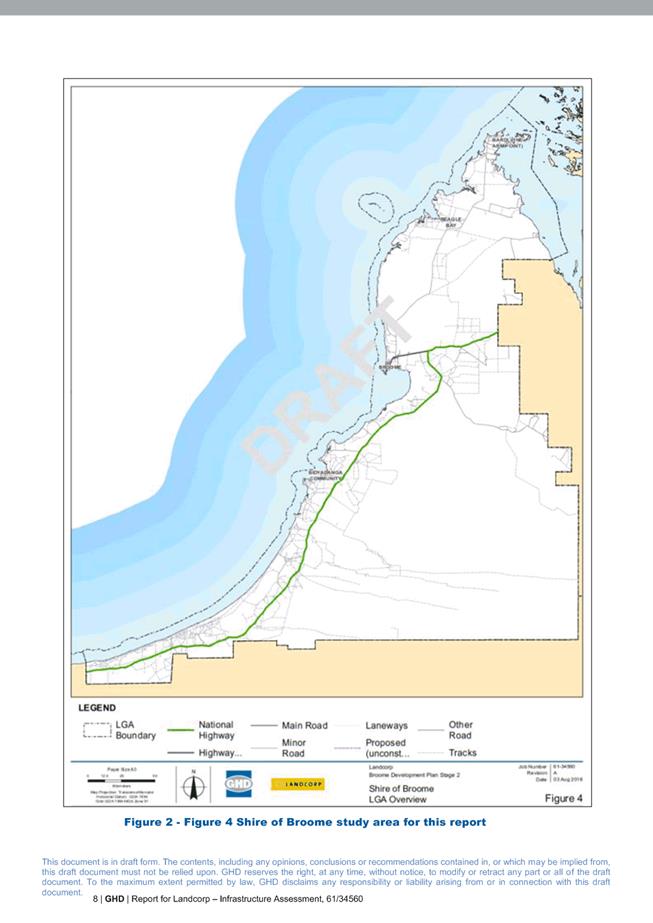
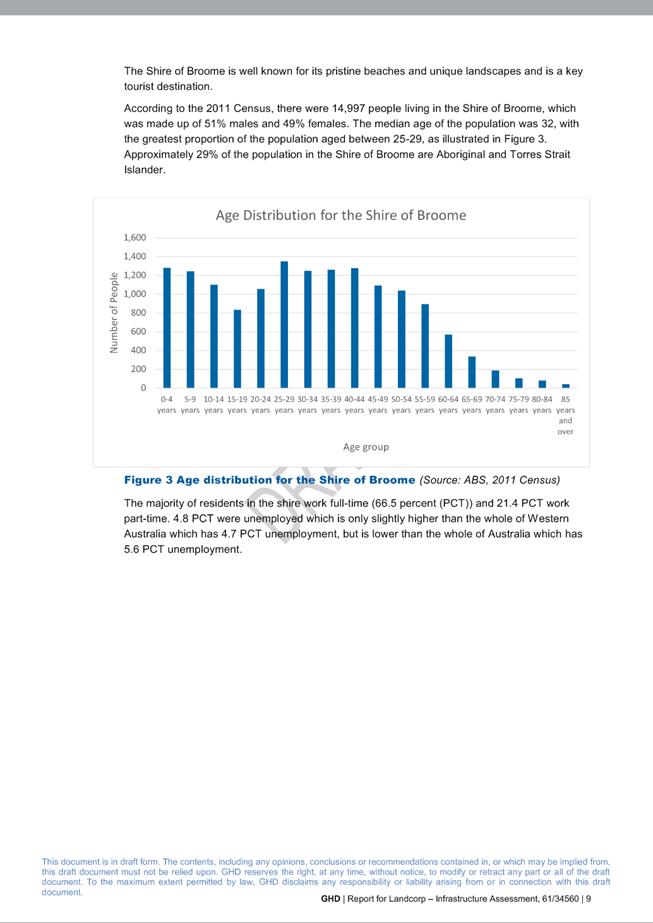
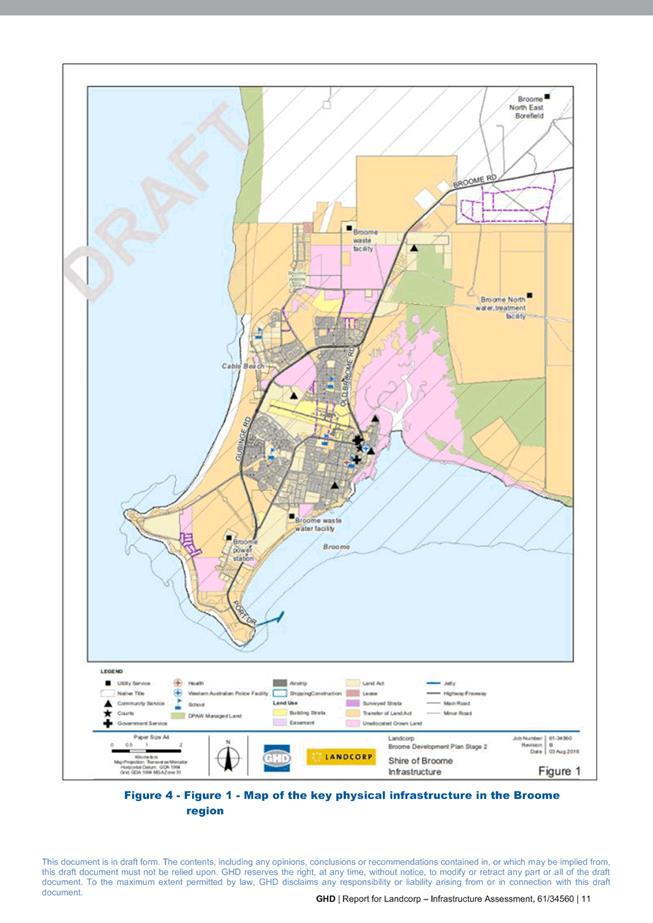
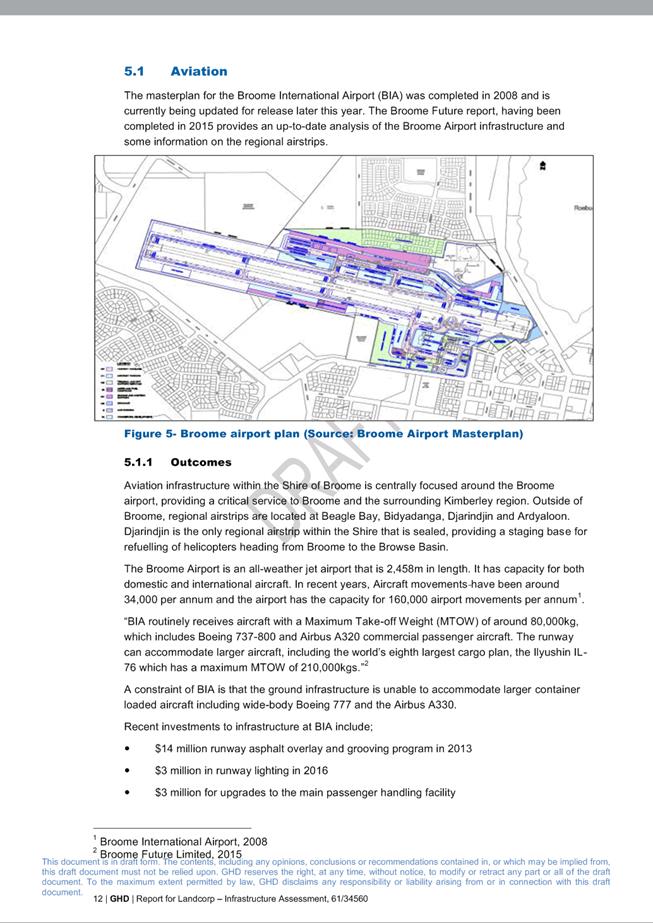
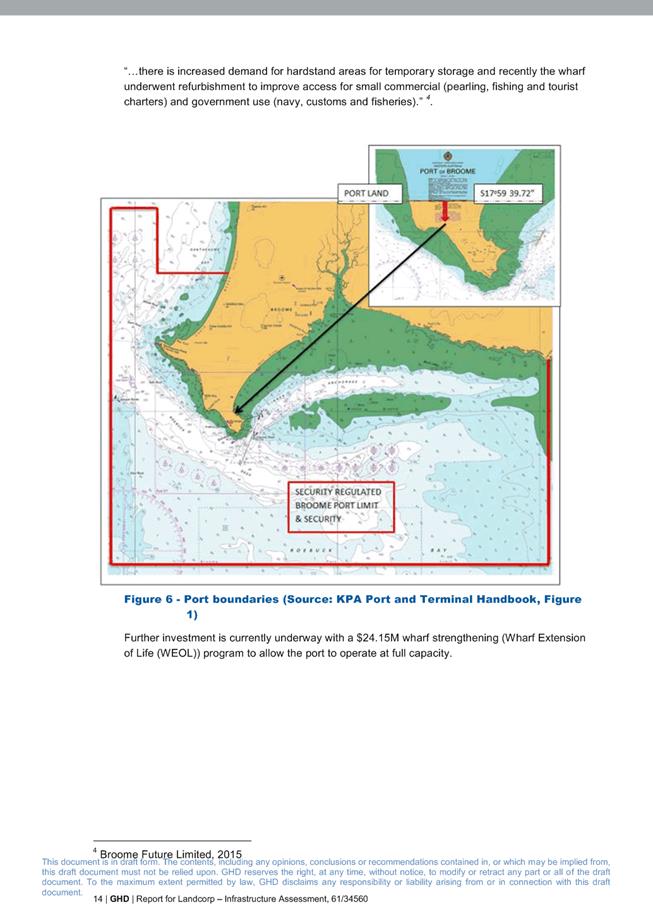
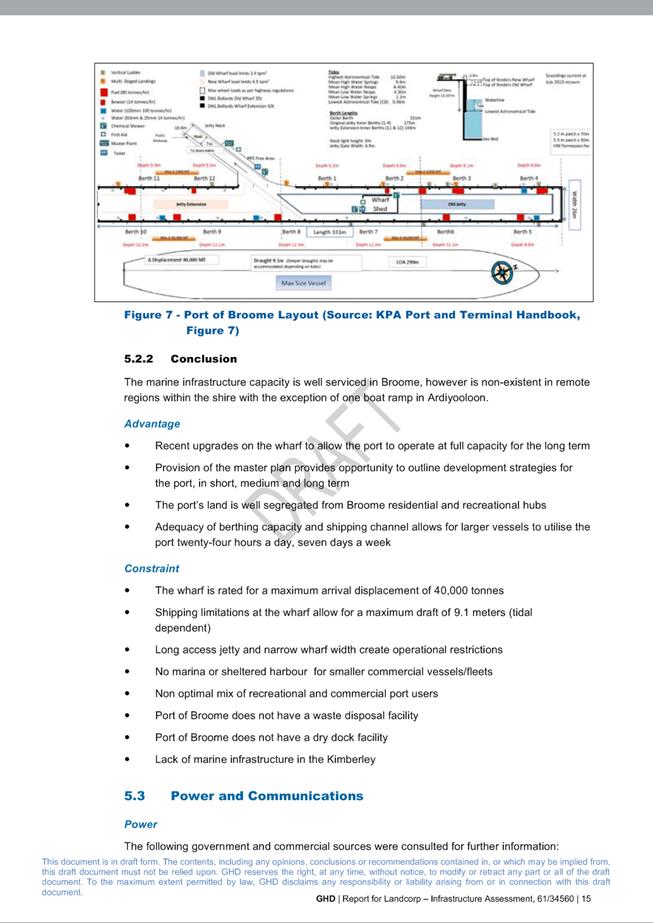
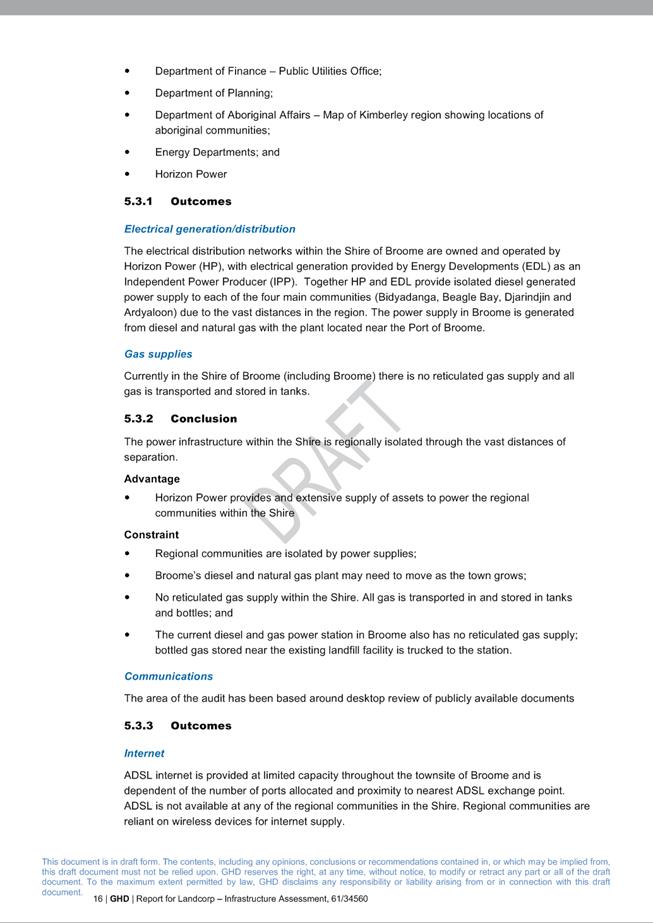
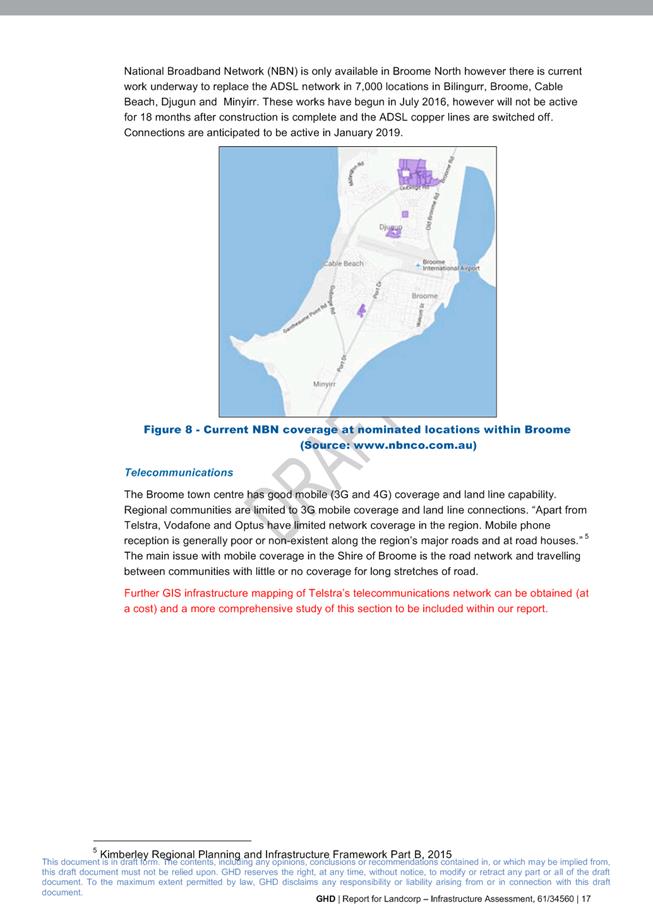
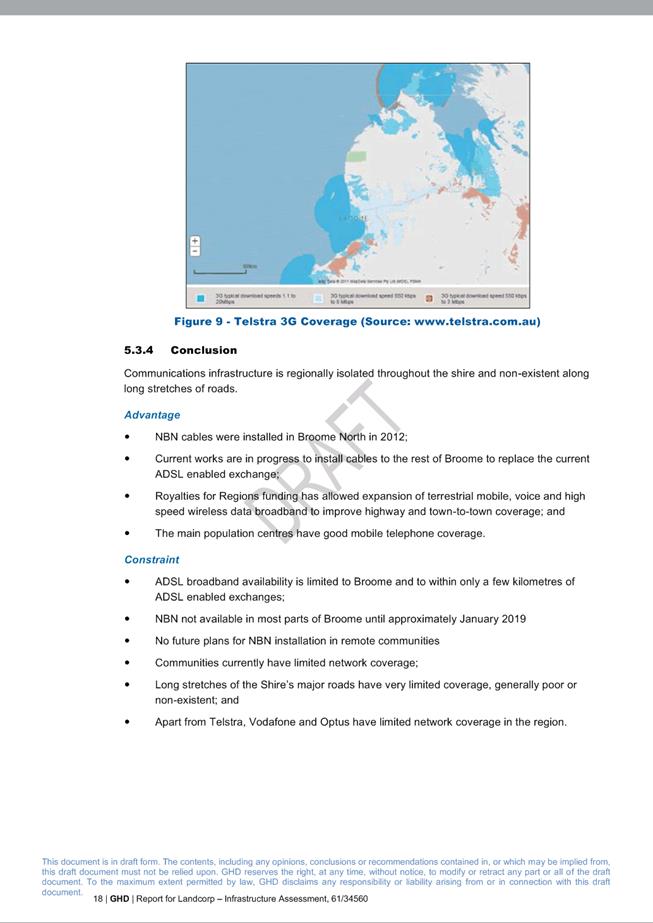
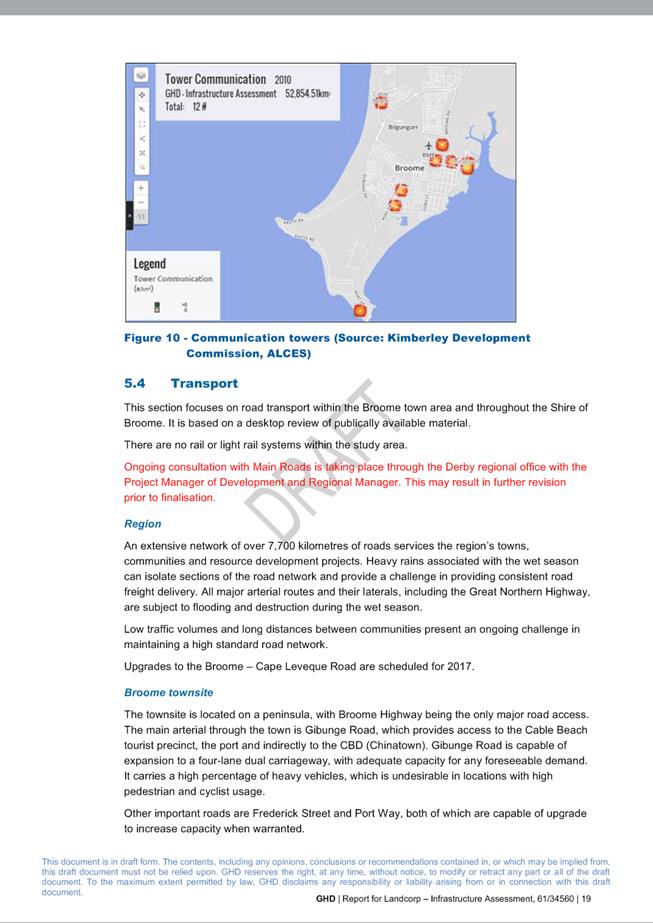
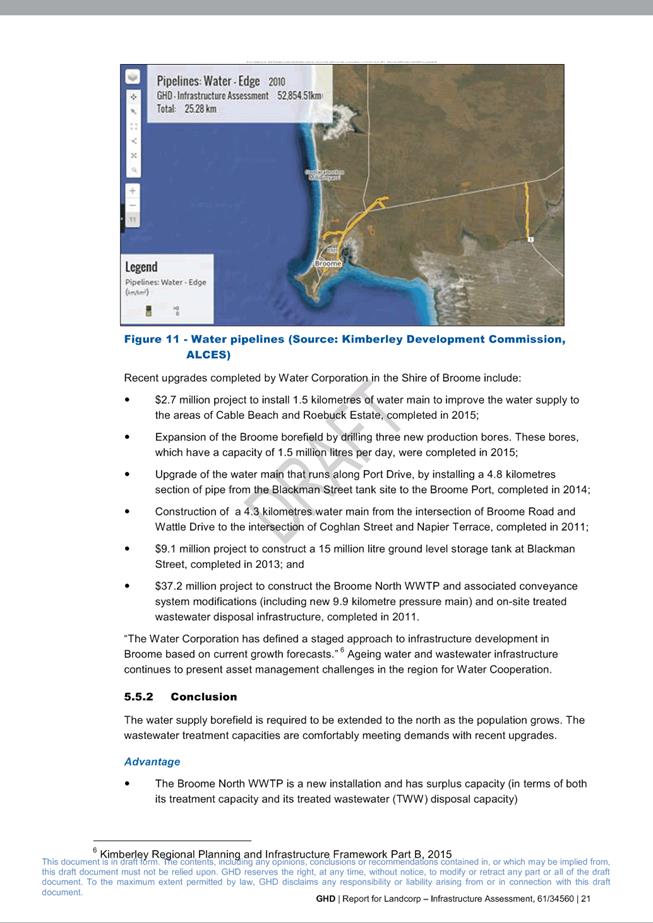
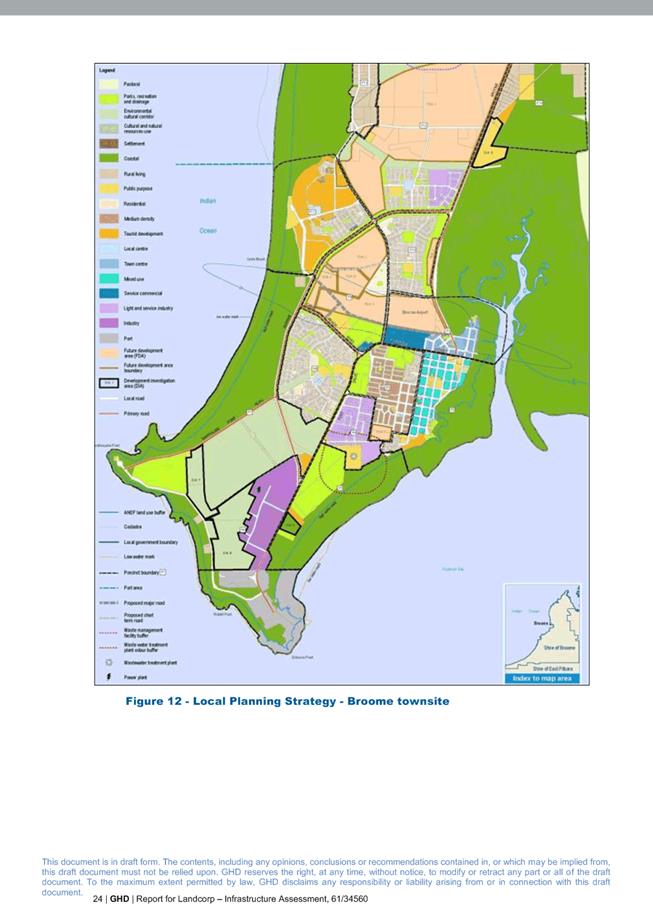
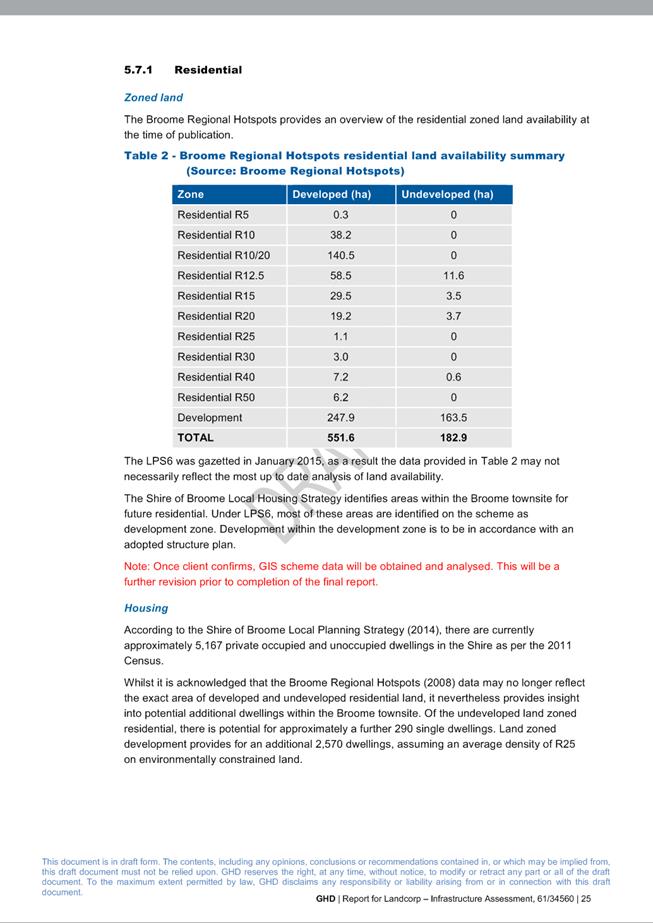
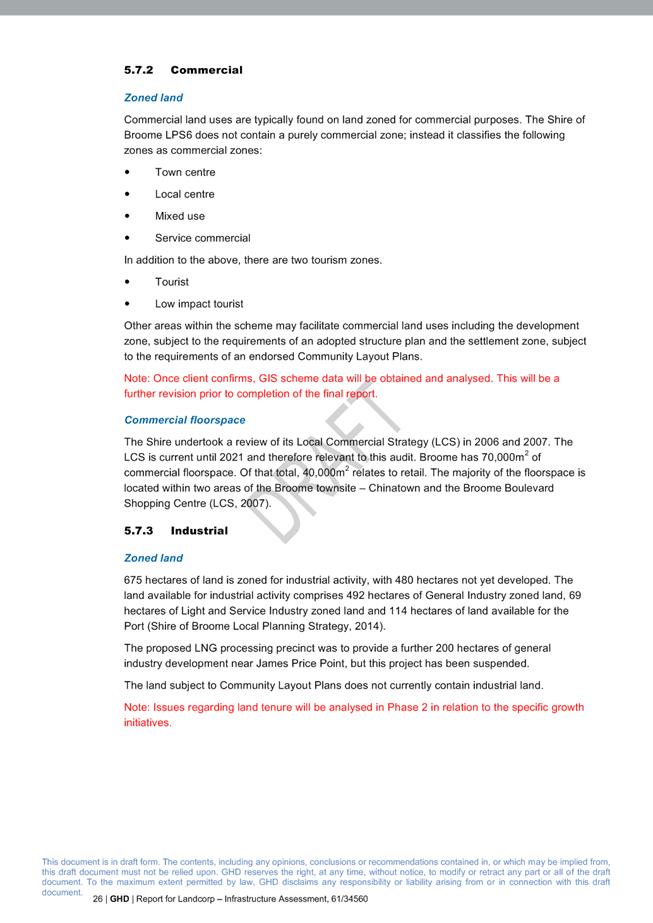
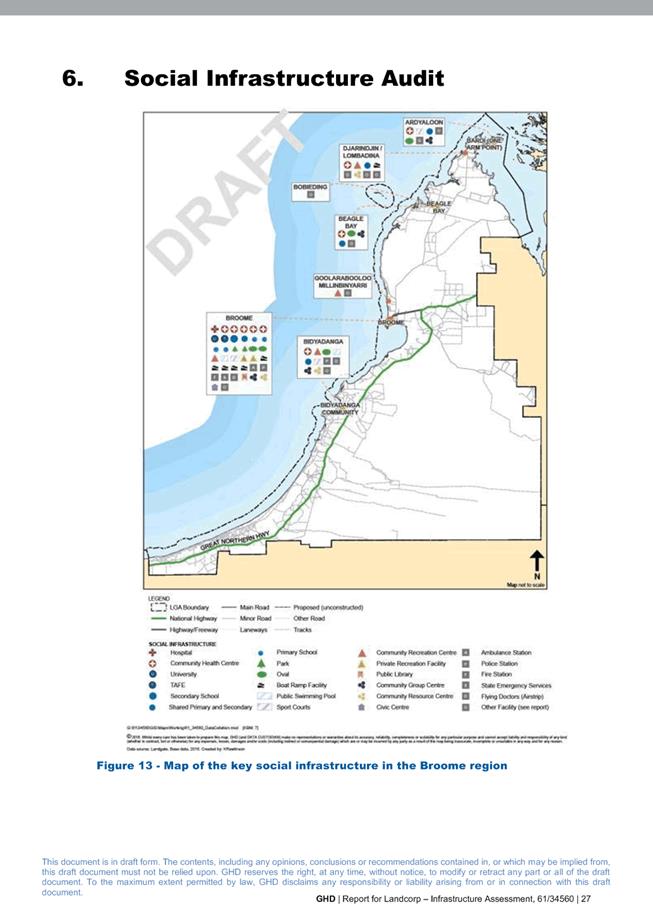
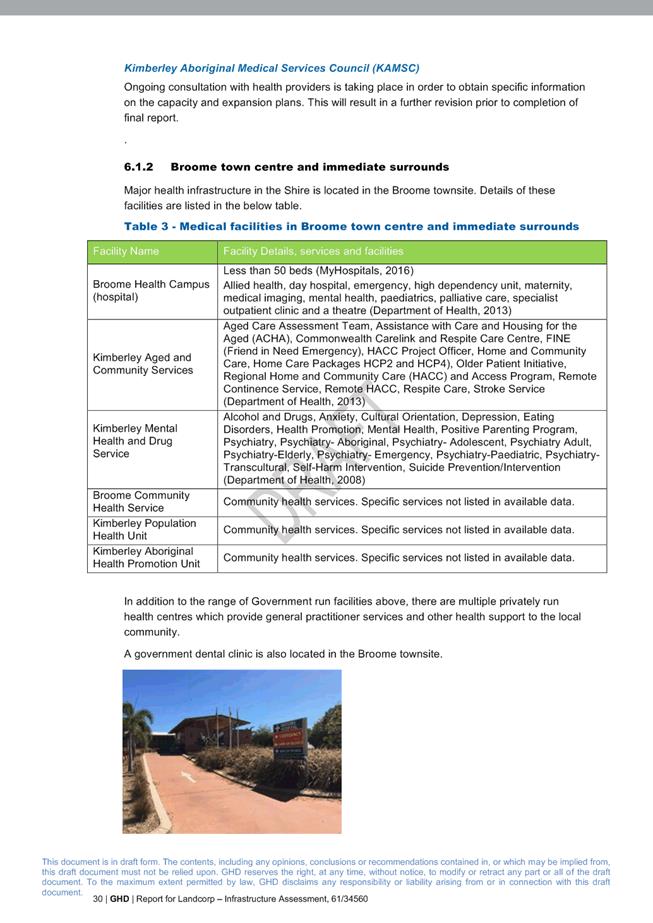
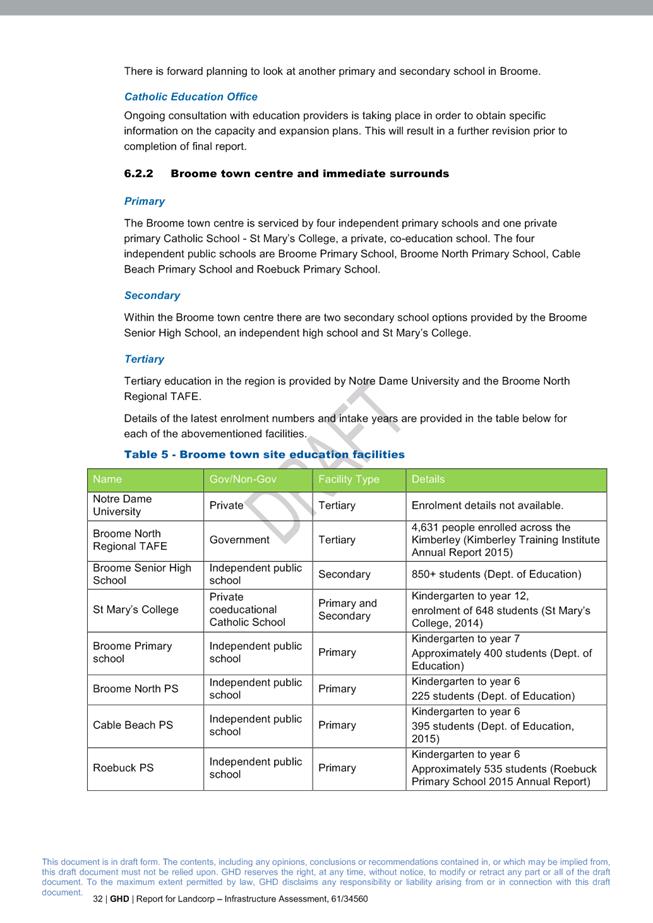
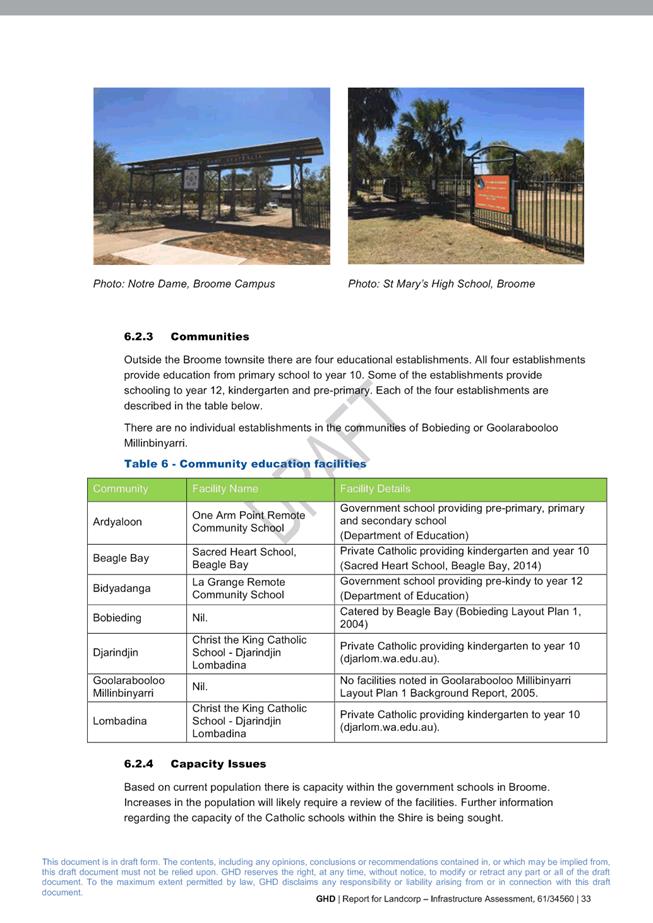
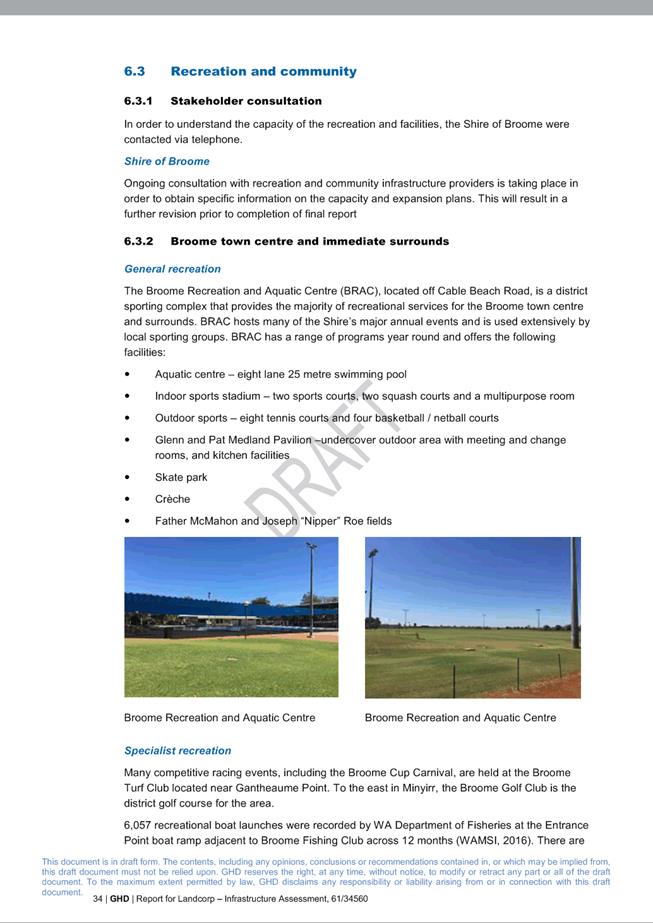
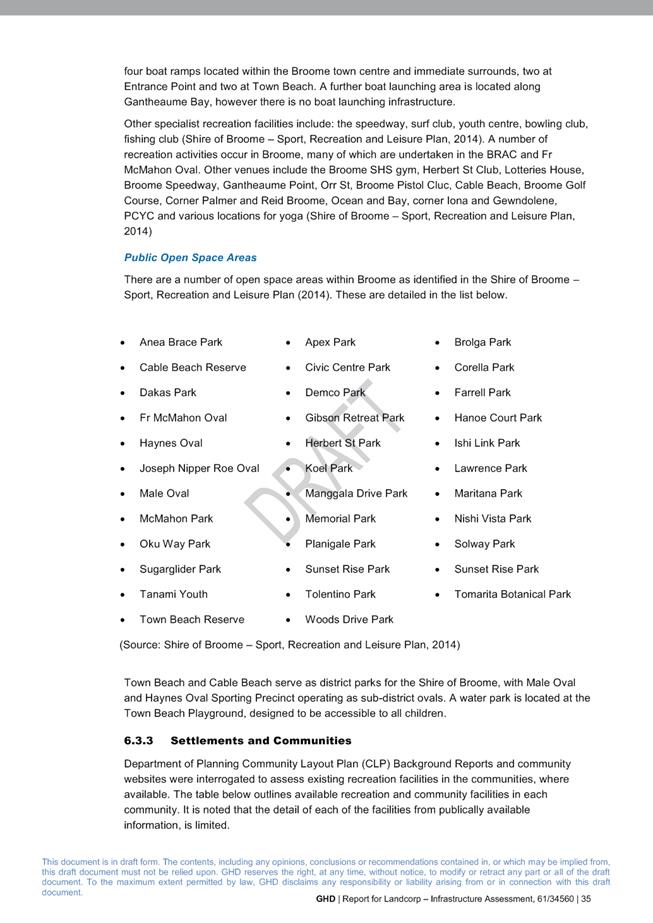
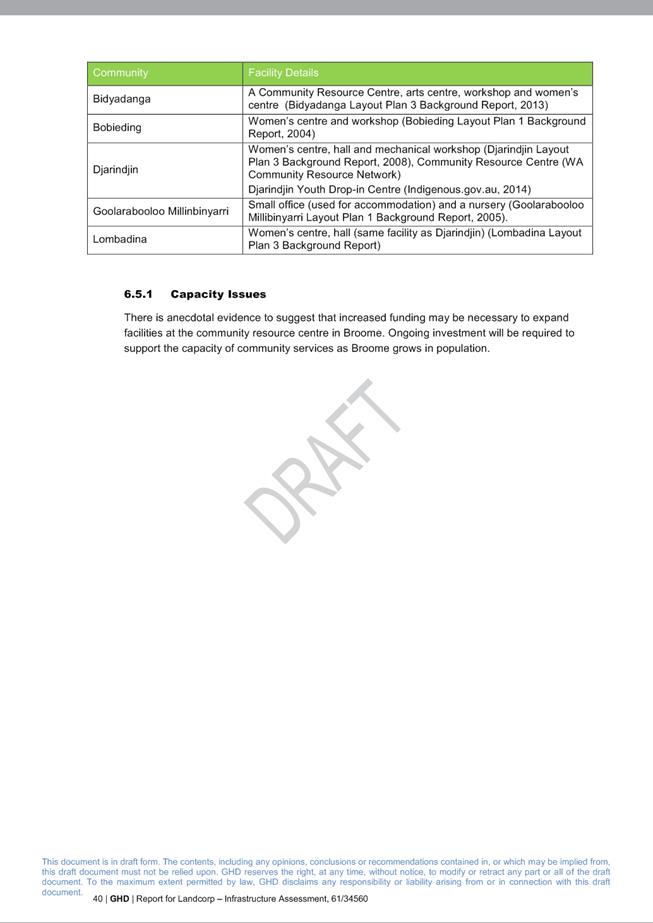
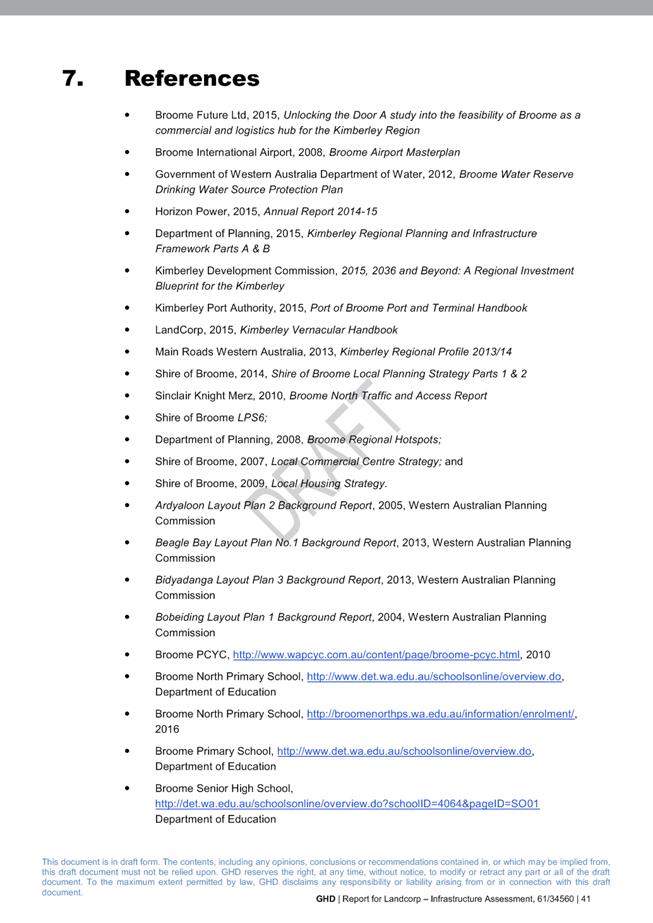
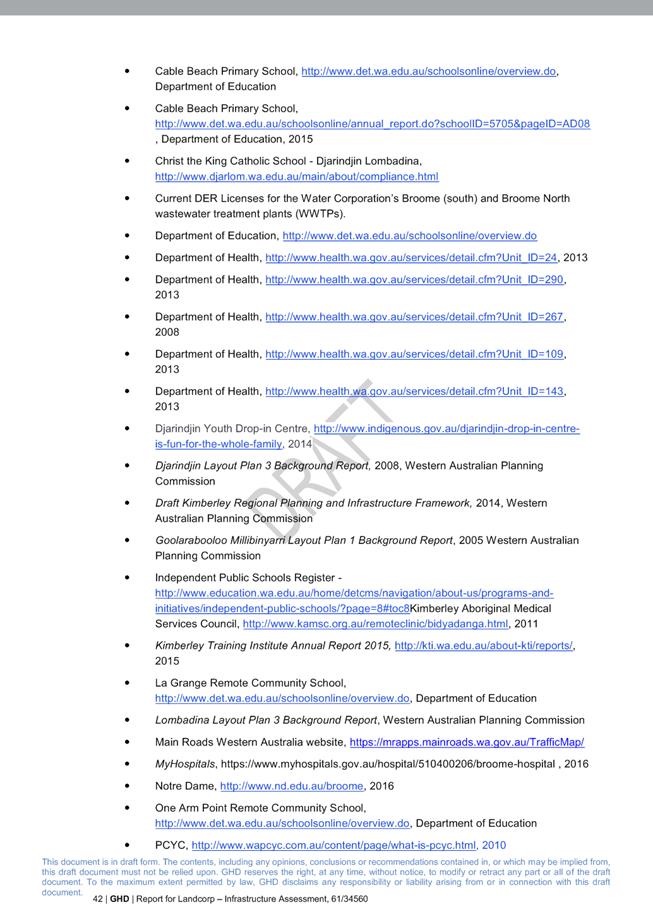
|
Item 5.1 - BROOME GROWTH PLAN - STATUS UPDATE AND KEY
ELEMENTS
|
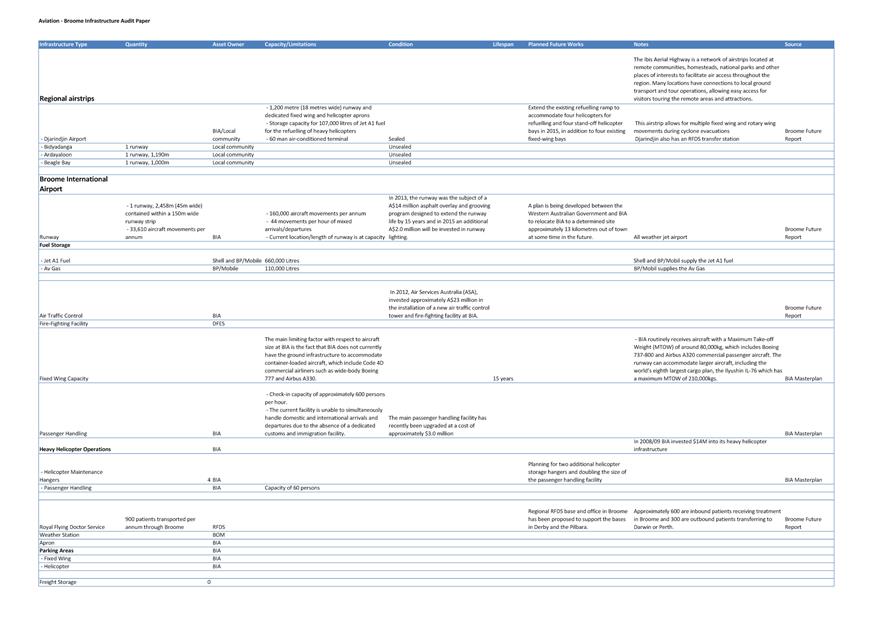
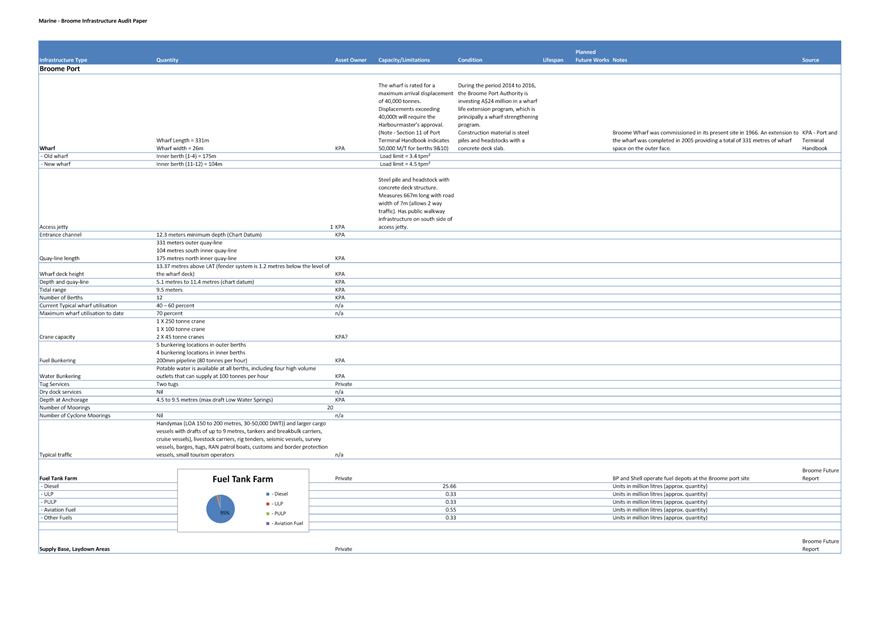
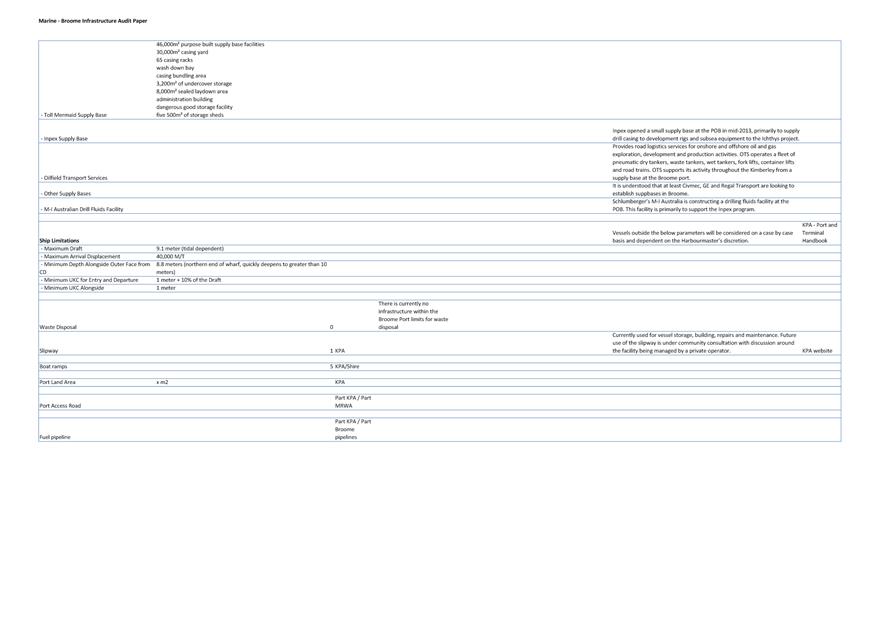
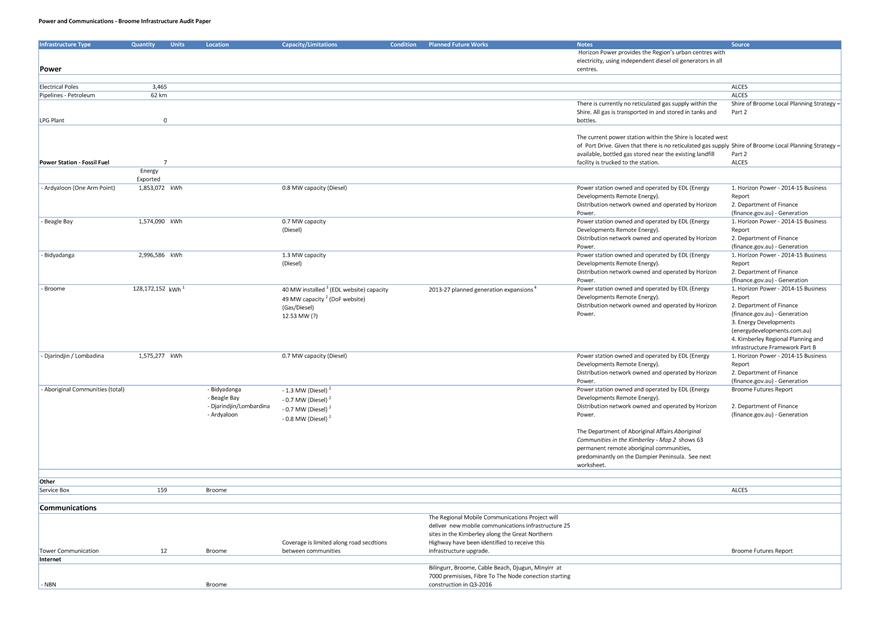

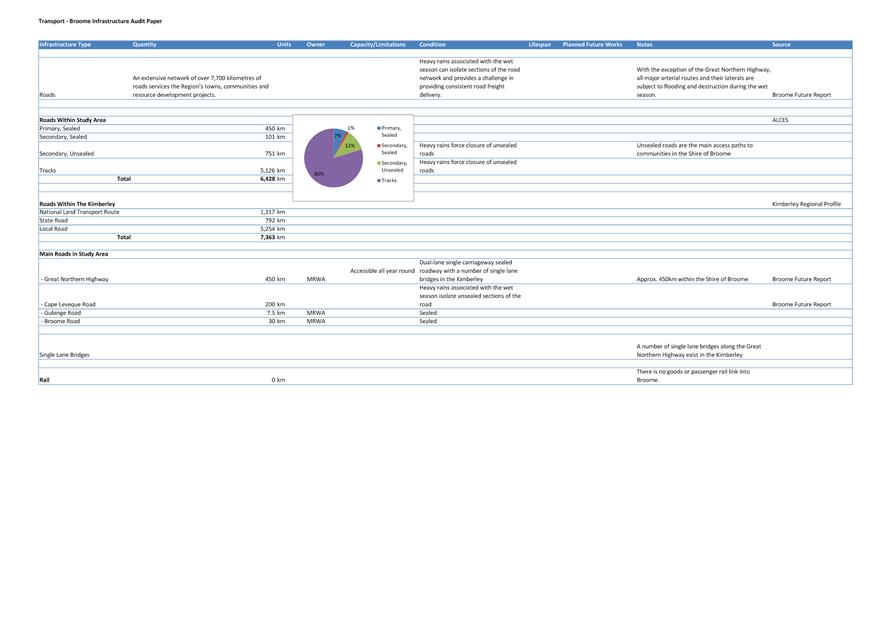
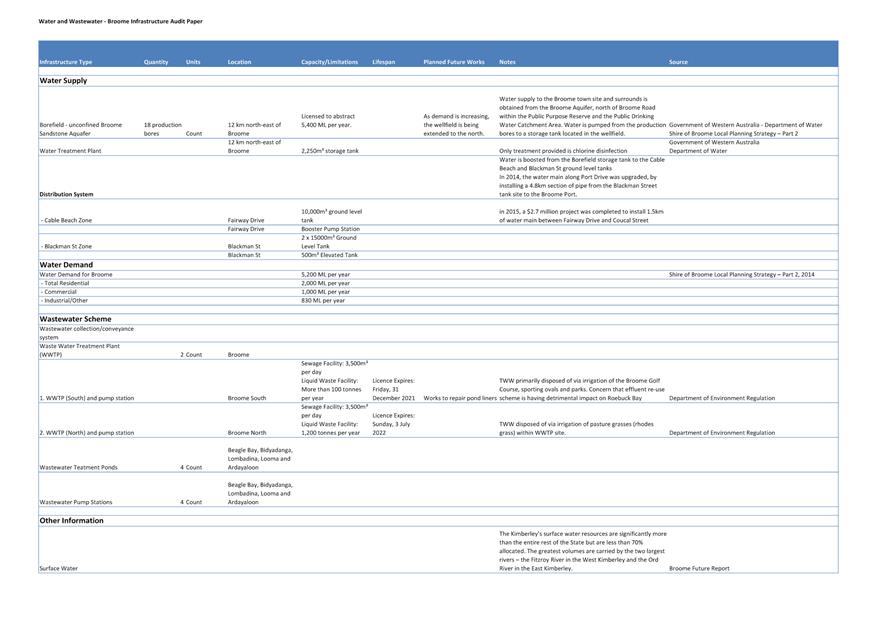
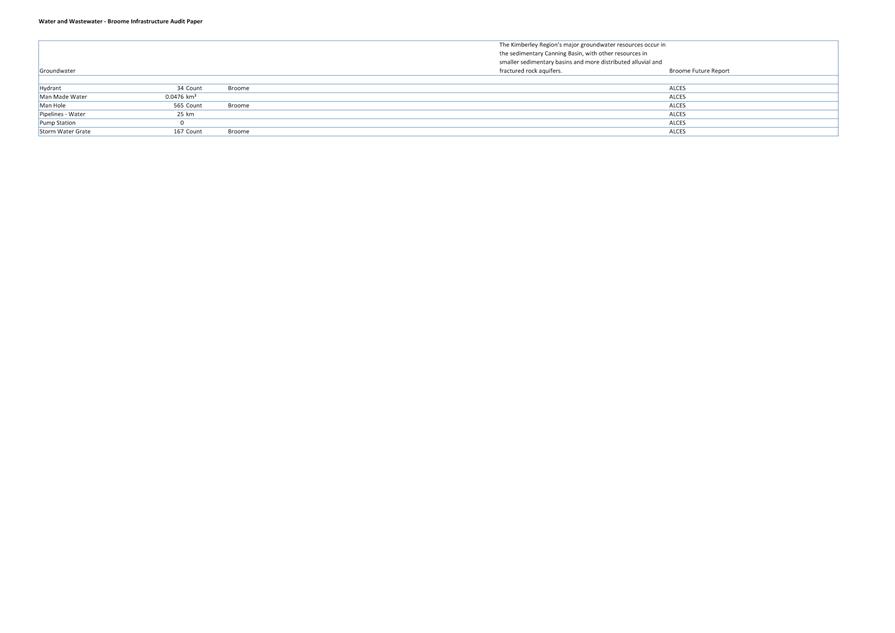
|
Item 5.1 - BROOME GROWTH PLAN - STATUS UPDATE AND KEY
ELEMENTS
|
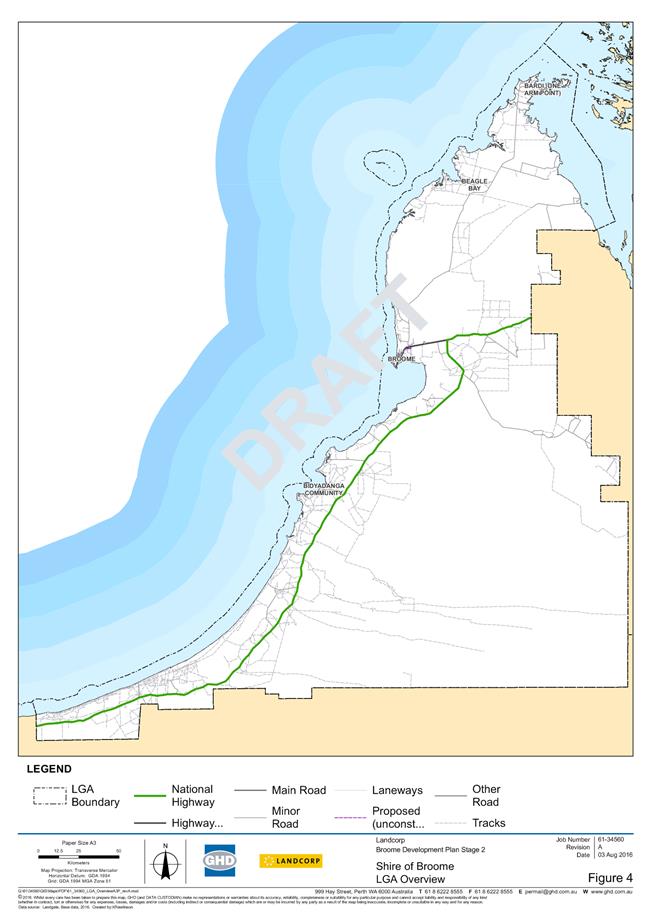
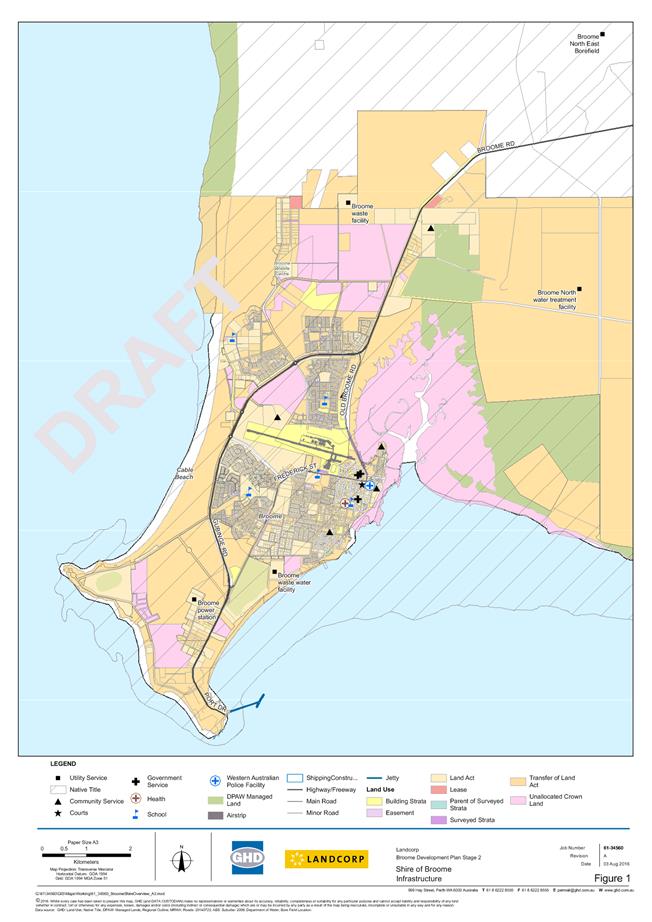
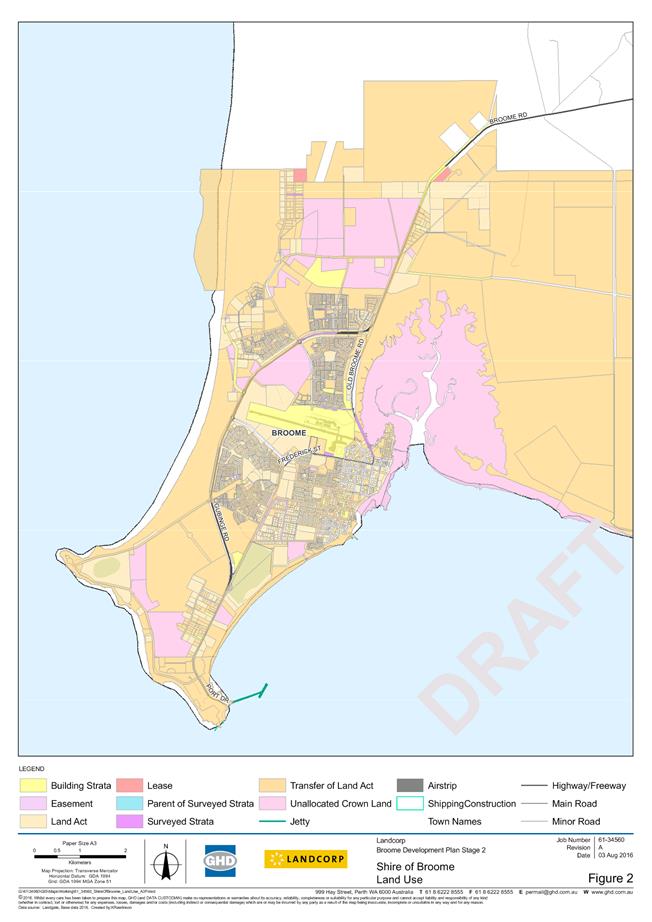


|
Item 5.1 - BROOME GROWTH PLAN - STATUS UPDATE AND KEY
ELEMENTS
|
Agenda of Economic Development Advisory Committee - 16 September
2016
|
|

Prepared
for Creating Communities
August
2016
|
|
Contents
Key
Messages. 3
Aboriginal
advancement 3
Structural
changes – to services and funding.. 3
Specialist
medical, diagnostic and secondary treatment services. 4
Bigger,
younger populations expect modern health technologies. 4
Healthy
ageing and aged care needs attention. 4
Health
and schools working together 4
Synergies
between industry and education and training.. 5
Advocating
for a new agenda – transformation and deriving economic benefits. 5
Addressing
health concerns which will detract from economic participation and benefits 6
Food
is powerful on many levels. 6
Community
action on health and better prevention measures. 7
Schools
and health collaboration. 7
Private
sector involvement in an expanded range of specialist medical, diagnostic and
allied health services. 7
Growing
a healthy and productive older population. 7
Building
awareness, optimism and motivation. 8
Enhancing
Broome’s ‘brand’ as a welcoming and accommodative regional
services and visitor destination centre. 8
Introduction. 9
Situational
Analysis. 9
The
Current State – A broad description of the health service and wellbeing
provision system/s 12
State
government hospital and health services. 12
Primary
health services – NGOs, state government and private sectors. 13
Primary
health care financing and investment – national government reforms. 15
Wellness
and services aligned to wellness. 16
Community
sector services and wellness. 17
Aged
care services. 17
Overview
of current health and wellbeing/ statistics and outcomes for Shire of Broome 19
Key
Stakeholder Mapping and Network Analysis. 22
Opportunities
and Constraints. 24
Existing
and Future Plans. 27
Strategies. 32
Strategies
for Moving Beyond the Status Quo.. 38
Strategies
to Support a Growing Economy. 44
Appendix
1: Summary of Stakeholder Engagement 50
Key Messages
Aboriginal advancement
There is
interest in new approaches and most importantly aspirations to shift well away
from racism and ‘old think’ paternalistic policies and attitudes to
dealing with prevailing problems – like poverty, welfare dependency,
social stresses, violence, substance abuse, higher burden of disease and
shorter life expectancy.
Solutions
to the prevailing barriers associated with land/living ‘reserves’
in town and communities would be a major breakthrough and something everybody wants
to see happen.
To reduce
the number of lives dependent on welfare and support, Aboriginal people will
need to be:
1. Healthy throughout
childhood and school years; protected from harm, diseases and disabilities
detrimental to their education and job/advanced education readiness – the
strategy for a school based and primary health partnership has the potential to
be a cycle breaker for the future generation of workers, professionals,
partners and parents;
2. Well equipped with
effective personal strategies to avoid lifestyle/chronic diseases –
prevention strategies will keep young people protected from lifelong
medications, inevitable disability; and reliance on welfare/support services;
3. Aspiring to and reaching
for better lives - motivated by tangible job, career and personal/family
economic possibilities – strategies for a more diverse economy with a
range of industry and professional trades, careers, jobs and business
enterprise; and access to local training, advanced education and academic
research endeavour;
4. Entitled to achievable
personal/cultural and material ambitions – strategies to further leverage
personal, family and cultural strength and especially those derived through the
direct and indirect benefits of Native Title, land ownership, Indigenous
enterprise and equal power and authority in planning and decision making;
5. Content with their family,
community, cultural and modern day lives as measures of wellness –
strategies to improve housing and living conditions which enshrine family and
community connectedness; remove imposed barriers/take care not to impose future
barriers to the freedoms to access and enjoy cultural places and pursuits;
6. Very competent consumers
and independent custodians of their own/family health, lifestyle and economic
choices – education which skills up young consumers about the marketing
game; navigating conflicting/confusing health and dietary advice, financial
advice/coaching for younger people designed to help them set and work to goals
(tools to acquire knowledge, social and financial/property assets and equity;
how to use credit to advantage and how to avoid debt traps).
Structural changes – to services and
funding
State
government is looking for more effective funding/service consolidation
solutions for town and community client groups in the Kimberley and Pilbara.
They have identified a high degree of inefficiency; myriad programs and funding
streams and chronically plateaued outcomes when considered in context with the
allocated resources.
The
Office of Prime Minister and Cabinet are supporting the Empowered Communities
development. This is also about looking for ways of getting resources to
communities of consumers in ways that enable better outcomes and value for
money.
Specialist medical, diagnostic and secondary
treatment services
The range
of services can only grow well beyond the status quo if there is a much greater
and sustainable population growth than already factored into forward
demand/supply planning assumptions.
Higher
demand from more people usually creates a supply response if market conditions
are right. Broome presents some barriers to entry by private sector operators
into the service mix. Strategies designed to lower barriers to private sector
entry will be needed if/when the population and economic growth gain momentum.
Bigger, younger populations expect modern
health technologies
In small
towns, people are usually content to settle for a basic range of services. As
the population grows in response to economic/industry diversity and expansion,
people will expect more contemporary service models. Examples are:
Ø Cancer/chemotherapy;
Ø Diagnostics – including MRI and breast screening;
Ø End of life – palliation for a range of conditions (not just
cancer);
Ø Ambulatory/in-home hospital treatment;
Ø Midwife managed low risk family birthing;
Ø Mental health and social, emotional wellbeing and healing services.
Healthy ageing and aged care needs attention
This was
discussed through two lenses and the report suggests there is a need for planning
to address both aspects:
1. The increased demand for
aged care services and infrastructure – as people suffer from earlier age
onset of disabilities related to the current epidemic of chronic diseases; and
2. Measures to attract/retain
more productive retirement aged people to continue living in Broome – it
will be necessary to consider a range of residential solutions (designed to
meet the unique lifestyles of different consumers) community and social
facilities, amenities and services; and opportunities to participate in a
self-determined mix of affordable pleasure/leisure pursuits and part time
employment or volunteering work.
Health and schools working together
A primary
health service built through health and school collaboration which leverages
the constant and enduring relationship children and their families have with
schools from a very young age should be further explored – starting with
the proposal put forward by Broome schools and also taking into account the
model used for ear health at the East Kalgoorlie Primary School in the
Goldfields.
Synergies between industry and education and
training
Re-energising
workforce education and training in Broome needs to be stimulated by a
workforce hungry sector of industry and service employers whose job and career
offerings are sufficiently motivating to prospective course entrants.
Another
aspect of education is growth, nurturing and economic potential of advanced and
applied research knowledge aligned to industry solutions.
It was
suggested an academic research and development centre be considered for Broome,
based on a contemporary redesign of the Combined University Centre for Rural
Health which was established in Geraldton many years ago. The underpinning
model for this is that all of the universities in WA collaborate so that a rich
array of courses, programs, areas of academic and applied research can be
sourced, brokered and supported for students and employers.
Advocating for a new agenda – transformation and
deriving economic benefits
A health
and wellness agenda emerged – with no limitations placed on scope –
and encompassed the need for measures which:
1. Increase employment,
business and material prosperity prospects so people can afford a comfortable
and satisfying lifestyle in a modern day world – and resulting in greater
economic participation, independence, less reliance on welfare incomes and
social support services;
2. Create and leverage
intellectual and technical knowledge and industry know-how;
3. Help to advance community
cohesion, deeper mutual respect and quality of living – improving
sporting and leisure amenities; social and artistic activities; and very
importantly a reality of friendly and safe neighborhoods;
4. Enable a celebration of
the culture of the Indigenous people as well as that of Broome’s own
history - able to be shared with others; create greater inclusion of
locals; offer enjoyment by/enrichment of visitors; and underpinning greater
enterprise growth;
5. Enable freedom to enjoy
access to traditional and contemporary places, lifestyles, pleasures and
cultural practices;
6. Leverage the potential of
Native Title settlements – the people, ideas, aspirations and
possibilities; their ideas for land development; their influence; and their
financial, intellectual and cultural resources;
7. Make Broome an attractive
and affordable place for people to live as they grow older;
8. Cater for people’s
care needs as advanced age and/or related disabilities influence their
decisions to stay in Broome or return to larger centres or cities;
9. Cater for people’s
physical, mental, family/birthing, community and end of life care needs through
an adequate range of general and specialist medical, diagnostic and therapy
technologies and services;
10. Reduce public health hazards; early onset
preventable diseases and the high cost/low productivity consequences of the
associated disability burden.
Addressing health concerns which will detract
from economic participation and benefits
A
transformation agenda aimed at improving health – in the prevailing
environment where most of the most debilitating ill health is associated with
chronic/lifestyle diseases – must encompass measures for prevention that
actually work.
Prevention
at a population level remains elusive in the prevailing public health policy
settings.
Therefore,
poor health and disability will continue to limit the scope for participatory
benefits of economic growth for many in the community to the extent a great
many people are not well informed and able to make good consumer choices.
Engage with and leverage Native Title
There are
new avenues for transformative strategies being driven by the Yawuru and
possibly other Native Title groups in Broome. Yawuru is actively participating
in growth planning for Broome and the scope for economic benefits is
significant given the land they own and the range of business and property
development interests they have.
They are
keen to explore leveraging opportunities for themselves and to benefit Broome
as a community. There should be equal interest from the BGP group to explore
how plans can be similarly leveraged to drive community wellness/advancement
and economic benefits.
The much
anticipated thesis by doctoral student –Yawuru women Many Yap – on
the ‘Economics of Liyan’ may help to make ideas more tangible.
Leverage government reforms
There
could be opportunities for different structures and government funding models
through the reform space, although how these might be aligned with economic
and/or health and wellness advancements in Broome has yet to crystallise.
Neither
agenda is seeking out links with growth planning for Broome specifically.
The
Broome development oversight/stewardship group suggested in this report might
be a productive way to gain engagement in exploring beneficial interests and
ideas central to or linked with the BGP.
Food is powerful on many levels
Food
production, enterprise and export is on the agenda for Broome and Kimberley
development. Prospective enterprise benefits (in addition to wage/salary jobs)
for locals – including for Aboriginal people - should also be in focus as
part of the future food production industry growth.
Rather
than being seen exclusively as a vehicle for corporate enrichment and local
jobs; the evolving food story in Broome and the wider region could be fully
exploited for its capacity to better feed local people right throughout the
region – at prices able to be managed by a great many people on low
incomes.
Community action on health and better
prevention measures
Community
focus on better food quality and affordability solutions to prevent and reverse
chronic diseases could be a powerful way to bring community, local industry and
government stakeholders together.
Solutions
involving local/regional food basics production, distribution, marketing,
preparation, eateries and retailing infrastructure, systems and enterprise
would be beneficial.
There
could be enterprise opportunity in the traditional indigenous food and
medicinal products, cooking (skills teaching) and meals/eatery models.
Schools and health collaboration
Engagement
of the education system and the network of schools in Broome to leverage their
potential for health advancement with a strong generational
‘legacy’ is a very exciting prospect to envisage.
Other
than in tiny pockets, neither the school or health systems ‘have their
heads around this’ and in reality, there is probably a mind field of
territorial warfare ahead. Health are generally not very good at sharing their
space with others; and many schools don’t see themselves as responsible
for health.
However,
the power, leverage and legacy prospects from a school based and long range
student and family health model is compelling and should be fully explored and
developed.
In
Broome, the schools have already begun applying themselves to the potential for
health measures to become built around their relationship over years with
students, their siblings and their families. This should be further explored
and supported once a workable model is agreed – even on a pilot basis.
Private sector involvement in an expanded range
of specialist medical, diagnostic and allied health services
This is
not envisaged as a likely option for viability reasons (high entry and
operating costs as well as marginal consumer volumes) in current forward
capacity planning assumptions for the next decade.
If the
Kimberley Blue Print and BGP do cause a paradigm shift in growth with sustained
momentum, the planning assumptions will need to be adjusted and it may present
an opportunity to explore greater private/public mix of services in health.
This
would be a big change from the status quo where government is the only operator
of diagnostic and secondary treatment services. A greater proportion of private
sector providers would add another dimension of economic productivity related
to health.
Growing a healthy and productive older
population
Older
people – retired and semi-retired – are valuable within a growing
local economy and at the present time, this aged group is relatively small in
number for non-Aboriginal people.
They can
continue to participate in employment and they are consumers of a wide range of
products and services.
Healthy
ageing is the ideal of course, however, as age advances people’s
residential and care/service needs being to change. Being closer to services
and supports and being able to access the right type of residential solutions
are factors believed to be influencing older people to leave Broome.
So
changing from this status quo would require some worthwhile investigation and
planning as part of the growth plan. The planning would be an excellent
opportunity to explore the unique aspirations and models suited to the
Indigenous aged people and their families as well as the standard/westernised
models we are typically think about – nursing homes, retirement villages.
Building awareness, optimism and motivation
Promoting
the growth plan in ways that encourage thinking and innovation through a range
of measures – for example, talking to high school and advanced education
and training students, talking in the media and encouraging discussion in
corporate, business and public forum settings.
An
ability for people to access planning/advisory services to explore
opportunities for small enterprise development could be an advantage – as
well as some capacity for ‘incubating’ small enterprise and
innovations.
Enhancing Broome’s ‘brand’ as
a welcoming and accommodative regional services and visitor destination centre.
It
wasn’t too many years ago when Derby was the regional centre for the
Kimberley and most government services had their regional offices and
accommodations in that town. Progressively many regional operations and
corporate offices have relocated to Broome and some divide between Broome/Derby
and Kununurra.
Being
designated as a Regional Resource Centre, the hospital in Broome has undergone
redevelopment and expansion from its former role as a small district hospital
servicing the needs of the Broome community to being the central operation base
for the highest level/capacity clinical services for patients from all over the
Kimberley.
This
dictates that many more people from around the region need to come to Broome
for health care; and indeed for other government services. The ability to
‘digest’ the knock on consequences of this has taken some time and
is still a work in progress to some extent. It will be exponentially a greater
effect if and as populations in Broome and indeed right across the Kimberley
grow as envisaged in the next two decades.
Tourists
are the market most typically catered for by businesses in Broome. There are
and will continue to be a greater number of health tourists from around the
region; as well as intra-regional people who go to Broome for holiday breaks
and to access goods and services only available in this larger centre.
A variety
of hospitality and leisure solutions are needed; and public transport is
another aspect needing some attention – both creating potential for
enterprise responses.
Introduction
The
context for this piece of work is the work being done to articulate a
comprehensive growth plan for Broome as one component the Regional Centres
Development Plan (RCDP) being driven by the WA Department of Regional
Development (DRD).
The aims
of the RCDP are to help designated regional centres such as Broome to realise
their economic potential and create a flourishing community that is highly
attractive to external investors[2].
Serving
as a platform for developing the BGP are key documents published by the
Kimberley Development Commission:
Ø The Kimberley Regional Investment Blue Print;
Ø The 2013-18 Strategic Plan; and
Ø Kimberley: a region in profile (published by DRD).
Some
contemporary profiling, planning and survey work undertaken by the Shire of
Broome have also been briefly examined:
Ø Broome Economic Profile
Ø Broome Community Profile
Ø Shire of Broome Strategic Plan 2012-16. (The Shire of Broome
Community Strategic Plan 2015 – 2020 was not examined and is being
reviewed by the Shire in the latter stages of 2016)
Ø Community Survey.
This
particular exercise undertaken for Creating Communities was intended to explore
prospective economic development and population growth (as envisaged for the
BGP) from health and wellness perspectives.
The scope
of inquiry, research and analysis is pitched at a high level as the timeframe
for this work was short.
Situational Analysis
A few
general observations are offered:
Not surprising was that the agencies and individuals able to be
engaged during this exercise are all concerned that economic, industry and
population growth in a future Broome is balanced enough to underpin material
progress and improvement for the community and all of its people.
Some people were sceptical and even cynical – they see growth
based on industry (especially resource and agricultural industry with
environmental impacts) would enrich big corporates and a small number of
‘local fat cats’. In the same vein, they talked about
‘token’ initiatives for community wellbeing as having little value
unless they are genuinely and adequately targeted to improve inclusion,
cohesion and broader enjoyment of the benefits over the long term.
The dimension of wellness as distinct from health care/illness was
overwhelmingly what people wanted to talk about. This included the health
service providers as much as the agencies and individuals whose interests sit
more within the community development and advancement domains.
It was virtually impossible for discussions of health and wellness
not to be predominantly focussed on the needs of the Aboriginal people of the
community;
Prevailing themes in wellness were:
- Greater inclusion, participation sharing of benefits;
- Changes in the power and intellectual dynamics post Native Title and
the potential for this as a ‘game changer’;
- Various assumptions and views on ‘community closures’
and service /funding reforms;
- Looking beyond government’s ability to design and execute
effective solutions at national and state levels;
- Prevention of a wide range of diseases through regional/local foods.
Broadly
considering wellness as being happiness and a state of satisfaction with
measures of quality of life, many people talked about things like:
Ø Opportunity for paid work in a chosen field that pays well;
Ø Good living conditions and a manageable cost of living;
Ø Financial security;
Ø Employment security and career satisfaction;
Ø A good state of mental, emotional and physical health;
Ø Good municipal services;
Ø Justice, fairness and equity;
Ø A living environment and lifestyle that supports good general health
– good quality foods and food security, community amenities for leisure,
activity; sports and social groups/clubs;
Ø Harmonious and peaceful community and neighbourhood dynamics with
good social behaviour standards;
Ø Safety and security;
Ø Freedoms and choices – self-determination, self-agency,
sufficient influence and control over own life and wellbeing of self and
family;
Ø Access to the things they need most – housing, income,
mobility, communications, social contacts, family support, entertainment,
recreation, services and advice;
Ø A community where there is fairness for all people; and where there
are cohesive, inclusive and respectful relationships between the different
cultural groups.
It is
stated[3]
that western measures of wellness are not sufficient for Indigenous people,
albeit they might serve as statistical measures of use to governments and their
programs.
A research paper[4] published in August 2016 by Mandy
Yap and Eunice Yu – both Yawuru women – reports in great detail on
qualitative and quantitative research on concepts and definitions of wellness
undertaken by and amongst a sample of Yawuru Indigenous people in and from Broome.
These concepts of wellness from an Indigenous
perspective – are defined for the first time with academic rigour by
people who are centred within the status quo of health and wellness in Broome
right now. Importantly, people are considering not only the multi-dimensional
frame of wellness from an exclusively cultural perspective; they are also
clearly seeing wellness in a contemporary, modern world view and there is some
thinking as so how material essentials for a good life and good health are fitting
in alongside the cultural frame.
Wellness was defined by study subjects as a mixture
of measures essential to ‘mabu liyan’ or health and wellbeing of
the spirit/soul and inner self. These are shown below:
Ø Family
wellbeing – the strength of connectedness to one’s family;
Ø Community
wellbeing – it is necessary for one’s community to also have
wellbeing;
Ø Strong
culture, country and identity – knowledge of culture and stories, about
flora and fauna on country, about fishing and hunting, about eating traditional
foods and knowing how to prepare them, and about knowing the language;
Ø Self-determination,
rights and autonomy – this mean more than just an ability to ‘have
a say’. It is about feeling one’s rights are genuinely respected
and that people are free to exercise decisions and rights;
Ø Health and
wellbeing – the necessities to live a healthy life and have help when
needed for physical health;
Ø Material
wellbeing – having an education, good employment, steady income and being
able to afford the basic things that make modern life comfortable, satisfying
and safe such as housing and transport for mobility;
Ø Subjective
wellbeing – a person’s overall rating of their feelings about their
state of wellbeing – how good and satisfying personal, family community,
modern world and cultural life balance is.
The report quotes a number of statements by study
subjects which illustrate how overall wellness is challenging for some
contemporary Indigenous people and they reflect the mix and balance of
‘normal and basic’ material essentials (like income, housing,
financial and lifestyle resources) together with the essential cultural
measures. For example:
Ø One person
spoke of needed to redefine the contemporary settings of our sense of wellbeing
– it has to have the normal material kind of issues like health, income
and housing.
Ø Another
observed that there needs to be room for economic and cultural and social
wellbeing.
Ø One
individual expressed this as feeling under pressure to sustain both culture and
work – having to live in two worlds where surviving financially means
working fourty hours a week and cultural activities having to be fitted in on
weekends. They observed that this was hard.
Ø A couple of
quotes from younger study subjects were clear about measures of a good life
– such as having all the necessities like clothes, money, a car and
probably my own house. Another statement reflected on ambitions and dreams
– ticking the milestones, finishing school and going to university.
The Current State – A broad description
of the health service and wellbeing provision system/s
State government hospital and health services
The
region itself influences health care provision decisions by governments and the
private sectors.
The WA
Country Health Service (WACHS) operates all government hospital services in the
region in addition to population health, community, school, child and mental
health services in towns and several remote communities.
Their
planning and operating model is based on a ‘hub and spoke’ network.
In each of their seven WA regions with the exception of the Wheatbelt, one of
their hospitals in the largest regional centre (Broome in the Kimberley
context) is designated as the ‘Regional Resource Centre’ (RRC).
The RRCs
deliver the highest range and level of service and support the hospitals and
other health services and teams in other regional places.
Typically,
the specialist medical, diagnostic, allied health and population health
services are based in the regional centre.
The
hospitals and health services around the regions are then accorded specific
designations which prescribe their range and level and capacity in some detail.
The
entire WA Department of Health (metropolitan and regional service systems) now
plan and develop services aligned to a comprehensive Clinical Services
Framework (CSF). The prescribed services range and levels are projected forward
based on combinations of modelled population and consumption patterns.
The
prevailing CSF 2015-25 documents the services provided by the Broome Hospital
and other WACHS services working in and from Broome.

All of
the Kimberley’s major townships as well as the regional centre in Broome
are a long way from Perth where the major publicly funded and private sector
diagnostic, treatment and therapy systems are based.
As in
other WA regions, the health care/referral system relationships are exclusively
between each region and Perth providers. There are very few service linkages
with referral and transfer/transport pathways between WA regions (for example
between Broome and Port Hedland). Outside of WA, the Royal Darwin Hospital is
used as a referral destination mainly for East Kimberley inpatients due to its
relative proximity and depending upon its capacity at the time of requests.
Off all
WA regions, the Kimberley is somewhat unique in health system planning because:
Ø The
total population is relatively small and Broome as the regional
‘hub’ is also a much smaller population (15,000-17,000 estimated)
than Geraldton, Kalgoorlie, Bunbury and Albany which have more than 30,000;
Ø The
small population combined with serious cost and clinical viability detractors
are constant barriers to advancing hospital services in Broome beyond current
range and levels;
Ø The
commercial viability of private sector health services is limited by big
barriers to entry for general practice, routine medical specialties, advanced
diagnostics, advanced secondary hospital clinical care systems like intensive
and coronary care units, private hospital services and a full range of allied
health/therapy services;
Ø The
absence of a good range of private health sector options expresses itself
through low levels of private health insurance, the cost of which is generally
well beyond the means of many of the highest need/consumer group;
Ø Aboriginal
Community Controlled Health Services (ACCHS) are major players throughout the
region in provision of culturally aligned primary health and GP services;
Ø In
the absence of private or ACCHS GPs who bulk bill, WACHS (mainly through their
hospital emergency departments and also in their remote community clinic
services) continue to provide ‘default’ free primary medical
services;
Ø There
are a huge number of remote communities throughout the region of varying
population sizes and infrastructure/services capability and servicing
arrangements;
Ø The population is
uniquely ‘young’ in structure;
Ø Community and
residential aged care provision is geared mostly (but not exclusively) to
Aboriginal consumers;
Ø Many non-Aboriginal
people leave the region (and Broome) when they begin to age to a point their
residential, care and family support needs begin to manifest;
Ø Other than standard
model residential and in-home aged care/service solutions, ‘retirement
aged’ living facilities, amenities/attractions and services best suited
for older Aboriginal people and their families have not been well
conceptualised or materialised;
Ø Solutions for an older
(but not yet requiring care) non-Aboriginal population are generally not a
priority due to the younger age structure and relatively low numbers of
non-Aboriginal people who chose to ‘age in place’;
Ø The
greater proportion of WA’s Aboriginal population live in the Kimberley
and the proportion of Aboriginality in the major townships range from upward of
80% in Halls Creek and Fitzroy Crossing to an estimated 35% in Broome.
Primary health services – NGOs, state
government and private sectors
Community
Controlled Aboriginal Health Services
These
operate from clinics based in Broome, Derby, Halls Creek and Kununurra. They
are each independent with their own constitution and board of directors and
they all service a number of outlying communities in their district.
The
Kimberley Aboriginal Medical Service (KAMS) is based in Broome and functions as
an umbrella/support organisation for its members (who control the organisation
via the governance board). KAMS also delivers direct primary health services to
the remote Kutjunka region (Balgo, Bililuna and Mulan) and to the Dampier
Peninsular and Bidyadanga. They deliver renal dialysis services in Broome,
Derby, Fitzroy Crossing and Kununurra under contract to WACHS; operate a
population team; and provide the Head Space (mental health) service. They also
operate their own Registered Training Organisation; and host the UWA’s
Rural Clinical School.
Other
NGO primary care services
Boab
Health Service is an established provider of non-medical primary health
services for patients with one or more chronic diseases and who wish to have a
supported program to help them manage their conditions and lifestyle
modifications.
They
operate from and in Broome and are also active in the East Kimberley.
Allied
Health
In
Broome, private physiotherapy services are quite commercially viable thanks to
the demand from a significant young professional, sporting and industrial
market.
There is
one private podiatrist in Broome. Other than these therapy services, there are
no private allied health services in Broome or other parts of the region.
Pharmacy
Broome
currently sustains four private pharmacies in a very viable retail market.
Kununurra and Derby are also able to sustain private pharmacy businesses.
Private
medical services
There are
four private GP practices in Broome; much less in Kununurra; and as yet none in
any of the other towns (Derby, Fitzroy Crossing, Halls Creek and Wyndham).
Specialist
medical consultants
There are
no region based specialist consultant and diagnostic providers outside of the public
system.
Regional
based specialists cover the basics of:
Ø Generalist physicians;
Ø Obstetrics and gynaecology;
Ø Surgical;
Ø Paediatrics;
Ø Psychiatry.
Otherwise,
specialist services are supplemented by visiting specialist arrangements funded
by WACHS and/or with funding support from Rural Health West in Perth (a
commonwealth funded rural health service workforce ‘commissioning’
body.
Diagnostic
services
The
region is well enough served for clinical pathology although this would need to
expand in range if there was a paradigm shift in population and demand growth
followed by a significant expansion of level and range of hospital services in
Broome and other parts of the region.
Medical
imaging is well covered for XRay but not for MRI which has become a clinical
necessity in diagnosis in many specialty areas.
A Broome
MRI service (public and/or private) cannot be supported for the Kimberley with
current population levels or even at projected population levels encompassed
with the CSF to 2025 based on current growth/consumption patterns.
The
absence of MRI diagnostics in the region dictates a range of other specialist
medical services are also not very viable; and that patients requiring this
type of imaging will continue to be referred/transferred to Perth for their
diagnostics and quite probably also for their medical/procedural treatment.
Primary health care financing and investment
– national government reforms
In
Australia, state governments are responsible to finance and operate public
hospitals and a range of other non-hospital programs (community health for
example).
Primary
general and specialist medical care outside of the public/hospital system is
the responsibility of the for-profit private sector funded/reimbursed through
Medicare (financed by the Australian Government).
Private
medical services are not ‘regulated’ in terms of where business
owners choose to operate. This has resulted in medical business/workforce and
service distributions consolidated in places where market forces prevail.
The more
remote places with lower numbers of more complex patients in the market (higher
cost and lower profit margin); where the barriers to entry (operating and
living costs) are high; and living conditions not so attractive to
professionals and their families are typically underserved.
The
Kimberley demonstrates this ‘maldistribution’ system better than
most places in WA; although the gaps have been significantly lessened with the
establishment of Medicare bulk billing and supplementary block and grant funded
ACCHS (through salaried GPs) throughout the region.
Various
governments have been collaborating on major health system reforms for several
years and most especially (although not exclusively) in the primary medical
sector to try and better engage and focus the GP services.
The most
recent/current approach is Primary Health Networks (established in 2015). These
are exclusively commissioning bodies and don’t deliver services.
There are
much higher expectations for preparation for and execution of commissioning
functions for primary health services and in the Kimberley region, what they do
will be critical to strengthening the secondary prevention/disease management
effort.
In WA, a
new organisation called the WA Primary Health Alliance (WAPHA) has been established.
It is a NGO sector incorporated enterprise. They are Perth based but operate an
extensive country arm and have a small office in each region and for the
Kimberley, this office is based in Broome.
Other
significant national health reforms
Significant
funding reforms for hospital services nationally are underpinned by the
introduction of Activity Based Funding/Management (ABF/ABM). This is
essentially a financing model where volumes of certain types of services are
purchased/funded to state governments based on need/consumption patterns and
best practice; and also valued on a Nationally Efficient Price (NEP) benchmark.
This
presents WACHS with challenges as the actual costs in the WA regional system,
most especially in the Kimberley, are so much greater (and probably always will
be) than the NEP benchmark.
Finally
and perhaps most importantly in terms of the national reforms are the intended
synergies between primary and hospital systems. The two systems are intended to
function collaboratively – ensuring reduced demand for hospital
admissions for preventable conditions. Hospitals for their part must ensure
there are much better transition to primary care systems in place.
Wellness and services aligned to wellness
Primary
health service providers in the ACCHS, other NGO, government and private sector
would lay claim to a wellness agenda and service profile.
This
would also include the population health service units in WACHS and KAMS which
operate from Broome.
Similarly,
environmental health services would see themselves in this space also.
Mental
health and drug and alcohol services deal with complex cases therapeutically
but a good measure of their models of care embrace general wellness at the
person and household/family levels.
Collectively,
the grounds for this are that they are concerned to prevent disease and in so
doing, promote a state where wellness is created or at least made more
possible. They do this by way of:
Ø Influencing prevention of disease and illness through their actions
in educating and promoting good personal, domestic, community and lifestyle
knowledge and applied behaviours;
Ø Screening of health markers and to identify possible and/or existing
health hazards and risks;
Ø Provision of early interventions designed to protect and restore
good health and limit exposures to future risks and decline;
Ø Acting early and systematically on communicable and non-communicable
diseases and outbreaks;
Ø Respond to community concerns about health issues and risks –
for example, in the areas of substance abuse (crystal meth being a very
contemporary matter) and outbreaks of suicide including in young children
outside of the mental illness domain;
Ø Influence plans, strategies, actions and health policy designed to
promote and improve wellness;
Ø Having appropriate public health concerns for the impact of
developments and evolving factors on health and wellness.
Community sector services and wellness
Outside
of the health service system itself, there is a much broader sector engaged in
various aspects of community wellness.
There are
some emerging developments – such as surveys, research work, new models
and engagement in business and planning which have been empowered consequent to
the Yawuru Native Title determination. There are now powerful forces for good
at work on several fronts examining questions from a uniquely Yawuru (and more
broadly local Indigenous) perspective.
Apart
from Yawuru, there are a number of community service styled organisations
– mostly Aboriginal owned and controlled but some not – operating
in the general wellness space and targeting social problem amelioration (such
as meals, counselling, pre-post custodial release support and the like);
enterprise creation; training and employment; and other means of advancement of
interests.
This
exercise has of necessity been only superficial in this domain. Indeed it would
require a rather more extensive study to map and examine all the organisations,
funding streams and initiatives in process at the present time.
For now
though, the most impressive endeavour was observed to be the models and
initiatives being developed by some very key agencies and what appears to be a
‘thought and action leadership collaborative’. The
intellectual capacity (which has been around for a very long time) is emerging
and becoming increasingly influential and empowered due to contemporary
developments.
Whilst
there was that ‘vein of dissent’ about prospects for major economic
and population growth (for fear that the Aboriginal community, the environment
and the local community other than the ‘fat cats’ would get very
little benefit); there was surprisingly a very strong thought and action front
from contemporary Indigenous leaders to join in and help design and guide the
solutions.
They
appeared to have a strong conviction that there is a far better way to do
things other than to wait for government programs to sort things out; and that
there are huge benefits to be had for Indigenous people generally, Yawuru in
particular and the general community of Broome in taking a place around the
tables in the BGP development.
Clearly,
the thinking is that wellness – and indeed health itself – will be
greatly enhanced if there are equal opportunities for Aboriginal enterprise and
inclusion in future developments in mainstream industries; and also in a range
of enterprises being nurtured within the Aboriginal land holding and
organisational domain.
Aged care services
The aged care services available are structured as
they are in other places – governed by the commonwealth
government’s aged care services resource allocation policies and the
provider industry funded to provide various types of care.
A long standing goal in aged care is to keep elderly
people living at home for as long as possible and provide in-home and community
based care and supports to enable people/families achieve this goal.
Residential nursing home care is available in
mixtures of low and high care formats and for people caring for elderly at
home, the residential sector usually accommodates some respite care
availability.
There are significant planning challenges to
addressing aged care:
Ø Aged care
cannot be dealt with in isolation from the chronic disease burden and its
impact on premature ageing and disability;
Ø Disability
will continue to drive non-Aboriginal older/retired people away from Broome as
their care needs transcend the range and level of services available locally;
Ø Aboriginal
people will continue to succumb to these diseases at a higher rate and with
greater early age onset in the absence of more effective prevention;
Ø New medical
and surgical breakthroughs may keep people alive longer, but the burden of
disability and demand for care will grow;
Ø A
significant driver of demand for aged care services will be the upward trends
in earlier age onset dementias and Alzheimer’s Disease; loss of limbs due
to diabetes, partial paralysis following strokes, loss of vision, autoimmune
and neurological conditions resulting in severe physical disabilities.
To the extent the issue of ageing was raised at all
during the consultations for this exploration, the interest was not about
‘aged care services’ but rather about exploring measures to
encourage people to keep living in Broome as they begin to age.
At the present time, there is a trend for many people
who have lived for several years in Broome to return to live in cities or other
places closer to service and family contacts as or before they begin to age.
Elders in the Aboriginal context have enormous cultural value. Older
–retirement aged but well and generally productive – people
generally have great value within families.
Senior people often have time to contribute to
community endeavour through volunteering and/or part time work and many have a
great deal of knowledge, skills and wisdom to impart to others. This suggests
that a future planning agenda is emerging around the aging population and may
need to be addressed through two specific dimensions:
3. The
increased demand for aged care services and infrastructure – as people
suffer from earlier age onset of disabilities related to the current epidemic
of chronic disease; and
4. Measures
to attract/retain more productive retirement aged people to continue living in
Broome – it will be necessary to consider a range of residential
solutions (designed to meet the lifestyles of different consumer markets)
community and social facilities, amenities and services; and opportunities to
participate in a self-determined mix of affordable pleasure/leisure pursuits
and employment or volunteering
Overview of current health and wellbeing/
statistics and outcomes for Shire of Broome
The scope
of this exercise has not allowed for a thorough going gathering, analysis and
presentation of health and wellbeing statistics.
Most of
the health outcome statistics gathered during the project relate to the
Kimberley as a whole. However, they can reasonably be assumed to reflect
outcomes for Broome as well, especially for the Indigenous population.
For
Broome itself, very little has been obtained which is exclusive to the area
other than Indigenous population enumeration (done in 2011 through the Knowing
Your Community (KYC) household survey[5]);
some numbers on homelessness and social meals provision; and community
perceptions[6].
A
‘potpourri’ of statistics and estimates of health and wellbeing for
the Kimberley (reflective of Broome generally) and Broome in particular is
summarised in this table.
Table 1: Some Kimberley and Broome health
and wellness statistics to consider
|
Category
|
Summary detail
|
|
Population
and growth outlook
|
Projections
vary in different reports:
- Living in the
Regions 2013 (DRD publication) said Broome’s population was 17,251,
with 35% Indigenous and had grown 2.2% over the previous 10 years; and
projected that by 2023 the population would be 44,0000 for the Kimberley
region;
- The Kimberley
Blueprint (KDC) projects a Broome population of 48,500 by 2036 and a
total Kimberley population of 93,173 is possible if the type and scale of
envisaged economic growth occurs. The Blueprint also estimated the impact on
new jobs creation in this projects at about 34,000;
- The Knowing Your
Community (KYC) household survey to better enumerate Broome’s
population of Yawuru/Indigenous people and households reported in 2011 there
were 3712 people in 997 households. Even allowing for some growth over the 5
years since the ABS 2006 census, the population count was 61% higher. There
was a big difference in the number of households as well – 686 in ABS
2006 versus 997 in KYC survey 2011. Importantly, the ‘service
population’ of Indigenous people in Broome (8763) was very similar in
both ABS Census and the KYC survey.
|
|
Stolen
Generation Legacy
|
- In 1958, 25% of
Indigenous Kimberley adults and 45% of the children were living in mission
settings following removal policy through to the 1970s[7];
- 96% of Kimberley
Aboriginal people belong to a family were members were removed[8].
|
|
Suicide
|
- 71% of the people who
suicided 2004-2014 did not have a mental illness and had no contact with
mental health services;
- Determinants of suicide[9] are
violence, dysfunction, homelessness and poverty (data not sourced but
prevalence is known to be high);
- A 2013 spike in
Acute Rhematic Fever followed by a spike in post streptococcal kidney
infection are outcomes of overcrowding in housing, very poor
domestic/environmental conditions and the potential for “menacing
impact on young people living in these conditions”.[10]
- 75% of completed
suicides in the Kimberley occurred amongst Aboriginal men;
- Aboriginal children
regularly attend funerals of relatives who die prematurely and frequently
from suicide and violence (statistics not known);
- The ‘Feed the
Little Children’ service are providing around 300 meals to hungry young
people on Friday and Saturday nights in Broome and crime statistics by youth
are lower as a result.
|
|
Homelessness
|
- Centacare in Broome[11]
reported over 1400 homeless and at risk adults and children are on their
books;
- They provide meals for
50 individuals per sitting;
- There are around 87 new
people turning up each month in need of food and help;
- 8 out of 10 of the
murder victims in Broome in the last 3.5 years have been alcohol related and
in people who don’t usually reside in Broome;
- ‘Rough
Sleepers’ are more likely to die prematurely;
- Regionalisation of
services (like health care) stated to be contributing to homelessness and
need for meals and social assistance – placing stress onto the
community and needing better hospitality solutions.
|
|
Health
|
In their
Kimberley Health Profile[12]
WACHS provides a broad overview of health statistics and outcomes:
- Low SEIFA scores
indicate high exposures to the determinants of health;
- Heart and vascular
diseases and cancers caused two out of three of all deaths;
- Mortality from alcohol
and tobacco was higher for the Kimberley than for WA as a whole;
- Around 66% of deaths in
the Kimberley in the decade 1997-2007 were due to potentially preventable
conditions – ie, prevented from occurring in the first place (primary
prevention);
- More than half of the
deaths could have been avoided through better primary health care management
of diagnosed conditions (secondary prevention including lifestyle/diet
modifications);
- Crude rates for
notifiable diseases (particularly STIs) were higher in the Kimberley than WA
as a whole (2009/10);
- In 2008, one in four
Kimberley Aboriginal women who gave birth were aged under 20 years and three
in five smoked during pregnancy;
- In 2009, the proportion
of Broome children rated as developmentally vulnerable was 31.4% (compared to
56.3% in Halls Creek);
- In Fitzroy Crossing, 1
in 5 children have FASD[13]
- this is a particularly bad area for FASD but reflects also that the problem
is region wide.
Chronic
diseases
These
are metabolic dysfunction, weight gain and diabetes; micro/macro vascular
diseases; and cancers. They are a global epidemic and public health crisis
affecting a lot more Aboriginal people due to the poorer foods and lifestyle
risks but also non-Aboriginal people in ever growing numbers. These
conditions will be massive drivers of demand for health, disability services
and service for people who have aged prematurely.
Renal
disease[14]
is a metaphor:
- For underlying exposure
to chronic diseases with high morbidity and premature mortality and outcome
gaps;
- As at February 2016
there were over 2000 cases of diagnosed renal disease in various stages; a
vast quantum of undetected disease was a certainty including in children;
- There were 108
people having regular dialysis treatments in the Kimberley and around 70 late
disease stage patients expecting to transition to dialysis in the next 6 to
18 months;
- It costs around
$100,000 per patient per year for dialysis treatments in the Kimberley units.
BRAMS
activity
- The health service has
7,500 active enrolled clients on their books;
- They do 40,000 episodes
of care each year;
- They have 2,737 chronic
disease cases under active management and this is 30% of their client load.
|
|
Food
costs
|
Food
cost survey
- Food across the
Kimberley costs 26.1% more than in Perth[15];
- The increase in food
costs in 2010/2013 was mostly in fresh vegetables and fruit;
- Welfare recipients need
to spend a higher proportion of their disposable incomes on food than others
– food cost stress is a factor once >25% of income is required
for food;
- All single parent
families on welfare are at risk of food cost stress
Food
generally
- Poor quality, poor
access, high cost and poor consumer knowledge and skills) is a major
contributor to chronic disease.
|
|
Community
perceptions
|
- Lifestyle and happiness
were rated highest for the Kimberley (78-80%) and safety, education and
training were rated the lowest (57-70%)[16]
- Community survey[17]
of people living in Broome and the surrounding rural areas rated the town
high as a place to live (85%) and visit (82%) but very low on measures of
community governance (48%). Much of the dissatisfaction related to
anti-social behaviour
- In the remote
communities of Broome, the survey of those people rated the communities very
high as places to live (91%) and visit (94%) but again very low (44%) on
community governance.
|
Key Stakeholder Mapping and Network
Analysis
In the
short timeframe set for this piece of work, it has not been possible to develop
a comprehensive picture which adequately depicts the network of organisations
currently operating in the health and wellbeing space in the Shire of Broome
and how they interact.
A fairly
simple approach is offered in the table below to enable at least a beginning
examination of organised/structural health and wellness business in Broome. The
list of organisation in each category is not exhaustive, most especially in the
domain of general wellness and community support where there are a very large
number of NGOs and locally based Aboriginal owned and controlled entities.
Table 2: Summary of health and wellness
related organisations and their services
|
Hierarchy
|
Organisations
|
Service
offerings
|
|
Providers, lead operators and decision makers
|
WACHS regional
executive group
|
- Resourcing
and operations management
|
|
Broome Health Service
|
- Hospital
inpatient including psychiatric and obstetric, emergency department, medical specialists,
community mental health and drug service, community health and allied health
(various in therapy and diagnostics)
|
|
Kimberley Population Health Unit (Broome Based)
|
- Communicable
disease and outbreak management, remote community services management; health
promotion and education; public health program s for non-communicable and
preventable diseases
|
|
Kimberley Satellite Dialysis Centre (KAMS)
|
- Dialysis
treatment for Broome people and some remote community people
|
|
Broome Regional Aboriginal Medical Service (BRAMS)
|
- Primary
medical and health services for Broome
|
|
KAMS (regional focussed member support organisation for
ACCHS but also provides some services)
|
- Remote
primary medical and health services for Bidyadanga and Dampier Peninsular communities;
- Population
Health;
- Renal
services;
- Head
Space services;
- Health
leadership, planning and advocacy.
|
|
WA Primary Health Alliance (Broome team)
|
- Primary
health planning and commissioning (resource allocation)
|
|
Kimberley Aboriginal Health Planning Forum
|
- Planning,
leadership, governance and coordination (all providers and related agencies)
|
|
Rural Health West (Perth based)
|
- Commonwealth
workforce support agency
- Finances
various medical, allied health and multidisciplinary teams visits to the
region and remote areas
|
|
Private GP services (4)
Broome Medical Clinic;
Broome Doctor’s Practice;
Kimberley Medical Group;
Roebuck Bay Medical Services
|
- Private
fee payment and limited bulk billing medical services in Broome
|
|
Boab Health Services
|
- Primary
health care financed as a not-for-profit by the WAPHA.
- Supports
longer term chronic disease management for referred patients through
organised programs
|
|
Private pharmacies
|
- Full
dispensing services
|
|
Physiotherapy (several)
|
- Fee paying and some Medicare
rebateable private operators
|
|
Royal Flying Doctor Service (new Broome regional base)
|
- Primary
emergency medical evacuations;
- Inter-hospital
patient transfers;
- Some
primary medical services to remote communities;
- Emergency medical chests in remote
settings
|
|
Providers of wellness services
|
Nirrumbuk
|
- Environmental
health;
- Training
and work experience
|
|
Shire of Broome
|
- Municipal
and public health services
|
|
Aged care providers (various)
|
- Community
and residential care services
|
|
Centacare
|
- Homelessness
and meals support;
- Social
care programs.
|
|
Feed the Little Children
|
- Delivered
meals for young people to age 18 years Friday and Saturday nights
|
|
Milly Rumara
|
- Alcohol
detox and rehabilitation
|
|
Anglicare
|
- Counselling
support and other
|
|
Mamabalunjin
|
- Night
patrol (Kularri)and other initiatives
- RJCP
– Regional Jobs and Community Projects (Kularri CDEP)
|
|
Broome Circle
|
- Social
support for women, children, financial advice and community development
support interests
|
|
Men’s Outreach
|
- Engagement
and involvement for men
|
|
Head Space
|
- National
youth mental health – prevention/early intervention
|
|
Community support and development agencies
|
Goolarri Radio Enterprises(Broome Media Association)
|
- Community
engagement and advancement agenda;
|
|
Kimberley Institute
|
- Innovative
models and collaborations
|
|
Nyamba Buru Yawuru (NBY)
|
- Not-for-profit
corporate arm of the Yawuru Native Title Prescribed Body Corporate;
- Land
development – sales and lease;
- Conservation;
- Culture
and language;
- Planning
and needs;
- Housing
– rental relief and purchase support;
- Community
development;
- Legal
services/acts;
- Funeral
fund.
|
|
Nangala Jarndu
|
- Women’s
Resource Centre – arts, crafts, textiles
|
|
Broome Recovery Centre
|
- Men’s
Shed
|
|
Burdekin Youth Broome
|
- Youth
Drop In Centre
|
|
T.H.E. (Traditional Homelands Enterprise) and Kakadu
Plumb Company
|
- Food
production enterprise
|
|
Argunya
|
- Housing
|
|
Red Cross
|
- Social
support
|
|
Jaylgurr Guwan
|
- Dampier
Peninsular Child Care for working mothers and families when taking up
training and employment.
|
Opportunities and Constraints
The next
table considers the key opportunities and constraints for a health and wellness
advancement agenda in context with prospective economic growth aspirations.
Table 3: A summary of key opportunities
and constraints in the health, wellness and growth sphere
|
Opportunities
|
Constraints
|
|
A shared commitment
and forward looking ideas for ‘transformational growth’ for the
Kimberley as a whole and for Broome through the BGP
|
Translation of
aspirations into reality – belief and optimism haven’t filtered
to the greater community and focus is on every day issues: constrained
services, overcrowding, visitor pressure, anti-social behaviour,
neighbourhood troubles;
Poor understanding
and community support for the major drivers and developments;
Community
opposition and negativity to growth – low trust, some cynicism and
environment issues.
|
|
Economic growth
means more jobs and more employment – especially for young regional
people and the local Aboriginal people – addresses one or more of the
determinants of health deficits
|
Job readiness
amongst young Aboriginal people will need a big boost;
Education and
training motivation is low when job opportunities are limited and confined to
low level/skill and pay jobs;
Literacy and
numeracy are problems – health, social problems, hearing deficits and
truancy rates.
|
|
More prospects for
enterprise – entrepreneurial business, ownership, control and autonomy
for local people in response to local, regional and further afield consumer
markets
|
Education, training
and business acumen not sufficient at this stage – will need to be
developed in alignment with materialising opportunities.
|
|
Greater critical
mass in the local and broader regional population brings with it prospects
for material expansion of the types of health services currently not
economically or clinically viable in Broome;
Material Kimberley
population growth (for example as envisaged in the KDC Blueprint) will
generate a paradigm shift in demand for higher level services from the
Regional Resource Centre in Broome – this could conceivably open up
consideration for more private sector involvement in services than is
currently the case.
|
Government’s
ability to finance the infrastructure and recurrent cost profile of expanding
range and volumes of health services;
Current hospital
campus in Broome is small – adequate for now and next decade but if the
population growth tracks close to aspirational projections, a re-think of its
location and a green field development may be necessary;
Private sector
involvement (if population and demand growth makes it a possibility) would
also depend upon other market conditions, such as the proportion of the
consumer population with private health insurance, which at the present time
is quite low.
|
|
A new era of
Aboriginal affairs leadership and community advancement; and the emergence of
strong, intellectually advanced and innovative thought leadership in Broome.
There is a clear
intent to break some cycles - shake of shackles of old (paternalism
underpinning dependence on government and welfare); and to move away from the
status quo.
|
There is a
‘transitioning’ underway from the early era of activism and
self-determination to a contemporary post Native Title universe of more
sophisticated and legitimate legal power over land and resource development;
This is not very
well understood as yet as traditional power bases are beginning to come to
terms with it – but perhaps not truly engaging with it and the mutually
beneficial opportunities that could be leveraged.
|
|
A more varied array
of underpinning economic industries with synergies – reducing over
reliance on government funded services making up almost half of the Broome
economy/GPD.
|
There is a very
strong mindset – amongst the community and within the health
professional and governance leadership – that government funding and
programs are essential in order to meet needs and make a difference in health
and wellbeing outcomes (somewhat regardless of cost);
There is some
thought leadership wanting to challenge the tendency for government and NGOs to
‘overreach’ and provide basic services as a compensation for
failure of parental and personal accountability. For example, feeding
programs for children with homes and parents – there are polarised
views.
|
|
Workforce
development – home grown careers in health and a professional/clinical
health workforce comprised of a more equally balanced proportion of Kimberley
Aboriginal people (doctors, nurses and nurse practitioners, midwives, allied
health practitioners and corporate business, accounting and IT professionals).
|
Most jobs for
Aboriginal people in the health sector are in lower paid positions –
Aboriginal Health Workers, Indigenous Outreach, Tobacco Worker, various
liaison and program jobs associated with fixed term government funding
initiatives; and in hotel/domestic services and transport/orderly roles.
To get young people
into meaningful health careers across the full health workforce spectrum and
balancing the Kimberley health workforce such that Aboriginal participation
is balanced commensurate with the makeup of the population – a very
significant investment in creating a healthy, robust and training/job ready
market is necessary;
As well, the
education (trades and tertiary), training and job practice is going to need
to be within the Kimberley.
|
|
Leadership in
achievement of primary prevention of chronic and infectious diseases –
especially via the prospects of higher quality local food production;
intra-regional distribution of the produce (rather than shipping it all off
to Perth or Asia); with availability through retail food shops at affordable
prices.
The KAHPF has begun
the process of monitoring health research and findings;
More recently, KAMS
and others have been developing a more formal governance solution for
stimulating and monitoring research activities and outcomes.
|
Food is a major
problem but could equally be a major solution provided local food production
of richly nutritious and fresh meat and produce makes its way into the realm
of everyday people who need it the most.
Unlike the NT, WA
health leaders have little organised participation and governance authority
over academic research and where it interfaces with health delivery, best
practice, clinical governance, planning and service design, or the
acquisition and dissemination of learnings and knowledge;
|
|
Using schools for
high risk children/family health and education outcomes improvement –
the combined schools model from Broome could examine & develop this
concept based on experience elsewhere.
The concept of
building primary health improvement – early intervention and better
longer term case management for children and troubled families – around
their ‘multi-year and every day’ association with their schools
is not well developed in either health or education systems.
But there is a
development in action to examine - an ear health service for students (and
their associated families) of the East Kalgoorlie Primary School.
It is a virtual
‘prototype’ and whilst the focus in this instance is ear health
(chronic otitis media and hearing loss prevention) the model lends itself to
a more comprehensive approach to dealing with the full gamut of health and
wellness issues afflicting school kids (and their pre-school and infant
siblings via contact with their families).
It is designed to change
hard and measurable outcomes for kids – attendance and good learning;
Good
achievements/performance at school; good hearing.
It appears to have
a compelling ‘legacy’ benefit built in – changing knowledge
and self-agency capacity in schooling children will make them more effective
adults, parents and community participants. This could help the younger
generation make a break from the current cycle.
|
Health providers
see themselves/their systems as the preferred solution for health care and
outcomes – hence they build their strategies around getting people in
front of them, at their clinics etc.
For children (who
rely on parents to be proactive about their health and care needs), they are
mostly only seen opportunistically and/or episodically.
They might be
‘oft screened’ but the alibility for well- orchestrated and
highly sustainable follow through and long term case management from health
providers is not always very robust or reliable. It depends on programs being
funded. These are typically short term and the targeting is built around
health services able to put up successful bids for funds and therefore
geographically ‘patchy’.
For those children
with problems, their ongoing interactions with the health system for their
conditions depends upon them being bought back into the health services on a
scheduled basis and outside of school (or instead of school).
There may be some
resistance to having school systems as the ‘lead agency’ in a
health outcomes improvement strategy; and there is not as yet very much
momentum within the education system to positions schools as health/wellness
leaders for their student populations (and by extension their families as
well).
It would take some
‘work’ to convince enough of the most influential and authorised
leaders in health and education to develop a schools based health solution
where health providers work as ‘technical’ partners to a largely
school driven system of case management.
|
|
Prospects for local
‘liveability’ improvements shared by all of the community
|
Most people
consider that the Broome Aboriginal community have been chronically excluded
from the real benefits of growth and development and see this is the
foundation of social and health issues including anti-social behaviour which
is on display in public and neighbourhoods;
A more
‘liveable’ Broome means that the local people – especially
the Aboriginal people – get a fairer go and that developments pay a lot
more attention to the things they need;
An example talked
about was the case for modern hospitality amenities for Aboriginal visitors
to the town – not rough camps ‘out of sight’ but pleasant
places where they are made to feel as welcome and important to the town as
any other visitor.
|
|
Improved community
cohesion through inclusion and well balanced attention to real community
needs and solutions
|
Racism was said to
be alive and well in Broome;
Some said
“Old Broome wasn’t perfect but it was better than this”;
If economic growth
builds upon and keeps the status quo going, some people said they see no value
for the general community in growth and really would prefer it not happen at
all.
|
Existing and Future Plans
The
following tables set out a high level overview of the current/forward going
plans for governments, key institutions and some of the key local
organisations. It is not comprehensive. It is drawn from prior knowledge (of
the consultant) together with what has been able to be learned from
talking/meeting with people over the course of the work.
Table 4: Government plans
|
Governments
|
Key plans and strategies
|
|
Federal
|
- Closing the Gap agenda
through the COAG continues;
- Monitoring KPIs from
recipients of health funds for Closing the Gap/COAG initiatives and
publishing regular annual reports (for each individual service as part of a
Continuous Quality Improvement process; and for the sector at each state and
national level; and a report is tabled in the federal Parliament by the Prime
Minister each year in February);
- A number of programs
consolidated and administered as the Indigenous Advancement Strategy (IAS)
via the Office of the Prime Minister and Cabinet;
- Hospitals funding
reforms – paying on volume and efficient price benchmarks nationally;
- Primary health system
reforms – phased out the Medicare Locals and setting up not-for-profit
incorporated entities (PHNs) as planning, commissioning and resource
allocation and performance monitoring bodies around the nation;
- Health technology
– electronic patient held health records;
- New focus on Empowered
Communities approach;
- Sourcing Indigenous
strategic advice from outside the traditional community controlled health
sector from other leaders – including Andrew Forrest;
- Empowered Communities
developments – a new and evolving leadership and energy/intellectual
source in Aboriginal affairs improvement driven by the Office of Prime
Minister and Cabinet;
- Welfare reforms –
income management;
- Medicare items review;
- Review of the National
Aboriginal Community Controlled Health Organisation (NACCHO) and State
Affiliates (for WA, this is the Aboriginal Health Council of WA (AHCWA).
|
|
State
|
- New Public Health Act
– Local Governments are also major players;
- New Health Act recently
enacted introduces a new system of governance of health services into the WA
publicly funded health system;
- New board chairs were
appointed several months ago and most recently following the enactment of the
new Health Act, each of the new boards (WA Country Health and the North, East
and South Metropolitan Health Service) has been populated with a full set of
members;
- The new boards are
currently setting up their sub-committees and getting about regular
governance business;
- In the new governance
system, the department of health (in Royal Street East Perth) is presided
over by the Director General of Health and its function is now described as
‘system manager’. Importantly, the chairs of each health service
are now fully accountable for their health service performance to the
Minister for Health and the chief executives report directly to their
respective chairman. This is a significant departure from the health
governance arrangements in place since early 2001 where the Director General
of Health has doubled up as the head of the department and as the board
chairman for each health service;
- A regime of tight cost
controls and savings measures continues – the system has just (1 July)
come off a whole of system and Treasury/Cabinet imposed staffing freeze
lasting six months;
- The WA Country Health
Service continues as it has for the past fifteen years (albeit now under the
direct governance of an appointment board) and is accountable for planning,
reforms and operations management, resource allocation and management and
performance of all publicly funded health services (including services
outsourced to other providers via procurement contracts) in the seven WA
regions outside of the metropolitan area;
- The Mental Health
Commission was established by the current state government in recent years
and operates under its own Minister and Commissioner. Funding for mental
health was separated out of the Health budget allocation and reallocated to
the MHC which has been established on a model of planning, solutions
development, commissioning and procurement and performance management and
reporting to government;
- The overall department
of health service sector continues to be the majority provider of mental
health treatment services (including in the regions) and continues to do this
with funds provided by the MHC;
- Since the introduction
of the Royalties for Regions scheme from the outset of the first term of the
current Liberal government in WA, there has been an evolving regional
development agenda – underpinned by extensive planning and investments
in infrastructure, capacity building and longer term sustainability;
- A great deal of the
Royalties funds have found their way into the Health domain through
investment programs such as the Southern Inland Health Initiative and others,
including in the north west;
- In the mid 2005’s
the Health Networks section of the department was established and there were
several years of collaborative clinical services plans and frameworks
developed. The system is still working on building around the models and
plans for primary health, chronic disease management and most notably for the
Kimberley, the development and investments in renal dialysis services and
statewide governance of renal services;
- Announcement by the
Barnett Government following the Bilateral Agreement with the federal
government on funding for remote community utility services (articulated
and/or interpreted to mean closure of a large number of small communities);
- Undertaking given that
the state government would not close any communities – but would be
consulting with communities to develop a plan on which particular communities
should continue to be supported;
- Subsequently two
Ministers (Regional Development and Mental Health/Family Services) appointed
Mr Grahame Searle (Director General of the Department for Housing) to set up
a special unit (called the Regional Services Reform Unit) to undertake
examination of how government organisations and funding streams might be
better organised and targeted to helping communities achieve much better
outcomes in the future.
|
|
Local
|
- The Shire of Broome has
been responding to the prospects of community, economic and industry growth
for some time. Most recently, the James Price Point development and also the
planning work developed through the KDC;
- For this work planning
documents on the Shire of Broome website were examined- Community Profile and
a Broome Economic Profile;
- A body of work based on
a 2015 Community Survey was also obtained;
- The Shire of Broome are
a key partner in the BGP process;
- Their planning work is
focussed on:
o Measures for servicing the entire population
– having regard to the significant differences between the resident and
service populations and the peak/off peak dynamics;
o Future population demand in the context of
material growth – infrastructure, services, amenities for recreation;
o Pockets of disadvantage – promoting more
cohesion and equality;
o Housing affordability;
o Indigenous population engagement in economic
growth benefits.
- Planning now must be
done with due regard to the ramifications and legal technicalities of post Native
Title;
- The issue of municipal
services to remote communities in the future is an as yet unresolved matter.
A funding solution for Local Government is necessary for this to be achieved.
- The future of the Town
Reserves is also an outstanding matter needing to be planned and negotiated
with the Native Title owners.
|
Table 5: Major Institutions
|
Major Institutions
|
Key plans and strategies
|
|
Broome
Hospital and Health Service
|
- Range, volume of
services and bed numbers for medical, surgical, obstetric, psychiatric and
high dependency are prescribed and compliant with the 2015-2025 Clinical
Services Framework (CSF);
- Whether or not some of
the prescribed services can be expanded when scheduled in the CSF will depend
upon contemporary assessment of the actual situation, clinical viability
prospects and affordability to the state government;
- Broome Hospital has
been redeveloped and is currently operating very well and meeting over 85% of
local and regional need. This is a very high retention rate and reflects the
fact that the greater majority of health care demand is within the scope of
the hospital in Broome;
- The linkage of service
areas (for example the medical/nursing high dependency unit) to tertiary
support and advice via Telehealth in Perth is a major enabling factor.
|
|
Royal
Flying Doctor Service
|
- The organisation has
recently established a major operating base in Broome.
|
|
Notre
Dame
|
- The university has been
on the Broome scene for some time. It was able to offer tertiary nursing
education but is currently offering Enrolled Nurse level training.
|
|
Broome
Primary Schools
|
- Proposal to develop
health/wellness responses within and around the school system where children
and their families attend virtually every day of the school year and where
the relationship between child/family/school spans many years (4 to 17).
|
|
KAMS
|
- This is a regionally
focussed umbrella/member support organisation governed by directors from each
of the ACCHS around the Kimberley (including BRAMS);
- They operate full
medical and health primary services in Dampier Peninsular, Bidyadanga and
Kutjunka inland remote communities and also provide the renal dialysis
services throughout the Kimberley including in Broome;
- KAMS runs a number of
functional units and programs and has diverse roles and responsibilities;
- They are influential
health planning and policy leaders in the region and within the universe of
the WA ACCHS sector in WA and nationally;
- They (along with AHCWA
and many other ACCHS in WA) are currently developing their strategic thinking
in a new and different future;
- They have a very good
understanding of ‘the changing nature of the game’ and the need
to be a lot more businesslike (pursuing diverse streams of income and avenues
for building equity, balance sheet strength and an ability to be a lot more
self-determining;
- KAMS recently relocated
into new purpose built premises which they own;
- They continue to expand
into land/facilities more recently acquired.
|
|
Churches
|
- This dimension was not
explored in this project.
|
|
Aged
care providers
|
- The capacity and
structure of aged care services was not explored in this project.
|
|
BRAMS
|
- BRAMS are a robust
primary health service servicing the population of Broome and offering bulk
billed medical care though a team of salaried doctors and other health staff
in their clinics and community programs;
- They recently took
possession of the land and buildings on their wider campus in Anne/Dora
Streets once KAMS (who leased premises from them) vacated;
- This has given BRAMS a
great deal more scope to fully utilise and progressively redevelop their
campus;
- The first step (other
than relocating some offices to create more space in their clinic building)
has been to establish a Family Health Service in the building adjacent to
their medical clinic;
- This will enable them
to undertake more ‘slow stream’ and multidisciplinary work with
individuals at the family level and helping them a lot more with education
and lifestyle modifications – these sorts of measures are in fact very
difficult (if not impossible) to follow through properly in an acute medical
clinic where the patient demands are high every day, the needs are more
acute, and the consultations with the GPs and the other health staff are
– of necessity- very time constrained.
- BRAMS are very excited
about this new model – enabled because they have more space and amenity
available to them;
- They will require
additional resources to fully actualise this new service model to its fullest
extent. This adds up to around $2.7 million/annum. Part of their financing
model is to ‘drive’ the medical consulting business harder and
produce more Medicare income to be invested into the ‘slower
stream’ Family Health model.
|
|
WA
Primary Health Alliance
|
- Currently established
stakeholder advisory groups, governance and Clinical Commissioning
Committees;
- Have done needs
assessments (partnered with Curtin University);
- Developing
‘machinery’ for formal health commission procedures including
various mechanisms for market engagement and procurement;
- Until this is full
developed they are continuing with prevailing funding arrangements and
relationships with all of the providers who receive funds and deliver
services (these were initiated by the former Medicare Locals and there is a
significant business continuity requirement pro-tem).
|
A
thorough study of all of the local organisations involved in the broader health
and wellness domain and their existing plans was not able to be done during
this short exercise.
However,
there were some key organisations able to be engaged directly or examined
briefly through the content on their websites and other sources which are of
particular interest in the context of the BGP and the dimension of
wellness. These are very briefly identified in the next table.
Table 6: Local organisations
|
Local
organisations
|
Current
plans and strategies
|
|
Nyamba
Buru Yawuru (NBY)
|
- Community census styled
survey – improved understanding of their own community;
- Transitional housing;
- Funeral assistance;
- Land use and development;
- Creating
wealth/prosperity for the land owners;
- Working with and
influencing future growth, land development and economic plans in Broome in
ways which leverage their constituent’s direct interest.
|
|
Kimberley
Institute
|
- A ‘think
tank’ function for contemporary thought and innovation leaders;
- Developed and
promulgating ‘The Broome Model’ – a way of moving away from
slavish dependence on government programs designed nationally and at a whole
of state level based on one-size-fits-all thinking and associated reliance on
government funding everything;
- A different –
shared – approach to funding: proposing that hard outcomes are bought
and paid for (rather than price/volume specified outputs) by those who get
the best value from them: governments, corporates, philanthropists;
- Gathering support for
this amongst the universe of Broome Aboriginal organisations and others;
- Partners with other
organisations and provides project management and consultancy support.
|
|
Mamabalunjin
|
- Transitioned successfully
from a former CDEP administration hub (former ATSIC days) to a community
development and employment support agency with a number irons in the fire;
- Sponsor the Kularri
Night Patrol service.
|
|
Goolarri
Media Enterprise
|
- A big and active
supporter of Indigenous community advancement through entertainment, talent
creation and educating and connecting people;
- A powerful vehicle for
community knowledge and information sharing and to enhance inclusion and
participation.
|
|
Centacare
|
- A Catholic Church
agency – social support and caring for people at risk and in need.
|
|
Broome
Circle
|
- Aiming to build a
stronger more inclusive community through connecting people, encouraging
collaboration, supporting initiatives and exchanging skills;
- Focus is on sustainable
future growth; responsive programs; inclusion and participation and
strengthening the community through their activities.
|
|
Aarnja
|
- Developing a range of
activities and income sources for self-sustainability;
- Initially funded by the
state government to help develop the Indigenous community’s interests
which were intended to evolve following the James Price Point development;
- Continue to be funded
and have taken on administrative facilitation of the West Kimberley Empowered
Communities Developments;
- Empowered Community
leadership - the driving force is mostly from the East/Kununurra. In the West
Kimberley, the participants are still finding their feet.
|
|
Nirrumbuk
|
- Significant
pre-employment and employment based training;
- Strong involvement in
Environmental Health service delivery.
|
|
Traditional
Homeland Enterprises
|
- Kakadu Plumb Company is
a community owned venture seeking to create prosperity, skills and employment
through Indigenous enterprise through scaled up unique foods production.
|
Strategies
The next
table gives a summary of ideas and strategies discovered during the
consultation. A brief and very high level assessment is offered for each one.
Table 7: Assessment of identified
ideas/strategies
|
Idea/strategies
|
Assessment
|
|
Family
birthing centre – midwife led & enabling interagency maternity care
in Broome
|
This is a
contemporary and very popular approach to normal low risk birthing and
designed around an enjoyable, non-clinical style of care highly supportive of
families;
Broome will
increasingly provide for many more births and this is the experience most
women and families aspire to.
|
|
More
inpatient psychiatric beds and mental health infrastructure and services
development
|
The growth in
morbidity in mental illness and more generally in social and emotional
wellbeing is huge;
Facilities and
service models will need to keep pace with this and have a strong bias to
contemporary approaches; prevention and early intervention; and the cultural
and existential underpinnings of the unique client population being served.
|
|
Cancer
services (chemotherapy)
A 4
chair/1bed unit
|
A growing morbidity
sector along with chronic diseases generally. New research suggests many
cancers are caused by the same diet, inflammatory conditions and chronic
exposure to stress and anxiety as metabolic, vascular and mental illnesses;
Arguably a
contemporary regional health hub in growth mode and serving a high demand
population ought to cater for cancer diagnoses and treatment services –
this should include quality palliation services (noting that palliation
should not be confined exclusively or mostly around a cancer model –
for example, there are a growing number of people who chose a palliation
route instead of renal dialysis and they have very special needs for symptom
management which is quite different to those for cancer patients);
Increasing use of
Advanced Health Directives also empowers patients with a range of other
debilitating conditions to opt out of treatment and to receive only symptom
and comfort care through a more palliative approach.
|
|
Local/regional
breast screening service
|
A growing
population and bringing with it high expectations for local/regional access
to what is now considered a ‘basic women’s health screening
service’ will make this an increasing necessity for the future;
The technology for
breast screening might align well to other medical imaging technologies of
use in a much expanded range and volume of diagnostic services.
|
|
Orthopaedic
surgery
|
Trauma management,
sporting injuries and joint replacement surgery;
The case for this
will grow – the determinant will be cost, viability, demand and value
for money compared to other priority areas. Needs some examination of market
potential (and it is understood a group of orthopods are looking at this
right now).
|
|
Resident
nephrologist
|
Identified by
regional renal providers – as the number and clinical complexity of
existing and prospective renal failure cases increases, so will the need for
a region based nephrology service.
Ideally, a resident
nephrologist should be able to have some capacity for admitting patients to
the Broome Hospital and have the necessary nursing and other support
available to care for more of these types of patients in Broome;
At the present
time, any patient beyond the scope of renal nurses and advanced skill GPs
must go to Perth if their clinical status is a concern. Most of these
problems do get quickly sorted out at RPH and in hindsight, it was not really
necessary to transfer the patient to Perth.
|
|
Ambulatory
care – in the home
|
Palliative,
dressings service, post discharge and ancillary services;
Ambulatory care
(out of hospital and often instead of hospital) is a very contemporary but as
yet under developed model;
In a growing Broome
and regional population, it is very likely that a vast volume and range of
services could be provided to patients by an ambulatory patient work team and
would reduce the demand for much more costly admitted patient services with
long lengths of stay;
Often the longer
length of stay for Kimberley patients is simply due to there being no
ambulatory care system organised.
|
|
Palliative
care
|
End of life care is
becoming an increasing need as more people suffer from chronic conditions
including cancers.
Increasingly, older
and sick people these days are taking advantage of Advanced Health Directives
through which they can dictate their wishes relating to continuing with
specific treatments, being resuscitated or choosing conservative and
palliative styled care for symptom control and comfort only.
As population,
demand and expectations grow, the need for palliative in home and hospice
styled respite and final care solutions suited to Aboriginal and
non-Aboriginal cultures will manifest and demand a solution.
This was identified
by WACHS as a priority/evolving issue they currently only have a minimalist
solution for.
|
|
More
Men’s Health models
|
Reduce domestic
violence by men – these are highly regarded mechanism to engage and
work with men to improve connections, inclusion and reduced harming behaviours
and violent harm to partners/others;
A big part of the
poor outcomes in chronic disease screening and early intervention is that
adult men will not engage very well and consistently with health services;
The same applies
for young men – once out of school, they tend to access health care
infrequently and episodically. For example for STIs or accidental injuries.
They are often into substance abuse, very poor nutrition and neglect of
personal and oral health.
|
|
Improving prospects for ageing and retaining senior
citizens in Broome
|
Regional
Development Australia (the Broome office) are keen to develop strategies to
entice older people to remain in Broome. There are factors influencing
people’s decisions and ability to stay in Broome in the ageing years:
need for a range of service, affordability once on retirement incomes,
community and neighbourhood stress, loss of connections and isolation.
The
Wheatbelt RDA team developed some strategies for ageing and the Broome office
are keen to do some work in this area too – this would be good to do in
context with a future growth plan and would need to be focused on the unique
issues in Broome life/community.
|
|
New
campus for expansion
|
The prediction is
that the current campus, whilst small and tight will continue to be adequate
for the next 10 to 15 years. Once and if time comes for material expansion
– especially if there is rapid and much higher growth than locked into
current planning assumptions; and also if there is a desire and the
wherewithal to opt for very contemporary ‘best practice’ models
for things like:
o Public/private colocation partnership;
o Family birthing;
o Ambulatory in-home hospital care;
o Oncology – chemotherapy;
o Mental health and social and emotional
wellbeing;
o Palliation care options and end of life care.
This may trigger a
need and an opportunity to re-consider prospects for a green field
development site and a very exciting health and wellness precinct
development. However, the current campus may be suitable if ‘building
upward and outward’ solutions are possible.
|
|
Health
workforce education and training
|
Essential but no
clear strategies were observed.
Employment in
health has been constrained with financing and efficiency drives by funding
governments.
Local training and
education is static at the present time.
|
|
Better
ear health outcomes
|
Hearing impairment
and impact on school attendance and outcomes
Microbe load causes
other serious mischief (heart value and kidney disease for example) The
suggested school/health concept is already maturing in the East Kalgoorlie
Primary School.
|
|
Research
governance
|
Better ability for
industry leaders to set the research agenda, target the areas of interest,
set the rules, monitor results and have the opportunity to use the learnings
for outcomes improvement and economic advancement.
|
|
Combined
Universities model in Broome – research careers and learning
|
Several years ago
(mid 1990’s) the department of health in collaboration with all WA
universities established an entity called the Combined Universities Centre
for Rural Health (CUCRH). It was intended to generate a research and learning
agenda, sponsor and support academic/clinical careers and deliver
benefits for heath leaders and communities from the research work;
It is based in
Geraldton and was intended to be state wide. However, it is ‘mostly
Midwest focussed’.
There is still a
lot of merit and attraction to the model however and quite a bit of interest
in establishing a re-vamped and modern ‘re-minted’ model into
Broome.
|
|
Better
structure, capital allocation and outcomes from government agencies
|
Brokerage/case
management model to concentrate and coordinate resources and effort around
families in trouble
|
|
Expenditure
reviews
|
Recently done by
RSR in Roebourne and in Youth Services. Clearly mapped ‘the mish
mash’ – shows there is scope for structural reform and makes it
all very visible
|
|
Place
and location based solutions which are co-designed
|
Agreed –
externally designed and imposed ideas often don’t work that well;
The alternative is
just more slow-stream – it takes patience and time and often these are
not available commodities for governments and their departments working on
specific time horizons, deadlines, reporting frameworks and politically
imposed expectations;
This is where more
locally guided, place based and unhurried solutions might be better
‘brewed’.
|
|
Investment
pilots of innovations (and evaluations)
|
Agreed and again
– patience and time is of the essence.
|
|
Kimberley
Schools Proposals
|
I would want to see
this idea developed as a more cohesive and joined up partnership between
schools, primary health services and population health;
Great opportunity
to change outcomes for children at a young age and possibly families if done
right.
The model (based on
ear health) maturing at the East Kalgoorlie Primary School in partnership
with Earbus Foundation) is well worth examination in the context of
developing a school/health partnership model in Broome.
|
|
Joined
up approach to maternal and child health outcomes
|
As above –
opportunities abound but not helpful if specific organisations and sectors
plan and act in isolation.
|
|
Mutual
obligations
|
Much discussed
– sense a keenness to get people off the dependency wheels;
Problem is that
there may be some ‘lost causes’ not able to be helped and in the
process, things might even (need to) get a little worse before they get any
better;
Difficult issues to
discuss, very hard for government agencies to act on, rife with politics and
strongly polarised views;
Something like this
as a general framework for the future would need to be strongly owned and
supported by community leaders who don’t run for cover the minute
fingers start pointing.
|
|
Bring
back ‘Home Maker’
|
Another
‘round’ of intensive domestic skills development for the current
generation is needed urgently and should include contemporary food and
consumer knowledge and skill building. Consumers have the ultimate power to
force suppliers to change what produce and products are available
|
|
Hospitality
industry comprehensive careers
|
It was said by
several people to be difficult to attract young Aboriginal people into
working in the hospitality industry in Broome and yet it is currently and in
the future a big industry and on a growth trend. To not have employment for
locals seems a missed opportunity;
Partly the reason
given was cultural related to history – not wanting to ‘wait
on’ white people doing menial work;
Another view is
that a lot of young people these days want to start at the top –
management and senior positions in their sights and not interested in
starting at the bottom and working their way up (like in ‘the old
days’).
Careers in
hospitality might be a solution – start at the bottom as part of a
tangible career pathway leading to higher paid and skilled work in the
industry and also being prepared if/as opportunities for developing
businesses.
|
|
Old
style growth policies reinforce exclusion – do it differently this time
|
People mean that
there is a lot of learning and listening and genuine inclusion in solution
design needed if things are ever going to done to produce different outcomes.
|
|
Want
the Shire to ‘own and address’ social problems more
|
People are looking
to the Shire to pick up and get solutions into place to deal with some of the
community problems more effectively in the future as especially as part of
the BGP.
|
|
Alternative
power
|
A big concern
– environmental wellbeing and cost of living.
|
|
Cultural
tourism
|
A great opportunity
if community people can get prepared for it so they don’t miss out (due
to lack of health, motivation, acumen, ability to get good backing)
|
|
Food
enterprises
|
Community Gardens
– not at project/volunteer level but as a serious and systematic
approach to improving access to affordable in season fresh produce from
multiple gardens around the community.
Affordable fresh
food widely available has more potential to improve health than expensive
medicine (subsidised extra virgin olive oil to go with it would increase the
impact significantly)
|
|
Build
a knowledge economy – northern knowledge and know-how, links to SE Asia
|
Sounds good –
not sure on the detail.
|
|
Cooking
and traditional foods, adapted recipes and techniques
|
Big role for
traditional foods, cooking techniques and medicinal foods to be developed and
re-entered into contemporary knowledge and practice;
Has
enterprise/market potential and well as health benefits.
|
|
Living
Library - stories
|
Real people with
real stories to share and tell and show;
Could be part of
cultural tourism experiences.
|
|
Indigenous
small business – fleet cleaning
|
Ideas like this abound
– need the right people, support and backing;
Someone prepared to
take some risks.
|
|
Integrated
BGP stewardship group
|
Have a modern day
go at getting the stakeholders together as equals in power and decision
making to steer community development;
|
|
Redevelop
the ‘Bronx’ area
|
A major problem
most people want fixed;
A belief that the
Shire of Broome have stood in the way of this and blocked developments (like
more houses and redevelopment of the area by the Housing Authority);
Racism suspected;
The distribution of
public housing model is better regarded than the consolidated
‘ghetto/projects’ style of residential settings;
In Broome, the
distribution model would have to be supported by reliable year round public
transport – or it will be unpopular because it reduces access and cuts
people off from friends and family and services.
|
|
Economics
of Liyan
|
Mandy Yap (local
Yawuru woman) will soon complete her PhD thesis on the ‘Economics of
Liyan’;
Not available for
examination as yet, but it sounds encouraging. It is highly anticipated and
talked about in the ‘think tank’ circles of Broome Indigenous
leadership. This may offer ideas for the future aimed at getting things right
on the next leg of the Broome growth journey.
|
|
ALT
reserve system 19th century and paternalistic
|
Land ownership for
people, rateability and proper municipal services;
This needs to be
dealt with – it would be a massive relief to the entire community if
done correctly and Broome could become a role model for other areas needing this
stuff fixed.
|
|
Sort
housing
|
Solutions needed
– homelessness, visitors from other towns, overcrowding and better
styling of housing suited to Aboriginal extended family way of living.
|
|
Quality
hospitality facilities and services for Indigenous visitors
|
Another major
social concern for want of a decent solution;
The short stay
accommodation facility in Derby is helping a lot and very appreciated by the
community;
A short stay
accommodation facility is due to be operational in Broome in 2017.
|
|
Food production
– locals first
|
If quality and
nutritious food production is trucked and shipped out of the Kimberley for
the benefit of other markets and sellers but does not make its way in
adequate quantities as a food solution for local people who desperately need
it, it will be a massive missed opportunity to move the needle on primary
prevention of chronic diseases including many cancers, mental illness and
general health and wellbeing.
|
|
The
Broome Model
|
Developed by the
Kimberley Institute and collaborating interests. A good sign of ‘new
think’ on how to allocated resources, quantify, price and measure
outcomes. May/should have some appeal to the RSR and E/Community groups
seeking better solutions.
|
|
BRAMS
Family Health Centre
|
An excellent and
much needed approach to differentiating the service model in the ACCHS and it
may contribute materially to developing best practice;
Relying on rapid
throughput GP consult models in busy clinics has reached the end point of
utility as the predominant prevention and outcomes improvement tool,
especially at a population level. A different approach is badly needed and
the thinking behind this effort by BRAMS is good;
They will need more
support – they will most probably not be able to generate enough
funding to fully realise the potential of the model;
It is worth being
supported as a pilot over a very decent (more than 3 years) timeframe and
should be evaluated academically.
|
|
Development,
conservation, ranger services & food production enterprises
|
Happening now and a
bit under the ‘radar’.
|
|
Integrated
primary health and family support centre (for multi-agency use in: mental
health, chronic conditions, drug and alcohol problems; co-morbid illness;
social, emotional and wellbeing issues; family and domestic violence
|
Great idea –
more contemporary and enabling infrastructure and service models go hand in
hand with restructured departments and funds targeting systems;
Co-location,
collaboration and coordinated action should ideally be supported by enabling
(rather than detracting) service design and technologies;
In integrating, a
great deal of duplication can be weeded out – shared IT infrastructure,
telecommunications hub, fleet management, meeting and function rooms, staff
and community amenities, storage areas, catering and corporate bureau
services are possible and overall the savings could be substantial. At the
present time, every individual organisation, group and agency are duplicating
most of this stuff;
Improved access and
amenity for consumers is also enhanced in ‘precinct’ models.
|
|
Cultural
centre – art, stories, commerce, food, learning, entertainment,
performance, showcasing
|
No argument at all
why something like this shouldn’t be as big a draw card in Broome as
the camel rides and staircase to the moon attractions;
Other than for
tourists, major potential benefits for community pride, development, and
inclusion abound.
|
|
Reduce
cost of living
|
Is this possible?
This is what makes
it virtually impossible to get private sector health and wellness services
into Broome;
And it is partly
why older people don’t stay;
There are much
cheaper holiday destinations for people who want as much as possible for
their dollar – Broome is very costly.
|
|
Private
sector operators need inducement
|
Apart from cost of
living, access to the essential infrastructure at affordable rates is
crucial;
It was reported
that a dollar in Broome only has spending power of 75c; and that it costs
500.00 rent for half a day for a medical consulting facility;
Built medical
specialist and diagnostic/treatment and therapy program infrastructure is
needed as people will never come if they have to put their own capital into
facilities and fit out.
|
|
Asset
and enterprise acquisition by KAMS
|
A very logical next
step – the community, including the other leading local Aboriginal
owned organisations need a health leader to have some financial power and
capacity to decide what to do and with whom;
In the prevailing
economics of the global world, Australia and the state government, it is very
wise to start thinking and planning around ways to acquire assets, equity and
profitable businesses and reduce to exclusive reliance for your very
existence on government’s capacity and will to fund.
|
|
Renal
best practice leadership
|
Renal health is big
business in the Kimberley with a great deal (financial cost penalty) at stake
for governments if the system does not manage to change the current trends.
To do this requires
some serious work in primary prevention as well as screening, early
treatment, quality management long term and excellent management of end stage
renal failure, transition to dialysis and care from that point on (including
end of life care for a growing number of people with very special and unique
palliation needs);
Getting a clear and
balanced strategy and getting all the right leaders and experts together in
collaborative governance of future developments in renal is an opportunity
for national and world leadership.
|
|
Environmental
health a very powerful game changer
|
Infectious and
inflammatory diseases are caused by poor environments either at the community
and/or domestic household level;
A new generation of
householders with poor skills and knowledge require education and assistance
through organised programs of monitoring, vigilance and fast mediative action;
Environmental
health is an important knowledge and skill base and in well structured (and
financed) programs there are significant job and career opportunities
possible;
The cost of not
doing environment health aggressively is hearing loss, lifelong damage to
heart values, irreversible and severe kidney damage and early age renal
failure, poor pregnancy outcomes.
|
|
Create
avenues for the environmentalists to come up with alternative ideas for
economic growth
|
There is a very
vocal anti-development lobby based on concerns for loss of environment; loss
of amenity for locals to the places they want to go; stresses on the town
services and local community; and concerns that social problems will be put
out of sight and out of mind by developers;
There is considerable
intellect amongst this group of people and their energy could be very
productively channelled into some legitimate processes to explore tangible
and possibly actionable strategies.
|
|
Must
have a local public transport solution all year round
|
A growing and
spread out community will need a reliable public transport system designed
with at least equal attention to the needs of the resident local and
transient Indigenous community;
The current system
is private, goes mostly to popular visitor points of interest and winds back
in the off-peak season.
|
Strategies for Moving Beyond the Status Quo
Health
services – secondary care/hospital
Hospital
services are adequate to cope with most secondary care needs in terms of bed
capacity and the range of clinical services on offer. These are well aligned to
current and forecast population projections and about 85% of all inpatients
Broome Hospital deal with are retained for treatment in Broome.
As and if
the population in Broome (and the region as a whole) grows by 2036 as suggested
in the Kimberley Blue Print, there will be a need along the way for additional
capacity to cater for bigger demand volumes. Some of this is already documented
in the CSF 2015-25 but it may need revising.
The case
to also consider expanding clinical and diagnostic capability as well as just
volume may present.
With this
in mind, the Robinson Street hospital campus will need to be critically
examined.
In the
meantime, contemporary capital solutions would be welcomed for innovations
like:
- Midwife managed
low risk family birthing and multi-provider maternity services;
- Chemotherapy;
- Better integrated
mental illness and social and emotional wellbeing services and programs;
- Ambulatory care
(cancer, palliation, home hospital and longer term therapies);
- Contemporary
residential solutions for older people and facilities and amenities to support
healthy ageing and access to care when it is needed.
Given the
amount of capital already invested into the current campus, it would be ideal
if a campus plan could be developed for capacity and capability growth as well
as inclusion of some very contemporary infrastructure models on or very near
the campus.
It may be
that the next hospital expansionary stages go skyward and a little outside the
campus boundary.
There are
significant barriers to entry to private health operators such as low
population and episode/procedural volumes; poor commercial viability prospects
coupled with high operating and living costs; low levels of private health
insurance (and a population accustomed to free ‘point of care’
services); and prohibitive costs for capital set up.
If some
of these barriers can be lowered, it might alter feasibility prospects.
Realistically:
· Population
and volume/demand potential could improve if sustained growth occurs as is
currently being envisaged and planned for;
· Operating
and living costs are probably always going to be a factor;
· Investment
in lease- ready medical infrastructure might change the prospects and would
almost certainly be necessary as a means to attracting private sector interests
to set up and operate in and from Broome.
Health
services – primary care and keeping people out of hospital
At the
present time, primary medical and health services are faced with growing demand
for episodic medical and clinic treatment services.
Their
program styled services – especially for chronic disease and lifestyle
intervention education, counselling and support are at capacity with very high
numbers of cases on their books needing follow up checks and tests and fine
tuning of medications for symptom control.
It is not
uncommon for program staff to get ‘pulled off’ their jobs to work
in the clinics just to get through the daily patient load.
Within
this typical picture, there is little practical scope for establishing and
supporting innovative models designed to work in a more
‘slow-stream’ way with individuals and their families including in
their own home and community environs to tackle what is often an extremely
complex set of factors acting as compliance barriers; and neutralising their
prospects for effectively managing their conditions.
The
Family Health Centre model being developed by new management in BRAMS is quite
a breakthrough (at least conceptually) in innovation. With support,
collaboration from others and clear focus on outcome measures and their value
this model could ‘move the needle’ on outcomes.
Wellness
– disease prevention
There is
an epidemic of diet and lifestyle diseases worldwide. Diabetes, obesity and the
metabolic syndrome are starting to overtake communicable diseases as major
threats to health worldwide. The prevalence rates of diabetes and obesity are
rising sharply[18]
Younger
adults and even children are gaining weight, some are already obese or heading
that way and many have or are on their way to full blown diabetes and the other
chronic disease complications and disabilities that go with it.
This
affects Aboriginal people – and the younger ones too - extremely badly
because of the generally poor quality and very metabolically damaging foods
they are doomed to consume on low incomes. But it also affects non Aboriginal
people increasingly and worldwide.
Medicine
has developed means to diagnose, monitor and medicate to bring markers like LDL
cholesterol, blood glucose and blood pressure into clinically acceptable
ranges.
However,
unless something changes the causes of these conditions, Broome’s much
bigger population looks well on the way to being prematurely old, disabled and
sick a lot of the time – and this is in spite of regular medical checks
and medicines.
Hardly
the stuff of a robust and successful growth plan with good health and wellness
outcomes and participatory benefits for the community.
Good
nutrition (from quality, fresh, affordable and ideally locally produced
seasonal vegetables, fish, meat, fruit) before and after birth and for life
positively supports good health and generally protects the body’s
inherent ability (through its own immune and healing systems) to keep itself
healthy and strong and even deal better with infections and other occasional
insults.
It would
be hard to argue against a case for doing whatever it takes to improve food
quality, availability and affordability and that to some extent, doing so would
be a game changer in future population wellbeing and economic participation.
Developments
in the food production domain – large and small scale, community
enterprise and a system of well supported community gardens – should be
exploited for enterprise, economic and health and wellness outcomes.
Wellness
– a general state of happiness, wellbeing and freedom from disease
Broome is
stuck deep into the groove of the ‘haves and have-nots’ profile of
the community. A place so lovely and with so much to offer and yet troubled by
a significant pocket of poverty, neglect and regular displays of anti-social
behaviour and tragic violence and death.
As the
community grows and strengthens, this aspect of community life in Broome is
probably getting generationally worse. It stands as a big concern for most
people – either because they just don’t want to see it; or for
many, because it is genuinely concerning to the point where they don’t
even want economic growth if it means they have to see all this get any worse.
Either way, it is quite a detractor.
Endless
attempts to meet needs and improve the situation by governments through funding
programs, by departments through their various efforts and strategies and by
community organisations and the church and charitable sectors have not materially
changed the situation.
This is a
piece of the status quo that people don’t want ‘dragged’
forward into a new Broome future. A new approach is needed and in this post
Native Title Broome world, there appears to be a groundswell of thinking people
willing to step forward and take some of this on in new ways.
At the
same time, governments are looking at ways they can change and work with change
agents. At the federal government level the Empowered Communities movement is
evolving. At the state level, the Regional Services Reform exercise has got
underway.
If these
interests could align, the potential to set and steer a different course for
Broome and improve life and prospects for traditional owners would position
Broome as a national leader.
Community
amenity
This is a
big theme in peoples’ minds with the prospect of expansion and growth.
This encompasses dimensions of:
- Cultural
celebration and ways of living;
- Hospitality;
- Arts and
performance;
- Community media;
- Cost of living
– especially food, housing affordability and power;
- Public transport;
- Integrated health,
wellness and culture precinct;
- Retaining seniors
in Broome;
- Land –
Aboriginal Lands Trust ‘reserve’ solutions and municipal services
for surrounding communities.
Investments
in a cultural centre; housing solutions; a pleasant and welcoming hospitality
solution for visiting Aboriginal people from other towns and communities and
year-round public transport will be needed.
As well
as a cultural centre, a very modern and well integrated primary health and
family support services precinct development would enable and align very well
to new departmental/agency service and government financing models.
A massive
show of faith and perhaps a way to open up new possibilities right now would be
to address the reserve land and community municipal services issues. This needs
ownership and leadership by the Shire of Broome, state government and land
owners together.
Structural
reform
The
number of funded organisations, agencies and programs providing an enormous
range of health, human and social service support programs funded by
governments is immense and confusing.
There is
considerable interest – at community leadership and government levels to
explore ways to restructure service models and fund allocations.
There is
a lot of shared frustration at the intractability of problems and the
relatively low impact on outcomes from the myriad streams of funding and
complex corporate structures and programs.
New
models of funding and service are needed – it seems most people think
these should be:
- Place based;
- Co-designed;
- Given sufficient
time; and
- Integrated,
collaborative and somehow really well logistically and financially better
coordinated than they presently are.
Through
the vehicles of innovative new models/structures and funding arrangements,
schools and health providers could become powerful collaborators in proactive
health and wellness intervention, changing outcomes and improving learning.
The model
put forward by the combined schools has merit and should be further developed.
Schools have substantial under exploited leverage on outcomes by way of the
very enduring relationship they have with children and their families over many
years.
A well
leadership group to help guide the BGP developments was suggested where Native
Title Holders and other community leaders and key stakeholder could work as
equal partners to steer future developments aligned to economic and industry
growth through the BGP.
Enterprise
Low
levels of participation in employment, career pathways and locally owned
business in the hospitality and other economic sectors could be improved.
A market
of educated and training/job ready people is needed – and for this they
need to be healthy and ready to take on new beginnings, training and education,
gaining qualifications through study.
Having a
significant proportion of the Aboriginal and non-Aboriginal youth and young
adult population overweight, reliant on medications, frequent doctor visits and
endless specialist referrals, illiterate and not numerate will ensure the
status quo.
Tourism
is a staple industry for Broome but the participation rates by young Aboriginal
people is low. The industry relies on 457 Visa and backpacker visitors for its
seasonal workforce.
There is
genuine enterprise in culture – living people have much to share by way
of stories and experiences and many visitors place high value on this.
Homemaker
and consumer skills
There is
at least one generation of people who are poorly prepared for home making and raising
families. The skills and knowledge are low across most areas of household and
family management.
There is
a component of public health policy and political action driven by the
community and consumers which will be essential to advance the health and
wellness agenda. And there is no reason why this cannot be driven by
Broome’s community leaders.
Food
knowledge is very poor and consumer skill levels are generally low. Consumers
have considerable power and it would be useful for a lot more of them to be
better educated so they can leverage their power on retailers and food
producers more than they currently do.
Broome
as a knowledge economy
A health
workforce in a Broome and regional population scenario around three times
bigger than it is now in twenty years will mean a lot more jobs.
To ensure
that workforce comprises around a 40% Aboriginal mix means a lot of people will
need to achieve entry standards into professional and clinical disciplines.
A move
away from the status quo on health workforce means more Aboriginal medical,
nursing, midwifery, allied health and pharmacy professionals and a range of
corporate and technology professionals.
This will
need a paradigm shift away from lower paid jobs in hotel and clerical services
and also building upon the more traditional Aboriginal Health Work, liaison and
outreach worker roles.
Outside
of the health industry a growth in the economy will also create jobs and career
opportunities on a broad spectrum.
The key
to making this possible – apart from a wide range of jobs, careers and
even academic researchers materialising – is access to education,
qualifications, training and mentored jobs in the Kimberley rather than needing
to go to cities to study and seek opportunities.
In the
Northern Territory, the health system is buffered by a robust community of
academic research undertaken by people who also work in the system. As such, it
is recognised as a ‘knowledge’ economy because it generates so much
learning and evidence able to be applied in practice systematically.
A great
deal of knowledge is generated by the NT system of health and academia and as a
result, the Territory has a very high profile in Indigenous health leadership
and enjoys substantially more attention, favour and funding benefits from the federal
government.
Getting
research funding, support and opportunity in the Kimberley is much less easy
for prospective students and researchers. Hence, the current efforts are patchy
at best.
It is
time the region’s leaders – in health, education, wellbeing and
community development – were solidly positioned to develop and drive a
highly relevant and productive research agenda. This would help them and their
university partners and students access better research funding and could also
be a much more welcoming environment for researchers to feel valued and have
their work regarded critically and with great interest for its applicability
regionally and beyond.
A
re-imagined contemporary model based on the best attributes and achievements of
the Combined Universities Centre for Rural Health was considered by many to be
an ideal solution to Broome.
Broome
currently has one private university satellite campus struggling to sustain its
full potential in the current market.
A
substantial and well-designed academic research and education sector with
excellent industry linkages and utility needs investing into the Broome milieu.
Leaders
in such a development should have a suitable degree of expectation and
performance obligation placed upon them. They need to deliver specific outcomes
aligned to and enabling Broome’s economic, health and wellbeing
advancement growth and development.
Strategies to Support a Growing Economy
This
short study has identified some key requirements and ideas for a health and
wellness agenda within a broader economic growth plan for Broome.
They are
summarised very briefly here:
1. Expansion
of health care - as population grows, both the need and the viability
prospects for a greater range of secondary/acute hospital and
maternity/obstetric services will emerge – the scope for this will depend
upon the pace, quantum and sustainability of population growth, mix and health
status/demand;
2. Primary
health innovation – these are critical in the chronic disease
prevention and management domain. Some scope and support for innovation to deal
with harder to reach people and problems – like a more family centric and
slow-stream model – is desperately needed, especially by the Aboriginal
Community Controlled Health Services sector;
3. Leverage
schools - health outcome systems designed around the uniquely strong
and long relationships children, their siblings and family units have with
schools looks to be one of the most exciting prospective ideas emerged from
this exercise. It is highly developmental but the potential for what is
inherently offered through schools is under exploited. In an environment where
the ‘needle’ is just not moving any more, this should be thoroughly
explored and tested for the potential to change measurable hard outcomes in the
short to medium term as well as a longer term legacy impact on the next
generation of adults, parents and employees.
4. Community
and social amenity - the community of Broome needs some of its amenity
problems treated. Living conditions and exclusion policies have the power and
do ‘neutralise health treatments and advice/counselling’. What is
needed for Broome are:
- A precinct for
culture;
- A hospitality
solution for visiting Aboriginal people;
- Local housing
– better neighbourhoods;
- Solution to the
long standing land problem – reserves and municipal services for the
remote communities;
- An all-year round
public transport system geared as much to the needs of the local consumers as
for tourist visitors.
5. Education,
training and on the job work experience –infrastructure and
systems are needed in Broome to nurture careers in health and other industries
in a growth scenario.
6. Knowledge
and research - the organisation and execution management of research
and its learnings and applicability for the Kimberley could and should be
driven out of Broome.
7. Nutrition
– this is a huge and systematically overlooked problem most people
wrongly assume can be:
- Dealt with by
doctors;
- Educated away
through mass media health promotion campaigns; and
- Fixed with greater
promotion of exercise.
8. Structural
changes - are essential in order to change things. The way things are
financed and managed, the way solutions are designed and how they are executed
all need to be re-designed. This is currently being explored by both state and
federal governments (Regional Services Reform and Empowered Communities) and
also by local organisations and leaders (for example NBY and Kimberley
Institute). In the context of the BGP, some alignment and leveraging of some of
the ideas and measures which will emerge is an opportunity.
Consideration
of this ideas framework from the perspective of
‘tradability/export’ suggests some – but at this stage a
somewhat narrow scope – possibilities:
1. Expansion
of secondary health care systems – potential for private sector economy
in health operating in a Broome hub and leveraging the broader Kimberley
market;
2. Primary
health innovation – exportable as best practice region wide and beyond;
3. The
schools/health model – enormous best practice exportability
state/nationwide (noting that this idea was sourced from research into a
program established by an education leader in Kalgoorlie. If it is adopted (or
something like it) in Broome, it would be already proven to be
‘exportable’). There are a few people within the education system
also trying to drive this innovation;
4. Cultural
tourism (including art and performance) – enormous potential;
5. Research
– as in the NT: greater recognition, influence, leadership, benefits
flowing into Broome and Kimberley from a knowledge and research economy;
6. Leadership
on prevention (especially community/politically drive) influencing reforms to
food and public health policies on diet and nutrition coming from a strong
driving force in Broome;
7. A food
economy – enormous health benefits as well as enterprise and economy
benefits.
There are
a number of requirements contextual to the suite of ideas and strategies
identified through this brief exercise and the aim to shift from the status quo
in health and wellbeing as part of the BGP evolving.
Most of
the ideas and actions would need to be progressed incrementally; and some would
be more or less dependent on actual achievements in enterprise, economy,
population growth and supply and demand dynamics. On the other hand, some
developments within the health and wellness domain could positively influence
achievement of population and economic growth targets. For example, things that
get more kids achieving school graduation and being training/job ready would go
hand in hand with enterprise and jobs growth.
The
health system is not generally very good at enterprise thinking. Of course,
there are some pockets emerging strongly nationwide. Examples are mole
scanning; corporatized general practice; cardiac catheter laboratories;
radiology and medical imaging are highly profitable enterprises in somewhat
‘cornered markets’.
As most
health systems are publicly funded (in the Kimberley), the predominant
‘appetite’ is for more government funding and by that measure,
there is usually always some degree of a real/perceived burden of hardship and
lack.
In this
segment, we are suggesting that at least some of the ideas could be developed
with the underlying intent being to establish working systems, patent them;
possibly even package and franchise them; and market them with all the ongoing
support and business enterprise that goes with it.
There is
no reason why a ‘culture of innovation and enterprise’ cannot be
threaded into health and wellness advances in Broome. It just is an overall
idea that would require a bit of ‘work’ and finding of champions
and highly competent individuals whose skill sets are aligned well to each and
different stage/s of developments.
The table
below is a beginning attempt to envisage how the key ideas might be framed over
the short, medium and longer term time frames.
|
Requirement
|
Short
term - 2024
|
Medium
term - 2031
|
Long
term – 2036+
|
|
Expanded secondary/hospital services – both
volume/capacity and range/level of clinical specialty and diagnostics
|
Capacity and range satisfactory for current population;
Planning for expansion scenarios in the next few years
– including for the next ‘stage’ of infrastructure and
service initiatives;
Planning and roll-out of new infrastructure for
midwifery based birthing and maternity care; for chemotherapy; for mental health
and social and emotional wellbeing services; and for ambulatory hospital at
home and comprehensive palliation services;
Start exploring feasibility prospects for a attracting
private health sector suppliers into the service mix in Broome (& for the
region);
Critical assessment of private health insurance levels;
Preparation of the consumer market for private services
– need and benefits of PHI.
|
Re-cast population growth and demand assumptions;
Continue and complete roll-out of contemporary service
infrastructure;
Develop a longer term campus plan – explore
upward and outward solutions on and from existing campus.
|
Consider any need/case for a green field hospital and
health campus development for the future beyond the next 20 years.
|
|
Innovation in primary health care
|
Explore avenues to advance the Family Health Centre
model being developed by BRAMS – as a pilot co-designed to test very
specific parameters;
Develop a business case and seek financing (the WAPHA
might be interested);
Look to the Broome Model (KI) for possibilities to
assist by securing investment partners;
Create some patent on the model if possible;
Explore packaging with franchising and licensing (like
the Head Space business)
|
Evaluate and build on primary health innovation model;
Promulgate and market license;
Develop franchise/license management and systems for
the market (if successful as a patented and tradeable model).
|
Continue development of packaged models and systems for
a national and international market.
|
|
Leveraging schools & their enduring and constant
relationship with children, their siblings and families
|
Examine and engage with key players in education and
health – with the Broome Combined Schools group;
Explore and design a leading edge model for Broome;
Prepare a business case and seek out funders and
investment partners;
Have some regard for ‘franchising’ to a
broader market – perhaps good enterprise for NGO health services and
schools which operate as Independent Public Schools (IPS);
Have some careful respect for the enormity of the
potential here – nurture and safeguard it for its potential tradability
within the Broome economy.
|
Promulgate and market the model;
Develop business enterprise;
Plan for and implement system growth to accommodate the
enterprise;
Take great care to keep refining the local model.
|
Enterprise growth in national and international
markets.
|
|
Cultural enterprise
|
Consider the development of a well sighted and scoped
cultural precinct in Broome.
|
Continue development of culture activities; community functions;
entertainment; tourism and enterprises
|
Expansion and growth in range, depth and value of
activities, offerings and community value.
|
|
Research and knowledge economy
|
Explore and plan for trades and undergraduate advanced
training and education in Broome;
Strong focus on a wider range of key health
professional and corporate and business courses;
Explore the CUCRH model and engage people in designing
a model suited to Broome’s BGP aspirations;
Undertake feasibility and business case development.
|
Consolidation and sustainability of new initiatives in
training, education and applied research linked to a variety of industries
(including health);
Expand investor and partner base;
Look for trading opportunities.
|
Growth and expansion.
|
|
Preventing chronic diseases caused by poor quality food
& malnutrition
|
Get community leadership together to expand &
promulgate leading edge scientific evidence & knowledge; develop outcome
measures; and plan executable actions for chronic disease and disability
prevention in Broome;
Develop political influence – align with leading
thinkers, champions and advocates;
Create and action an applied research agenda around the
prevention measures and outcomes measurement.
|
Publish and promote learnings and improvements using
political and media vehicles (this will help establish a strong evidence base
and push/pull effect on languid (and wrong) public health prevention policies
and move them forward much faster;
Leverage Broome’s leading position in this space;
Work on next stages of emergency possibilities;
|
Actualise next stages of development and growth.
|
|
A food economy in Broome
|
Identify and action existing opportunities to get local
and/or regional produced food in all Broome food retail outlets or
alternatives (farmer’s markets, farm shop sales);
Investigate ways to lower (or subsidise) prices on the
most nutritionally dense and appetite satisfying foods;
Scope out a robust ‘community garden’
business system for all year-round seasonal vegetables and fruits;
Explore ways to expand food interest, knowledge &
skills – build around traditional diet and medicinal foods template
(modernised adaptable interpretations).
|
Evolve food business over a wide front;
Infrastructure and systems in place to support (and be
supported by) a robust mix of food related enterprises;
Build traditional foods, cuisine, products and eatery
businesses and link them into the cultural tourism experience and cultural
precinct;
Ensure every food product raised, caught and grown in
the district (and region) feeds local people at very attractive prices
– open up distribution and marketing systems region wide (health
benefits and a growing local food economy);
Leverage global interest in grass fed animal products
(eg rendered fats & both broth); traditional healing herbs; organic
herbal health and skin care products – for local economic enterprise
and for export.
|
|
Appendix 1: Summary of Stakeholder Engagement
Kimberley Development Commission – Jeff Gooding
Notre Dame University – Sandra Wooltorton
Professor Patrick Sullivan – NDU/ANU
Sandra Joffe
Dr Jeanette Ward – Kimberley Population Health
Andrew Waters and staff – Kimberley Population Health
Bec Smith – Regional Director, WACHS
Peter Yu and Howard Pederson – Nyamba Burra Yawuru
Eunice Yu and Paul Lane – Kimberley Institute
David Wirken – Aarnja, Empowered Communities
Chris Mitchell – Regional Development Australia and Shire of
Broome
Aletta Nugent and Sam Mastrolembo – Shire of Broome
Vicki O’Donnell and Robert McPhee – KAMS
Bob Mahony – BRAMS
Jeff Moffet – WACHS
Graham Searle – Regional Services Reform
Tracey Gillett – Regional Services Reform
Neale Fong – WACHS
Margie Warne – Boab Health Service
Andrew McGraw – WAPHA
Jan Lewis – KAHPF Secretariat
Broome District Health Advisory Council
Broome Hospital Operations
Former Principal, East Kalgoorlie Primary School
Earbus Foundation team (associated with EKPS).
|
Item 5.1 - BROOME
GROWTH PLAN - STATUS UPDATE AND KEY ELEMENTS
|
|
Item 5.1 - BROOME
GROWTH PLAN - STATUS UPDATE AND KEY ELEMENTS
|
project
background.. 3
broome Scenario
Planning workshop summary.. 4
2036 Scenario
1 - Drivers of change.. 5
2036
scenario 1 - features and characteristics.. 6
2036 Scenario
1 - challenges and priorities.. 8
2036 Scenario
2 - Drivers of change.. 10
2036
scenario 2 - features and characteristics.. 11
2036 Scenario
2 - challenges and priorities.. 13
The Regional Centres Development Plan (RCDP) initiative is about
supporting the long term economic and population growth of the Regional Centres
and SuperTowns identified in the Western Australian 2013 State Planning
Strategy through the preparation of Growth Plans for nine Regional Centres and
their catchment areas.
Regional Centres and SuperTowns are critically important to the
Western Australian economy, providing a focal point for economic activity and
opportunity across a range of industries. The first four Regional Centres are
Broome, Greater Bunbury, Geraldton and Kalgoorlie. In the second stage of the
process Growth Plans will be prepared for the Regional Centres of Albany,
Busselton, Carnarvon, Kununurra and Mandurah.
Growth Plans are place based socio-economic development
strategies that address a Regional Centre and its catchment area, and provide a
vehicle for communities to set the direction for their future growth. The aim
of a Growth Plan is to strengthen a Regional Centre’s strategic positioning,
attract business and investment, support the growth of competitive industries,
and build a better place to live for existing and new residents.
The Scenario Planning stage is designed to explore future
drivers and scenarios that have the potential to impact on the sustained growth
of the Regional Centres, and work through a process of identifying solutions
and opportunities to understand the future and assist communities in making
more informed and better decisions about the future.
broome scenario planning workshop
summary
A half day scenario planning workshop was held in Broome on 15th
July to explore responses to the strategic challenge:
“How does Broome position its economy
and community for sustained future growth?”
2036 was chosen as the horizon year for the session and two
scenarios were developed to acknowledge the uncertainty in planning for such a
long-term range.
The purpose of this workshop was to develop scenarios that
enabled participants to address the following questions from an informed,
future perspective:
· What are the challenges to Broome becoming a diversified economy
by 2036?
· What are the enablers for Broome becoming a diversified economy
by 2036?
· What are the challenges to Broome becoming a tourism and lifestyle
destination by 2036?
· What are the enablers for Broome becoming a tourism and
lifestyle destination by 2036?
The workshop process followed
three logical steps:
1. Identifying
the significant external forces (drivers of change) which could shape Broome’s
economy and community between 2016 and 2036
2. Generating
two future scenarios for 2036 which describe the different impacts these
drivers of change could have on Broome’s economy and community
3. Assessing
the challenges to positioning Broome’s economy and community for
sustained future growth within each scenario, and the enablers (policies,
actions) necessary to overcome these challenges.
2036 scenario 1 - Drivers of change
Drivers of change are the external forces or factors (trends)
which drive the general direction of a scenario. Obviously there are a
multitude of forces which could impact Broome’s economic and social
future. Sorting through these forces and determining those considered to be the
most significant in terms of their potential to impact Broome’s future
was the first task of building the scenarios.
In this scenario, the drivers of change that were discussed in
detail included the following:
· Technology and tele-commuting
· Government budgetary pressures
· Asian growth
· Workforce automation
· Ageing population
· Rise of renewable energy
· Climate change
· Social and economic participation
The two drivers considered most significant to the future of
Broome’s economy and community were:
· Asian growth
Broome airport’s proximity to Asia provides opportunities
as hundreds of millions of people over the next 20 years enter ‘middle
class’ status. This rising income on Broome’s doorstep equals
rising trade opportunities, as the “middle class can now afford our
prices”.
Asian growth presents opportunities in gourmet food exports
(barramundi, oysters, beef, etc.), tourism (niche, cultural experiences) and
education (regional university, more secondary schools).
Investment in capital projects including port and airport
upgrades were seen as essential to capitalise on these opportunities.
· Social and economic participation
The current status of social and economic participation in
Broome is low. Broome was described as having a “misery economy”,
with a large proportion of its residents receiving government welfare (“a
drain on the economy”) and government services being the biggest
employment sector.
This under-represented sector of the community was seen as an
essential ‘untapped resource’ that needed to be realised if Broome
was to reach its potential in 2036.
As participation grows, it was perceived that government
services would decline as a proportion of economy, and new industries could
emerge or prosper.
The major challenge to growing social participation was being
overwhelmed by community opposition or anti-development crusaders who wanted to
maintain their historic ‘snapshot’ version of Broome (“Broome
is beautiful, leave it as it is”).
The opportunities were seen to be working collaboratively and
collectively with the multiple corporations undertaking long-term projects in
the region and developing local employment opportunities. Likewise, there had
to be better facilitation and co-ordination of ‘local voices’ so
that they could be heard.
2036 scenario 1 - features and
characteristics
In this scenario we see a confident and competent Broome that
has the policies and infrastructure in place to exploit the opportunities
presented by the growing middle class in Asia. In 2036 Broome has benefited
from this global mega-trend by promoting and optimising use of its natural
advantages, namely:
· Proximity to Asia
· Authentic cultural experiences
· Natural resources and climate
· Availability and production of gourmet food
· Gateway to the Kimberley
Central to this success has been the ability to develop and
promote a compelling vision for Broome’s future that has evoked
‘buy-in’ and advocacy from local residents. In 2036 Broome
residents and decision makers are united in their vision for Broome as a
leading provider of premium and ‘iconic’ experiences.
In 2036 Broome is a proud community where consistent policies
since 2016 have been successful in facilitating and improving social and
economic participation. In effect, these policies have unlocked the latent
potential within Broome’s population. As a result, social cohesion is
strong, community well-being and safety is high, crime is relatively low, and
dependency on welfare has dropped significantly since 2016.
Significant features and characteristics of this scenario
include:
1. Dynamic, thriving economy
· The tourism and resort industry is thriving as Broome
capitalises on the growing middle class and ageing market for authentic
wilderness and cultural (Indigenous) experiences
· Global tourism is an ultra-competitive industry and
Broome’s success is due to taking a deliberate position to deliver
premium / niche / unique / ‘iconic’ experiences
· There is an increased desire for the iconic experiences Broome
can deliver including Cable Beach and local Indigenous culture
· Tourism and food opportunities are tied together, and unlike
other regions, Broome has never aspired to become the ‘food bowl’
of Asia, preferring to play to its strengths in more ‘high end’
food offerings
· Regional exports of gourmet beef and fish products are booming,
as the Broome economy benefits from upgrades to its port and airport
facilities
· Professionalism within the hospitality and services industry has
improved markedly
· In 2036 Broome has a world-class service and hospitality
culture, reflecting concerted effort over a sustained period of time and the
level of buy-in that locals have to the Broome vision
· The Social Services industry now represents a smaller proportion
of the local economy in line with the greater social and economic participation
· By freeing up land assets the Broome community was in effect
enabled to “take the economy to the local Indigenous”, providing a
massive upside for the local community
· Education is one of the industries that thrives within this
scenario as demands on education have increased significantly
· More children attending and staying in school has led to the
demand for more teachers, more schools, more facilities, and better education
services including secondary schools, etc.
2. Sustained high population growth
· A high-end population growth rate driven by a greater retention
of local population, and improved attractiveness as a place to live, due to the
delivery of better services, greater employment opportunities, and improved
levels of community safety.
· Greater economic opportunities, delivered via prosperous and
sustainable local businesses and industries have led to a decline in population
transiency (E.g. The decline in the government services sector)
3. Improved home ownership rates
· Individuals take greater responsibility for their own housing
and health, with a home ownership target of 60% vs the current rate of ~30%.
· Introduction of a seasonal home ownership model (6 months) for
Australian ‘snowbirds’ (people who follow the warmer weather)
4. Discerning consumption
· Consumers becoming more discerning with regard to the quality
and choice of their food (‘gourmet’) and the experiences they are
seeking (niche, authentic)
5. Community cohesion
· Greater social and economic participation leads to improved
community safety, well-being and cohesion
· A decrease in crime improves opportunities to promote the
‘live-ability’ aspects of Broome
· Increased social participation leads to greater demand for
recreational facilities and services
· Hospital admissions for violence, alcohol and drug abuse have
fallen significantly since 2016
6. Improved infrastructure and services
· Upgraded port and airport facilities lead to improved services,
particularly to Asia
· Tele-communications, internet and mobile services are comparable
with Perth, again driving the ‘live-ability’ status of Broome
2036 scenario 1 - challenges and
priorities
This scenario provided the backdrop against
which challenges and opportunities were assessed for positioning Broome’s
economy and community for sustained future growth, with particular focus on
positioning Broome as a tourism and lifestyle destination and as a diversified
economy by 2036.
Challenges to Broome becoming a diversified
economy in this scenario include:
· Lack of free-hold land (97% of state is lease-hold)
· Scant infrastructure (“pitiful infrastructure”)
o “We have a
wharf called a port”
· Government budgetary pressures will make it harder to secure
funding for urgently needed infrastructure and services upgrades
· Overcoming community and environmental opponents who want to
maintain Broome as it is
· Economic leakage to bigger retail centres
o Broome’s limited market size impacts retail choices
Positioning Broome as a diverse economy can be enabled in this
scenario by prioritising the following:
· State-led tenure reform (market-ised)
o Land needs to be unlocked as a useable asset to enable cultural
tourism and agriculture opportunities to boom
· Broome must develop and promote a compelling vision for its
future that evokes ‘buy-in’ and advocacy from local residents
o United in its vision and voice - premium / niche / unique /
‘iconic’ experiences
· Explore and develop partnerships for common use infrastructure
which are cohesive with the longer term vision
· Developing and co-ordinating long-term strategies with long-term
investors (i.e. Shell, etc.), particularly around local employment programs
o Many investors have programs, but there is a lack of
co-ordination amongst them
Challenges to Broome becoming a tourism and lifestyle
destination in this scenario include:
· Under-developed capacity, particularly in the area of Indigenous
skills for tourism
· Poor infrastructure and facilities
· Generational legacies such as welfare dependence
o History and heritage
· Community opposition to growth (NIMBY)
· Lack of “stickiness” (transient population)
· Not a lot of options for seasonal Baby Boomer accommodation
· How will the tourism sector provide high quality, high paying
jobs?
o Workforce transiency
Positioning Broome as a tourism and lifestyle destination can be
enabled in this scenario by prioritising the following:
· Capacity building in the tourism, hospitality and services
industry
o Emphasis on training to develop a world class service and
hospitality culture
· Providing a pathway from welfare dependence (e.g. free housing)
to full participation in the economy
o Including health and education initiatives
· Communication of the 2036 vision and meaningful community
engagement
· Providing the appropriate range of facilities and infrastructure
for Grey Nomads
· Advocating for policy changes to government benefits currently
provided for employees (nurses, teachers, etc.) which make renting more
desirable vs home ownership
· Increased income in the local community will provide additional
funding for improved community facilities and services
2036 scenario 2 - Drivers of change
In this scenario, the drivers of change which were discussed in
detail included the following:
· Unlocking the potential of the community through land tenure
reform
· Values driving social change
· Education
· Mental health and wellbeing
· Telecommunications infrastructure
· Government funding
· Have’s and have not’s
· Asian growth
· Housing affordability
· Workforce and skills development
· Climate change
· Participating in the decision making
The drivers considered most significant to the future of
Broome’s economy and community were:
· Values driving social change
In the context of Broome this driver was about respecting and
valuing community culture, and not just talking about it, but making sure all
key stakeholders and the community in general are walking the talk. There is a
need to understand the values that drive the community in order to facilitate
change and drive a better future for the community.
Education and mental health and wellbeing are drivers in their
own right, but they are also seen as critical challenges to get right in order
to really drive social change across the community, and the benefits that will
flow from this for all members of the broader Broome community.
The Yawuru corporate group and traditional owners will play a
critical role in facilitating outcomes related to this driver of change.
· Unlocking the potential of the community through land tenure
reform
The resolution of land tenure reform was identified as the key
driver in unlocking the potential of the Broome community. There are high
levels of disengagement across the community, and this driver presents the
opportunity to engage with the community and utilise this experience to drive a
unified community and a diversified economy.
2036 scenario 2 - features and
characteristics
In this scenario we see a Broome economy that is diverse but
with strong connections to local community and culture. It is a community that
is tied together by a ‘Development Charter’ that sets the direction
for the types of development and growth the community wants to see, and it is a
community that is completely engaged and has high levels of ownership over the
decisions that are made for the best interests of the community.
Significant features and characteristics of this scenario
include:
1. Diverse
economy closely connected to community, culture and the land
· The Broome ‘Development Charter’ has set the scene
for what drives economic and social opportunity across the entire Broome region.
· The environment and climate change have generated opportunities
in areas such as the carbon economy, science and research, renewable energy and
with strong links to education and training for local residents.
· Industries that grow sustainably from natural resources are
strong contributors to the local economy, including sectors such as aquaculture
and agriculture.
· The creative arts and associated industries (IT) are part of the
Broome economic climate.
· Economically Broome operates successfully as a broader region
including the Hinterland.
· Broome is the gateway to the regional economy.
· Broome has developed a reputation for education and research in
the major economic contributors of the region.
· The Broome economy has developed a significant number of
industry cooperatives that facilitate job creation and economic critical mass.
· The Broome tourism industry is flourishing in the areas of
culture, arts, nature based experiences and research based tourism. The Broome
tourism market is defined by relationships and experiences.
2. A
highly engaged and socially strong community
· The Broome community is connected by its high levels of
engagement and community participation.
· An engaged community has facilitated a social license to
operate.
· Broome has a high level of quality community events and activity
designed to bring the community together.
· Engagement is focused on bringing the entire community together
to participate in community decision making.
· Relationships are at the heart of the community.
3. Broome
is a community where access to opportunity (wealth, education, etc.) is evenly
distributed.
· The social behaviours and challenges have been addressed and the
residents of the broader Broome community have equal access to opportunities.
· There is an increased level of home ownership across the Broome
region, and home ownership has become a means to family wealth generation.
· All corners of the community are actively engaged and respecting
of the cultural environment.
· Historical grievances have been settled and formal relationships
now ensure Broome is a strong community where all people have access to equal
opportunities.
· “Mabu liyan” – healthy mind, people and
country.
4. Technology is driving cultural
development and enabling economic diversification
· The uptake of technology has enabled the diversification of the
economy.
· Technology has assisted to bring indigenous culture into the
mainstream.
· The greater Broome region has access to the infrastructure
required to drive access to technology.
· Engagement in education is at an all-time high driven by the use
of technology.
· A greater level of local youth are retained in the region as a
result of increased technology access and understanding.
5. Broome
is an urban environment driven by outside activity and participation
· Broome is a highly engaged and active community driven by a
network of urban connectedness.
· The amazing Broome climate encourages people to be outside and
active.
· Broome is a modern community defined by its urban design that
encourages outside community participation.
2036 scenario 2 - challenges and
priorities
This scenario provided the backdrop against which challenges and
opportunities were assessed for positioning Broome’s economy and
community for sustained future growth by 2036.
Challenges to the sustained
future growth of Broome’s economy and community in this scenario include:
· Finding strong leadership that can help to engage the community
effectively.
· Getting the public and private sector on board to deliver local
and sustainable employment outcomes that are driven by identified and commonly
agreed targets.
· Getting the broader community and key stakeholders across the
community on board and supportive of the community direction.
· Environmental risks associated with mining and managing
controversial development negotiations associated with this industry.
· Settlement of native title land tenure.
· Access to technology and education to facilitate opportunities.
· Resolving social and economic inequities.
Positioning Broome’s economy and community for sustained
future growth can be enabled in this scenario by prioritising the following:
· Establishment of a ‘Development Charter’ for the
Broome community that takes into consideration the following requirements:
o Broome needs the right protocols and support mechanisms in place
that will drive strong leadership.
o The community through identified community leaders will endorse
and sign up for what is important to the City and what we want to achieve. This
will be an excellent tool to get the community as a whole on the same message.
o Key community leaders will be offered the opportunity to sign on
from the outset. The key challenge will be to get everyone on board, but it is
important to make a start and now wait for everyone to sign on, we need to get
it happening and provide the opportunity for others to sign on when they are
ready.
o The initial priority is to get key community leaders on board.
The timing is right to do this now, we need to start with the willing
participants and grow from there.
· Explore the establishment of a policy and regulatory framework
that supports and incentivises local employment.
· Establish a comprehensive settlement agreement that all
community, private and public sector stakeholders support that is linked to the
Development Charter. It is believed that there is an opportunity for Broome to
become a national leader in this space.
· Broome needs one unified and consistent voice in the persistent
pursuit of our priorities.
|
Item 5.1 - BROOME GROWTH PLAN - STATUS UPDATE AND KEY
ELEMENTS
|
|
Item 5.1 - BROOME GROWTH PLAN - STATUS UPDATE AND KEY
ELEMENTS
|
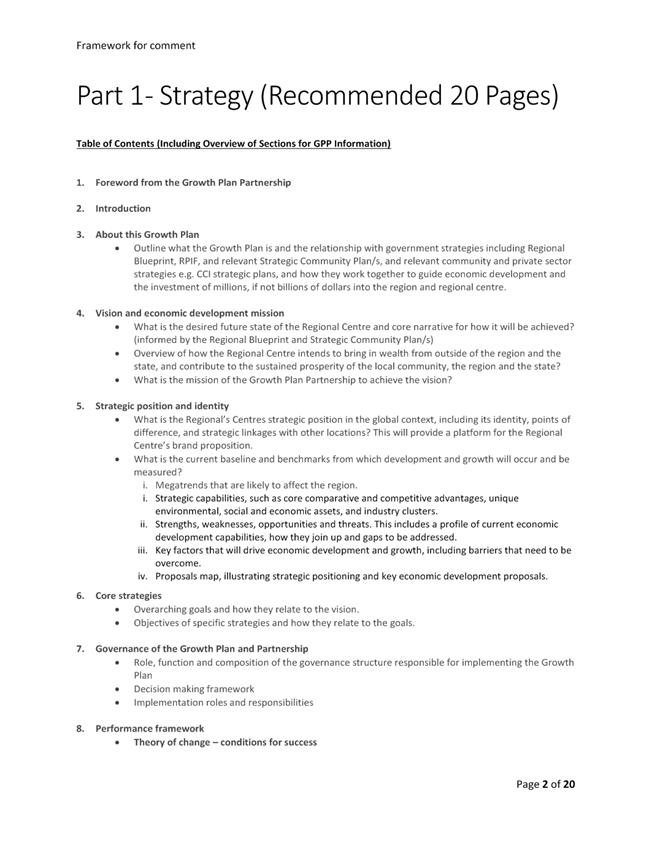
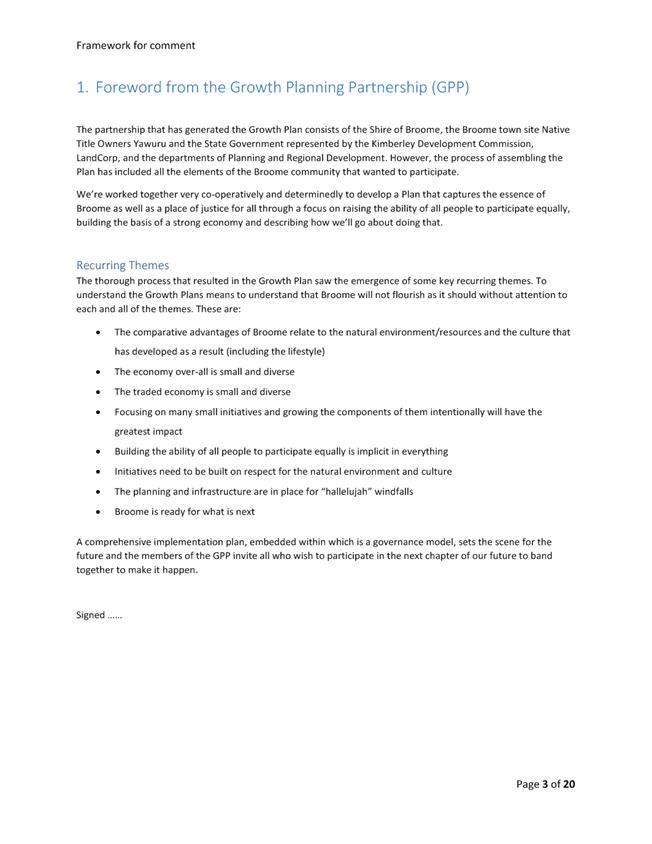

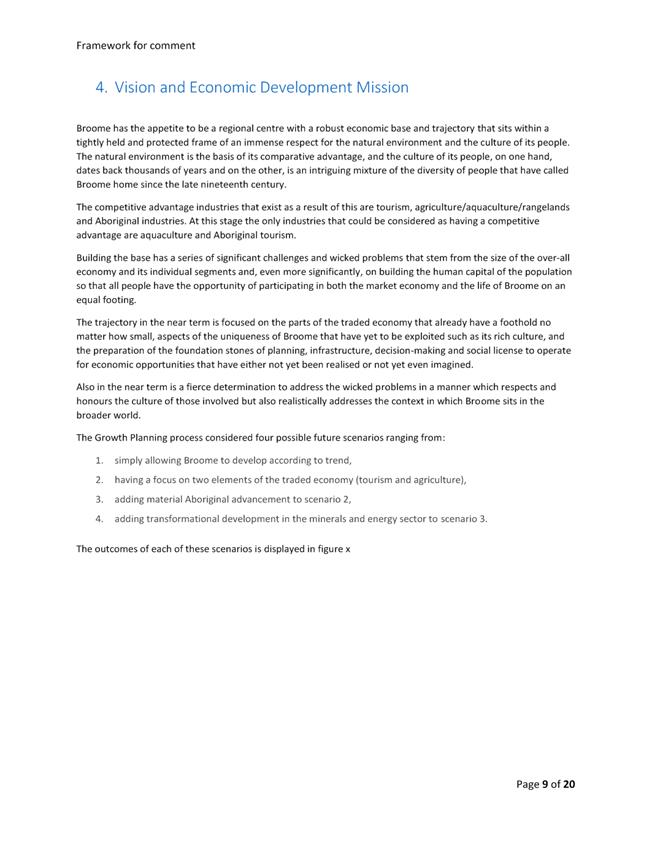
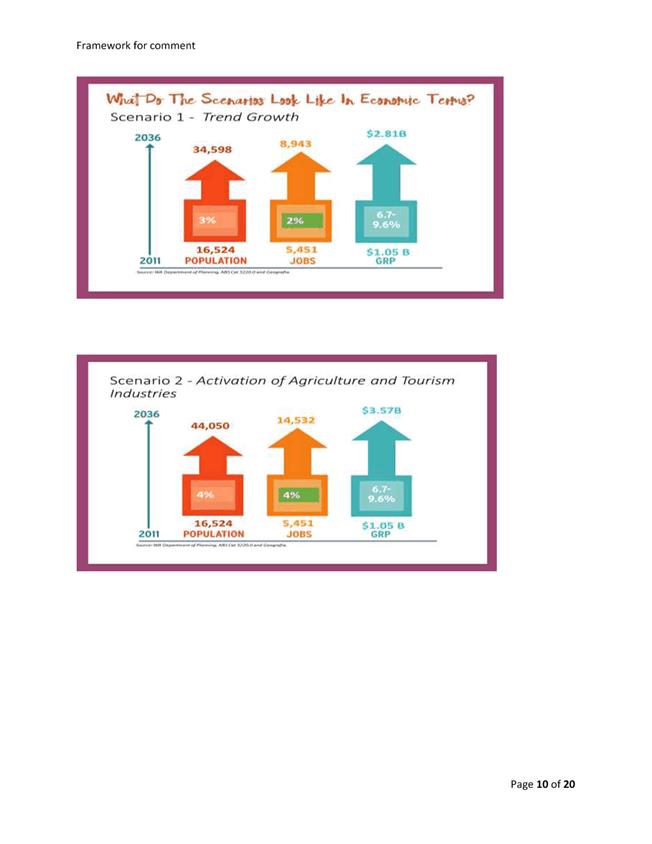
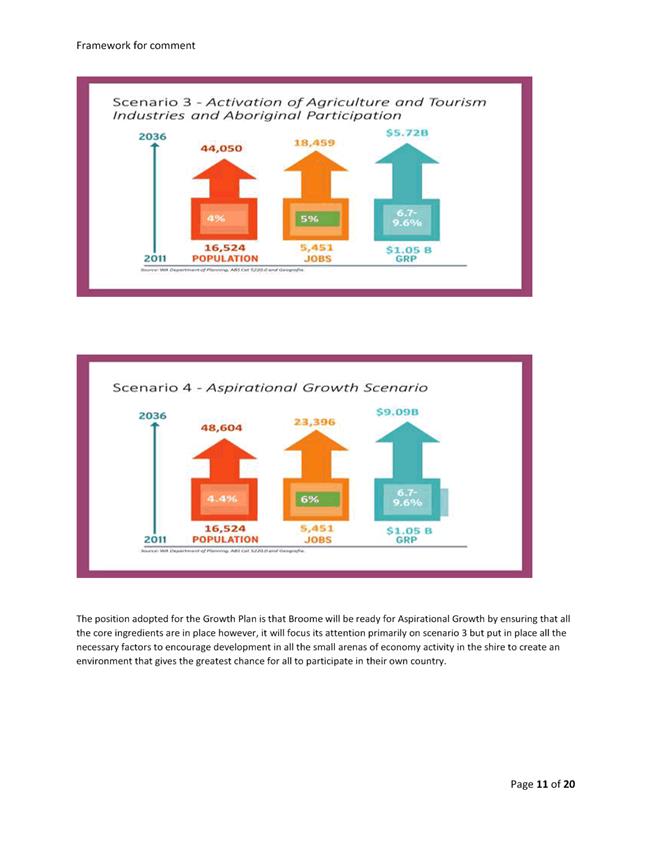
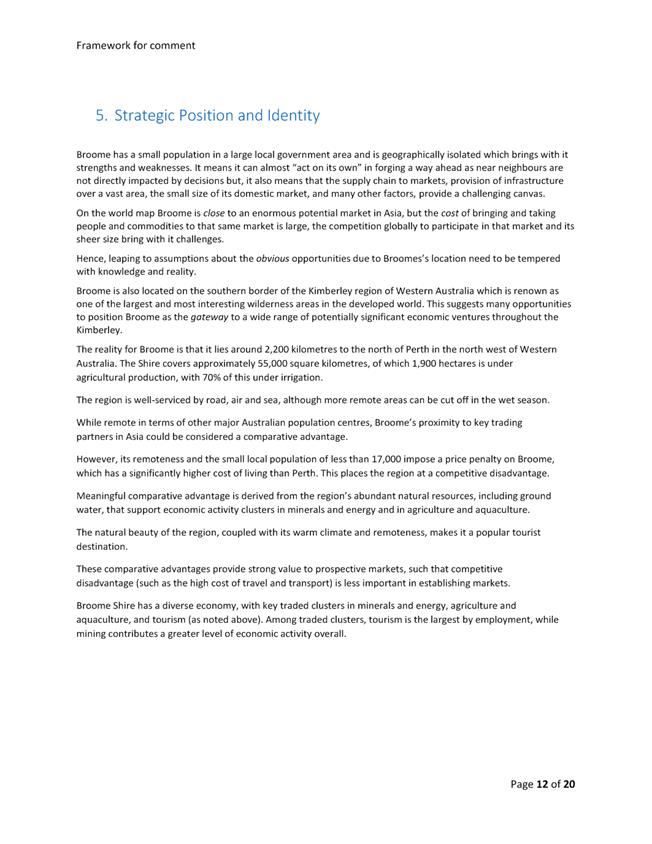
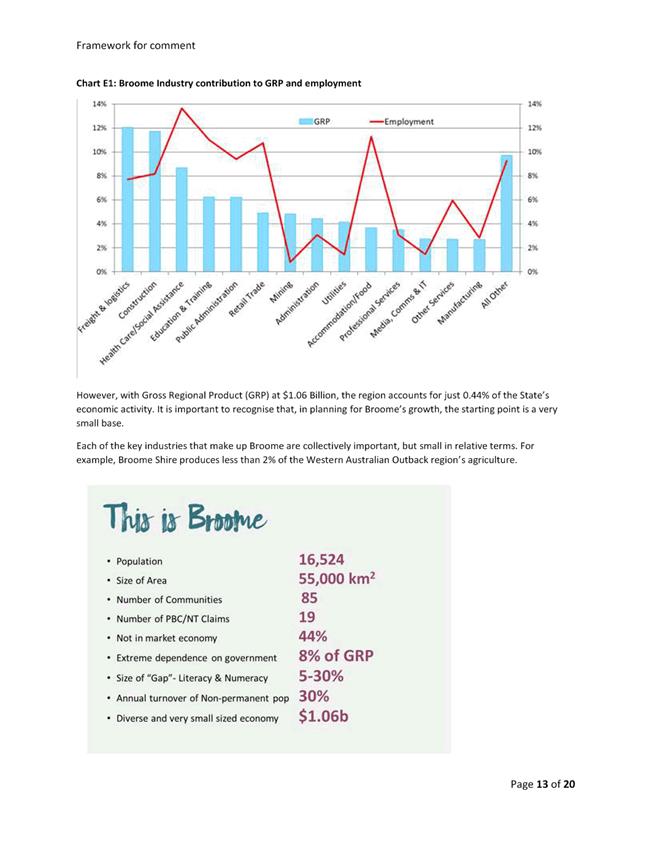
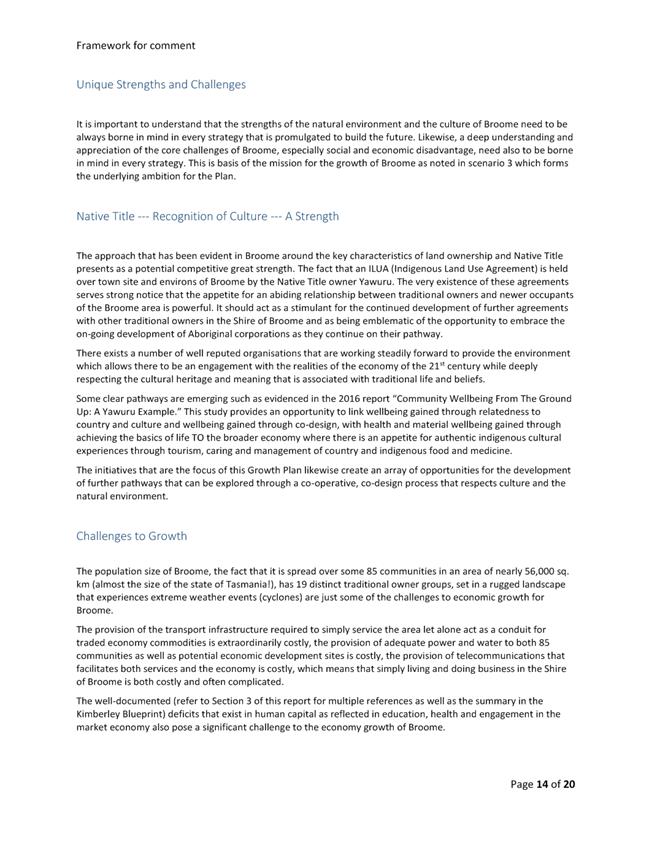
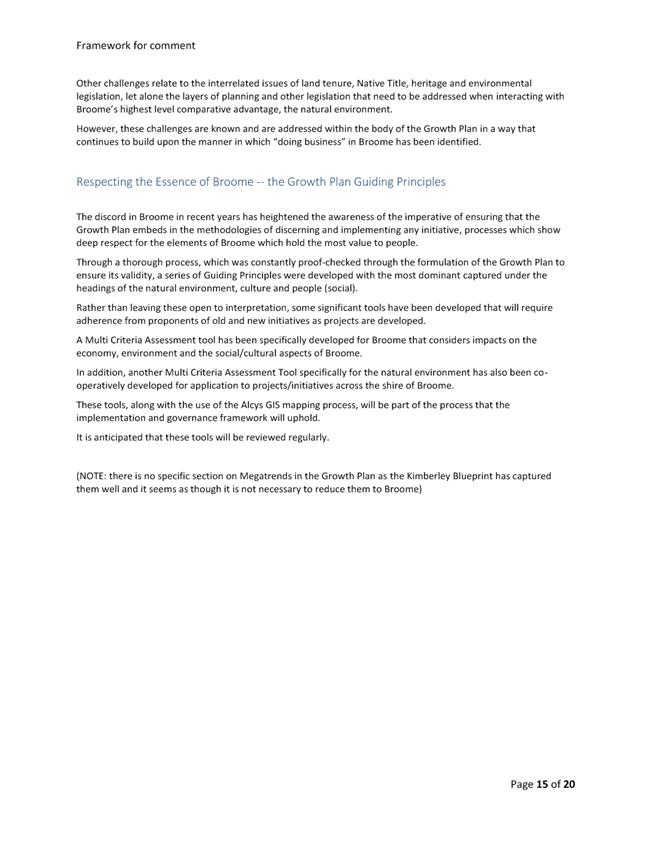
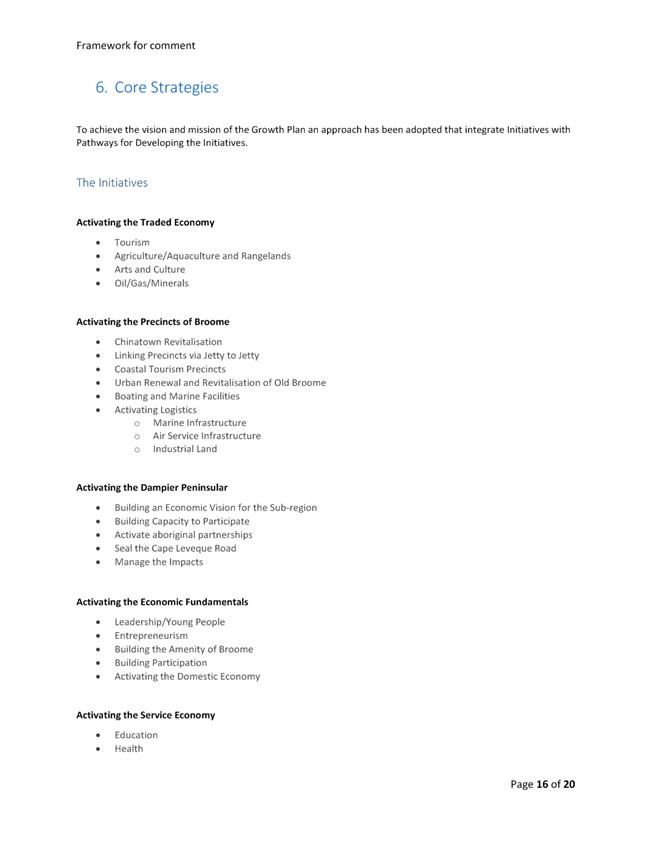
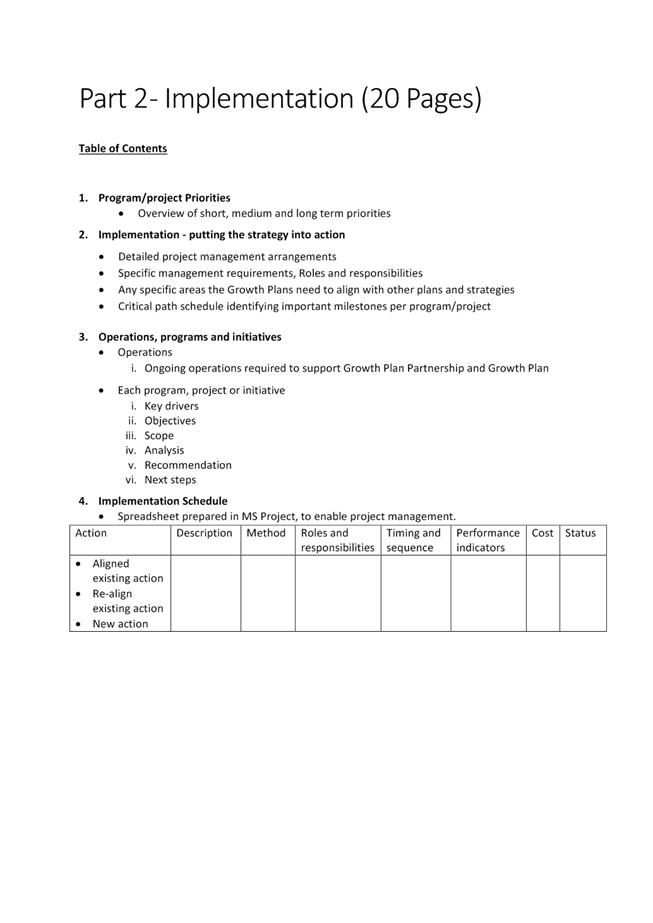
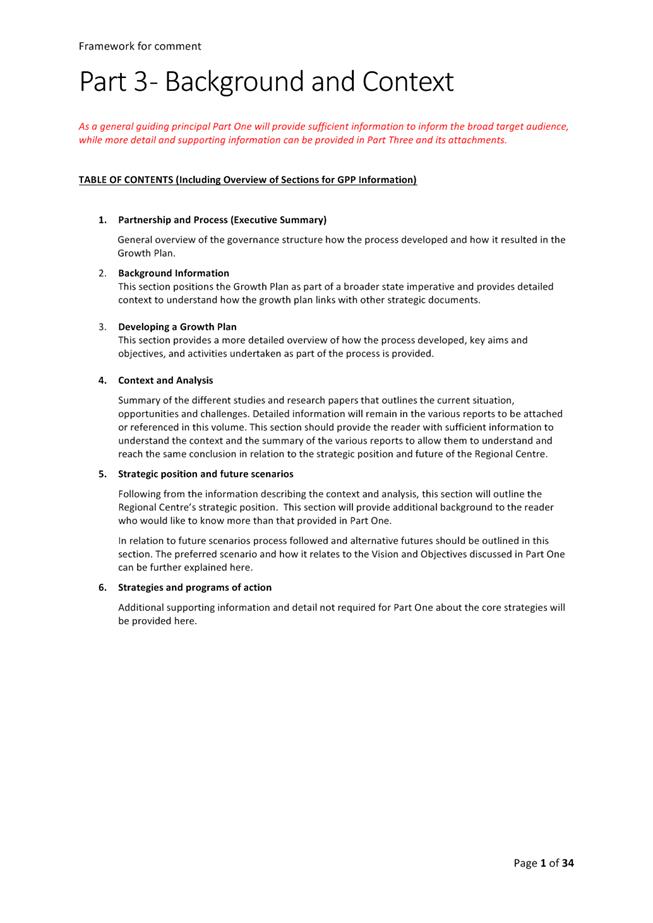
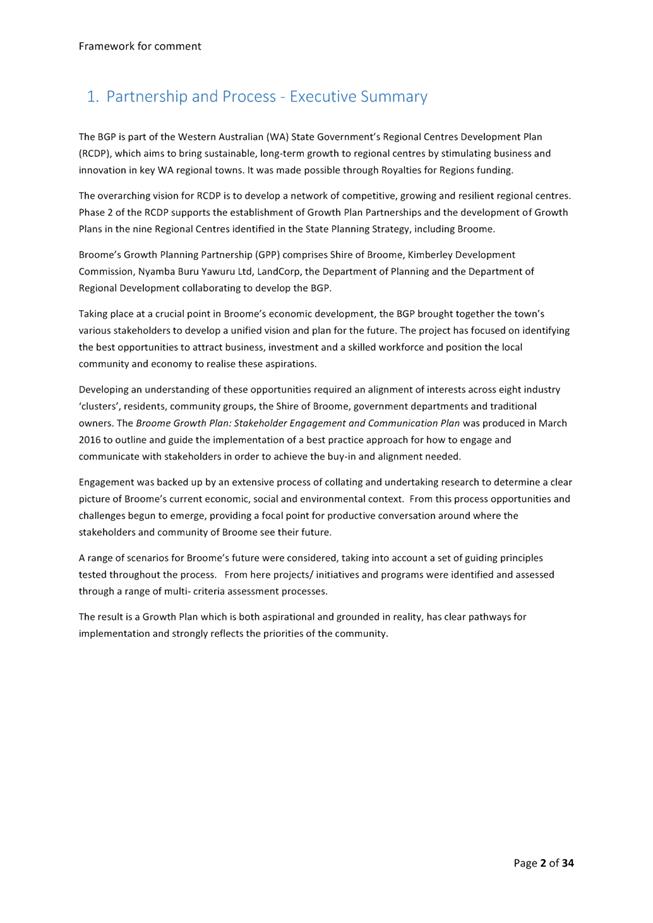
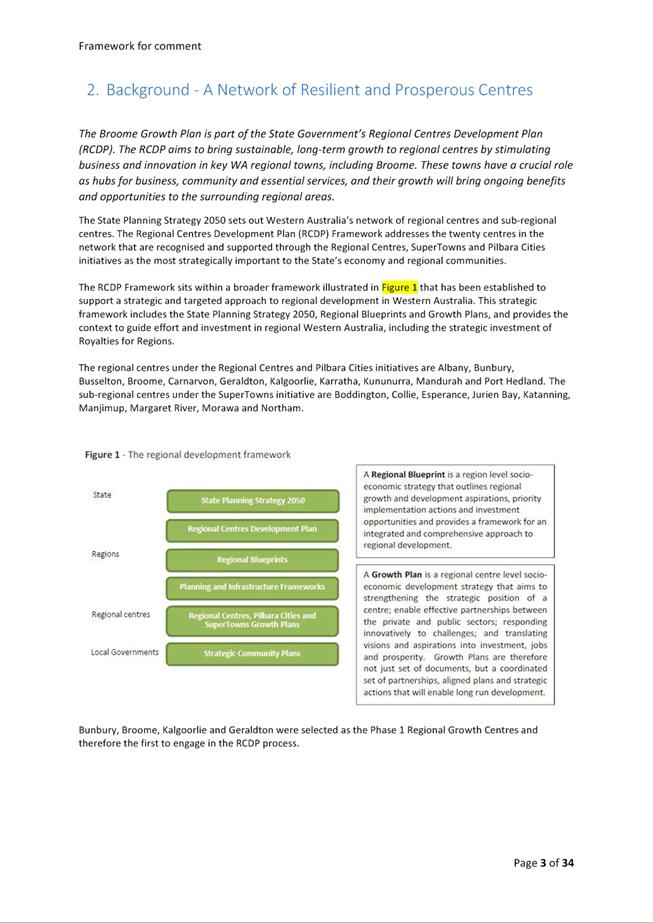
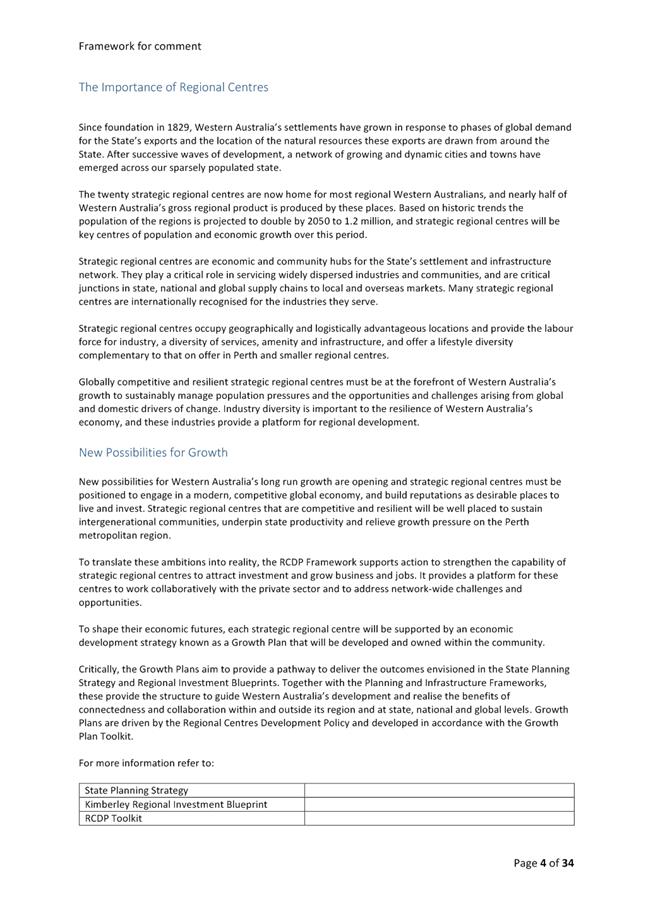
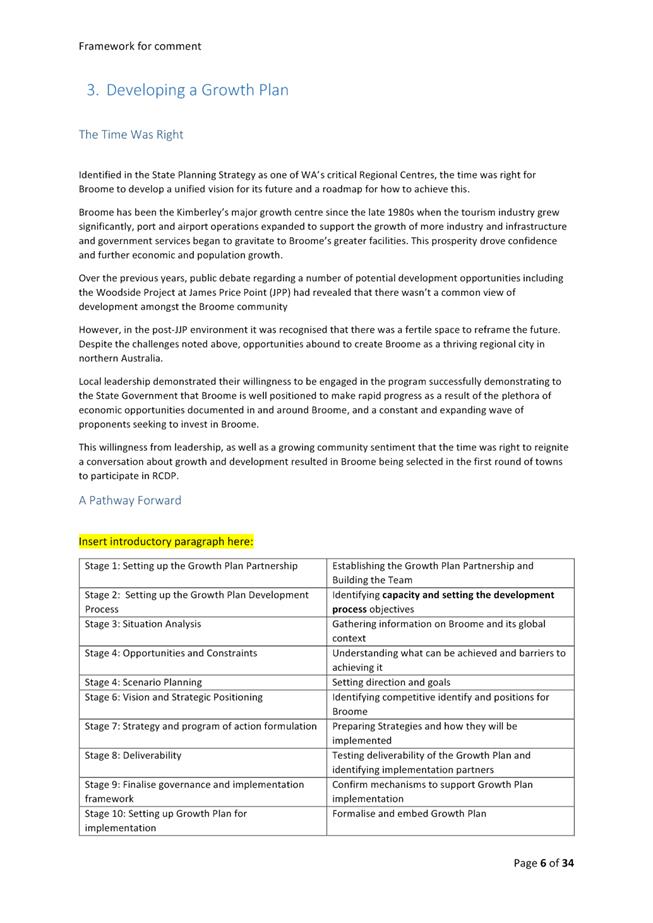
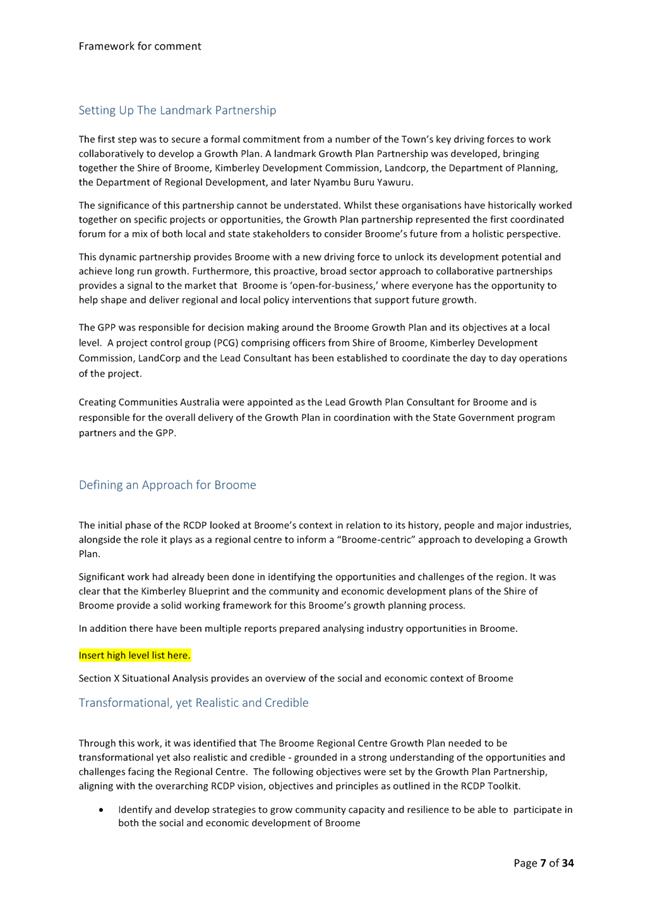
|
Item 5.1 - BROOME GROWTH PLAN - STATUS UPDATE AND KEY
ELEMENTS
|
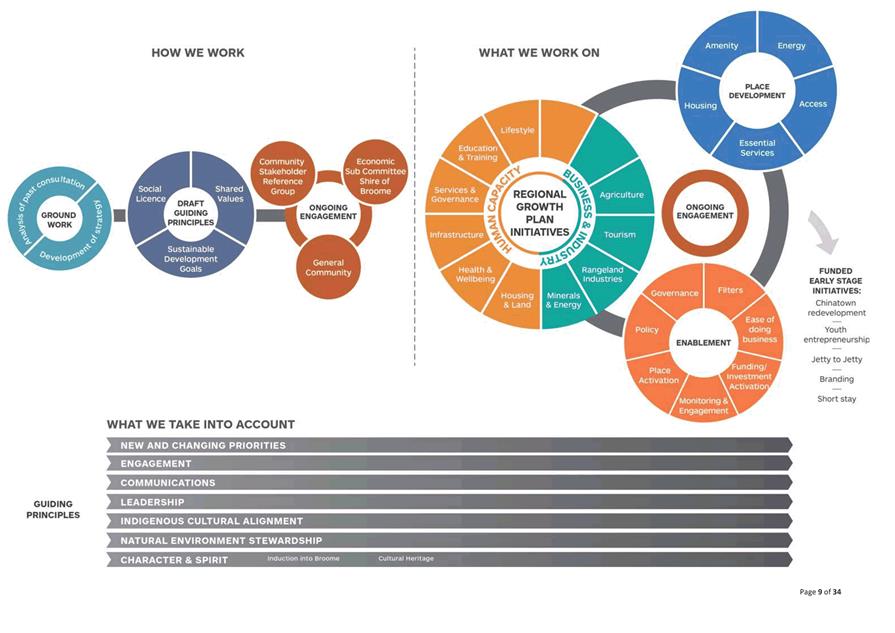
|
Item 5.1 - BROOME GROWTH PLAN - STATUS UPDATE AND KEY
ELEMENTS
|
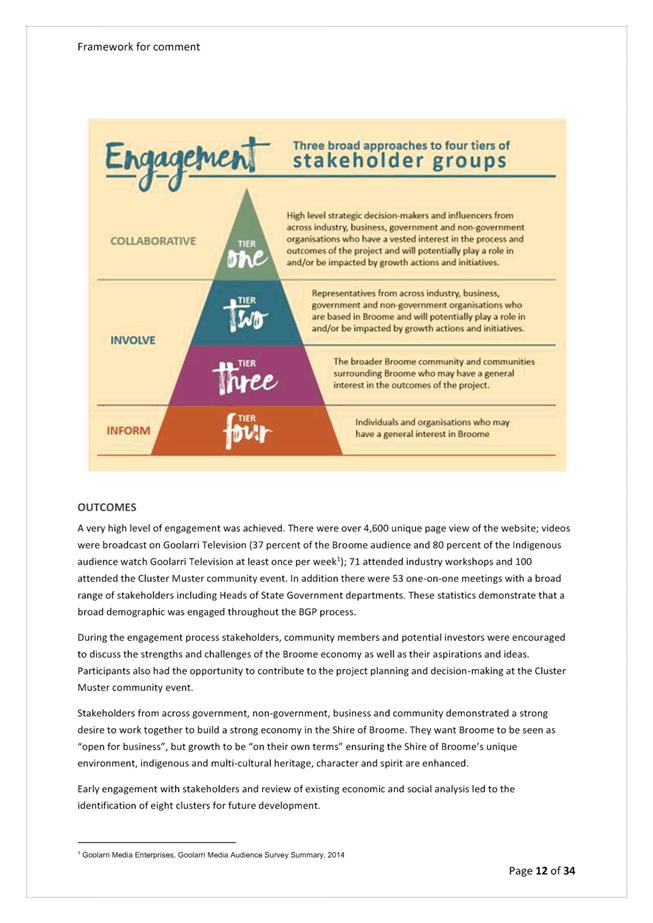
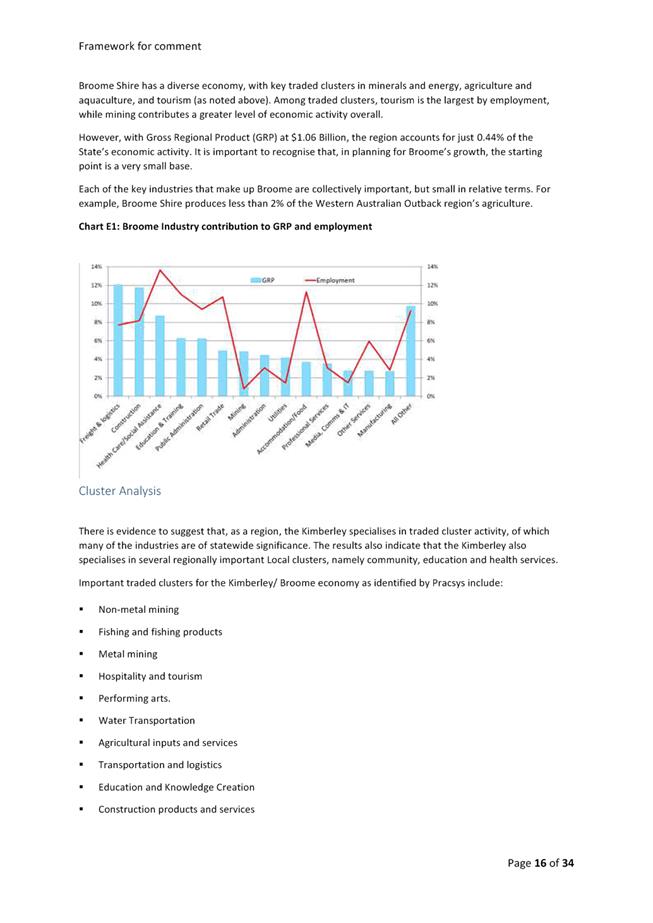
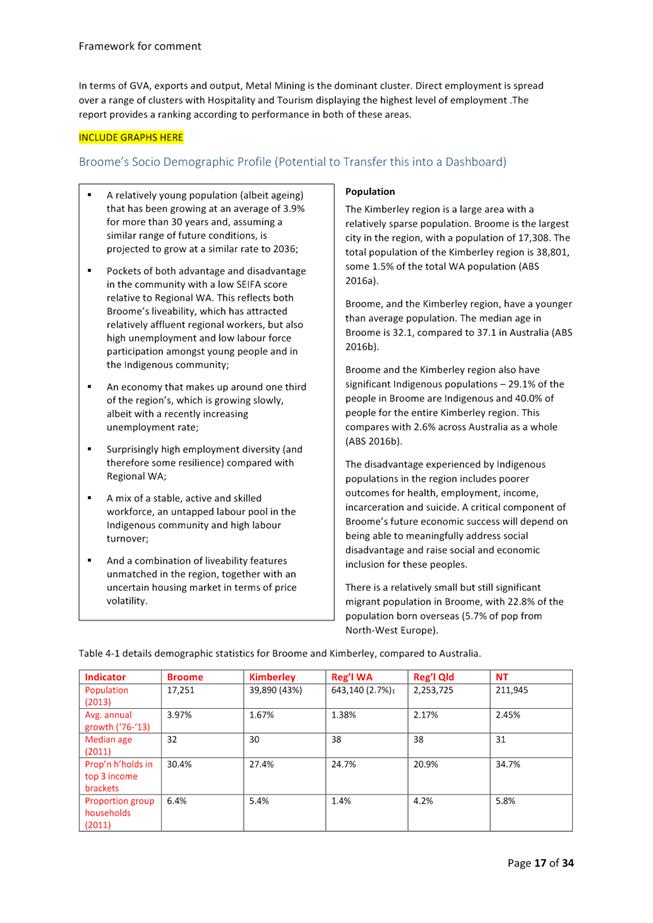
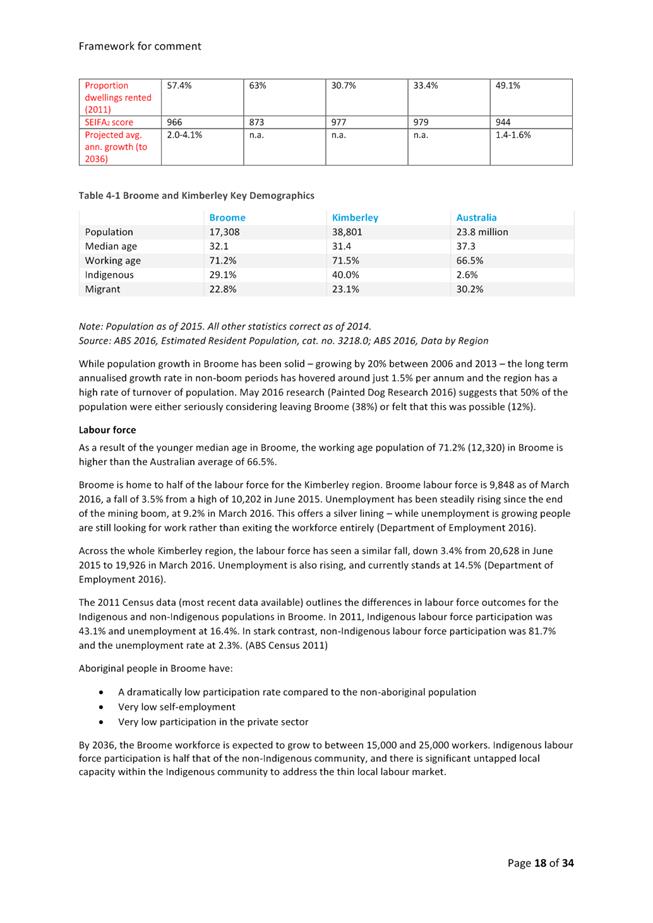
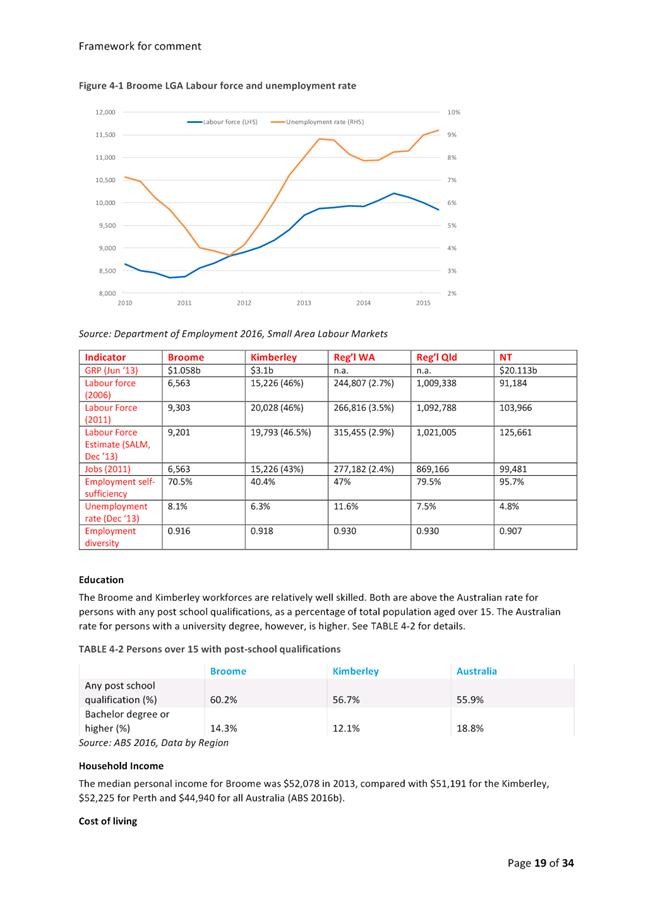


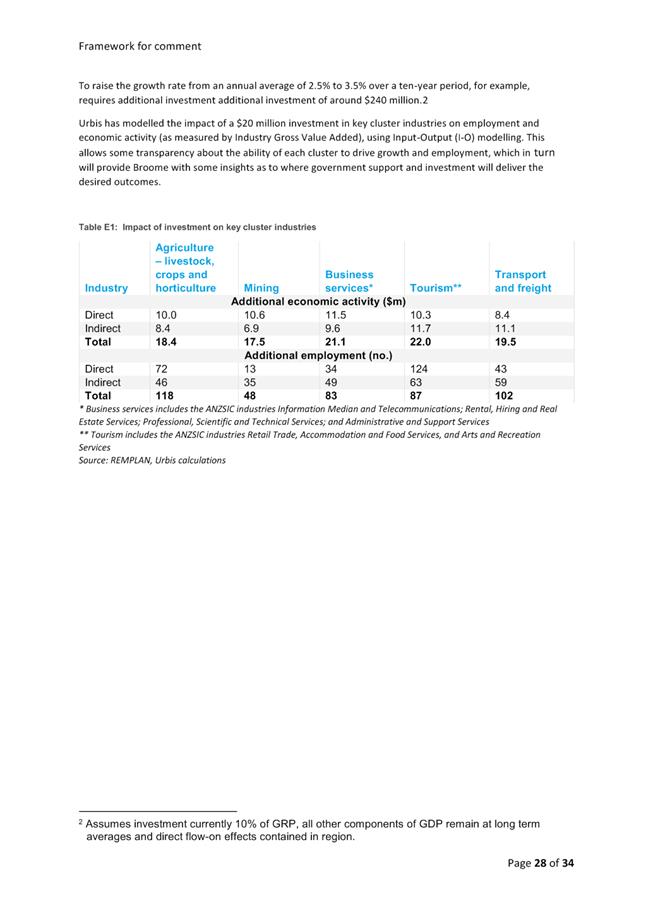
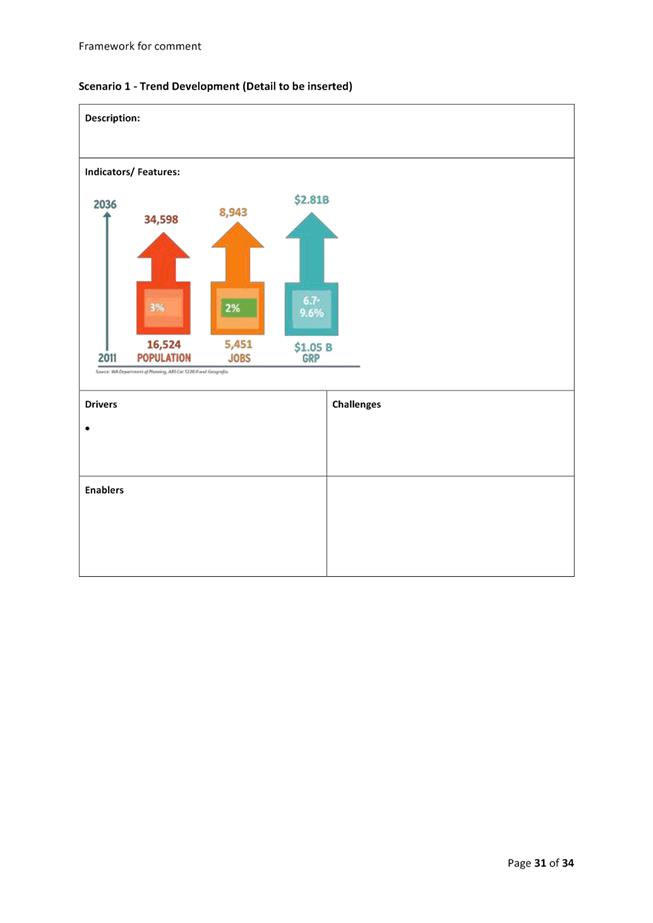
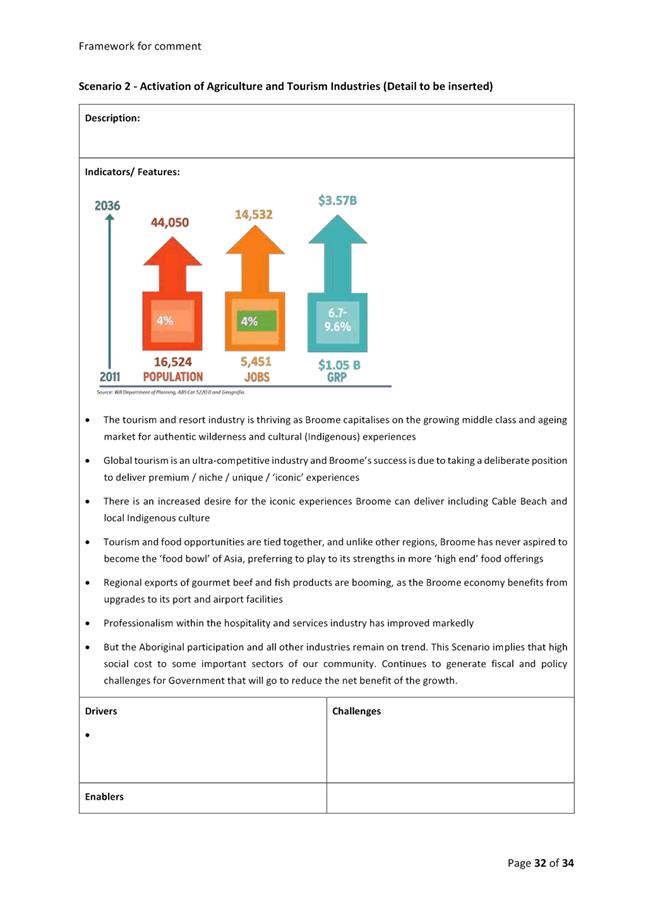
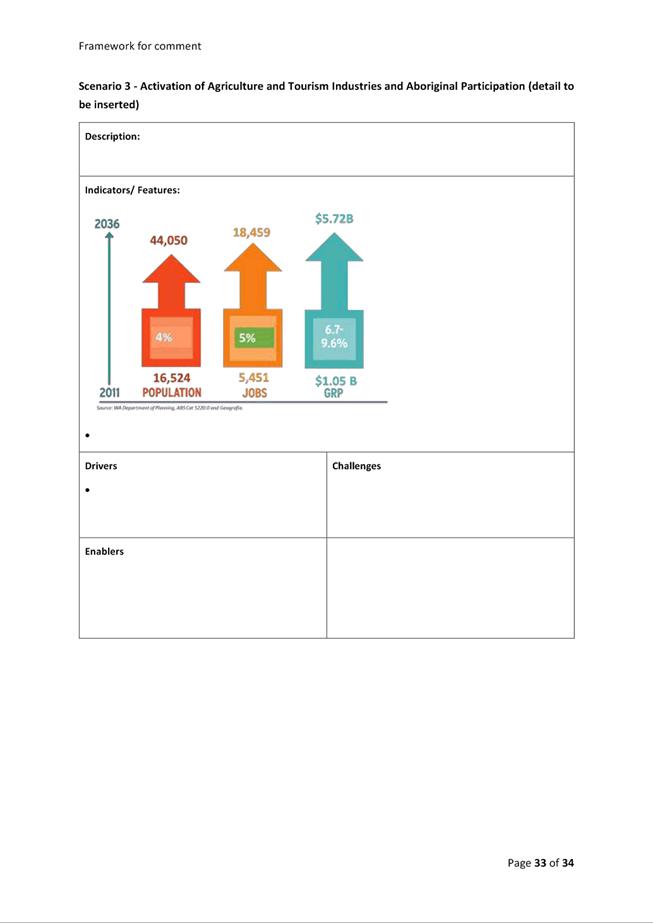
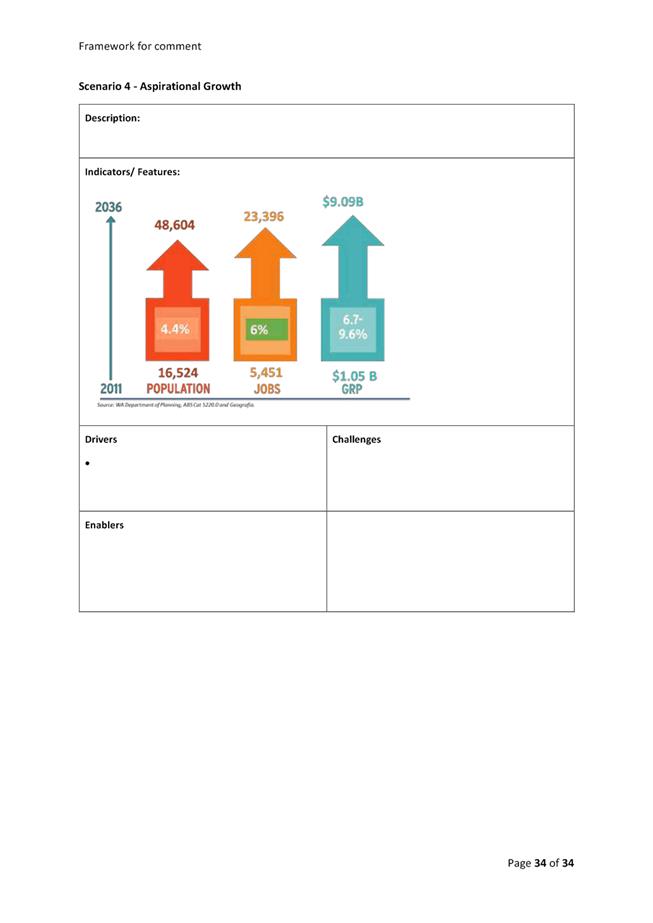
|
Item 5.1 - BROOME GROWTH PLAN - STATUS UPDATE AND KEY
ELEMENTS
|
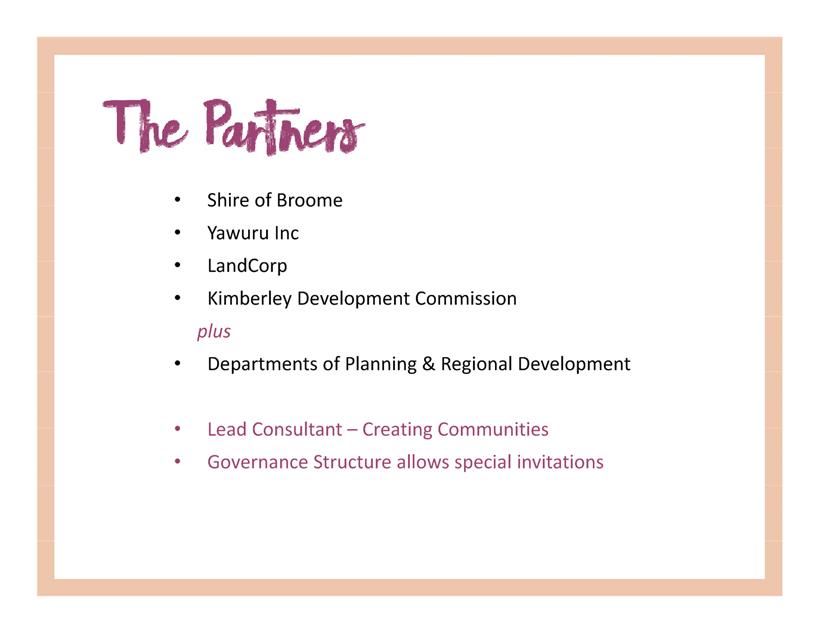
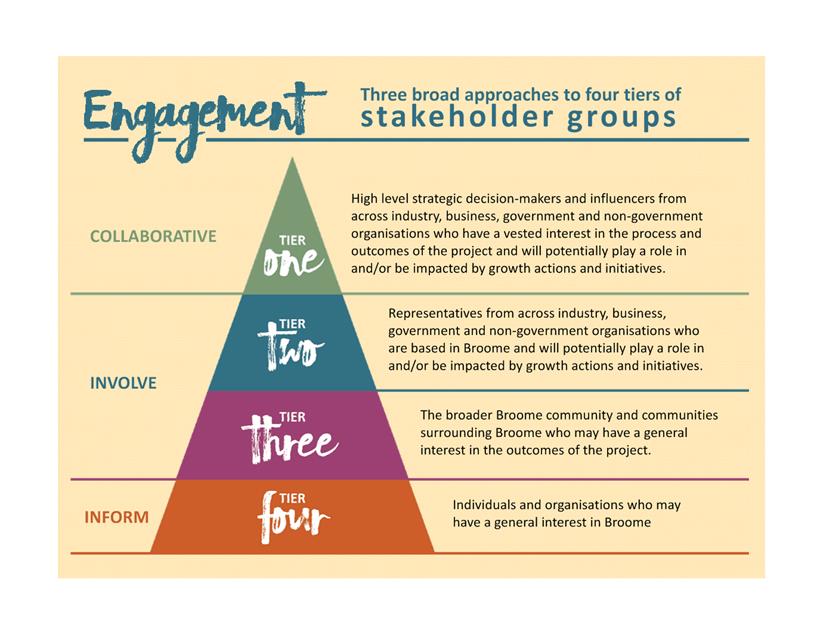
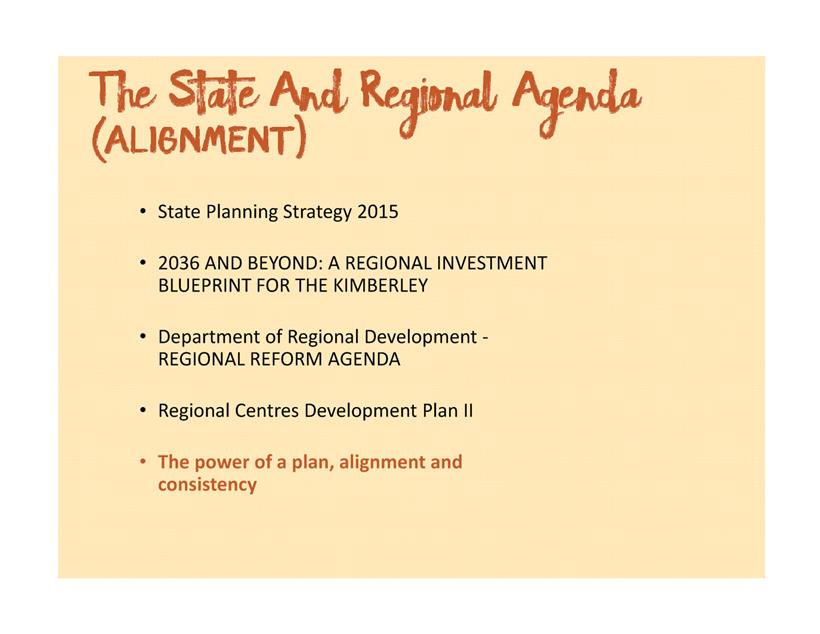
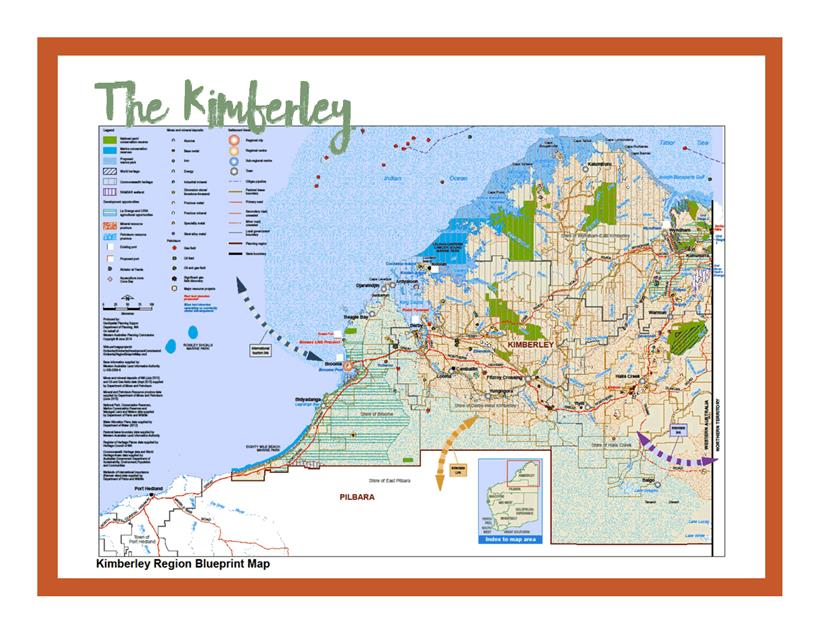
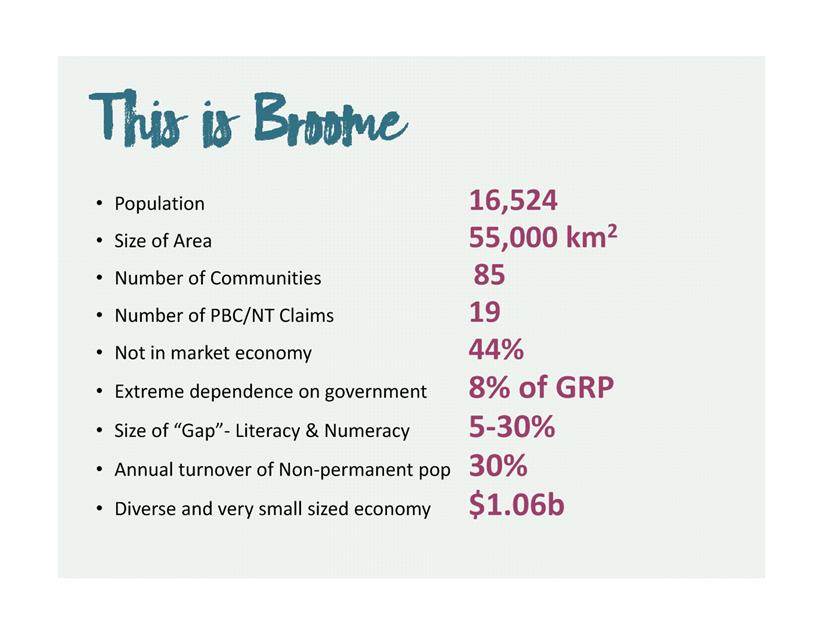
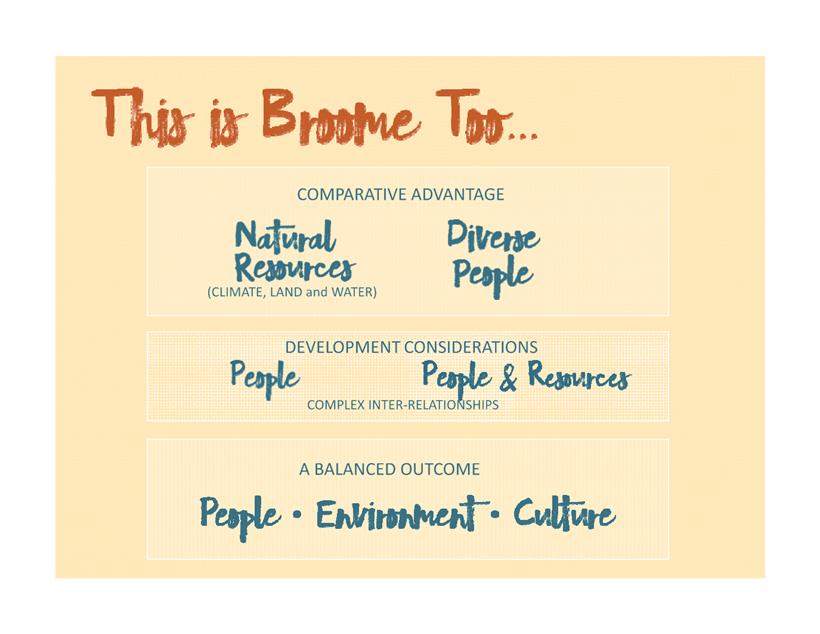
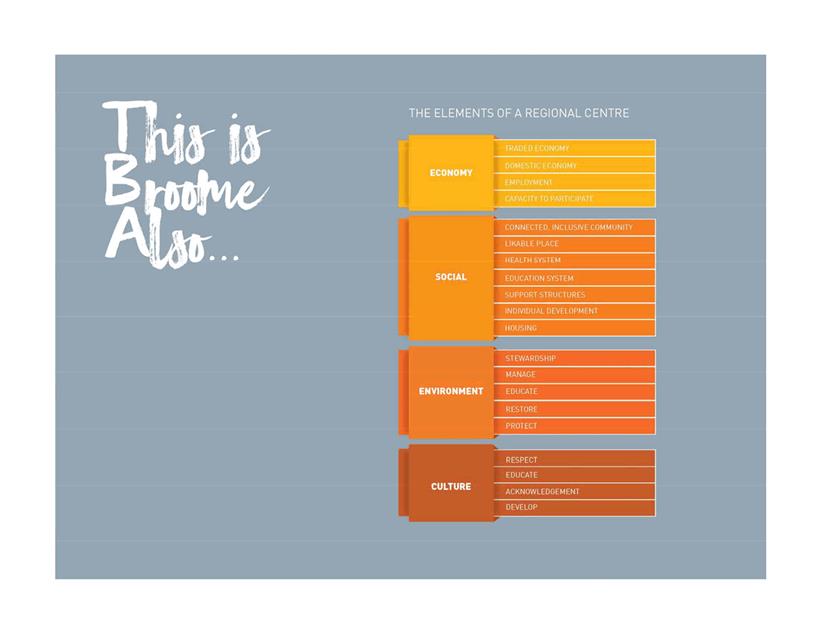
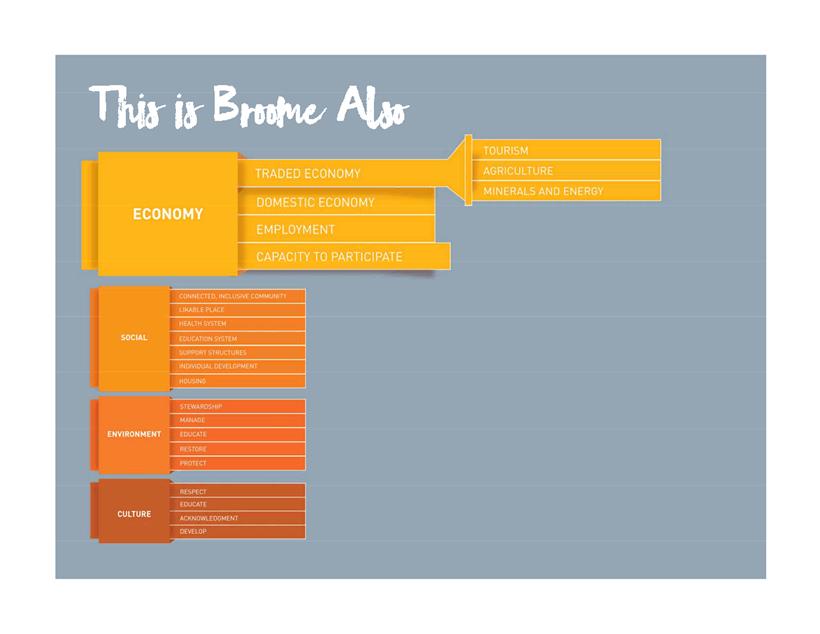
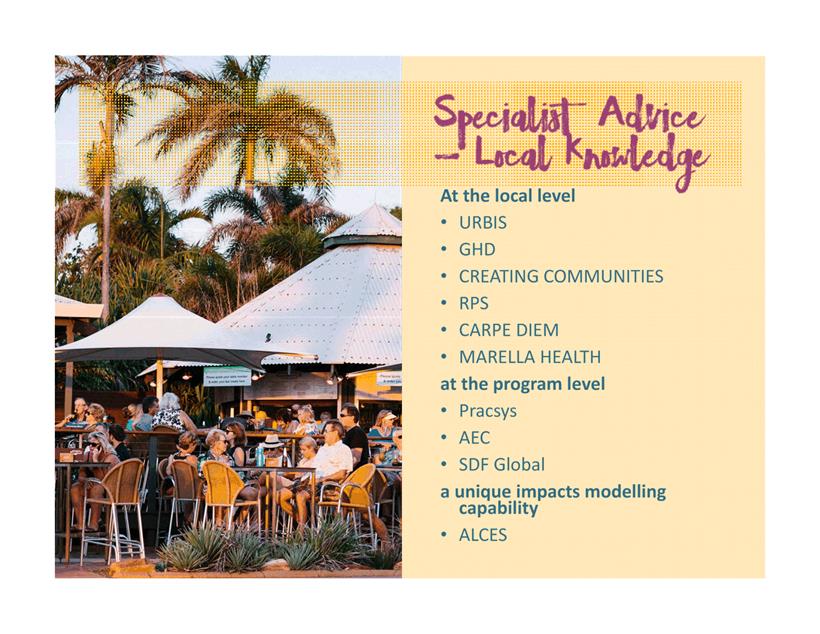
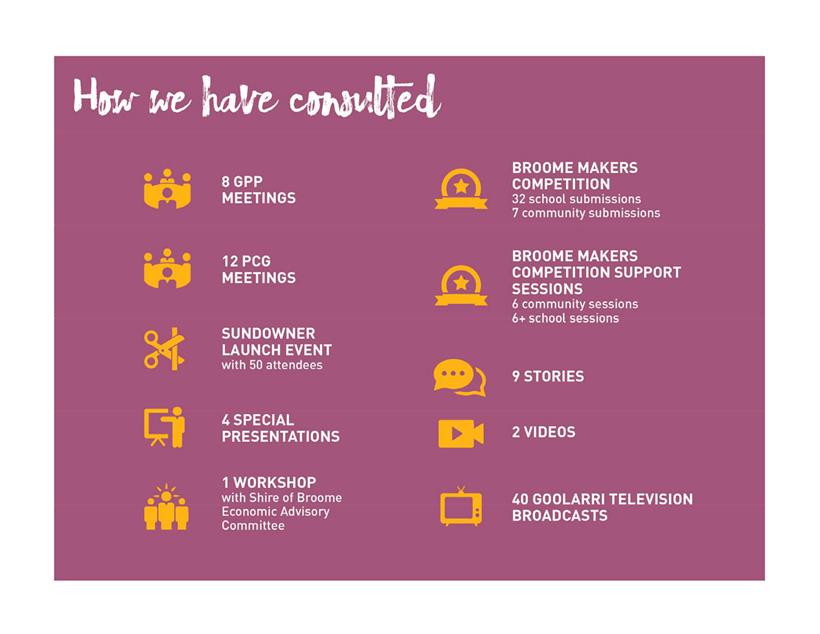
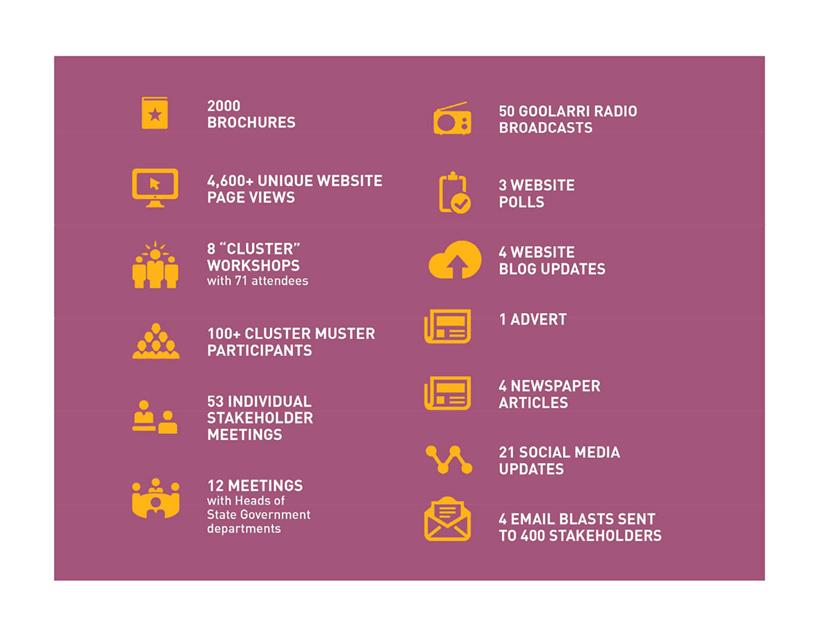
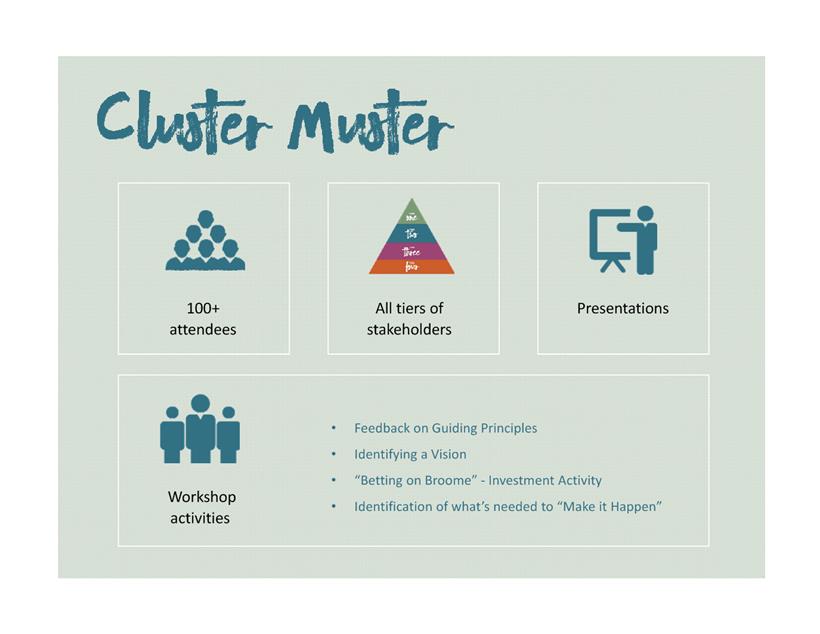
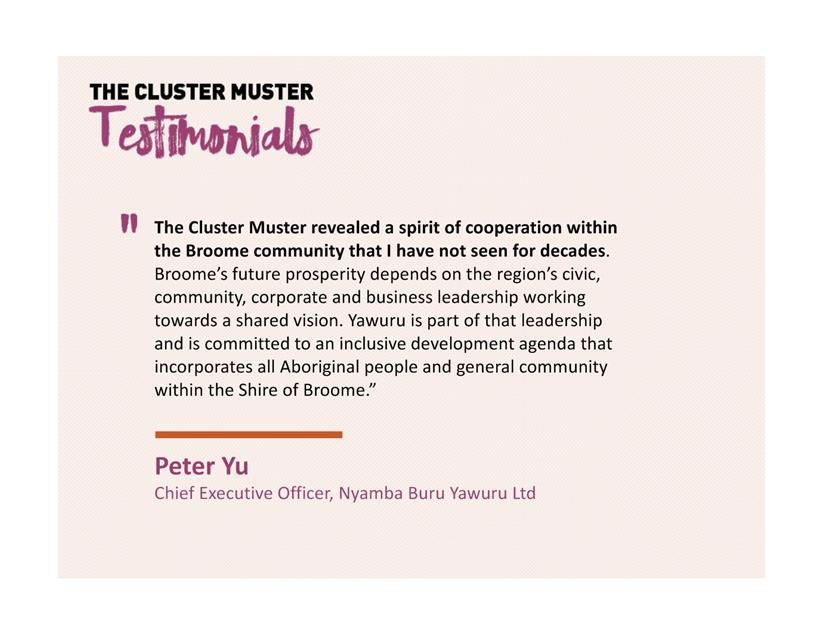
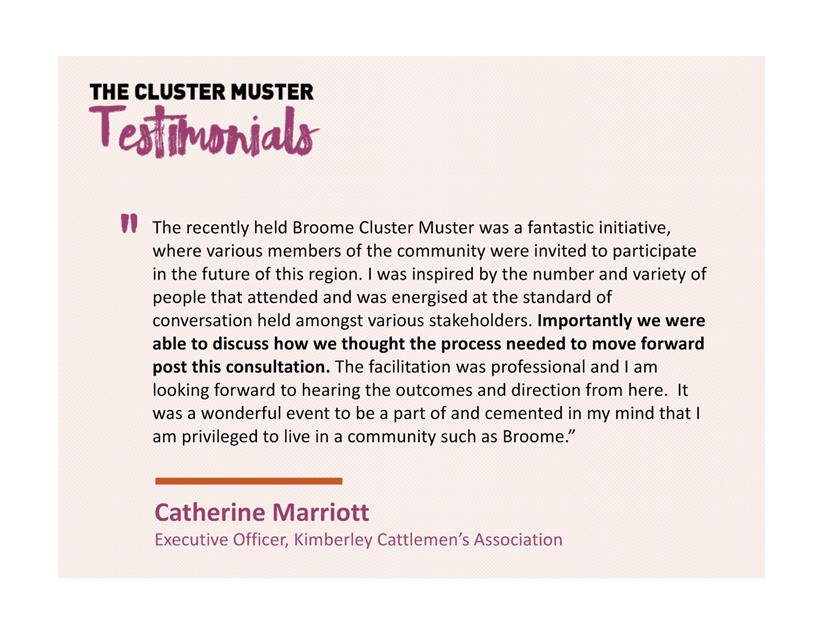
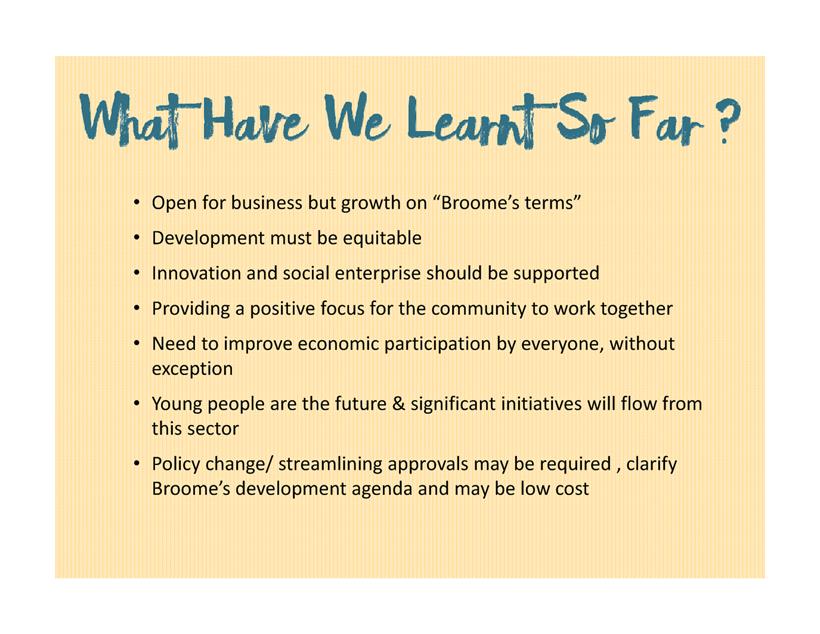
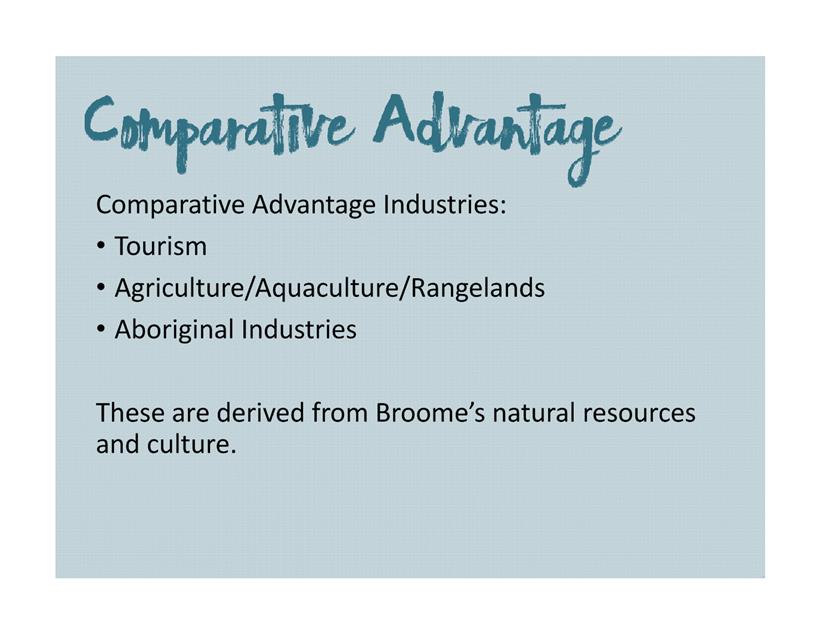
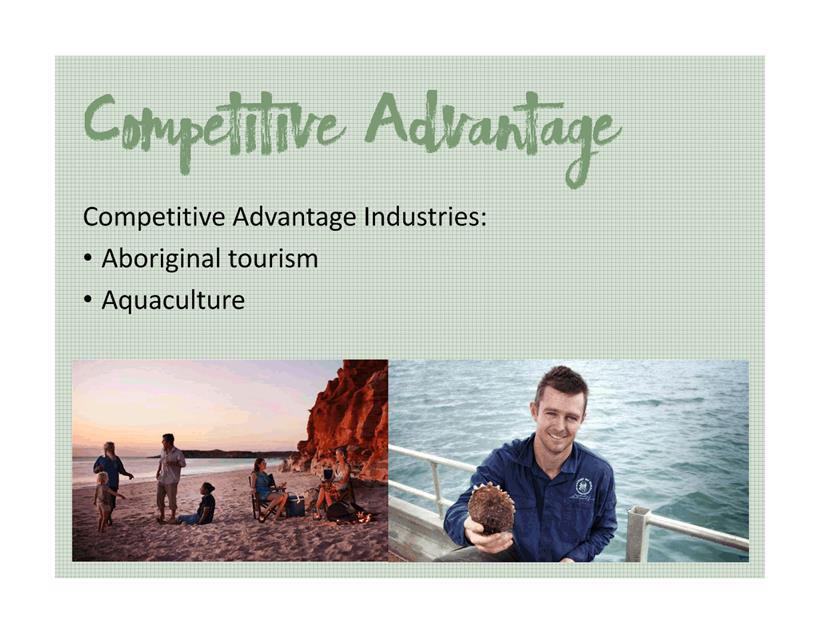
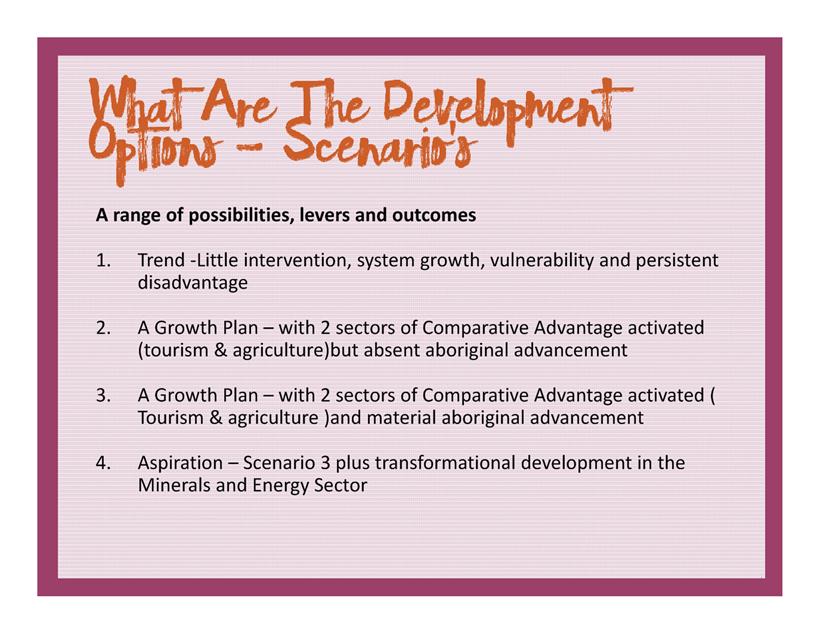
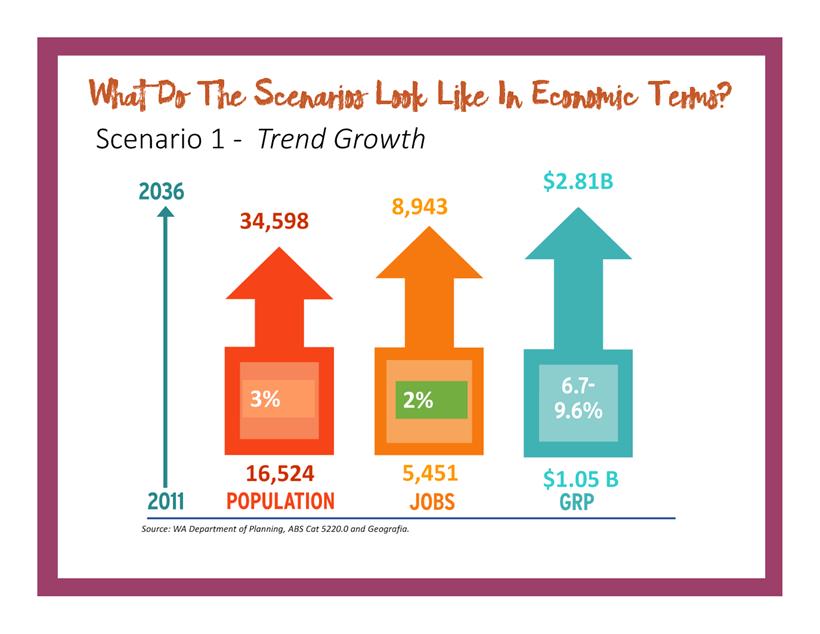
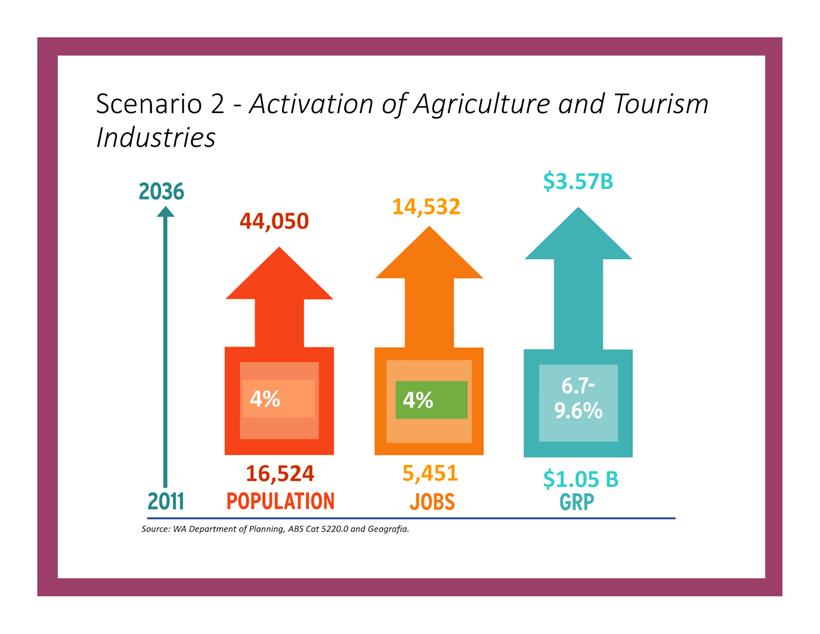
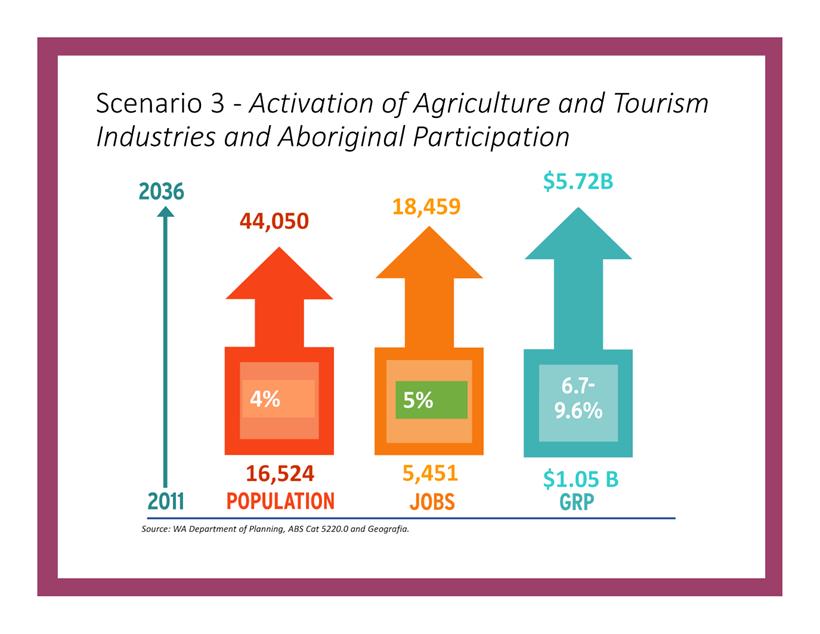
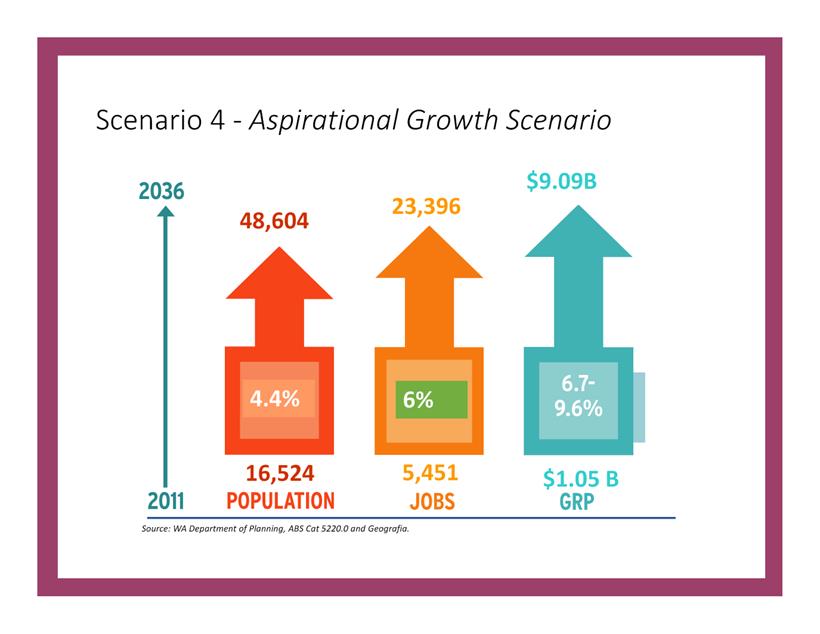
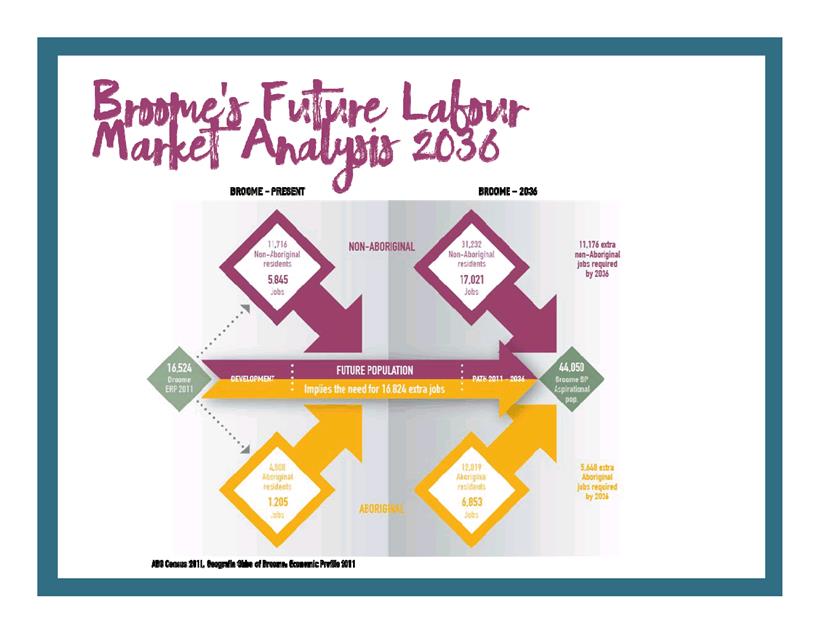
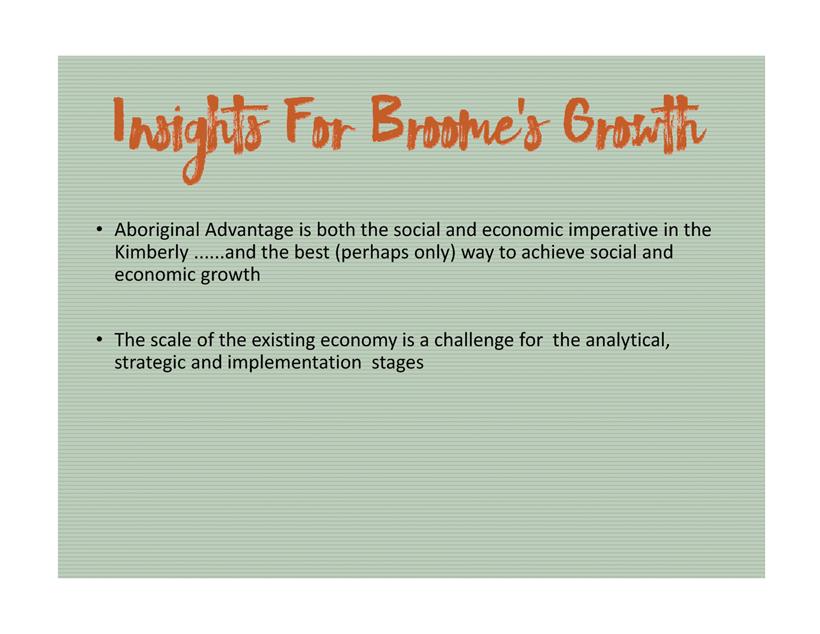
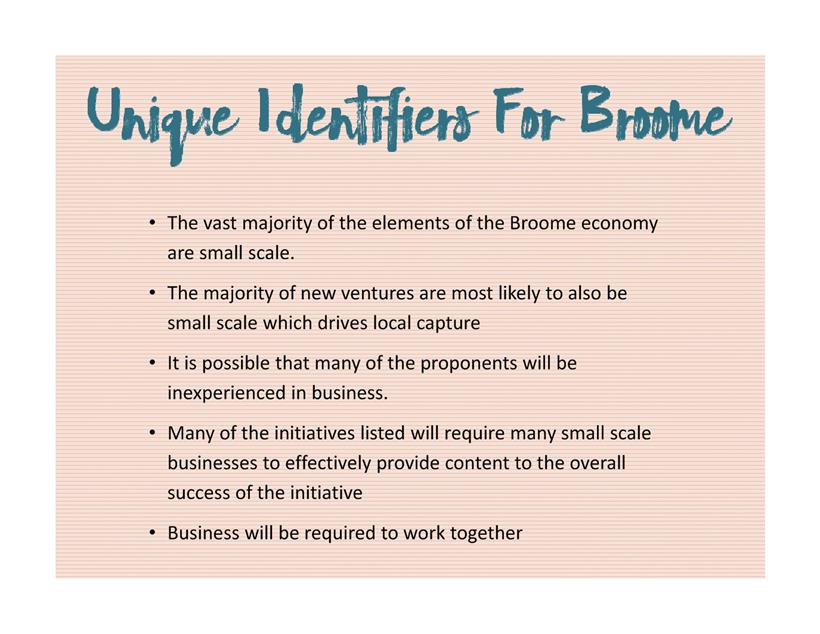
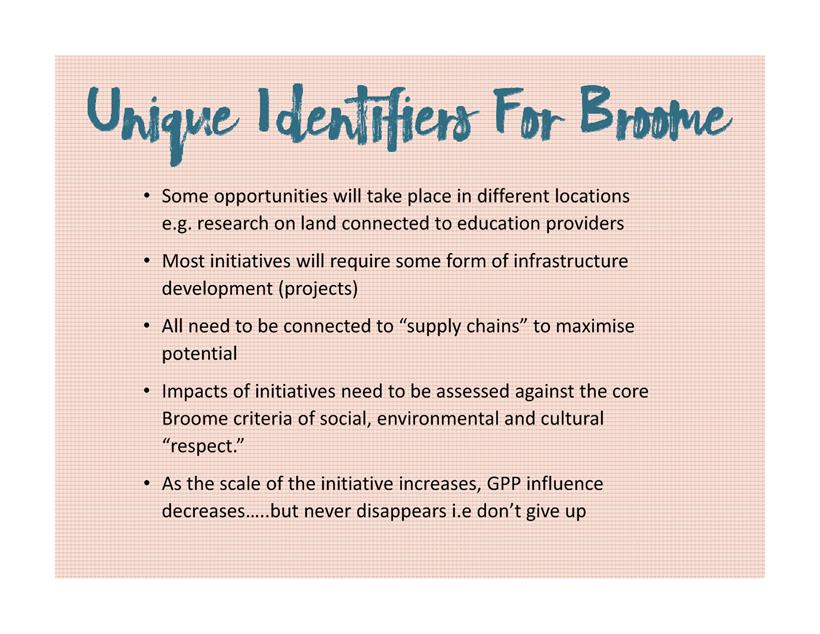
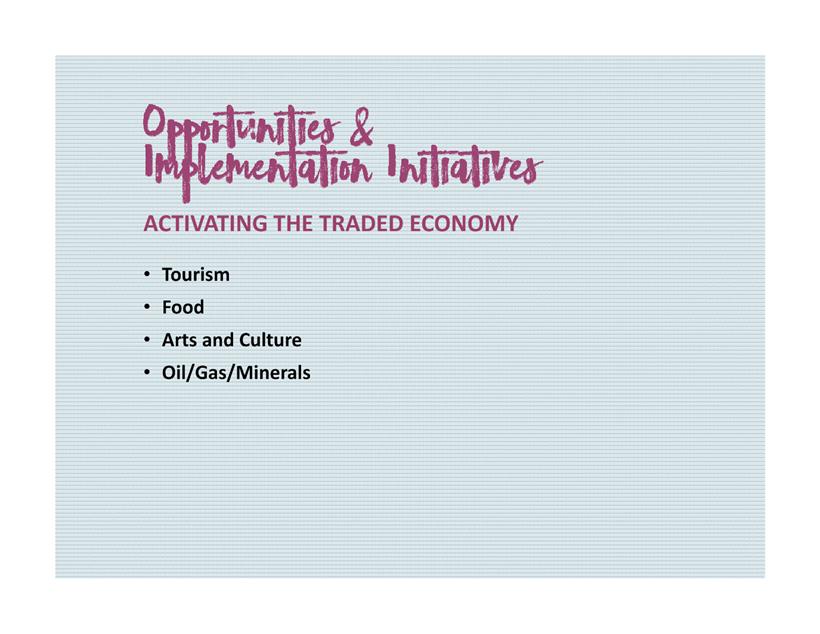
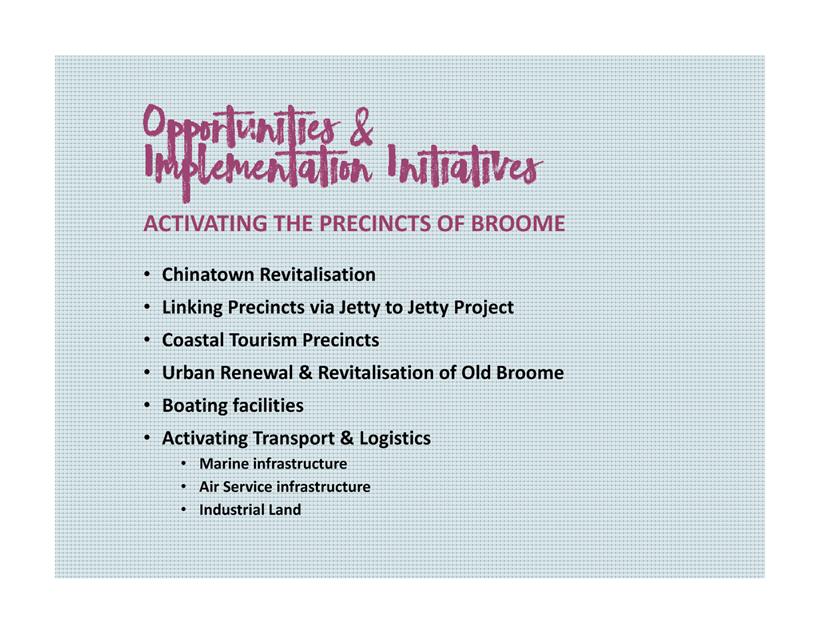
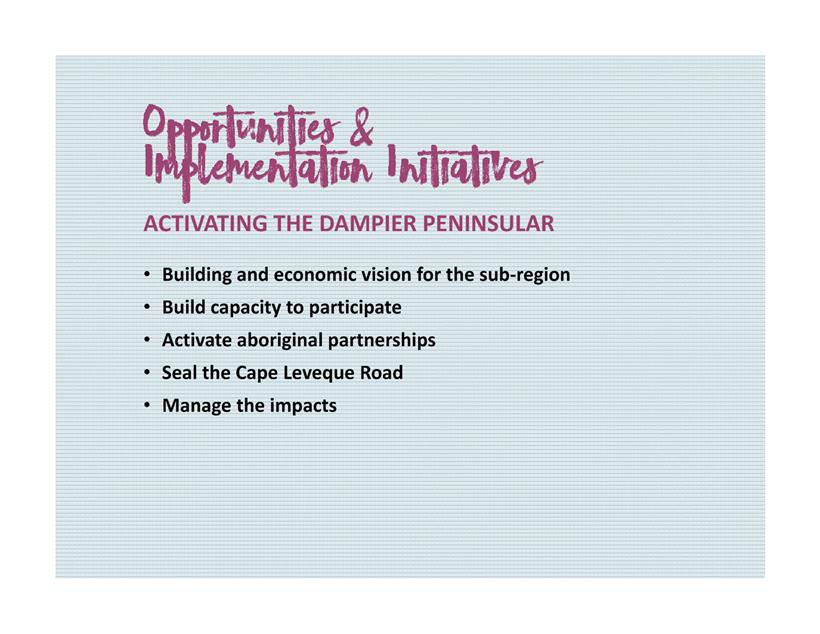
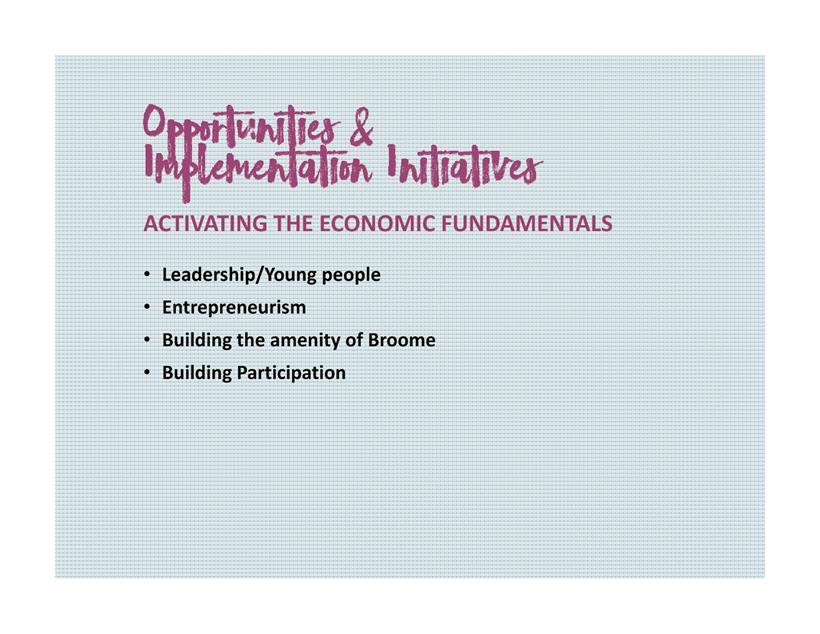
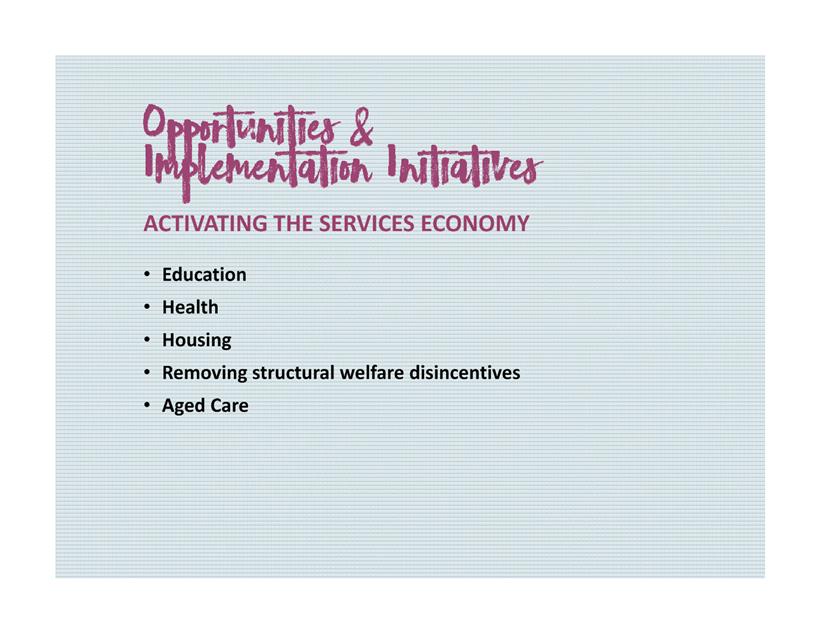
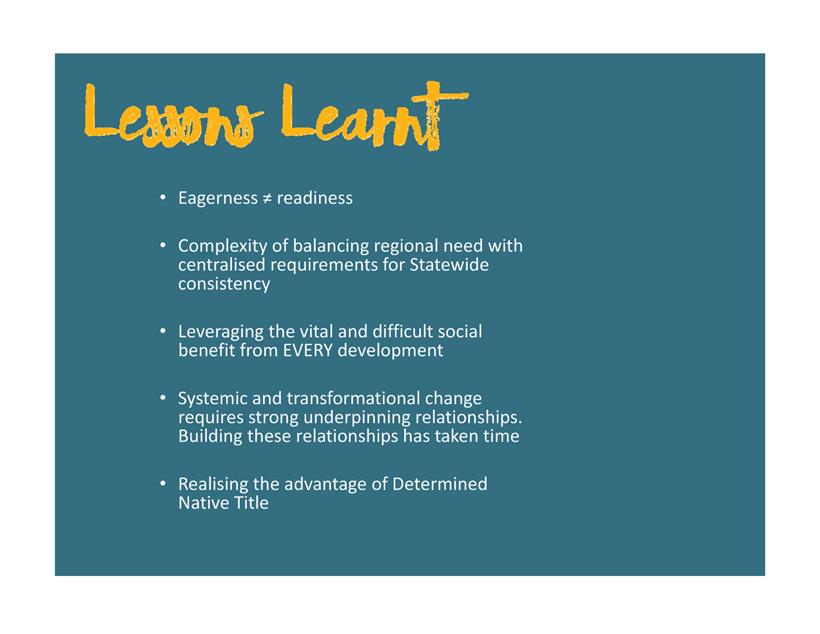
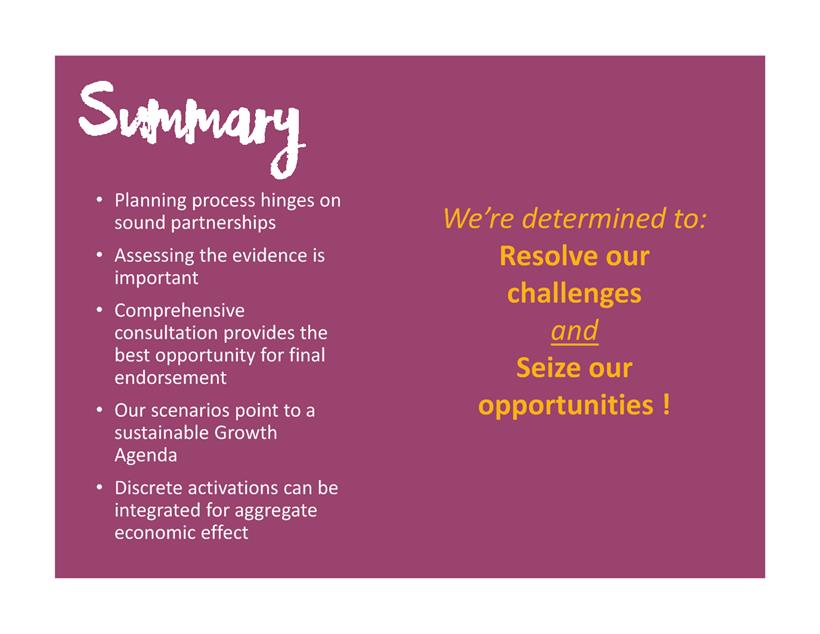

|
Item 5.1 - BROOME
GROWTH PLAN - STATUS UPDATE AND KEY ELEMENTS
|
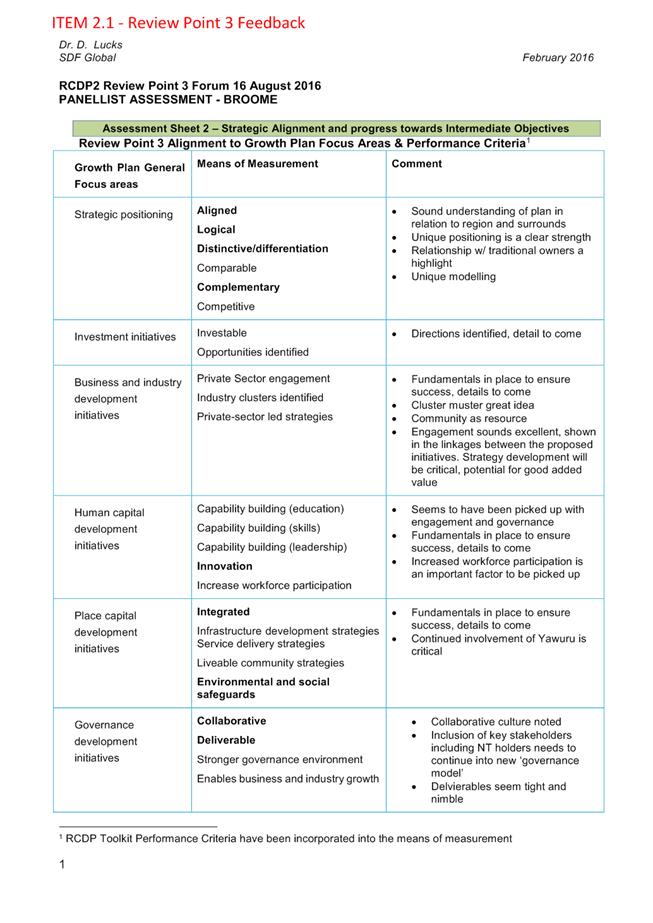
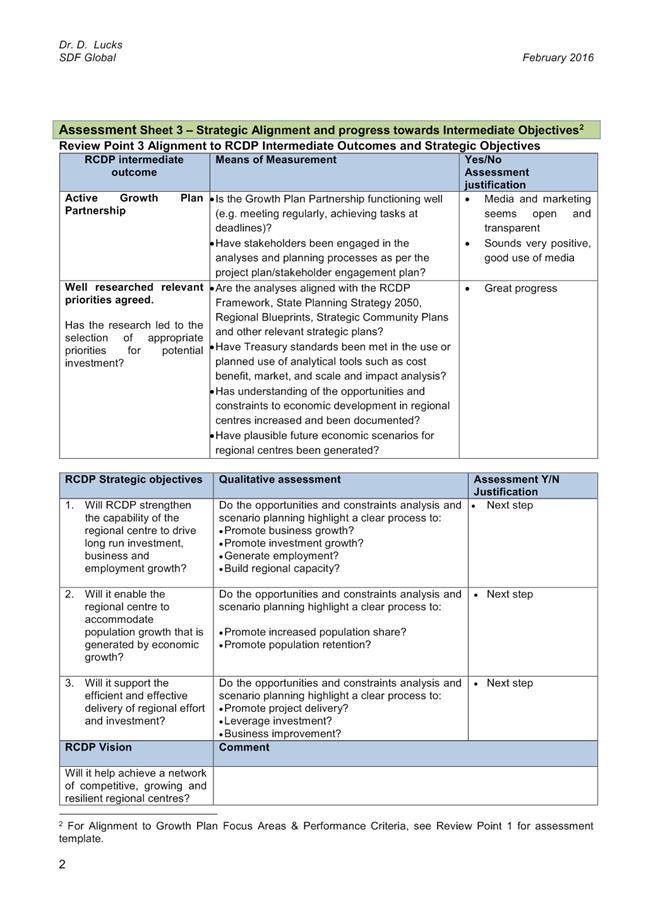
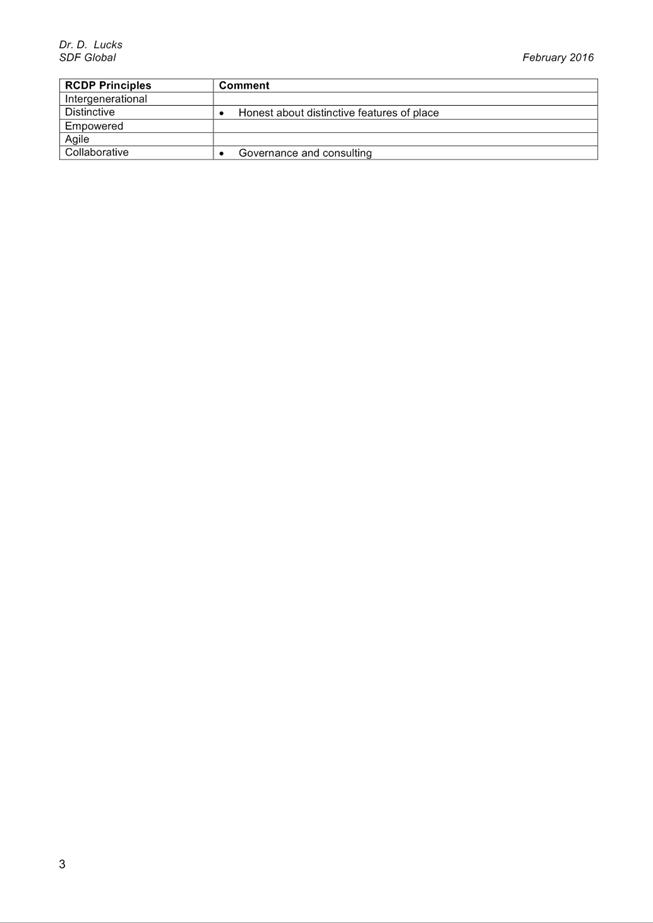
|
Item 5.1 - BROOME GROWTH PLAN - STATUS UPDATE AND KEY
ELEMENTS
|
|
Item 5.1 - BROOME GROWTH PLAN - STATUS UPDATE AND KEY
ELEMENTS
|

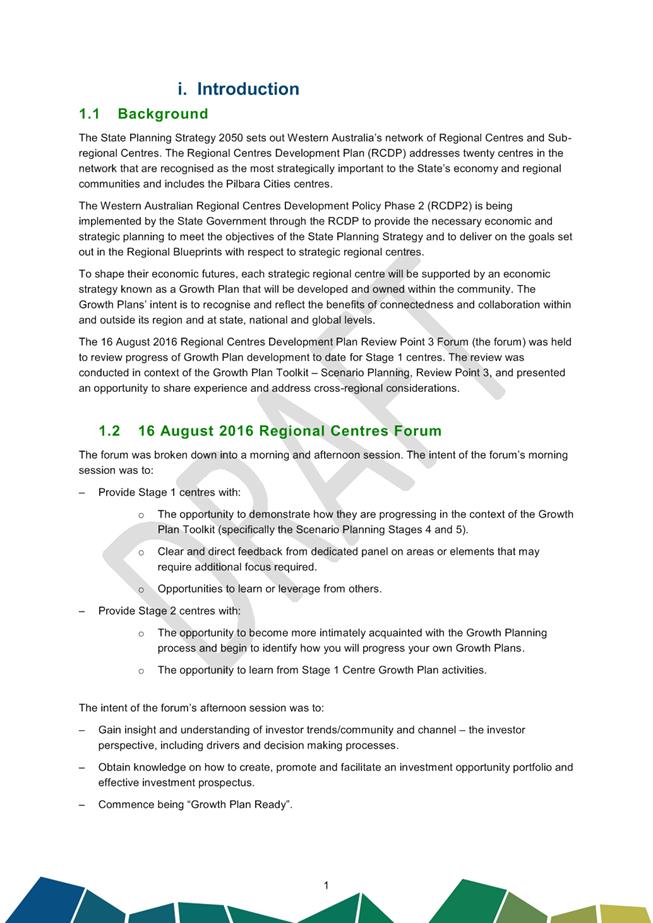
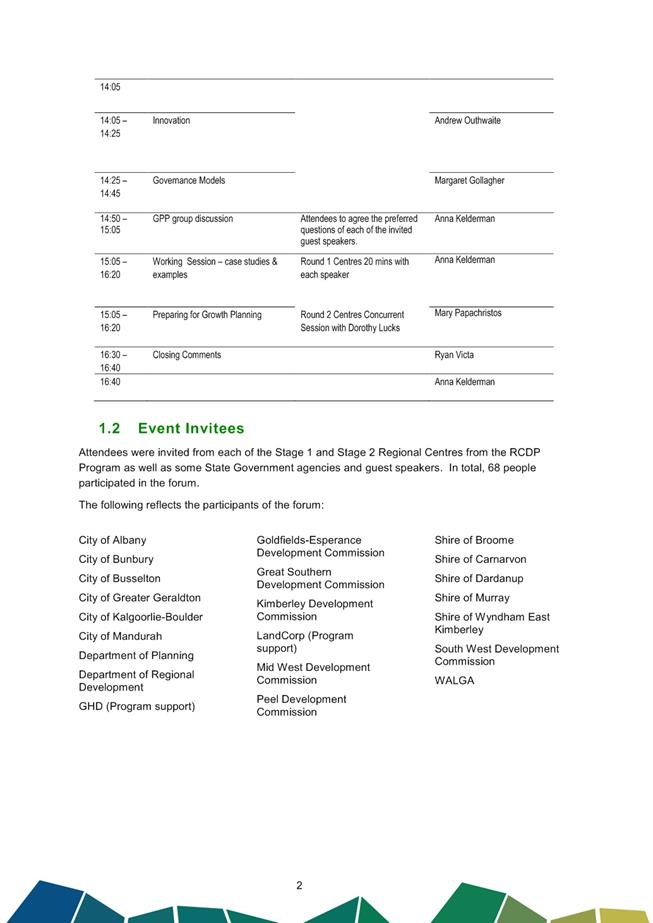
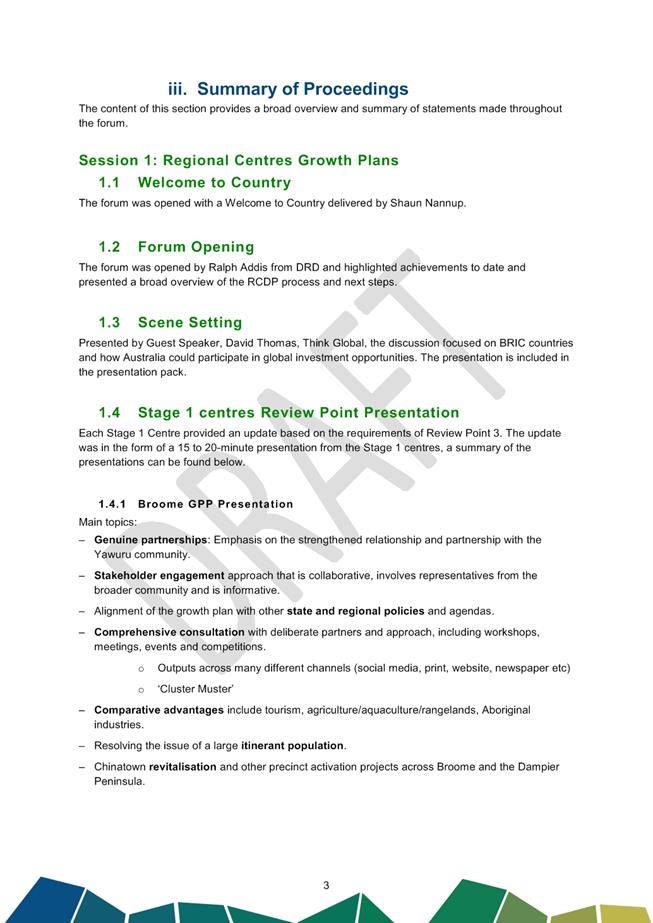
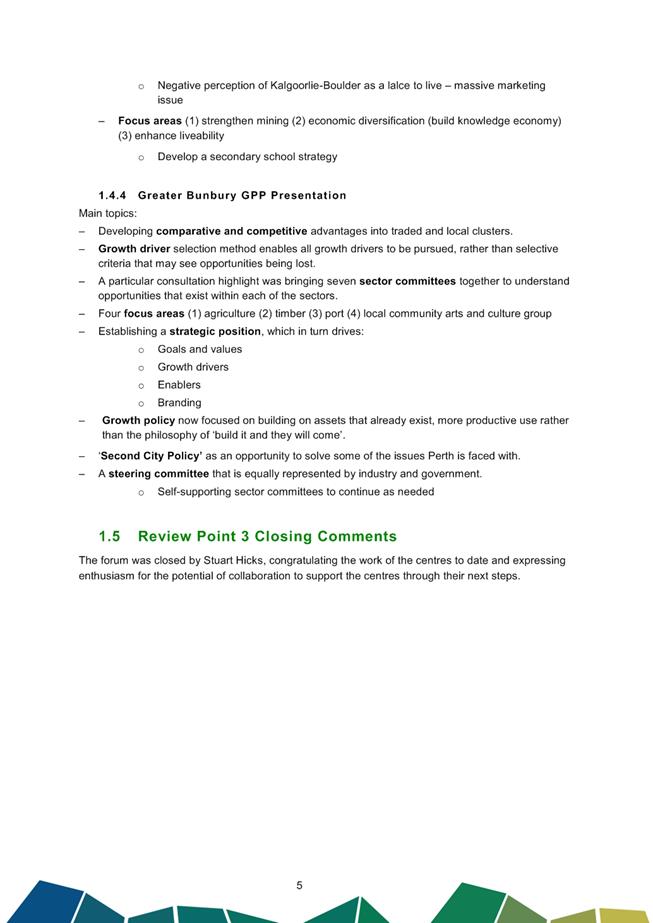
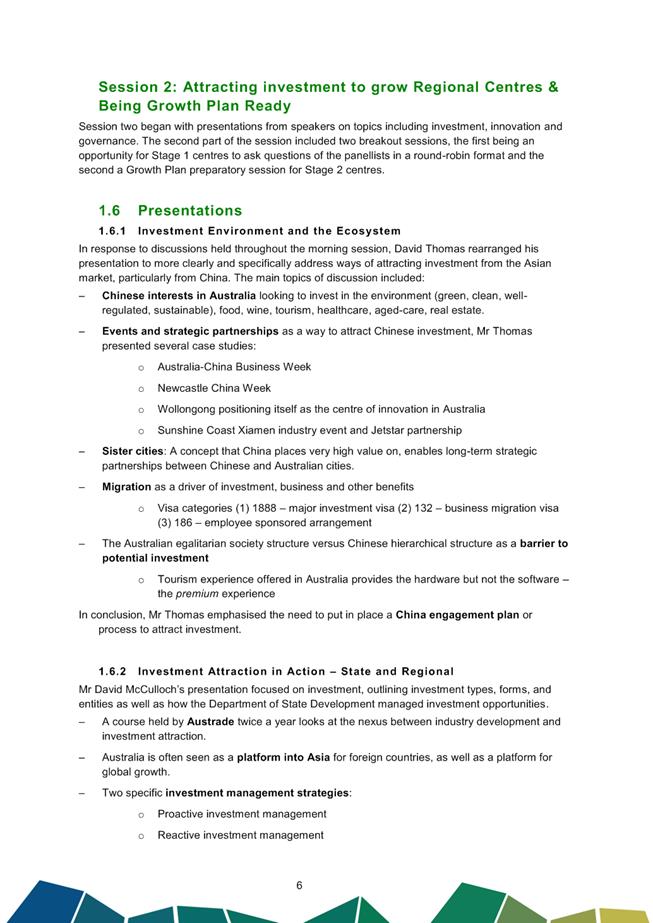
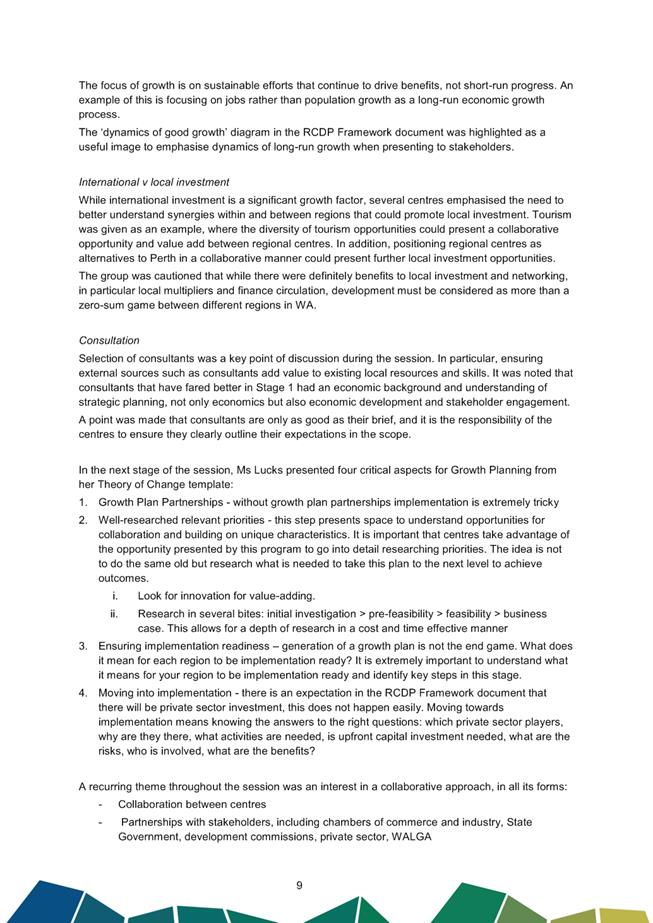
|
Item 5.1 - BROOME GROWTH PLAN - STATUS UPDATE AND KEY
ELEMENTS
|
|
Item 5.1 - BROOME GROWTH PLAN - STATUS UPDATE AND KEY
ELEMENTS
|
|
Item 5.1 - BROOME GROWTH PLAN - STATUS UPDATE AND KEY
ELEMENTS
|
|
Item 5.1 - BROOME GROWTH PLAN - STATUS UPDATE AND KEY
ELEMENTS
|
|
Item 5.1 - BROOME GROWTH PLAN - STATUS UPDATE AND KEY
ELEMENTS
|
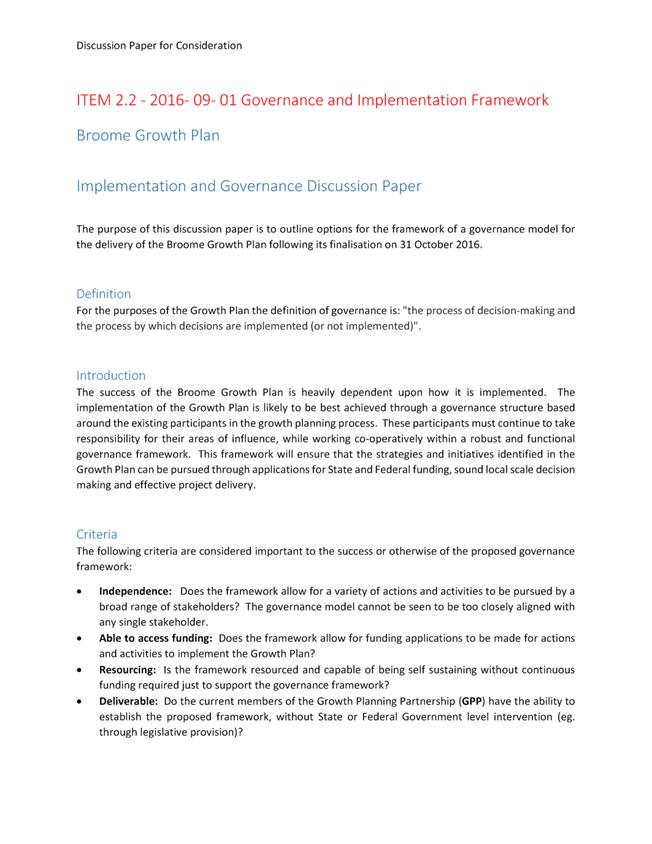
|
Item 5.1 - BROOME GROWTH PLAN - STATUS UPDATE AND KEY
ELEMENTS
|
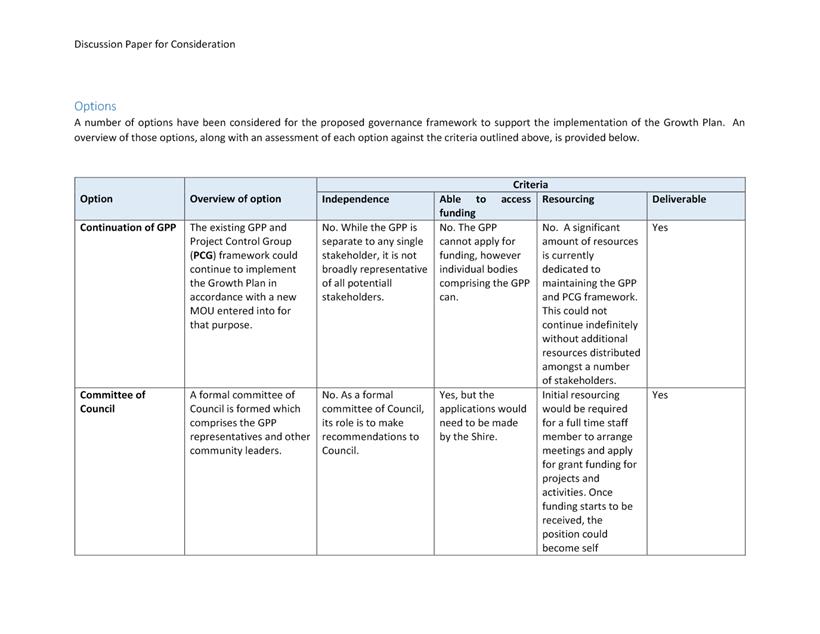
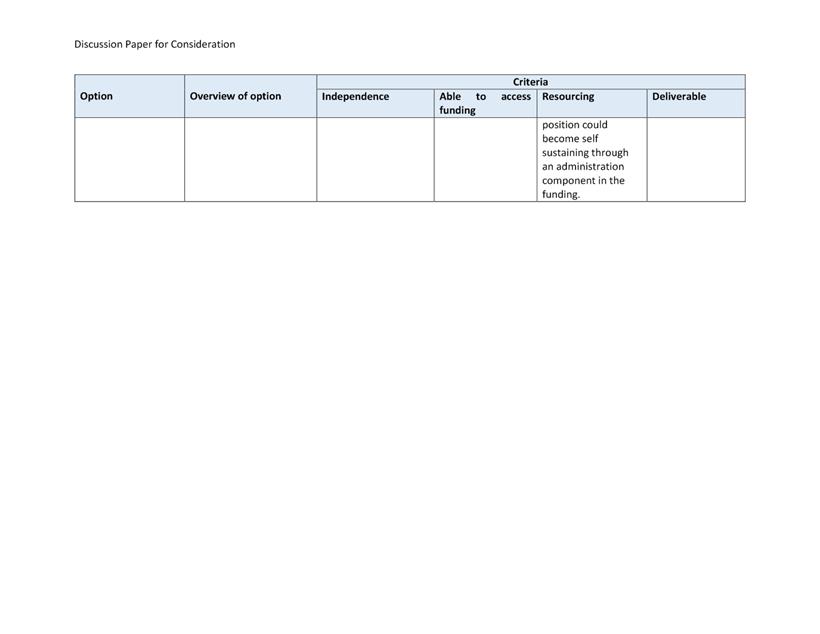
|
Item 5.1 - BROOME GROWTH PLAN - STATUS UPDATE AND KEY
ELEMENTS
|
Agenda –
Economic Development Advisory Committee
Meeting 16 September 2016 Page 916 of 916